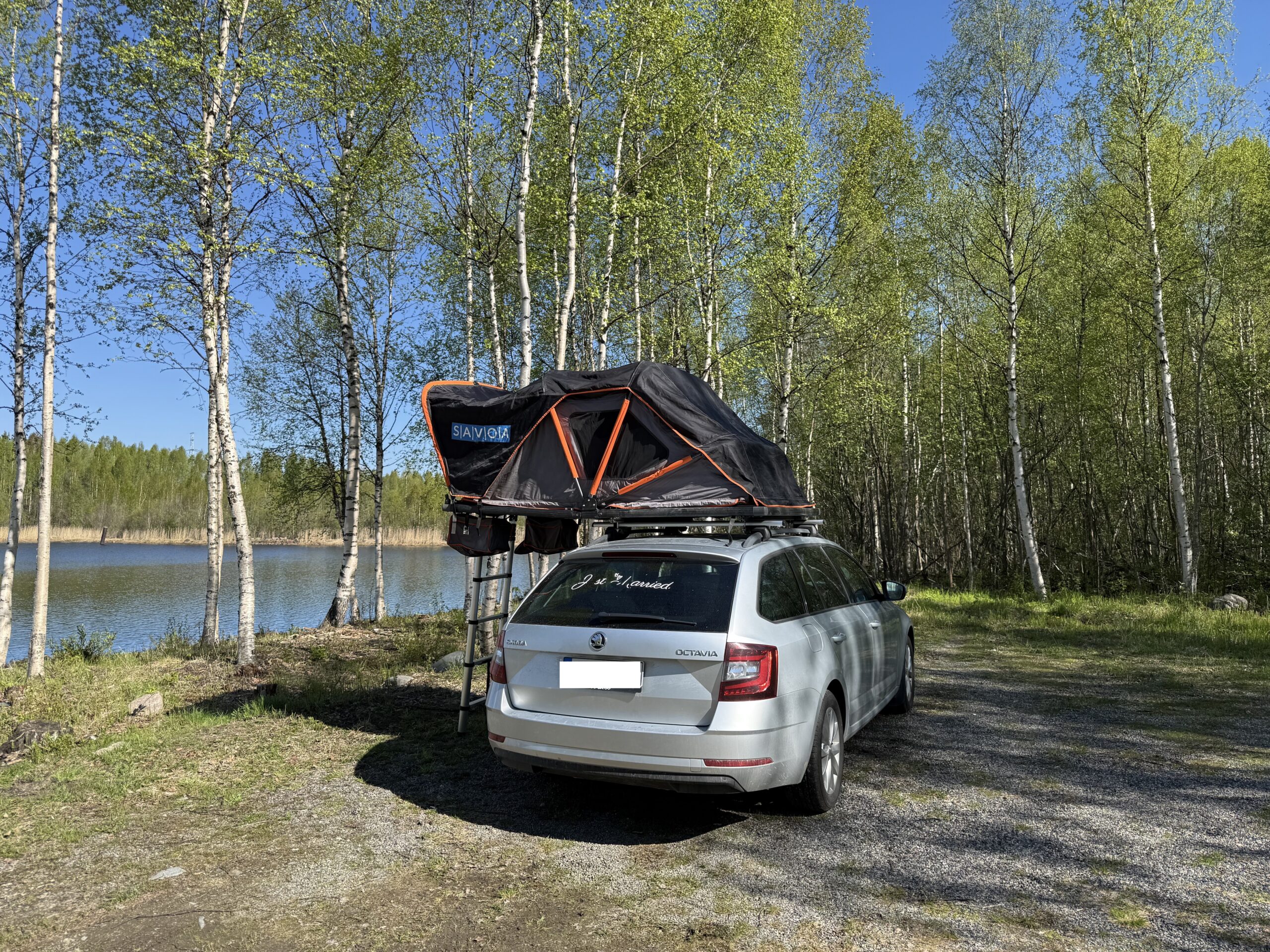
Everyone wants a cheap campervan rental in Denmark, and almost everyone defines cheap as the lowest number on the first page of search results. We have learned, on the Nordic roads and in the booking tabs, that the lowest number and the cheapest trip are often different things. A van that is a little cheaper per day but starts in the wrong city, closes the campsites you need or leaves you with a huge excess can cost you more by the time you are home.
So here is how we would approach saving money in Denmark: where the real discounts sit, what to trim and what not to. Figures for Denmark come from CampervanPlanet’s own Denmark guide, which we read fresh for this article, and prices are always live by date, so we deliberately avoid quoting a daily rate.
The biggest saving is when you go: May and September are the best-value months, while June to August is the priciest. After that, pick up where your route begins, choose the smallest van that fits you, sleep at aires some nights and never cheap out on cover. Our reader code HUNGRYTRAVELFAMILY20 takes €20 off at checkout.
What cheap should mean on a Danish campervan trip
Denmark is not Norway. It is flat, compact and well supplied with fuel stops, so the brutal cost lines of a fjord trip simply do not exist. That makes the rental itself, plus where you sleep, a larger share of your total than it would be in Norway, and it also means mistakes in those two areas hurt more.
Our definition of cheap is the lowest total for the trip you actually want, not the lowest daily rate. A rate that looks great but needs a long positioning drive, a bridge toll for a vehicle that is too big or a pricey extra at pick-up does not qualify.
If you want the full cost picture first, our guide to what a campervan trip in Sweden really costs uses the same approach, and our campervan rental guide explains how comparison sites work.
Shoulder season is where the real discount lives
CampervanPlanet’s Denmark guide marks May and September as the best-value months and June to August as the priciest, with the school holidays and Sankt Hans on 23 June filling the coastal campsites. May and September also bring mild weather, around 12–18°C, open campsites and lower rates than the peak.
September has a particular charm. The light is golden, the sea still holds some of summer’s warmth and most campsites are open. May is fresher and greener, with long days. If you can pick either, you will almost certainly pay less than in July and enjoy quieter roads.
April and October are quieter and can be cheaper still, but they come with a trade-off: the Danish campsite season broadly runs May to October, so you need to check what is open. We would use those months only if you are happy leaning on aires.
Pick up where your route starts
Denmark has six pick-up locations: Copenhagen, Aarhus, Odense, Billund, Aalborg and Aabenraa. Copenhagen is the capital and the one most people choose, partly because of the airport at Kastrup, but it is not automatically the best place for your route or your budget.
Think about the loop you want. A run around Zealand, taking in Copenhagen and the North Zealand castles, is about 130 km over three or four days and never needs a bridge. The classic crossing from Copenhagen to Aarhus is closer to 320 km. A Jutland west coast trip from Billund to Skagen is longer again. Starting in the right place means you do not burn diesel and days driving back to where you collected the van.
It is also worth comparing the same dates from two cities. Availability and price can differ by location, and the live search makes that a two-minute job on CampervanPlanet.
💡 Our campervan tip: prices for the same van vary a lot between rental brands. We compare Denmark campervans across 160+ rental companies on CampervanPlanet — and code HUNGRYTRAVELFAMILY20 takes €20 off your booking.
A smaller van is a smaller bill
This is the least glamorous saving and often the largest. The Danish fleet starts with a Budget Camper that the guide describes as small, easy on diesel and quick to park, and which also pays the lowest toll across the Great Belt Bridge. At the other end sit the larger motorhomes, which cost more per day, more in fuel and more at the toll, since the charge goes by length.
For two adults on a Danish trip, we would start with the smallest vehicle that has the kitchen and sleeping setup you will use. Denmark’s distances are short, so you are not living in the van all day as you might on a Lapland winter trip. You are mostly sleeping, cooking breakfast and parking in towns, where a compact van is genuinely easier.
The exception is if you travel in cooler months. Then a model with a heater is worth the extra, because a cold, damp night costs far more in comfort than it saves in euros.
Sleep cheaper: aires, campsites and the numbers
Wild camping is not an option for vehicles in Denmark, so your accommodation bill is decided by which licensed place you pick. A full campsite pitch for a van and two adults is about DKK 250–450 a night, roughly €34–60. A motorhome aire, an autocamperplads, is often DKK 100–200, or about €13–27, and occasionally free or donation-based.
That gap is significant. Over six nights, mixing three aires and three campsites rather than six campsites could save you something like €60–100, depending on where you stay. It is not a fortune, but it adds up to a couple of dinners.
The trade-off is facilities. Aires are simpler, often without showers, so we would use them on nights when we are out all day and use a proper campsite when we want laundry, power and a hot shower. Remember too that some campsites still ask for a camping card as ID, at roughly €20 a year.
What not to cheap out on
Here is where we get strict. Do not choose the lowest offer if it has a huge excess and you have no plan for it. The security deposit is a refundable hold on the main driver’s credit card, and how big it is depends on the company, the vehicle and the protection you choose. Make sure your card limit can take it.
Do not assume your credit card or travel policy covers a rented campervan either; we explain the common myths in our campervan insurance guide. And do not skip a heater if you travel outside summer. Danish nights in spring and autumn can be wet and cold, and the weather is windy.
Lastly, read the payment plan. Many offers take a deposit online and the rest at pick-up, others are paid in full, and that changes how cheap an offer feels on the day.
Food, tolls and the last savings
Prices in Denmark run high, but you control the grocery line. Cooking in the van brings food down to roughly DKK 300–450 a day for two (about €40–60) by shopping at Netto, Rema 1000, Lidl or Aldi. Eating out for every meal in Copenhagen will blow that quickly.
On tolls, stay on one side of the Great Belt if you only have a few days. A car-sized camper pays roughly DKK 250 (about €34) each way, so a round trip is around €67 you can simply avoid on a Zealand loop.
And finally, the coupon. If you book through our link and enter code HUNGRYTRAVELFAMILY20 at checkout, €20 comes off the booking. It is a fixed amount, which makes it most noticeable on a shorter, cheaper rental, and it comes out of our commission rather than your price.
Book your Denmark campervan
Compare prices across 160+ campervan and motorhome rental brands, get a free 1GB eSIM with every booking — and €20 off with code HUNGRYTRAVELFAMILY20.
Check prices & availability →Frequently asked questions
What is the cheapest time to rent a campervan in Denmark?
May and September are marked as the best-value months, while June to August is the priciest. April and October can be quieter, but check which campsites are open.
Is there a discount code for CampervanPlanet?
Yes. Enter code HUNGRYTRAVELFAMILY20 at checkout on CampervanPlanet to take €20 off the booking. It is a fixed euro amount for our readers.
Is it cheaper to pick up in Copenhagen?
Not always. Denmark has six pick-up locations, and price and availability vary by city and date. Compare the same dates from your route's start point and a second city.
Can I save money by wild camping in Denmark?
No, wild camping is not allowed for vehicles. You stay at licensed campsites or motorhome aires, and aires at roughly DKK 100–200 a night are the cheaper choice.
What should I never skimp on when renting a cheap campervan?
Cover and the deposit terms, a heater outside summer, and a clear understanding of the payment plan. A low rate with a high excess is rarely cheap.
Keep your crypto offline, not in an exchange app
Any crypto we hold lives on a Trezor hardware wallet — a small offline device in a drawer in Rovaniemi, not on a phone that crosses borders every month. If you’ve been meaning to sort that out, this is the link we’d send a friend.