Iceland in November: Northern Lights Peak and Winter Begins
A Rovaniemi-based couple who’ve driven Iceland’s Ring Road shares what November actually looks like — the aurora odds, the weather trade-offs, the empty roads, and why this shoulder month might be the smartest time to go.
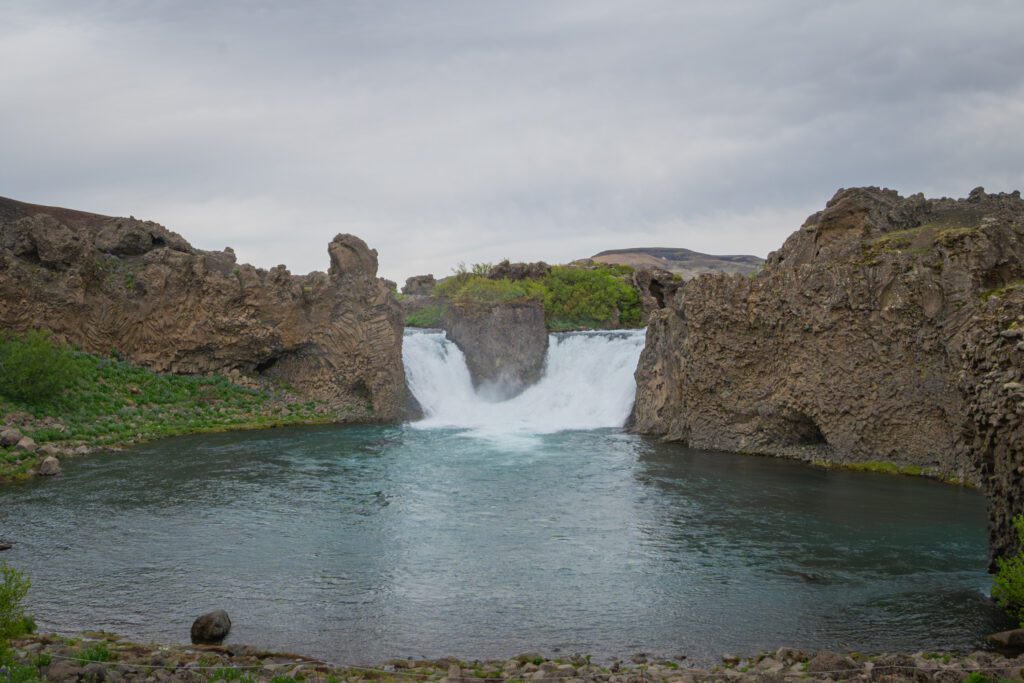
We first visited Iceland in summer — endless daylight, green valleys, tourists everywhere. When we came back in November, it was a different country. Dark by 4 pm. Snow on the passes. Gas stations that felt like the last outpost before the end of the world. And the northern lights, finally, doing exactly what we’d hoped.
Iceland in November is not the easy trip. But it might be the most rewarding one.
November in Iceland means long dark nights perfect for northern lights, fewer tourists than any summer month, and prices that drop 30–50%. The trade-off is short daylight (5–6 hours), unpredictable roads, and weather that changes hourly. If you’re comfortable driving in winter and flexible with plans, it’s one of the best months to visit.
What November in Iceland actually looks like
The shift from autumn to winter
Early November still carries traces of autumn — brown tundra grass, occasional patches of color in Þingvellir. By mid-month, that’s mostly gone. Snow covers the highlands, the interior roads (F-roads) are closed, and the landscape compresses into blacks, whites, and deep greys. It’s stark and beautiful in a way summer never is.
The light is the biggest adjustment. Sunrise happens around 10 am and sunset around 4 pm, giving you roughly 5–6 hours of usable daylight. But those hours are extraordinary — the sun stays low, casting golden-hour light across lava fields and glaciers for the entire “day.” Photographers love it.
The tourist math
Iceland received over 2 million visitors in 2023, and the vast majority came between June and August. November is one of the quietest months. We walked into the Blue Lagoon without a queue. We had Seljalandsfoss to ourselves. The Golden Circle felt like a private tour. If crowds are what kept you from Iceland, November fixes that problem entirely.
Northern lights: why November is peak season
The darkness advantage
The northern lights need darkness, and November delivers it in bulk. With 17–18 hours of darkness per night, your viewing window is enormous. Compare that to September, when you might get 6–8 dark hours and the light is fighting twilight until 11 pm.
Iceland sits right on the edge of the auroral oval — the ring of geomagnetic activity encircling the North Pole. In November, even a modest KP 2–3 storm can produce visible aurora from Reykjavík’s suburbs. During our November trip, we saw the lights on four of seven nights.
Where and when to look
- Best time: 9 pm to 1 am, though displays can start as early as 8 pm in November because it’s fully dark by then.
- Best direction: Face north, but strong displays can fill the entire sky. We’ve seen them directly overhead in Vík.
- Best spots: Anywhere away from Reykjavík’s light pollution — Þingvellir, Kirkjufell, Vík, Jökulsárlón. Even a 15-minute drive from the capital makes a difference.
- Forecast tools: The Icelandic Met Office aurora forecast (vedur.is) is the gold standard. It shows cloud cover AND aurora activity on the same map.
Weather, daylight, and what to wear
November weather by the numbers
- Average temperature: 0 to 4 °C along the coast, colder inland and at elevation.
- Rain/snow: Expect precipitation on roughly half the days. It switches between rain, sleet, and snow unpredictably.
- Wind: This is the real challenge. Sustained 40–60 km/h winds are common. We had a day near Dyrhólaey where the car door nearly ripped off.
- Daylight: About 5 hours 45 minutes at the start of November, dropping to 4 hours 40 minutes by month’s end.
What to pack
- Base layer: Merino wool top and bottom — not cotton, ever.
- Mid layer: Fleece or down jacket.
- Outer layer: Waterproof and windproof shell (Gore-Tex or equivalent). This is the single most important piece.
- Footwear: Waterproof hiking boots with good grip. We wore Salomon X Ultra and they handled everything.
- Accessories: Windproof gloves, a buff or balaclava, and a beanie. We used hand warmers on aurora-hunting nights.
- Crampons: Lightweight strap-on crampons (Yaktrax or similar). Ice forms on paths without warning.
Letters from Rovaniemi
Honest travel stories from a couple in Finnish Lapland — one email, twice a month.
What’s open and what’s closed
- Golden Circle: Open year-round. Þingvellir, Geysir, and Gullfoss are all accessible. Roads are paved and maintained.
- South Coast: Route 1 stays open. Seljalandsfoss, Skógafoss, Reynisfjara, Vík, Jökulsárlón — all reachable.
- Snæfellsnes Peninsula: Mostly accessible, but road 54 can get icy. Kirkjufell is open.
- Westfjords: Mostly closed or extremely difficult. Some roads shut as early as October.
- F-roads / Highland interior: Closed. Don’t even think about it.
- Blue Lagoon / Sky Lagoon: Open. Booking in advance is still smart, but availability is much better than summer.
- Ice caves: Some glacier ice caves open in late November. Vatnajökull caves typically start tours mid-to-late month.
- Whale watching: Still running from Reykjavík and Húsavík, though seas are rougher and sightings less guaranteed.
Driving in November: roads, rental cars, and safety
Route 1 is your lifeline
The Ring Road (Route 1) is maintained through winter, but “maintained” in Iceland means plowed when they can get to it. Black ice is common, especially on bridges and mountain passes. We hit a whiteout near Höfn that reduced visibility to maybe 20 meters. You need to be comfortable pulling over and waiting.
Rental car rules
- 4WD is strongly recommended. We rented a Dacia Duster and it handled everything on Route 1 and paved side roads. Don’t go cheaper.
- Get the gravel/ash protection. Wind-blown volcanic sand is the insurance claim Iceland is famous for.
- Check road.is every morning. The Icelandic Road Administration updates conditions in near-real-time.
- Fill up whenever you see a gas station. Distances between stations in the north and east can be 100+ km.
Our November driving tip
Plan your driving for the daylight hours — roughly 10 am to 3:30 pm. Use the dark evenings for hot springs, northern lights, and early dinners in whatever town you’ve landed in. We made the mistake of driving the south coast after dark and missed half the scenery.
Budget breakdown: what we actually spent
- Flights (Helsinki → Keflavík, return): €180 per person with PLAY airlines. November fares drop significantly vs summer.
- Rental car (7 days, Dacia Duster 4WD): €420 total, including gravel protection.
- Fuel: €140 for roughly 1,600 km driven.
- Accommodation (mix of guesthouses + one Reykjavík hotel): €85/night average — about half of what we paid in June.
- Food: €40–60/day for two, cooking some meals in guesthouses. Restaurant meals average €25–35 per person.
- Activities (Blue Lagoon + glacier walk): €180 total for two.
- Total for 7 days, two people: Roughly €2,100. Our summer trip of similar length cost us over €3,400.
Our November Iceland mistakes
- Underestimating the wind. We packed for cold, not for wind. A warm jacket without wind protection is useless in coastal Iceland. Our biggest regret was not bringing a proper windproof shell from day one.
- Trying to drive too far in one day. With only 5 hours of daylight, distances that look easy on a summer map become impossible. We tried to reach Jökulsárlón from Vík and arrived in total darkness.
- Skipping crampons. One of us slipped on ice at Seljalandsfoss and bruised a hip badly enough to slow down the next two days. €20 crampons would have prevented it.
- Not checking road.is often enough. A road that was green at 8 am was yellow by noon. We drove into a storm that a 5-minute check would have warned us about.
- Booking only one night in Reykjavík. We wished we’d had two. November Reykjavík is cozy — the pools, the cafés, the museum scene. One night wasn’t enough to enjoy it properly.
- Ignoring the Snæfellsnes Peninsula. We assumed it was too remote for November. It’s not — Route 54 was fine, and Kirkjufell with snow and aurora behind it was the best photo of the trip.
Frequently asked questions
Is November a good time to visit Iceland?
Yes, if you come prepared. November offers peak northern lights viewing, dramatically lower prices, and almost no crowds. The trade-offs are short daylight, cold weather, and unpredictable roads. For experienced travelers who don’t mind winter driving, it’s one of the best months.
Can you drive the Ring Road in November?
Route 1 is maintained year-round, but conditions vary daily. The south and west coasts are usually manageable. The north and east can get dicey — mountain passes accumulate ice and snow. Check road.is daily, rent a 4WD, and have flexible plans.
How cold is Iceland in November?
Coastal temperatures hover between 0 and 4 °C, which is milder than most people expect. But the wind chill makes it feel much colder. Inland and at elevation, expect sub-zero. Wind is a bigger factor than temperature.
Are ice caves open in November?
Some Vatnajökull glacier ice caves open in late November, depending on conditions. Tour operators like Guide to Iceland and Arctic Adventures start trips around mid-to-late month. Book early — slots fill fast once they open.
Is the Blue Lagoon open in November?
Yes, and it’s a completely different experience than summer. Fewer crowds, steam rising into cold air, and sometimes northern lights overhead while you soak. Book in advance — even in low season, popular time slots sell out.
What’s the best way to see the northern lights in Iceland in November?
Drive 15–30 minutes from Reykjavík to escape light pollution, check the vedur.is aurora and cloud forecast, and be patient between 9 pm and 1 am. Alternatively, book a guided tour — they chase clear skies and know the best spots. November’s long darkness gives you an enormous viewing window.
A final word from Rovaniemi
We live in the Arctic, so dark and cold don’t scare us. But Iceland in November still surprised us — not with difficulty, but with how intimate it felt. The landscape strips down to essentials. The light, when it appears, is the best you’ll ever photograph. The aurora puts on a show that summer visitors will never see.
It’s not the trip for everyone. But if you’re the kind of traveler who’d rather have a volcano to yourself than share it with a hundred strangers, November is your month.
Joona & Alla
A Finnish-Ukrainian couple living in Rovaniemi, Finland. Joona is a marketing professional in Lapland tourism; Alla is an AI Engineer. Together we’ve visited 25 countries and share honest, locally-grounded travel writing from our home in the Arctic.
Read our full story →