Overtourism in Rovaniemi? A Local View on Crowds, Growth and Responsible Travel
Rovaniemi's tourism has grown fast, and some residents are asking for rules. Here is what the numbers show, what the debate is actually about, and what travellers can do.
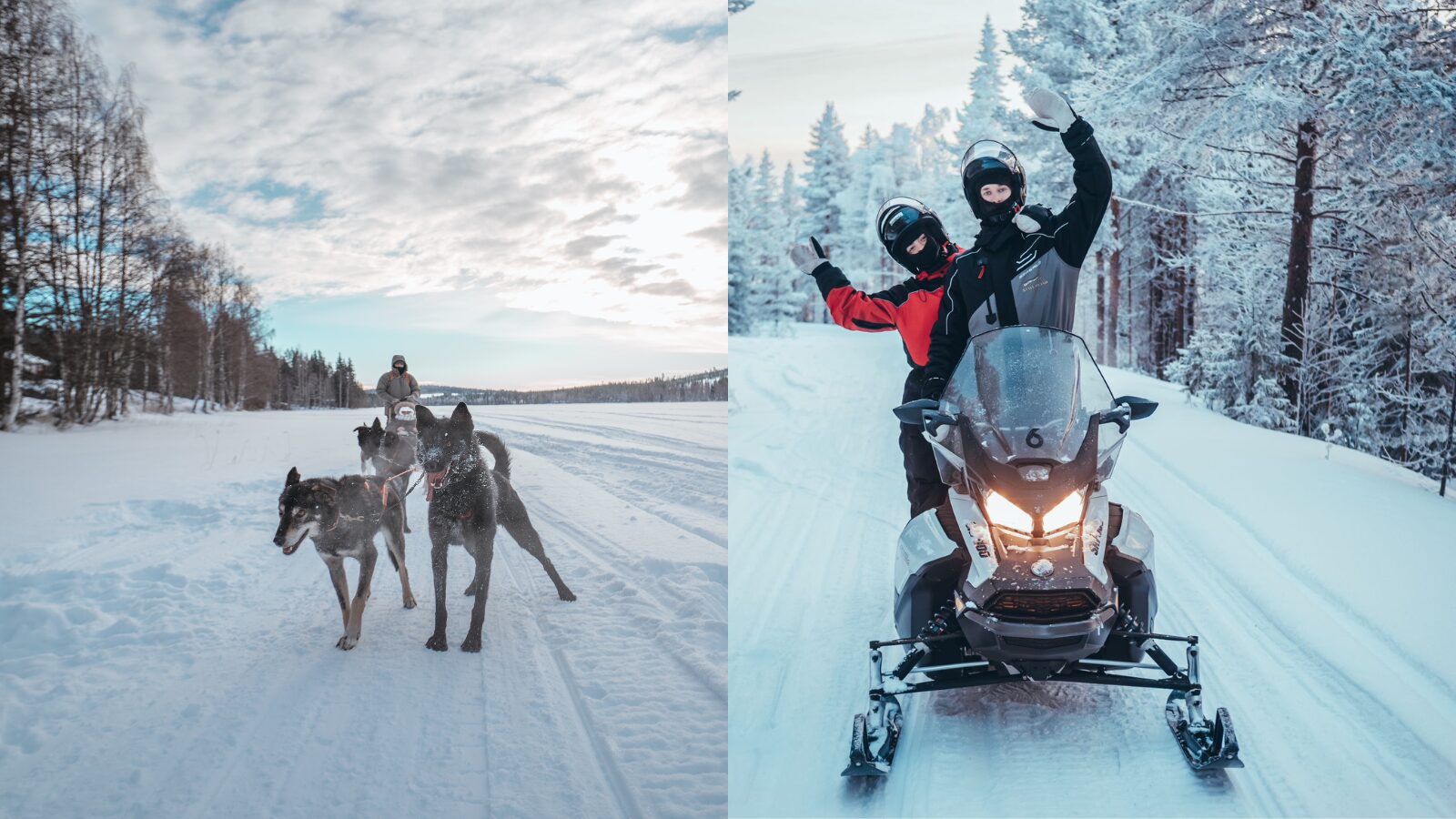
Is Rovaniemi suffering from overtourism? The honest answer is that it depends on what you measure and who you ask. International media have asked the question since late 2024, after local residents started a public campaign about tourism growth and short-term rentals.
We are Joona and Alla, a couple living in Rovaniemi, and we both work in tourism marketing in Lapland, so we are not neutral observers. We have tried to be careful here: every number has a source and a period, the concerns residents raise are described as they were reported, and we say where the data cannot settle the argument.
Rovaniemi is growing fast but is far smaller than the destinations usually called overtourism hotspots. Registered guests in December 2025 averaged around 5,400 per night against 66,191 residents (our arithmetic from official figures). The sharpest local concern is housing and short-term rentals in the city centre, not queues at attractions.
What is being claimed
The international story began with an Associated Press report in December 2024. It described a local group in Rovaniemi worried that tourism had grown too fast and was no longer under control, and it reported that residents organised a rally through the city’s streets. The AP linked this to protests in other European destinations such as Barcelona, Amsterdam, Malaga and Florence.
According to the same report, local critics said many apartment buildings in the city centre are used for tourist accommodation during peak season and are therefore unavailable for housing, and that short-term rentals have pushed up prices and turned the centre into a “transient space for tourists”. AP noted that Finnish law prohibits professional accommodation services in buildings intended for residential use, and that campaigners wanted better enforcement. The mayor, quoted by AP, noted that some residents make good money from short-term rentals, and AP reported that stricter rules were unlikely to be in place for that winter.
AP defined over-tourism in the same report as the tipping point at which visitors and their spending stop benefiting residents and start causing harm, for example by overwhelming infrastructure or making life markedly more difficult for local people. That is a useful test, because it asks about residents rather than about visitor counts, and it is the test we try to apply below.
We have not found a later official decision that settles this, so we describe the debate as ongoing.
What the numbers show
| Measure | Figure | Period | Source |
|---|---|---|---|
| Residents | 66,191 (up from 63,528 at end of 2020) | End of 2025 estimate | Statistics Finland (via CityPopulation) |
| Registered overnight stays | About 1.1 million, almost a fifth more than the winter before | November 2024 to March 2025 | Yle News |
| Registered overnight stays | Over 166,000 (growth just under 6%) | December 2025 | Yle |
| Airport passengers | 1.1 million (+18.4%) | 2025 | Finavia |
| Santa Claus Village visitors | More than 700,000 (Visit Rovaniemi) or more than 600,000 (AP) | Per year; neither names a year | Visit Rovaniemi; AP |
Growth is slowing from its post-pandemic peak. Rovaniemi’s registered nights grew by almost a fifth over the winter of 2024–25 but by just under 6% year on year in December 2025. Business Finland and Visit Finland’s April 2026 winter release says the growth of foreign overnight stays across Finland has slowed from earlier double-digit rates and links this to capacity limits in the most popular destinations.
Guests per night versus residents
One of the claims heard in the debate is that visitors outnumber residents many times over at Christmas. The AP report described the visitors who come each year at Christmas time as ten times the town’s population. That compares people arriving over a period with people living here all year, so it overstates how crowded the town feels on any one night.
A cleaner comparison uses nightly occupancy. In December 2025, Rovaniemi recorded over 166,000 registered overnight stays (Yle). Spread over the 31 days of the month, that is about 5,400 registered guests per night on average. Compared with 66,191 residents, that is roughly 8%. Across November to March 2024–25, 1.1 million nights over about 151 days is around 7,300 guests per night, or roughly 11% of the resident population. This is our own arithmetic from the official figures, not a published statistic, and it excludes guests in unregistered short-term rentals and day visitors, so it is a floor, not a ceiling.
Averages hide peaks, though. Yle reported that in the run-up to Christmas 2024 Rovaniemi Airport handled up to 80 flights a day, and the pressure is concentrated in the city centre and around Santa Claus Village, which its own website places eight kilometres north of the centre.
The housing and short-term rental question
This is where the data is weakest. Statistics Finland’s accommodation statistics cover registered establishments. Yle reported that in January 2025 more nights were recorded in short-term rentals in Rovaniemi than in official accommodation, and that the official tables do not include unofficial lodging. So the scale of short-term rental use is real and significant, but the exact housing impact is not captured by the figures we can cite.
Locals we talk to raise the same worry, that apartments in the centre are harder to find and cost more in winter. We cannot back that with a number, so we present it as a local concern consistent with what the AP reported. What we can say is that Finnish law, as AP described it, already bars professional accommodation in residential buildings, so the debate is partly about enforcement.
The case for tourism
A balanced account has to include the benefits. According to Yle, accommodation revenue in Rovaniemi rose by around a third to roughly €130 million in winter 2024–25. A preliminary estimate in the Lapland business review puts the 2025 turnover of the “Rovaniemi tourism centre” company group at €358 million with about 1,530 full-time-equivalent employees. Finavia says the airport now has direct flights from 38 airports in winter 2025–26, which also serves residents travelling out.
Visit Finland’s year-end report adds that foreign lodging revenue in the Lapland region rose 23% in 2025, to €246 million. For a town of about 66,000 people, that is a major employer, which is why many residents feel mixed about limits.
What the destination says it is doing
Visit Rovaniemi’s sustainability page lists several commitments. Visit Rovaniemi has the Visit Finland Sustainable Travel Finland label and Biosphere certification, and it lists commitments to guide partner companies toward its principles of responsible and sustainable business, to be honest in communication about conditions such as weak ice and snow, and, together with the City of Rovaniemi, to listen to concerns and act when issues caused by tourism arise. The page does not list a cap on visitor numbers, and we are not aware of one.
Whether those commitments are enough is exactly what residents and the city disagree about, and we would not claim to settle it.
For reporters, it is worth being explicit about what is not publicly available in the sources we could check: a published count of short-term rental units in Rovaniemi, a measured effect of tourism on local rents, and a resident survey on how people feel. Those are the three numbers that would turn the debate from anecdote into evidence, and asking the city and the housing authorities for them is a more productive angle than counting visitors.
What travellers can do
- Choose registered accommodation. Hotels, holiday villages and registered rentals are counted and regulated; look for operators with the Sustainable Travel Finland label.
- Travel outside the Christmas peak. The Finnish Meteorological Institute says the best months for northern lights are February to March and September to October, so there is a good aurora case for avoiding late December. See our earlier take on whether Rovaniemi is too touristy.
- Spread your spending. Visit Finland notes that visitors in Lapland spent less on restaurants and recreation last winter; eating and shopping locally is the simplest way to change that.
- Look beyond one hub. Inari, Kittilä and other destinations are growing faster in percentage terms; our comparison of Rovaniemi, Ivalo and Inari explains the trade-offs.
We are happy to help journalists with local context; the details are on our press page.
FAQ
Is Rovaniemi overcrowded?
Registered guests averaged around 5,400 per night in December 2025, about 8% of the 66,191 residents, by our arithmetic. Peaks around Christmas are higher, and unregistered rentals are not counted, so the picture is mixed rather than clear.
Why are some locals unhappy?
According to AP in December 2024, critics say short-term rentals have pushed up housing prices and turned the centre into a transient space for tourists, and they want existing rules enforced better.
Is tourism good for Rovaniemi?
It is a major source of income: Yle reported about €130 million of accommodation revenue in winter 2024–25, and a preliminary estimate puts the tourism-centre company group’s 2025 turnover at €358 million.
How can I travel responsibly to Rovaniemi?
Stay in registered accommodation, travel outside the Christmas peak, spend locally and choose operators with the Sustainable Travel Finland label.
Quotable · free to use with credit
“We would rather see the overtourism debate in Rovaniemi argued with numbers than with adjectives, because the housing question is real and the data is thin.”
— Joona & Alla, Hungrytravelfamily, Rovaniemi
“If you can, come to Rovaniemi outside the Christmas peak: the northern lights are at least as good in February or September, and the town is calmer.”
— Joona & Alla, Hungrytravelfamily, Rovaniemi
“Responsible travel here is not complicated: sleep in registered places, spend in local businesses and respect that people live in the apartments around you.”
— Joona & Alla, Hungrytravelfamily, Rovaniemi
Please credit “Joona & Alla, Hungrytravelfamily (hungrytravelfamily.com)”. Need a fresh quote or an interview? Contact us.
For journalists, TV & podcast producers
Working on a story about overtourism in Rovaniemi?
We’re Joona & Alla — we live in Rovaniemi on the Arctic Circle and both work in tourism marketing in Lapland. We can help with:
- On-camera interviews and expert comments in English (Joona also speaks Finnish)
- Story research, real prices and location ideas in Rovaniemi and Finnish Lapland
- Filming days and contacts with local husky, reindeer, snowmobile and northern lights operators
Send your outlet, topic, dates and deadline — we try to reply within 24 hours.
Email a media requestPress & media pageSources & further reading
- As tourists discover Finland's Santa Claus Village, some locals call for rules to control the masses (AP, December 2024)
- Lappi porskutti joulukuussa Uudenmaan ohi (Yle, 5 Feb 2026, in Finnish)
- Record winter tourist season for Finnish Lapland (Yle News via Eye on the Arctic, April 2025)
- Rovaniemi population (Statistics Finland data via CityPopulation)
- Statistics 2025: airports in Northern Finland lead growth (Finavia, 2026)
- Ulkomaisten matkailijoiden määrä talvella nousi 1,3 miljoonaan (Business Finland / Visit Finland, 22 April 2026, in Finnish)
- Sustainable Rovaniemi (Visit Rovaniemi)
- Northern lights (Finnish Meteorological Institute)
- Suhdannekatsaus, Rovaniemen seutukunta 2025 (Lapland business review, 2026, in Finnish)
- Cross the Arctic Circle (Santa Claus Village)
- VF monthly follow-up, December and year 2025 (Visit Finland)
- Santa Claus Village (Visit Rovaniemi, The Official Hometown of Santa Claus)
Get our best travel tips in your inbox
Monthly stories from Rovaniemi — Arctic tips, packing lists, and the places we keep coming back to.