How to Get to Finland From Europe — Every Route We’ve Used
We live in Rovaniemi. Getting here from the rest of Europe is something we’ve done dozens of times — by plane, overnight ferry, train, and bus. Here’s the honest breakdown of every real option in 2026.

We get this question more than almost any other. Friends in Germany ask it before their first Lapland trip. Colleagues in London ask it when they want a summer week by Finnish lakes. And visitors to our blog ask it constantly: how do you actually get to Finland from Europe?
The honest answer is: more ways than you’d think — and the right one depends entirely on where you’re coming from, what your budget is, and whether you’re headed to Helsinki or all the way up to us in Rovaniemi.
Flying is the fastest and often cheapest way to travel to Finland from Europe, with direct routes from most major hubs into Helsinki-Vantaa. The overnight ferry from Stockholm or Tallinn is a genuine alternative that doubles as accommodation. Trains and buses work from Scandinavia and the Baltics. From Rovaniemi’s perspective: fly to Helsinki, then connect — or book a direct flight if your origin city has one.
Flying to Finland from Europe
Flying is how most people travel to Finland from Europe, and for good reason: Helsinki-Vantaa Airport (HEL) is well-connected, Finnair runs a dense European network, and budget carriers like Ryanair and Wizz Air have added enough routes that prices are genuinely competitive. If you’re coming from London, Amsterdam, Berlin, Paris, or any major hub, a direct flight to Helsinki is almost always available.
Which airports to know
- Helsinki-Vantaa (HEL) — the main international gateway. Direct flights from 30+ European cities. Connects to Rovaniemi, Oulu, Tampere, Turku, and all other Finnish airports domestically.
- Tampere-Pirkkala (TMP) — a secondary airport with Ryanair and Wizz Air routes from several European cities. Worth checking if you want to skip Helsinki entirely and head to the lake region.
- Turku (TKU) — small but growing. Direct routes from a handful of European cities; also the terminus of the Stockholm ferry (more on that below).
- Rovaniemi (RVN) — yes, there are direct flights from London, Amsterdam, and other major European airports in winter (ski/aurora season). In summer they’re rarer, but worth checking directly with Finnair or Norse Atlantic.
- Oulu (OUL) — occasionally direct from European cities in winter. A good entry point if you’re heading to northern Finland without going all the way to Lapland.
Booking tips that have saved us money
- Search HEL first, then check TMP. Tampere is 30 minutes from the centre and the train connection to Helsinki is easy — sometimes the TMP ticket is €60 cheaper and the routing is worth it.
- Finnair frequently offers good prices on Tuesday and Wednesday departures. Flexibility of even one day can shift the price significantly.
- Book connecting flights to Rovaniemi at the same time as your Helsinki leg. Finnish domestic connections are short (50 min) but if you miss one due to a delay, a combined booking protects you with rebooking rights. Two separate bookings leaves you exposed.
- Winter flights to Rovaniemi directly from Europe are a different product — they’re seasonal charter-style routes. Operators like TUI and Thomas Cook Nordic open these in October for the aurora season. Watch for them — they can be cheaper than connecting through Helsinki when they’re available.
Overnight ferries: Stockholm and Tallinn routes
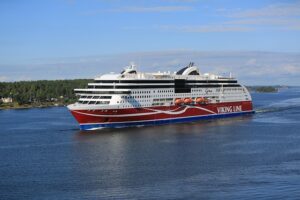
This is the route that turns heads when we describe it. Two classic Baltic ferry routes connect mainland Europe to Finland, and both are experiences in themselves rather than just a means of transport.
Stockholm–Helsinki (Viking Line & Tallink Silja)
An overnight ferry leaves Stockholm around 5–6 pm and arrives in Helsinki the following morning at 9–10 am. You sleep on the ship, wake up caffeinated by the Baltic light, and step off in central Helsinki ready to go. A cabin berth costs roughly the same as a budget hotel night, and the crossing is usually smooth in summer (rougher in winter — be warned). This is the route Joona’s family used for decades to get to the Swedish coast for summer holidays, run in reverse.
There’s also a Stockholm–Turku option (Silja Line and Viking Line both run it), which docks in Turku instead — useful if you’re heading to south-west Finland, the Archipelago, or want to connect to the train toward Tampere.
Tallinn–Helsinki (Tallink & Eckerö Line)
This is the ferry we use most often. The crossing takes just 2–2.5 hours, runs multiple times per day, and connects Helsinki’s South Harbour directly to Tallinn’s Old Town terminal. If you’re coming from the Baltics, Poland, or Eastern Europe overland, Tallinn is a natural staging point. We’ve done this crossing at least ten times.
Route finder: the fastest path from your city
Use this as a quick-reference table for the most common European origins. All times assume direct routes where available.
Fly direct to HEL: ~2h 55m. Also Ryanair to TMP: ~3h. Multiple daily departures from Heathrow, Gatwick, Stansted, and Edinburgh. No practical overland route.
Fly direct to HEL: ~2h 35m. KLM codeshares with Finnair, so points transfers work well. Also worth checking Rovaniemi direct in winter season.
Fly to HEL: ~2h 10m direct. Alternatively, train to Stockholm (overnight), then Stockholm–Helsinki ferry. That’s a 36-hour journey but a beautiful one — we’d do it once.
Overnight ferry to Helsinki (16h, you sleep) or Turku (11h). Or fly: 1h 10m direct. Flying is faster; the ferry is better. Your call.
Tallinn: ferry to Helsinki, 2–2.5h, multiple daily. Riga: bus or train to Tallinn (4h), then ferry. Or fly direct Riga–HEL with airBaltic.
Fly direct to HEL: about 2h from Warsaw, 2h 15m from Prague. Both have multiple weekly or daily flights. This is the practical choice — overland is 30+ hours and not worth it.
No direct flights (or only seasonal ones). Connect through Amsterdam, Frankfurt, Copenhagen, or Stockholm. Journey time is typically 4–6h gate-to-gate. Book the through-ticket rather than two separate legs if you can.
Both have direct flights to Helsinki, around 1h 30m. From Copenhagen you can also take the Øresund Bridge to Sweden and then the Stockholm ferry if you want a scenic overland-plus-sea trip. From Oslo, flying is the easy call.
We write from 68°N. Subscribe.
Practical travel notes, honest costs, and things we’ve learned from 21 countries — straight to your inbox.
Trains and buses: the Scandinavian overland routes
For travellers already in Scandinavia, or those committed to low-carbon travel, overland connections into Finland are genuinely viable. They take longer, but several of them are legitimately pleasant journeys rather than endurance tests.
- Stockholm–Haparanda/Tornio (train + bus, ~17h): Take the overnight train from Stockholm to Luleå or Haparanda, then a short bus or taxi across the border into Tornio, Finland. From Tornio, take a bus or local train toward Oulu, then north. It’s a long day but you arrive in northern Finland having seen the landscape shift from Sweden to Lapland. Joona has done this once, and it was worth it for the scenery alone.
- Oslo–Tampere (FlixBus, ~18h): FlixBus runs routes across Scandinavia that connect via ferry crossings. Check current schedules — these routes shift seasonally.
- Tallinn–Helsinki overland+ferry: Bus from Tallinn terminal to the port (20 min), then 2.5h crossing. This is the fastest “not flying” option from the Baltics and Eastern Europe by a long way.
- Interrail considerations: A Finland pass or Global Interrail pass covers domestic Finnish trains, the Swedish train toward the border, and can be used on the Stockholm–Helsinki ferry at discounted cabin rates. If you’re doing a wider Scandinavia trip, this is worth building in.
- Bus from Riga or Vilnius: Lux Express and Ecolines both run routes Riga–Tallinn–Helsinki via ferry. Journey time from Riga is about 8–9 hours. It’s cheap and surprisingly comfortable for what it is.
Getting from Helsinki to Rovaniemi — and the rest of Lapland
For most European travellers, the journey to Finland doesn’t end at Helsinki. They’re coming north — to us, or to somewhere like us. Here’s what the Helsinki-to-Lapland leg looks like.
- Fly Helsinki–Rovaniemi (50 min, Finnair): The fastest and most predictable option. Flights run multiple times daily. If you’re on a short trip, this is the only sane choice.
- Overnight train Helsinki–Rovaniemi (9.5h, VR): This is one of our favourite ways to travel in Finland. Leave Helsinki at around 8 pm in a sleeper compartment, wake up in Rovaniemi as the sun is already up (or the darkness is complete, depending on season). Price is similar to flying when you factor in saved accommodation. Book on vr.fi — it fills up fast in winter.
- Drive (830 km, about 8.5h without stops): Driving gives you the most flexibility and is essential if you want to explore the areas between Helsinki and Lapland. The road is the E75/E8 — well-maintained, stunning in all seasons.
- Bus (about 12h, OnniBus or Matkahuolto): Cheaper than flying or the train, but a long day. Not our preference for the full stretch, though it works well for shorter Lapland segments like Oulu–Rovaniemi.
Mistakes we made getting to (and from) Finland
- Booking the Helsinki domestic connection separately from the international flight. We missed a Rovaniemi connection once due to a late London departure and had no protection. Always book through to your Finnish destination on a single ticket or with the same airline family.
- Underestimating Helsinki-Vantaa airport size. It’s not huge, but if you arrive at gate 36 and need to make a domestic connection, budget 25–30 minutes minimum. Tighter than that and it’s stressful.
- Assuming the Tallinn ferry is “always available”. It runs frequently, but in peak summer (July) the popular departure slots on Friday/Sunday evening sell out. Book ahead for those.
- Not checking the ferry cabin vs seat price difference. On the Stockholm–Helsinki route, the cabin surcharge over a seat is small — sometimes only €20–30 extra. Always take the cabin. Four hours of broken sleep in a reclining seat is not worth saving twenty euros.
- Ignoring Tampere airport. For travellers from certain UK or Eastern European cities, TMP is significantly cheaper and only 2 hours from Helsinki by train. We’ve started routing through it when the price difference is real.
- Forgetting that Finnish summer changes the domestic train experience. Overnight trains to Rovaniemi in June run into daylight at midnight. Bring an eye mask. Seriously.
Frequently asked questions
What is the easiest way to get to Finland from the UK?
Fly direct from London (Heathrow, Gatwick, Stansted) or Edinburgh to Helsinki-Vantaa. Multiple airlines operate this route, including Finnair and British Airways. Flight time is under 3 hours. There is no practical overland or ferry route from the UK to Finland.
Can you get to Finland by train from Europe?
Not directly from Western or Central Europe — there is no cross-border rail connection into Finland from Sweden or Norway at the level most travellers expect. However, you can reach the Finnish border town of Tornio from Sweden by train and bus, and once in Finland the domestic train network is excellent. From the Baltics, the practical option is bus or ferry to Helsinki via Tallinn.
Is the Stockholm–Helsinki ferry worth it?
Yes, in our opinion — especially if you book a cabin. It takes about 16 hours overnight, so you travel while you sleep. The ships are large and comfortable, with restaurants and saunas on board. The Baltic crossing is genuinely beautiful in summer. It costs roughly the same as a budget hotel night in Helsinki plus a cheap flight, so the maths aren’t always worse than flying either.
How do I get from Helsinki to Lapland?
The fastest way is the 50-minute Finnair flight to Rovaniemi. The most memorable way is the overnight train (about 9.5 hours, with sleeper compartments). Both are good options. Driving is excellent if you have time — the route north through Finland is stunning. Book train tickets well in advance, especially for winter travel.
Do I need a visa to enter Finland from Europe?
EU/EEA citizens do not need a visa. Citizens of many other countries, including the US, UK, Canada, and Australia, can enter Finland visa-free for up to 90 days in a 180-day period. The new ETIAS pre-travel authorisation for non-EU citizens visiting the Schengen Area was still being phased in as of early 2026 — check the latest requirements before you travel.
What is the cheapest way to get to Finland from Europe?
It depends on origin, but budget airline routes (Ryanair, Wizz Air, Norwegian) from cities like London, Warsaw, or Riga to Helsinki or Tampere are often the cheapest options, with fares as low as €25–60 one-way when booked well in advance. The Tallinn ferry from Estonia is also extremely affordable when coming from the Baltics. Flexibility on travel days — especially midweek — makes a significant difference to price.
A final word from Rovaniemi
Every time we come back from a trip — whether it’s from a week in Greece or a weekend in Tallinn — the journey home to Finland still feels like arriving somewhere extraordinary. The sky changes as you cross the Baltic. The forests get denser and quieter. The light does things you don’t see anywhere else.
Getting here is genuinely easy from most of Europe. The options have only got better in recent years — more budget routes, better overnight trains, ferries that haven’t changed in the best possible way. The hardest part is usually picking a starting point and committing to it.
If you’re planning a trip and want to know the specific route from your city, drop it in the comments. We’ve probably done something close to it, and we’re happy to help.
Joona & Alla
A Finnish-Ukrainian couple living in Rovaniemi, Finland. Joona is a marketing professional in Lapland tourism; Alla is an AI Engineer. Together we’ve visited 21 countries and share honest, locally-grounded travel writing from our home in the Arctic.
Read our full story →