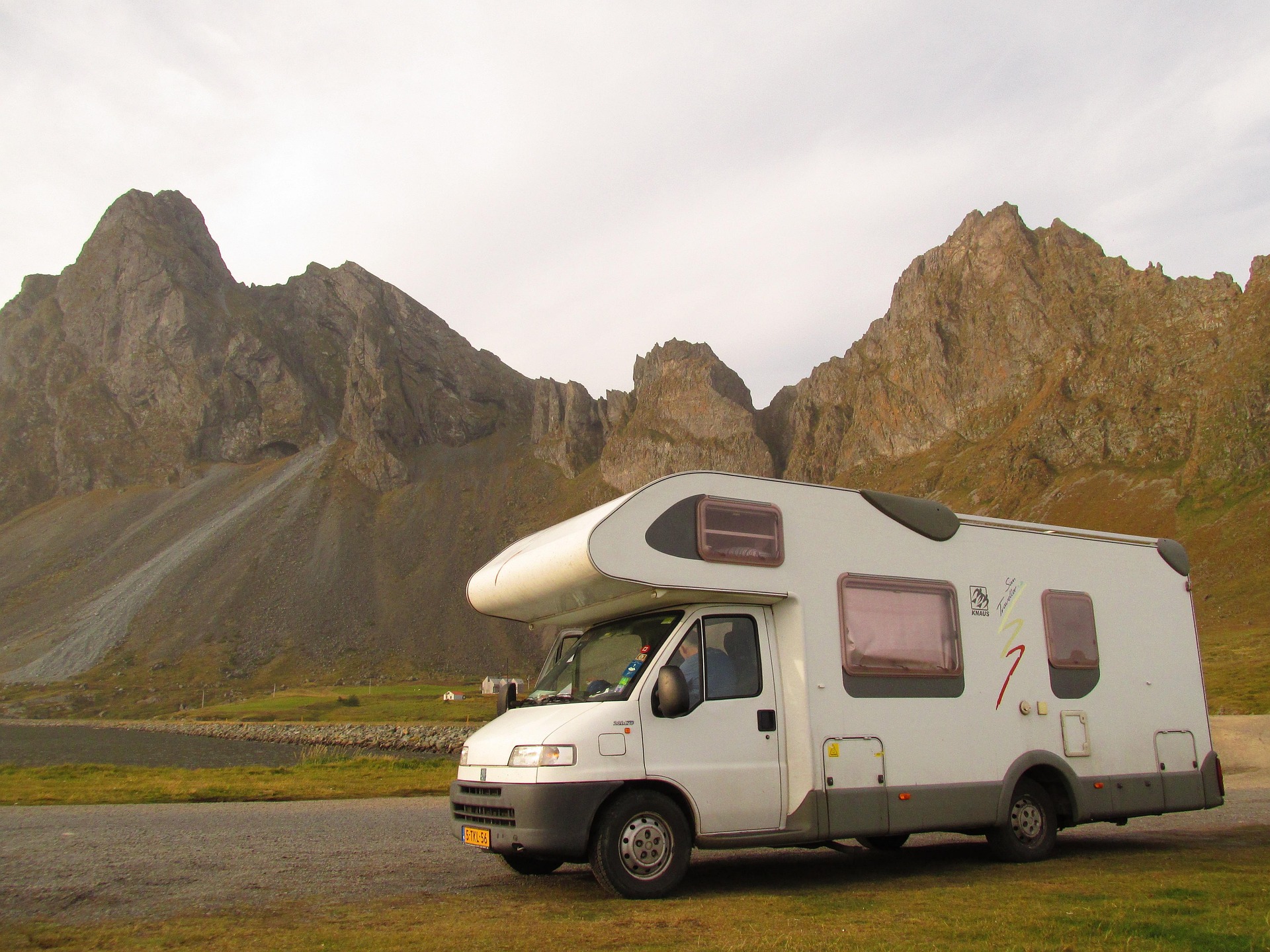
Every Norway campervan rental comes with a baseline Collision Damage Waiver (CDW) that still leaves you liable for an excess typically somewhere in the €1,000–€3,000 range if something goes wrong. Norway’s own specific risk isn’t gravel or ash the way Iceland’s is — it’s narrow single-track mountain roads, tight passing places, and low tunnel clearances, which is why mirror and roof/height damage come up so often in Norwegian rental claims. Your credit card’s travel insurance almost certainly does not treat a campervan the same way it treats a normal hire car, so it’s worth checking before you rely on it.
Joona has driven Norway’s fjord roads more times than he can count, and the one part of the whole rental process that trips up first-timers isn’t the driving itself — it’s standing at the counter being talked through three or four insurance tiers in about ninety seconds, each with a different excess number and a different list of what’s actually covered. Campervan rental insurance in Norway isn’t complicated once someone walks you through it properly. It just rarely gets explained properly at the counter, where the incentive is to upsell rather than clarify.
So here’s the plain version: what’s included as standard, what the excess number really means, why Norway’s narrow roads and tunnels matter more here than almost anywhere else in Europe, and whether your credit card is quietly already covering some of this (it usually isn’t).
What Insurance Actually Comes With the Rental
Every legitimate campervan rental in Norway includes a baseline Collision Damage Waiver by law — you can’t drive off the lot with zero cover at all. In practice, that baseline CDW means you’re covered for damage to the vehicle, but only above a certain threshold called the excess: below it, you pay; above it, the insurance pays. The size of that excess, and exactly which categories of damage it applies to, is where the real differences between rental companies and cover tiers show up.
Baseline CDW typically does not cover damage from single-track roads and passing places, tunnel height strikes, tyre damage, undercarriage damage, or glass chips from gravel forest roads. None of these exclusions are a trick — they reflect genuinely common ways campervans get damaged on Norwegian roads, which is exactly why separate add-on protections exist for them.
Understanding the Excess (CDW) Number
The excess is simply the maximum amount you’d be liable for if the vehicle is damaged and it’s your fault, or the cause is unclear. Across Norway campervan rentals generally, standard CDW excess tends to sit somewhere in the €1,500–€3,000 range, with a mid-tier upgrade commonly bringing that down to around €750–€1,000, and a top-tier zero-excess option removing it almost entirely for covered damage. Exact figures vary by rental company and vehicle class, so treat these as typical ranges rather than a quote for any specific operator.
This is the number that actually matters when comparing insurance tiers — not the daily add-on price on its own, but that daily price weighed against how much it lowers your worst-case liability. A few extra euros a day to drop your exposure from €3,000 to €1,000 is usually sensible for a first-time Norway renter; whether it’s worth going all the way to zero-excess is more a personal risk-tolerance question.
Norway’s Real Risk: Narrow Roads, Tunnels and Passing Places
This is the part that genuinely surprises first-time renters more than anything insurance-related in Iceland or the Alps. A lot of Norway’s most scenic fjord roads are single-track with passing places (møteplass) spaced out along the route — meeting oncoming traffic, especially another campervan or a bus, on a narrow bend is a completely ordinary part of driving here, not a rare event. Wing mirror clips and paint scrapes from squeezing past oncoming vehicles are one of the most commonly reported minor damage claims for campervan rentals in Norway.
Tunnels are the other Norway-specific risk worth knowing about before you drive off the lot: the country has thousands of them, heights and widths vary a lot between older and newer tunnels, and a taller motorhome can genuinely clip a roof vent or aerial on an older, lower tunnel if you haven’t checked the vehicle’s exact height against the route. Always confirm your rental’s precise height in centimetres, not just “should be fine,” before committing to a route with older tunnels.
💡 Our campervan tip: prices for the same van vary a lot between rental brands. We compare Norway campervans across 160+ rental companies on CampervanPlanet — and code HUNGRYTRAVELFAMILY5 takes 5% off.
Gravel and Glass Protection
Norway isn’t Iceland’s black-sand-and-ash environment, but it does have plenty of gravel and part-paved rural roads, especially once you get off the main E-roads and onto routes to trailheads, smaller fjord villages, or forest cabins. Loose stones thrown up on these stretches are a real, if less dramatic, cause of chipped windscreens and paint damage, and baseline CDW generally excludes this category the same way it does everywhere else.
If your route includes gravel side-roads — which is common if you’re chasing a specific trailhead or a quieter fjord viewpoint — ask specifically whether Gravel or Glass Protection is included in your tier, rather than assuming the standard CDW has you covered for a stone chip.
Does Your Credit Card Already Cover This?
Probably not, and this is the myth worth clearing up before you decline the rental company’s own cover assuming your card already has you sorted. A lot of premium travel credit cards do include rental car excess cover as a cardholder benefit — but the fine print on many of these policies specifically excludes recreational vehicles, motorhomes, and campervans, treating them as a different vehicle class from a standard hire car.
Even where a card’s policy technically extends to campervans, it very often still excludes exactly the categories that matter most in Norway: single-track road damage, tunnel height strikes, tyres, the roof, and the undercarriage. Before you rely on card cover instead of the rental company’s own protection, actually read your card’s policy document for the word ‘motorhome’ or ‘campervan’ specifically — don’t assume general rental car cover extends to it.
Zero-Excess and Premium Packages: Worth the Extra Cost?
A genuine zero-excess package removes your liability almost entirely for covered damage categories, usually bundling CDW, Gravel/Glass Protection and sometimes a dedicated tunnel/mirror cover into one all-in daily rate. For a longer trip through the fjords, or if you’d simply rather not think about it again once you’ve driven off the lot, this is often the simplest option, even though it costs more per day than building up cover piece by piece.
Whatever tier you choose, it’s still worth comparing across rental brands rather than accepting whatever the counter offers on the day — insurance structure and pricing varies more between Norway rental companies than people expect, which is exactly the kind of comparison a site like CampervanPlanet is built for, and reader code HUNGRYTRAVELFAMILY5 takes 5% off whichever campervan you book through them.
Practical Tips Before You Sign Anything
Ask specifically what the excess amount is for each tier offered, not just the daily add-on price — two companies quoting similar daily rates can have very different worst-case numbers behind them. Photograph the entire vehicle, inside and out, including existing scratches, chips and the exact roof height sticker if there is one, before you drive away, with timestamps visible if possible; this is your evidence if there’s ever a dispute at drop-off.
If your route includes older, low-clearance tunnels or a lot of single-track fjord road, ask the rental company directly whether their policy has any specific exclusion or excess adjustment for tunnel strikes or passing-place scrapes — it’s a fair question and a good one for gauging how experienced a company is with Norway specifically. And build the insurance cost into your comparison from the start rather than as an afterthought: when you compare campervan prices for Norway across multiple companies, the cheapest daily rate isn’t always the cheapest total once insurance tiers are factored in properly.
We’ve written more generally about what we’d tell you before you sign anything on your first Norway campervan rental, which covers the wider contract beyond just insurance, and separately about renting a campervan in Norway in winter, since winter tyre requirements and road conditions change some of this calculus between October and April. Both are worth reading alongside this if you’re still deciding what to book.
Insurance is one line item in a bigger decision, and it’s worth getting right before you’re standing at the counter under time pressure. When you’re ready to actually compare campervan prices for Norway across dozens of companies in one place, code HUNGRYTRAVELFAMILY5 takes 5% off, and our campervan rental guide covers the rest of the road-trip planning if you’re just getting started.
Book your Norway campervan
Compare prices across 160+ campervan and motorhome rental brands, get a free 1GB eSIM with every booking — and 5% off with code HUNGRYTRAVELFAMILY5.
Check prices & availability →Frequently asked questions
What is a typical CDW excess for a Norway campervan rental?
Standard CDW excess generally falls somewhere in the €1,500–€3,000 range, with mid-tier upgrades often bringing it down to around €750–€1,000, and zero-excess packages removing it almost entirely for covered damage. Exact figures vary by company and vehicle class.
What’s the biggest insurance risk specific to driving a campervan in Norway?
Narrow single-track fjord roads with passing places, and low-clearance tunnels. Wing mirror clips, paint scrapes from passing oncoming traffic, and roof strikes in older tunnels are among the most commonly reported minor damage claims for Norway campervan rentals.
Does my credit card cover campervan rental insurance in Norway?
Often not fully. Many card travel benefits exclude motorhomes and campervans from rental car cover altogether, and even policies that do include them frequently exclude tunnel, single-track and tyre damage specifically. Check your card’s actual policy wording rather than assuming.
Is gravel or glass protection worth adding for a Norway trip?
If your route includes gravel side-roads to trailheads, smaller fjord villages or forest cabins, yes — baseline CDW usually excludes stone-chip damage to glass and paint the same way it does everywhere else.
Should I get zero-excess insurance for a short Norway trip?
It depends on your risk tolerance and route. For a short trip mostly on main E-roads, a mid-tier excess reduction is often enough for many travellers; for longer trips with a lot of single-track fjord driving or older tunnels, zero-excess can be worth the extra daily cost for peace of mind.
Does HUNGRYTRAVELFAMILY5 work on Norway campervan bookings?
Yes — the code applies to campervan bookings in Norway and across the Nordics, taking 5% off through our CampervanPlanet link.