The Best Apps for Travel in Europe This Summer
(Our Couples’ Picks for 2026)
We’ve crossed 25 countries together — from Iceland to Singapore, Lapland to Greece. These are the apps we actually open on every trip, not just the ones everyone keeps listing.
In this guide
- Navigation & offline maps: finding your way without data stress
- Transport & booking: trains, buses, and ferries across borders
- Our complete Europe travel app stack (quick-reference list)
- Money & payments: spending smarter across currencies
- Language & communication: bridging the gap in 25 countries
- Mistakes we made before we found the right apps
- Frequently asked questions
- A final word from Rovaniemi
Navigation & offline maps: finding your way without data stress
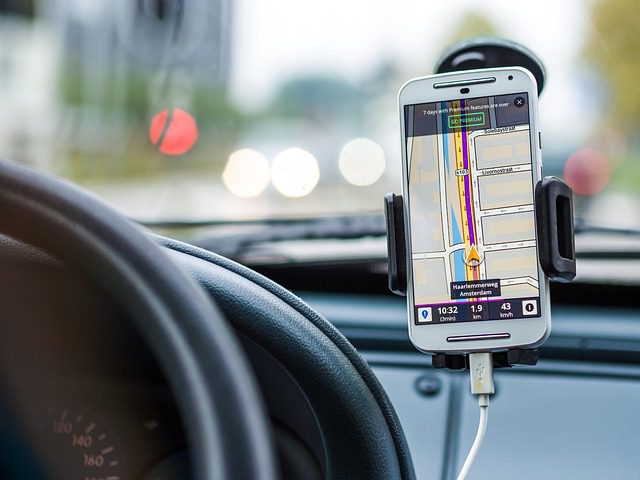
The single most stressful moment on any European trip is standing in an unfamiliar train station or a medieval town square with no data signal and a dead-end in your mapping app. We’ve been there — in Tallinn when our SIM card gave up, in Iceland’s Westfjords where roaming simply didn’t exist, and deep in the Polish countryside between Kraków and Gdańsk. The fix is always the same: download offline maps before you leave the apartment.
Google Maps — the baseline you can’t skip
We’ve tried to replace Google Maps at least three times. We can’t. The combination of walking directions, real-time transit, business reviews, and offline area downloads is just too good. Download the offline map for every country before you arrive — go to the search bar, type the country or city name, tap the three dots, and hit “Download.” A full country like Finland or Iceland is around 400–700 MB. Worth every megabyte.
- Best for: Walking, driving, transit in any city. The restaurant and café discovery within it is genuinely good for first impressions.
- Limitation: Offline transit schedules are hit-or-miss. For buses and trains, you still need a connection to get real-time departures.
Maps.me or OsmAnd — for the places Google doesn’t know
On the Karhunkierros trail in Oulanka National Park, on gravel roads in the Faroe Islands, and on hiking paths in Norway’s Lofoten, Google Maps has either no trail data or wildly wrong routing. Maps.me (free, OpenStreetMap-based) is our backup for rural and hiking routes — the trail detail is remarkable for a free app. OsmAnd is more powerful for serious hikers who want elevation profiles and GPX track imports. We keep both installed from May to September.
- Maps.me: simple offline download, excellent for small towns and trails across Scandinavia and the Baltics
- OsmAnd: better for detailed hiking, cycling routes, and GPX files if you’re planning multi-day treks
- Both: fully offline, no data needed once downloaded
Transport & booking: trains, buses, and ferries across borders
Europe’s train network is extraordinary once you understand how to book it. The problem is that each country tends to have its own rail system — DB for Germany, SNCF for France, VR for Finland, SJ for Sweden, NSB for Norway — and piecing together a multi-country route using separate apps is a recipe for confusion. These are the apps that simplify it.
Omio — the cross-border transport aggregator we actually trust
Omio pulls trains, buses, and (in some cases) ferries from most of Europe’s major transport operators into one search. For a trip like Tallinn → Riga → Warsaw → Kraków, it would take you four separate booking platforms. Omio does it in one. It’s not always the cheapest — sometimes booking direct with the national rail operator saves a few euros — but for route discovery and first-time planning it’s invaluable. We use it to understand what’s even possible, then sometimes shift to direct booking for the final ticket.
Trainline — especially useful for Western Europe
If your trip is focused on France, Spain, the UK, Italy, or Benelux, Trainline is slightly stronger than Omio for rail specifically. We prefer it for Paris–Brussels–Amsterdam runs and anything involving Eurostar or Thalys. The split-ticketing suggestions for UK rail (booking two separate tickets on the same train to save money) can occasionally surface genuine savings.
FlixBus — the budget option hiding in plain sight
For shorter legs between mid-sized cities — think Rotterdam to Ghent, or Kraków to Warsaw — FlixBus often beats the train on price and sometimes on schedule. We used it five times in the Netherlands and Belgium last summer and found it reliable. Not glamorous. But it runs on time, costs almost nothing, and the app books in under two minutes.
Wunderflats & Booking.com — for accommodation
We use Booking.com for almost all hotel and apartment stays in Europe — the cancellation policies are usually more flexible than Airbnb, and the review volume is high enough to trust. Wunderflats is useful specifically for longer stays (a week or more in a city) where you want an apartment with a kitchen.
Our complete Europe travel app stack (quick-reference list)
Here is every app we have installed before a European summer trip, broken into the categories we actually think in. This is the list we send to friends when they ask what to download.
Our Europe travel app stack — 2026
- Navigation: Google Maps (offline), Maps.me or OsmAnd (trails & rural)
- Transport booking: Omio (cross-border), Trainline (Western Europe rail), FlixBus (budget buses)
- Money: Revolut (card & currency exchange), Wise (international transfers if needed)
- Connectivity: Airalo or Holafly (eSIM for data) — we covered this in depth in our best eSIM for Europe guide
- AI trip planning: ChatGPT or Claude (itinerary drafts, local tips, restaurant ideas in unfamiliar cities)
- Weather: Yr.no (the Norwegian meteorology app — far superior to Google Weather for Nordic countries and coastal areas, completely free)
- Language: Google Translate with offline packs downloaded (camera translate is genuinely useful for menus), Duolingo for learning key phrases in advance
- Accommodation: Booking.com (hotels & apartments), Hostelworld (if travelling budget or meeting people)
Money & payments: spending smarter across currencies
This is the section that will save you the most actual euros. Currency fees and ATM charges are the invisible tax on European travel that most people don’t bother to optimize until they’ve already lost a hundred euros to bad rates.
- Revolut: This is our primary travel card across all 25 countries. The standard free account gives you fee-free exchange on weekdays up to a monthly limit that covers most trips. Open it at least a week before you leave — verification can take time. Keep a backup card in a different wallet.
- Wise (formerly TransferWise): We use Wise primarily for sending money home or receiving payments while travelling. The exchange rate is the real mid-market rate and the fees are transparent. For day-to-day spending, Revolut is simpler — but Wise is more reliable for larger amounts or transfers to a Finnish bank account.
- Avoid: Monzo is mostly useful for UK-based travellers. PayPal for currency conversion is expensive. Airport exchange booths are almost always a bad deal — the “zero commission” sign means they make it on the spread.
- Tip: In the Baltics (Latvia, Estonia, Lithuania), card acceptance is near-universal and even better than in Finland. In parts of Poland and Greece, small vendors still prefer cash — carry 50–100 euros in small notes.
Language & communication: bridging the gap in 25 countries
We’ve communicated in English, Finnish, Russian, and a lot of enthusiastic pointing across 25 countries. The apps that have genuinely helped:
- Google Translate with offline packs: The camera translation feature — point your phone at a sign or menu and see it translated in real time — is the single most useful travel feature invented in the last decade. Download the offline language pack for every country you’re visiting before you leave.
- DeepL: For longer texts where nuance matters — a rental agreement, a message from a host, a medical label — DeepL is more accurate than Google Translate for European language pairs. Use it when the translation matters.
- WhatsApp: Still the dominant messaging app in most of Europe (except Finland, where we mostly use WhatsApp anyway for international contacts). Works on any data connection, and the voice message feature is handy when you don’t want to type.
- Duolingo: We’re not going to claim we’ve become fluent in Norwegian or Greek from Duolingo — but learning ten phrases before a trip changes how locals treat you. Even in countries where English is widely spoken (Netherlands, Scandinavia), a hello and thank you in the local language opens doors.
- AI assistants (ChatGPT or Claude): For “what does this local dish actually contain” or “write me a polite message in Polish explaining I’m running late,” a good AI assistant on your phone is faster than any phrase book. We’ve used this in Latvia, Greece, and Portugal to a genuinely useful effect.
Mistakes we made before we found the right apps
- Relying on roaming data for Google Maps in Iceland. In 2022, we drove the Ring Road with no offline maps downloaded. The stretch between Höfn and Egilsstaðir had no coverage for hours. We navigated by road sign. Download the offline maps — always.
- Using our bank card for currency exchange at airports. Our Finnish bank charges 1.5% on foreign transactions and a flat fee per ATM withdrawal abroad. On a two-week Nordic trip across five countries, those charges added up to over €60. Revolut fixed this completely.
- Booking trains too late in peak summer. In France and Italy, high-speed trains sell out weeks in advance. We once had to take a three-hour slower regional train from Paris to Lyon because we waited until two days before to book. Set a reminder: as soon as your accommodation is confirmed, book the trains.
- Trusting weather apps that were wrong about coastal Norway. The forecast said sunshine. Lofoten said rain. The Norwegian meteorology app Yr.no is calibrated for coastal Arctic weather in a way that general apps like Weather.com simply are not. Use the local tool.
- Not downloading Google Translate language packs offline. We got caught without mobile data in rural Poland and couldn’t translate a sign at a road junction. The offline pack for Polish is 60 MB. Download them all.
- Using Airbnb out of habit without comparing Booking.com. For apartments in Europe, Booking.com’s cancellation policies are generally more flexible and the pricing is often comparable or lower. We now check both but lean toward Booking.com for flexibility.
Frequently asked questions
What is the single most important app for travelling in Europe?
Google Maps with offline regions downloaded. Everything else is a tier below — navigation is the thing that affects every hour of your trip, not just the booking phase. Download the offline map for every country before you land.
Do I need a travel money app or can I just use my normal bank card?
Depends on your bank. If your normal card charges foreign transaction fees (most do), a Revolut card will save you a meaningful amount across a two-week European trip. The setup takes ten minutes. It is one of the simplest upgrades you can make.
Is Omio better than booking directly with each rail company?
For route discovery and multi-country trips, yes — Omio is faster. For pure price, direct booking is sometimes cheaper and avoids Omio’s service fee. We use Omio to figure out the route, then sometimes shift to direct booking for the final purchase.
What’s the best weather app for Nordic travel specifically?
Yr.no, built by the Norwegian Meteorological Institute. It is calibrated for coastal and Arctic Nordic weather in a way that generic weather apps are not. It’s free and works for all Nordic countries. We have used it for years from our base in Rovaniemi.
Do I need a VPN app for Europe?
Not strictly necessary for most European travel — the region has strong data protection laws and public WiFi in hotels is generally safer than in other parts of the world. We use a VPN occasionally when banking on hotel WiFi, but it is not high on our priority list for a Europe summer trip the way it would be for South East Asia.
Which AI travel app is actually the most useful on the ground?
For real-time, in-the-moment questions — “what’s a good lunch near the Alhambra that isn’t a tourist trap” or “translate this menu item and tell me if I’ll like it” — ChatGPT and Claude are genuinely useful. We have a whole guide on using ChatGPT for trip planning if you want the detail.
A final word from Rovaniemi
We do not travel with a lot of gear. Two carry-on bags, one phone each, and a short list of apps we actually trust. After 25 countries together, the pattern is clear: the apps that make the most difference are the boring ones. Offline maps. A card that doesn’t charge fees. A transport aggregator for cross-border legs. A weather app that understands the climate you’re actually in.
The exciting travel apps — the ones that claim to “transform your trip” — tend to fizzle out by day three. The boring ones you forget are even running are the ones doing the real work.
This summer, wherever you’re heading in Europe: download the offline maps tonight, set up Revolut before you fly, and book your trains earlier than feels necessary. The rest is just travelling.
— Joona & Alla, writing from Rovaniemi, Finnish Lapland
Keep your crypto offline, not in an exchange app
Any crypto we hold lives on a Trezor hardware wallet — a small offline device in a drawer in Rovaniemi, not on a phone that crosses borders every month. If you’ve been meaning to sort that out, this is the link we’d send a friend.