Saving Money in Norway: Real Strategies
Norway is the country that breaks travel budgets without apology. We’ve crossed the border from Rovaniemi more times than we can count and spent years refining the strategies that actually work — not the generic advice, the real ones from the road.
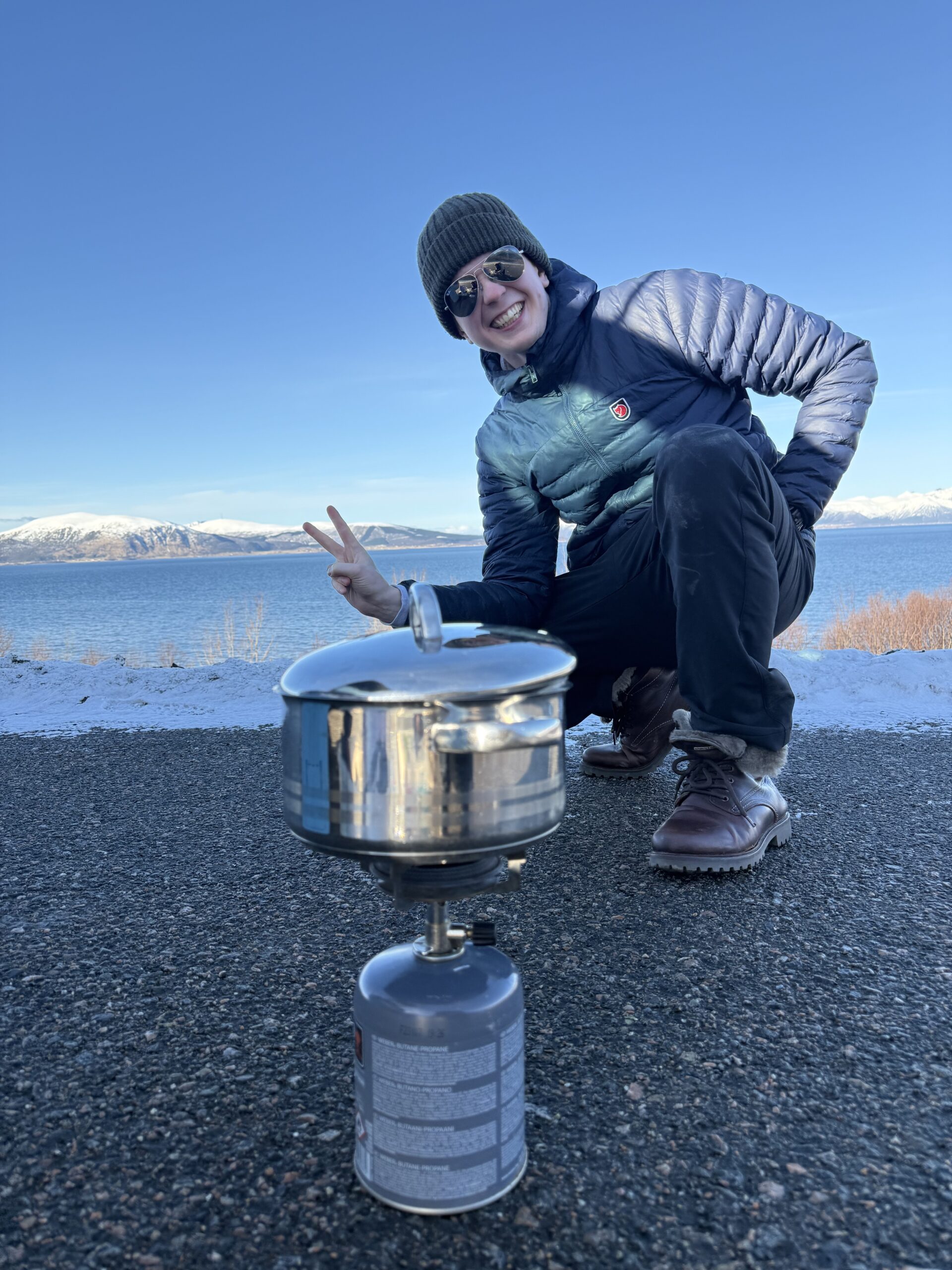
We live in Rovaniemi, which means Norway is practically our backyard. We can drive to the Norwegian border in under two hours, and we’ve done it in every season — summer midnight sun, autumn colours, January darkness, spring slush. That frequency of crossing has turned us into accidental experts on one particular subject: how to save money in Norway without pretending you’re a monk.
This guide is not the usual list of obvious tips. It’s the strategies we actually use, tested across multiple trips, some of which we learned the hard way. If you’ve already read the generic “cook your own food” advice, keep going — the specific tactics are where the savings actually live.
To save money in Norway, focus on three pillars: sleep free using Allemannsretten, buy groceries at Rema 1000 or Kiwi and cook almost everything, and plan your route to minimise toll roads and unnecessary ferry crossings. These three changes alone can cut a Norway trip budget by 40–60% compared to the hotel-and-restaurant default — the fjords and hikes remain completely free.
Where Norway actually takes your money
Before you can save money in Norway, it helps to know where it goes. Not all categories are equally painful — and some things that sound expensive actually aren’t. We’ve broken down our spending across multiple trips and the same pattern appears every time.
The categories that genuinely hurt
- Accommodation: A budget private room in a hostel starts around €40 per person. A simple cabin (hytte) is €100–180 per night. A mid-range hotel is €160–250. This is where Norway’s reputation for expense is entirely earned.
- Eating out: A sit-down restaurant dinner for two with drinks rarely lands below €90, and often reaches €130. Even a casual pizza or burger place charges what a mid-range restaurant would cost in Helsinki or Amsterdam.
- Alcohol at bars and restaurants: A pint of local beer runs €9–13. Wine at a restaurant is €70–100 for a bottle. There is no getting around this — alcohol in Norway is among the most expensive in Europe.
- Toll roads: Norway’s AutoPASS network is seamless and invisible until the bill arrives. Driving around Bergen or through major tunnels adds up to €10–25 per day without you noticing.
- Ferry crossings: A car plus two adults on a major fjord ferry costs €25–65 per crossing. Some scenic routes involve three or four ferries.
What costs less than you’d expect
- Hiking and nature: Every trail, national park, viewpoint, and waterfall is completely free. Preikestolen, Trolltunga, the Lofoten ridge walks — zero cost.
- Grocery shopping: Budget supermarkets are genuinely reasonable. A full day’s food for two people costs €18–28 at Rema 1000 or Kiwi.
- Petrol: High per litre, but distances between Norway’s highlights are shorter than they look on a map. A fjord road section might be 60km total.
- Museums and culture: Many excellent Norwegian museums are free or low-cost, particularly in smaller towns and national park visitor centres.
Free accommodation strategies that work
Accommodation is the single biggest expense variable in Norway. If you can eliminate or drastically reduce it, everything else becomes manageable. Here are the approaches we’ve tested personally.
Allemannsretten — Everyman’s Right
Norway’s Allemannsretten law gives everyone the right to camp on uncultivated land for up to two nights, for free. The rules are straightforward: stay at least 150 metres from the nearest dwelling, leave no trace, and move on after two nights or ask the landowner’s permission. This is the single most powerful budget tool available in Norway. We have slept in fjord valleys, on Lofoten headlands, beside glacier lakes, and on mountain ridges at zero cost. The scenery from our free camping spots has routinely beaten anything a paid campsite offered.
Budget campsite strategy
For nights when you need a shower, electrical hookup, or you’re in a location where wild camping spots are limited — popular viewpoints, urban areas — Norwegian NAF-affiliated campsites typically charge €25–40 for two adults with a car. Look for sites a short drive from the main attraction rather than directly at it. These are quieter, cheaper, and often better maintained.
Cabin sharing in shoulder season
If you want the hytte experience but not the high-season price, May and September bring genuine cabin bargains. We’ve found four-person hytte rentals at €65–90 per night that were €150+ in July. Split between two couples, that’s an excellent night’s sleep in a proper Norwegian cabin for less than a bad hostel in Oslo.
The Norway savings cheat sheet
These are the specific, actionable rules we follow every time we cross the border. Screenshot this section before you go:
- Fill your tank in Sweden or Finland before crossing. Petrol is consistently cheaper just before the Norwegian border. If entering from Finland via the E8 (our route from Rovaniemi), fill at the last Finnish station. The saving is €0.15–0.30 per litre, which adds up over a two-week trip.
- Shop at Rema 1000 or Kiwi, never 7-Eleven. The budget chains stock identical quality products at dramatically lower prices. A sandwich at 7-Eleven costs €6–8; the same ingredients at Rema 1000 cost €1.50. Do not buy food at petrol stations or convenience shops unless it is a genuine emergency.
- Buy wine and spirits at Vinmonopolet before Saturday afternoon. The state alcohol shops are closed Sundays and shut at 15:00 on Saturdays. Missing this window means paying triple the price at a restaurant or going without. Plan your alcohol purchase on Friday evening or Saturday morning.
- Avoid toll road city centres. Oslo, Bergen, Stavanger, and Trondheim all have toll cordons. If you’re passing through rather than stopping, route around the cordon. Saves €15–25 per city.
- Use iOverlander or Park4Night for wild camping spots. Both apps have user-verified free camping locations across Norway with ground condition notes. Don’t guess — use data that other travellers have already tested.
- Eat your main restaurant meal at lunch, not dinner. Dagens rett (today’s special) at Norwegian cafes runs €14–19 including a drink. The identical dish at dinner is €28–38. If you want to eat out, do it at midday.
- Carry a water filter or Nalgene. Norwegian tap water and wild water is excellent and safe. Eliminating bottled water saves €3–6 per day per person — more than €80 on a two-week trip for two.
- Book major ferry crossings in advance. The Bodø–Moskenes (Lofoten), Stavanger–Tau, and E39 fjord crossings sell out in summer. Pre-booking also sometimes unlocks small fare discounts. Missing a crossing can mean a 4–5 hour wait at peak season.
Get our honest travel notes
Real budgets, firsthand routes, and the things we wish we’d known — straight from Finnish Lapland to your inbox.
Cutting the food and drink bill
Food is where the budget either holds or collapses in Norway. The restaurants are excellent and the temptation is constant — fresh Arctic fish, incredible bakeries, local game. But eating out every day in Norway is simply not compatible with a reasonable budget. Here’s how we handle it without feeling deprived.
- Treat eating out as an event, not a habit. We budget for one proper restaurant meal every three or four days. Everything else is camp cooking or packed lunches. This framing makes the restaurant nights genuinely special rather than just another overspend.
- Norwegian brown cheese (brunost) is your friend. Cheap, high-calorie, genuinely delicious on rye bread. A block costs €3–4 and lasts three days as a breakfast and lunch staple. It’s also unavailable outside Scandinavia, so eating it is culturally appropriate budget travel.
- Harbour fish vendors beat restaurants for seafood. At Lofoten fishing villages and Bergen’s harbour, you can buy fresh or smoked fish directly from the catch for €8–15 for a generous portion. Cook it at camp. This is often the best meal of the trip.
- Buy alcohol at Vinmonopolet, not restaurants. A bottle of drinkable wine at the state shop is €12–20. At a restaurant, the same bottle is €70–100. We bring wine for camp evenings; we drink local beer once at a bar as a genuine experience.
- Norwegian bakeries for pastries. Kanelsnurr (cinnamon rolls), skillingsboller, and local pastries cost €2–4 and are genuinely excellent. Budget for one or two bakery stops per day — this is cheap joy and deeply local.
💡 Our campervan tip: prices for the same van vary a lot between rental brands. We compare Norway campervans across 160+ rental companies on CampervanPlanet — and code HUNGRYTRAVELFAMILY5 takes 5% off.
Managing transport costs
Getting around Norway costs money regardless of your approach, but the range is wide. A couple driving their own car with a good toll strategy can spend €20–35 per day on transport. The same couple using taxis and spontaneous ferry crossings can spend €80–120. The gap is strategy, not luck.
- Own car beats rental car for extended trips. Rental campervans are €130–200 per day in Norwegian summer. If you already have a vehicle and can drive it from home, the maths changes dramatically. We always use our own car from Rovaniemi.
- Plan your toll route before you drive it. Google Maps routes you through tolls by default because it optimises for time. Adjust the route manually or use an offline map to find toll-free alternatives, especially around major cities.
- Time ferry crossings for off-peak departures. Some Norwegian ferries charge more during peak hours or peak season. Checking the Fjord1 or Norled schedules for price differentials before setting your daily route can save €10–20 per crossing.
- The Bergensbanen (Bergen Railway) is exceptional value. If your trip includes Oslo to Bergen, the train costs €25–45 per person booked in advance and is one of Europe’s great rail journeys. It competes directly with driving for cost while eliminating tolls and parking stress entirely.
- Register your rental car with AutoPASS before you drive. Foreign-registered rental cars that pass through Norwegian toll stations get invoiced automatically. The invoicing company adds a service fee. If you rent in Norway, confirm whether AutoPASS is already included or register at autopass.no before you hit the first toll.
Free and cheap things worth doing
Norway’s best experiences cost nothing, and this is not a consolation — it’s genuinely true. The comparison between what you pay for and what you get free here is more skewed in the traveller’s favour than almost anywhere else in Europe.
- Every major hike is free. Trolltunga, Preikestolen, Kjeragbolten, the Lofoten ridge hikes, Besseggen — no entry fee, no booking required outside peak season. The scenery is world-class and the only cost is your legs.
- Wild swimming in fjords and lakes. Norwegian water is cold and clean and you can swim anywhere under Allemannsretten. This is an experience that resorts charge hundreds for. Here it’s just what you do.
- National Scenic Routes viewpoints. Norway has 18 designated National Scenic Routes, each with architect-designed viewpoints and rest areas built by the government. They are free, stunning, and often more architecturally interesting than any museum.
- Regional folk museums. Maihaugen in Lillehammer, the coastal museums in Bodø, and smaller regional collections have free or low-cost entry and genuine cultural depth.
- Midnight sun (no ticket required). If you’re above the Arctic Circle between late May and mid-July, you have 24-hour daylight. The sun at midnight over a fjord or Lofoten peak is the most extraordinary natural experience Norway offers. It costs exactly nothing.
- Shore fishing from the coast. Norway allows free sea fishing from shore for tourists without a licence. Bring a simple rod and fish from any coastal point. In Lofoten especially, cod and coalfish are genuinely catchable, and eating what you caught is one of the better travel experiences available at zero cost.
Mistakes that cost us more than expected
- Assuming Oslo would be quick to pass through. Oslo’s toll cordon caught us on our first Norway trip — multiple charges for routes we didn’t realise were tolled. Now we route the bypass road south of the city if we’re not stopping. Budget 30 extra minutes but save €20–30.
- Buying expensive gear in Norway. Norwegian outdoor stores (Bergans, Norrøna, XXL) are excellent but expensive. We once bought a replacement rain jacket in Bergen that cost 40% more than the same jacket would have in Finland or Germany. Buy all gear before you cross the border.
- Eating at tourist-area restaurants two days running. Restaurants at popular scenic spots — Geiranger village, Flåm, Eidfjord — charge a premium because they can. We now treat these as once-per-trip experiences and cook the other days. One excellent meal in Flåm is a memory; four mediocre ones at Flåm prices is just regret.
- Not checking if a tunnel has a toll. Norway has some of the world’s longest subsea tunnels and most of them are tolled. The Ryfast tunnel costs €10–15 each way for a car. We’ve been surprised by tunnel tolls twice. Now we check the Norwegian Tollroad Authority maps before planning any tunnel-heavy route.
- Forgetting to book the coastal ferry stops in advance. If you want to join the coastal express at a specific port, popular summer departures book out weeks ahead. Treat any scheduled Norwegian maritime experience like a flight — book early.
- Wild camping without checking fire rules. Open fires are banned in Norway from 15 April to 15 September. We brought firewood on our first summer trip, fully planning evening campfires, only to read the signs and realise the whole plan was illegal. A camping stove was the fix — but it cost us a shopping detour and some mild embarrassment.
FAQ: saving money in Norway
What is the cheapest way to sleep in Norway?
Wild camping under Allemannsretten — Norway’s Everyman’s Right law. You can pitch a tent or sleep in a vehicle on any uncultivated land for up to two nights, for free, as long as you stay 150 metres from the nearest dwelling. This is legally robust, widely practiced by locals and tourists, and produces the best views of any accommodation option in the country.
Which Norwegian supermarkets are cheapest?
Rema 1000, Kiwi, and Extra are the budget chains. All three offer quality comparable to more expensive alternatives at significantly lower prices. Avoid Coop Prix, ICA, and Meny for routine shopping — they’re positioned as mid-market. Never buy food at Narvesen, 7-Eleven, or petrol station shops if you have any alternative.
Is it worth getting a Norway toll pass as a tourist?
If you’re driving a foreign-registered vehicle, you don’t need a transponder — Norway’s system photographs your plates and invoices automatically. However, you can register your vehicle at autopass.no to receive direct invoices and avoid the surcharge that invoicing companies add. For a rental car in Norway, confirm whether AutoPASS is already included in your rental agreement before you drive.
Can you really save money on alcohol in Norway?
Yes, but only by buying from Vinmonopolet — the state-run alcohol shops. A bottle of decent wine is €12–20 there; the same bottle in a restaurant is €70–100. The catch: Vinmonopolet closes at 18:00 on weekdays, 15:00 on Saturdays, and is completely closed Sundays. Plan your purchases on Friday evening or Saturday morning, especially in smaller towns with only one location.
How much should I realistically budget per day to save money in Norway?
A couple using free camping and cooking most meals can bring daily spending to €55–75. That covers fuel and tolls, groceries for three meals, one or two coffees or bakery stops, and incidental costs. The variable that most controls this is accommodation — eliminate hotel nights entirely and Norway becomes a surprisingly affordable destination for what you receive.
Is Norway cheaper in spring or autumn than summer?
Significantly. May and September offer lower cabin prices (30–50% less than July), shorter ferry queues, fewer crowds at major viewpoints, and an overall more local experience. The midnight sun is gone, but you gain dramatic light conditions — long sunsets in May, autumn colour in September — that are arguably better for photography. The main trade-off is less predictable weather, particularly on the west coast.
A final word from Rovaniemi
Norway is not a destination for people who want to spend as little as possible on principle. It will cost money, and that’s fine — because the return on the money spent wisely here is extraordinary. What we’ve learned from years of crossing the border is that the spending split matters more than the total.
The couple who pays €180 for a Bergen hotel and eats out twice a day is having a more expensive Norway experience than the couple who pays nothing for a fjord-view campsite and €90 for a genuinely memorable dinner. The first couple spent more and had less. The second couple spent less and had more. That asymmetry is the whole game.
Every strategy in this guide exists to push spending toward the things that make Norway worth going to — the hikes, the light, the water, the occasional outstanding meal — and away from the things that don’t: convenience store sandwiches, toll roads through cities you’re not visiting, and hotel rooms with blacked-out fjord views.
If you’re driving up from Finland, you know where to find us for last-minute advice before the border.
Keep your crypto offline, not in an exchange app
Any crypto we hold lives on a Trezor hardware wallet — a small offline device in a drawer in Rovaniemi, not on a phone that crosses borders every month. If you’ve been meaning to sort that out, this is the link we’d send a friend.
Joona & Alla
A Finnish-Ukrainian couple living in Rovaniemi, Finland. Joona is a marketing professional in Lapland tourism; Alla is an AI Engineer. Together we’ve visited 25 countries and share honest, locally-grounded travel writing from our home in the Arctic.
Read our full story →