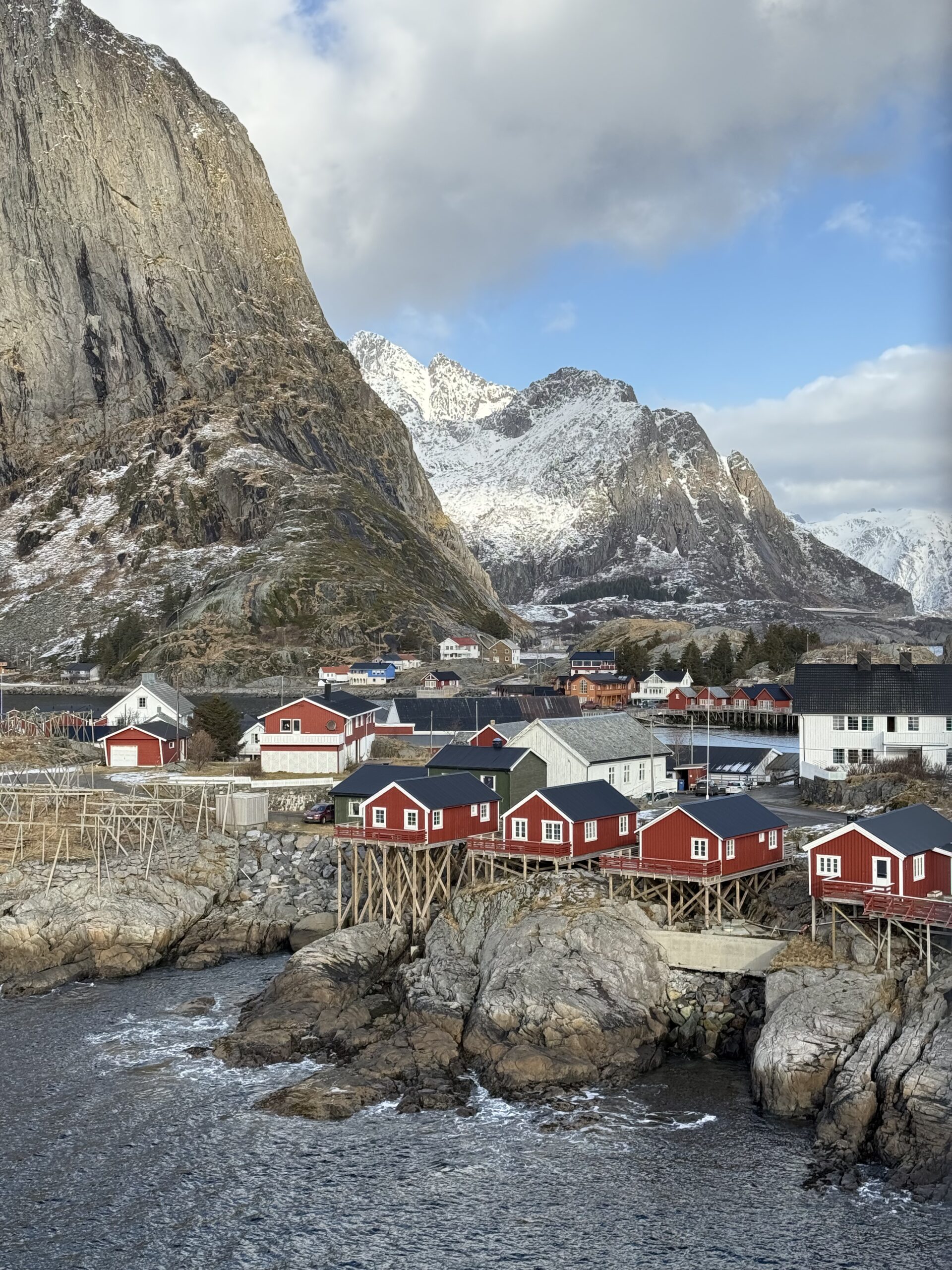
Norway has a reputation that scares parents. Expensive. Remote. Full of sheer mountain roads with no guardrails and ferries that run when they feel like it. We had heard all of this before our first drive up the Norwegian coast, and we want to be honest: some of it is true. But the version that says Norway is a bad destination for families with kids? That part is wrong.
We’ve done Norway in all its forms — fjords, coastal roads, island bridges, mountain passes, overnight ferries. And every time we go back, we’re struck by how well the country actually suits families. Here’s what we’ve learned.
Norway with kids is genuinely easier than most people expect. The country has excellent infrastructure, safe roads, short ferry crossings, clean rest stops, and scenery that makes children forget about screens for the first time in months. The main adjustments: plan more buffer time, book accommodation and popular ferries early in summer, and dress everyone in layers. Beyond that, Norway is surprisingly child-friendly.
Why Norway Actually Works for Families
Norway has thought carefully about what travelers with children need — probably because Norwegians themselves are serious outdoor people who take their kids everywhere from birth. The result is a country where the infrastructure fits family travel better than most places in Europe.
What makes Norway family-friendly in practice
- Clean rest stops everywhere. The Norwegian Public Roads Administration maintains laybys and rest areas with toilets, picnic tables, and often a viewing platform — spaced frequently enough that bathroom emergencies never become a crisis.
- Short ferry crossings break up long drives. Most Norwegian fjord ferries take 10–20 minutes. Kids love them. You park the car, walk to the upper deck, watch the water, and arrive somewhere new. It’s a free activity that resets everyone’s mood.
- Playgrounds at nearly every campsite and municipal park. Norwegian playgrounds tend to be genuinely good — wooden climbing structures, water features, and open space. Even a 20-minute stop genuinely tires small children out.
- Very low crime and near-zero stranger danger anxiety. Norway consistently ranks among the safest countries on earth. You can let children run ahead on a trail without the level of vigilance you’d need elsewhere.
- The scenery does the entertainment work. This sounds simple, but it matters: when the view from the car window involves a 1,000-metre waterfall or a fjord stretching to the horizon, children stop asking how much longer it is.
We’ve traveled with other families across the Nordics, and Norway is consistently the one that generates the least logistical stress. The hard part is getting there and the cost — not the daily reality of moving around with kids.
The honest caveats
- It’s expensive. Eating out regularly with a family is genuinely costly. Self-catering from supermarkets (Rema 1000, Coop Extra, Kiwi) is the move — most campsites and holiday cabins have basic kitchens.
- Mountain roads demand a confident driver. Some of the iconic roads — Trollstigen, Lysebotn — have switchbacks that are fine in a normal car but require calm, steady driving. If narrow roads stress you out, plan alternatives.
- Weather changes fast. A sunny morning at the fjord can turn into sideways rain by lunch. Pack accordingly for every member of the family.
Planning the Route and Logistics for Norway With Kids
The biggest adjustment for family travel in Norway is pace. What takes a couple two days to drive comfortably takes a family three. Build that in from the start and you’ll have a genuinely relaxed trip.
Route principles that actually work with kids
- Loop routes beat linear ones. A loop means you don’t have to retrace your steps, which eliminates the “we already saw this” energy on day five. The western fjords are ideal for a loop from Bergen or Ålesund.
- Stick to a maximum of 150–180 km of driving per day. Norwegian roads are slower than they look on the map. Fjord roads, ferries, and scenic stops mean 100 km can easily take two to three hours. Budget accordingly.
- Plan at least one “no-moving day” every three days. A day based in a cabin by a lake or fjord, where you hike a short trail, skip stones, eat lunch outside, and don’t drive anywhere — these are usually the days children remember most.
- Book cabins (hytter) over hotels when possible. Norway’s network of holiday cabins is extraordinary. A hytte with a kitchen, outdoor space, and a nearby lake beats a hotel room for families in almost every way. Sites like Booking.com and FINN.no list thousands of options.
Key logistics to sort before you leave
- AutoPASS: Norway’s toll roads are automatic. Register your foreign-registered car at autopass.no before you go, or risk a fine. There’s a tourist option specifically for visitors with short-term access.
- Ferry bookings in summer: The major fjord ferries (Eidsdal–Linge, Dragsvik–Vangsnes, Mannheller–Fodnes) book up quickly in July. Use rutebok.no or Fjord1.no to book ahead.
- Car seats: Norwegian law mirrors EU rules — children under 135 cm or 36 kg need a child restraint. If renting a car, book the seat in advance; availability is limited in high season.
Norway With Kids: The Essential Checklist
These are the eight things we’d tell every family before their first Norway trip — not the obvious stuff, but the things we wish someone had told us.
- Pack a rain cover for every age: Lightweight waterproof jackets and trousers for children are non-negotiable in Norway regardless of season. A wet child is an unhappy child, and unhappy children make Norwegian mountain passes feel much longer.
- Bring a travel kettle: Norwegian cabin kitchens often lack basic appliances or provide only a limited selection. A compact travel kettle covers hot drinks, instant oats, and warming up formula or food for smaller children.
- Download offline maps before you leave the city: Mobile signal disappears in fjord valleys and mountain passes. Google Maps offline or Maps.me covers Norway’s roads but you need to download the region before you lose signal.
- Stock the car with snacks at every Kiwi or Rema 1000: Grocery stores thin out in rural Norway. When you see one, fill up. Snacks in the car prevent the energy crashes that turn an ordinary mountain road into an argument.
- Build in at least one ferry crossing: Even if your route doesn’t require one, consider a short detour to catch a fjord ferry. The 15-minute ride across a glacier-carved fjord is often what children talk about most afterward.
- Keep a “Norway emergency fund” per day: Norway is expensive and kids generate unexpected costs — a broken zipper on a rain jacket, a museum entrance that wasn’t in the plan, a café stop because someone is tired and the next campsite is an hour away. Budget 30–50 euros per day as a buffer.
- Pack binoculars: Eagles, seals, porpoises, and reindeer appear regularly in Norwegian landscapes. Binoculars transform a quick roadside stop into a wildlife encounter that keeps children engaged for the next 40 km of driving.
- Check the road conditions app: Road.is (for Iceland) has a Norwegian equivalent — vegvesen.no. Check it each morning during mountain driving. Some passes have temporary closures after rain or early/late season snowfall.
Tips and Warnings for Family Road Trips in Norway
Norwegian mountain passes and popular scenic routes are empty before 9 am and crowded from midday. With kids who wake up early anyway, use the advantage. An early start on Trollstigen or Dalsnibba means you get the views without the coach buses.
Norway’s best family moments aren’t at the famous viewpoints — they’re at the unnamed waterfall 200 metres off the road, the rock pool full of crabs at low tide, the campsite with a fire pit by the water. Build unplanned time into each day specifically for these discoveries.
Moving every day is exhausting for children (and parents). Find a central cabin and use it as a base for day trips. You get the relaxation of staying put and the variety of exploring different directions — the fjord region around Flåm or the Sunnmøre Alps are ideal for this.
Mountain plateaus in Norway can be 10–15°C colder than the valley below. In summer this means a warm sunny morning in Bergen can turn into near-zero wind chill on the Hardangervidda plateau. Always have a full warm layer available for every family member, not just packed at the bottom of the boot.
Norwegian roads are maintained to a high standard, but some older mountain sections have very low or absent guardrails on the fjord side. This isn’t a reason to avoid them — millions of families drive these roads safely — but it does mean you don’t want distracted children climbing around the car on a mountain pass. Stop at a layby, then get out.
Norway’s 18 National Scenic Routes each have their own app content including rest stop information, points of interest, and offline maps. Even without signal, the app keeps working. It’s genuinely useful for navigating the scenic routes without missing what’s worth stopping for.
Best Regions in Norway for Families With Children
Not all of Norway is equally suited to family travel with young children. Some areas reward patience and wilderness skills; others are immediately engaging for all ages. Here’s how we’d break it down.
- The Western Fjords (Sognefjord, Hardangerfjord, Geirangerfjord): The classic Norway experience and genuinely brilliant for families. Multiple ferry crossings, short hikes to waterfall viewpoints, cabin accommodation right at the water’s edge. Best for: first-timers and children aged 4+.
- The Lofoten Islands: Dramatic and photogenic, with calm waters ideal for kayaking and fishing. The villages (Henningsvær, Reine, Nusfjord) are compact and safe for children to explore on foot. Best for: families with older children who can manage shorter hikes (5–10 km).
- The Oslo Fjord region: Underrated for families. Sandy beaches, island hopping by public ferry from Oslo, and the option to stay in a summer house by the water within 45 minutes of a major airport. Best for: families with very young children or those mixing city and nature.
- Jotunheimen and the mountain interior: Norway’s national park heartland. Excellent trails at all difficulty levels, reindeer sightings, and the kind of big open landscape children find genuinely impressive. Best for: active families, older children, and hiking-focused trips.
- Tromsø and Arctic Norway: Further north and more of a commitment to reach, but the midnight sun in summer gives children an experience that’s genuinely unlike anything else — playing outside at midnight in full daylight. Best for: summer trips with children old enough to appreciate the novelty (roughly 7+).
Norway vs Other Nordic Countries for Family Travel
We’ve traveled all the Nordics with this question in mind: where would we bring a family first? Here’s our honest comparison from the perspective of ease and value for family trips.
- Norway vs Finland: Finland is arguably easier logistically — distances are more manageable, prices are slightly lower, and the lake district is perfect for families who want a calm, slow-paced trip. Norway wins on dramatic scenery and the variety of experiences in a single week. For pure “wow factor” Norway is ahead; for a relaxed first Nordic trip with toddlers, Finland has the edge.
- Norway vs Sweden: Sweden has more child-specific infrastructure (theme parks, Astrid Lindgren’s World, better city playgrounds). Norway wins for nature-based adventure. If you’re looking for a mix of city and nature, Sweden; if the trip is primarily outdoor-based, Norway.
- Norway vs Denmark: Denmark is flatter, warmer in summer, and has excellent family attractions (LEGOLAND Billund, Copenhagen’s Tivoli). Norway is harder work but delivers more memorable landscape experiences. They’re doing different jobs — Denmark for a city + beach trip, Norway for a nature road trip.
- Norway vs Iceland: Iceland and Norway are the most comparable for dramatic nature, but Iceland is significantly more expensive and has less variety in accommodation for families. Norway’s cabin network is unmatched. For a first dramatic Nordic trip with children, Norway is the more accessible choice.
- Norway for teens vs young children: Both work, but teens tend to love Norway more immediately — the sense of scale and the more challenging activities (kayaking, hiking, via ferrata) suit them well. Younger children do fine in Norway but need more intentional “small moment” stops built into the itinerary.
What We Got Wrong When Traveling Norway With Kids
- We drove too much on day one. After a long travel day to get to Norway, we tried to push on toward the fjords. Exhausted children in a car for four hours post-flight is a recipe for misery. One night near the arrival city, then start properly the next morning.
- We underestimated ferry queue times in July. The popular fjord ferries in high summer can have queues of 30–90 minutes for cars without reservations. We arrived at one expecting a 20-minute wait and spent 75 minutes in a car park with restless children. Book ahead or arrive at the first sailing of the day.
- We packed too many “activities.” We had a list of museums and attractions. The children remembered exactly zero of them. They remembered throwing stones into a fjord, watching a seal, and eating waffles at a roadside café. Scale back the structured agenda and let Norway do its work.
- We didn’t pack enough layers for the children. Adults can tolerate being slightly cold and keep moving. Children cannot. Two children shivering at a viewpoint ruins the viewpoint. Every child needs a full winter layer available in the car at all times, even in July.
- We skipped the small hikes. We assumed trails with a 200m elevation gain were “too much” for the children. They weren’t — they were a highlight. Short Norwegian hikes to a waterfall or a ridge viewpoint are often the moments that last longest. Start smaller than you think you need to and adjust upward.
- We ate out more than we should have. Norway restaurant prices with a family are punishing. Supermarket breakfasts, packed lunches, and one restaurant dinner every two or three days is the financially sane approach. We didn’t figure this out until day three.
Frequently Asked Questions
Is Norway safe for traveling with young children?
Very. Norway is one of the safest countries in the world and the infrastructure for families — rest stops, short ferry crossings, well-marked trails — is consistently good. The main hazard on mountain roads is weather and some sections without guardrails, both of which are manageable with basic planning.
What age is Norway suitable for with kids?
All ages, with the right itinerary. Families with toddlers do best in the fjord regions and Oslo Fjord, with a cabin base and short daily drives. Older children (7+) unlock more of Norway — longer hikes, kayaking, and the full road trip format. Teens tend to love Norway immediately.
How much does Norway with kids cost per day?
Realistically, budget 120–180 euros per day for a family of four including a rental car, cabin or campsite accommodation, supermarket meals, and petrol. Eating out regularly pushes this significantly higher — 250–350 euros per day is typical if you rely on restaurants.
What is the best time of year to visit Norway with children?
Late June through August is the sweet spot — warmest weather, longest days, and all roads open. July is peak season and more crowded; early June and late August offer similar weather with fewer tourists. Summer also gives older children the midnight sun experience, which is genuinely unforgettable.
Do Norwegian roads have car seat requirements for children?
Yes — Norwegian law requires children under 135 cm or 36 kg to use an approved child restraint. EU-approved seats work in Norway. If renting a car, book the seat well in advance; availability in July can be limited at major rental companies.
Is the Lofoten Islands suitable for families with kids?
Yes, and it’s particularly good for families with older children. The islands have calm, shallow waters for kayaking and swimming at low tide, compact fishing villages that are safe for children to explore on foot, and some shorter hikes with genuinely dramatic payoffs. The main challenge is the distance from most European airports — plan at least five to six days to make it worthwhile.
A Final Word from Rovaniemi
We live next to one of the most remote and visually dramatic landscapes in Europe, and we still come back to Norway repeatedly. The fjords do something to you that’s hard to describe to someone who hasn’t seen them — a kind of scale that makes ordinary problems feel briefly smaller and the natural world feel genuinely enormous.
Traveling Norway with kids amplifies this. Children don’t have the filters adults develop over years of travel — they see a 600-metre waterfall and are simply, completely astonished. They want to throw a stone into every fjord, watch every ferry dock, stand in every waterfall mist. Norway gives them endless material for this.
It costs more than you’d like. It demands more patience on mountain roads than some trips. But the return — children who spent a week genuinely in the world, not in front of a screen — is worth every krone.
Joona & Alla
A Finnish-Ukrainian couple living in Rovaniemi, Finland. Joona works in Lapland tourism and marketing; Alla is an AI Engineer. Together we’ve visited 25 countries and share honest, locally-grounded travel writing from our home in the Arctic.
Read our full story →