What Makes Nordic Travel Feel So Easy
We have traveled to 25 countries and every time we come back to the Nordic countries, we notice the same thing: it just works. Here is our honest attempt to explain why easy Nordic travel is not a myth — and what actually makes it feel that way.
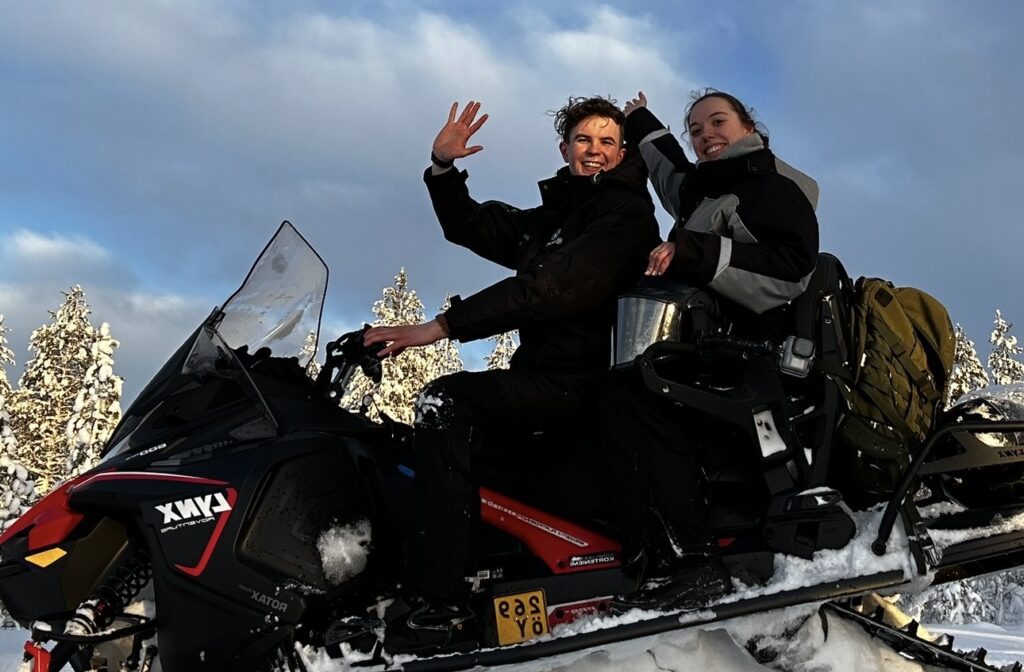
We moved to Rovaniemi years ago and have been using Finland as our home base for travel ever since. Before that, we traveled out of Ukraine, which meant dealing with a very different set of frictions: visas, border crossings that required planning weeks ahead, and a constant low-level calculation about whether the next destination would be straightforward or complicated. When we started traveling more seriously through the Nordic countries, something felt fundamentally different. Easy Nordic travel is a phrase people use almost casually, but we have been trying to pin down exactly what they mean by it — and what actually creates that feeling.
This is our answer, after years of living here and visiting all the main Nordic countries plus Iceland and the Faroe Islands.
Nordic travel feels so easy because the infrastructure is quietly excellent, the locals speak English without making you feel awkward about it, the signage and systems assume you are not an expert, and there is a cultural default toward honesty and fairness that removes the low-grade anxiety that makes travel in other regions exhausting. None of this is accidental — it is what these societies are built around.
- The infrastructure that quietly does most of the work
- Why language is almost never a problem
- Eight specific things that make Nordic travel easier than elsewhere
- The honest friction points — things that are not as easy as they look
- How Nordic countries compare to each other for ease of travel
- Mistakes we made thinking it would be even easier
- FAQ
- A final word from Rovaniemi
The infrastructure that quietly does most of the work
The first thing you notice when you arrive in a Nordic country — and it is easy to miss because it is invisible — is that the systems just work. The airport is well-signed and the transit options are obvious. The card payment works everywhere. The road has markings and the road markings mean what they are supposed to mean. Recycling bins are in the places you expect them to be. Public toilets are generally clean and usually free.
None of this sounds remarkable on a list. But the cumulative effect of everything being where it should be and working the way it is supposed to is a kind of low-level calm that is easy to take for granted until you have traveled somewhere it is absent. We have been to places where the card machine may or may not work, where the road signs are inconsistent, where public toilets are a navigational project, where border crossings add a layer of uncertainty to every plan. The contrast makes the Nordic baseline feel genuinely special.
The public transport assumption
In most Nordic cities, public transport is built around the assumption that a visitor with no local knowledge should be able to use it on day one without consulting anyone. Signs are in English as well as the local language. Ticket machines have English menus. The apps work with foreign payment cards. This is not true everywhere in Europe — we have spent frustrating hours in perfectly pleasant European cities trying to figure out how a bus payment system works because it was designed for locals who already know.
The Everyman’s Right factor
Finland, Sweden, and Norway all have some version of jokamiehenoikeus — the right to access nature freely, camp on unfenced land, pick berries, swim in lakes. This right is not just a legal curiosity; it removes an entire category of travel anxiety. In many countries, walking off a path or camping outside a designated site means worrying about whether you are trespassing, whether someone will ask you to leave, whether you are breaking a rule. In the Nordic countries, the answer is almost always that you are allowed to be there. That feeling of permission is quietly liberating.
Why language is almost never a problem
English proficiency in the Nordic countries is extraordinary by global standards. Finland, Sweden, Norway, and Denmark consistently rank at the top of the EF English Proficiency Index, which measures the English ability of non-native speakers. Iceland and the Faroe Islands perform similarly well. This matters more than it might seem in practice.
In many countries, English exists as a tourist-facing language — deployed at hotels and major tourist sites but dropping off quickly in everyday situations. In the Nordic countries, English is a genuine working language. A grocery store cashier in a small Norwegian town will switch to English without hesitation. A bus driver in rural Finland will explain your connection in perfectly clear English. A waiter at a local café (not a tourist café) in Copenhagen will chat with you in English without it feeling like a performance.
For travelers who speak only English, this removes an enormous amount of friction. You are never one wrong turn away from a situation you cannot navigate. You are never relying on translation apps at moments when the connection drops. The language barrier, which is a genuine source of difficulty in many destinations, is functionally absent.
Eight specific things that make Nordic travel easier than elsewhere
We have been asked this question so many times that we have started keeping a list. Here are eight concrete, specific reasons why easy Nordic travel is a real thing and not just Scandinavian marketing.
- Card payments work everywhere, including tiny shops and market stalls. Finland has been close to cashless for years. Sweden, Norway, and Denmark are similar. We have paid by card at a farmer’s market in rural Ostrobothnia and on a wooden boat in a Norwegian fjord village. The friction of “do I have the right cash?” disappears entirely.
- Signage is multi-lingual and comprehensive. National parks, hiking trails, coastal paths, and city transport all have English signage as a default, not an afterthought. Trail markers are consistent and reliable. Getting lost is a choice, not an accident.
- Tap water is excellent and safe everywhere. This eliminates an entire category of travel logistics. You do not need to think about buying bottled water, carrying tablets, or calculating whether the tap in your accommodation is drinkable. Finnish, Norwegian, and Swedish tap water is some of the best in the world. We carry refillable bottles and use them everywhere without thinking.
- Driving rules are consistent and respected. Road etiquette in the Nordics is unusually consistent — speed limits are followed, lane discipline is good, and the yield rules are applied reliably. For visitors driving for the first time in a new country, the predictability is reassuring. We have driven in cities where neither of these things was true and it is a completely different experience.
- Accommodation quality floors are high. Budget accommodation in the Nordic countries is expensive by European standards, but the quality floor is also high. A budget hotel in Helsinki or Bergen is cleaner and better-maintained than its equivalent in many larger European cities. The value calculation is different from southern Europe, but the reliability is significantly better.
- Healthcare and safety infrastructure is excellent. This matters more than people think when they are planning a trip. Knowing that if something goes wrong — a sprained ankle on a hiking trail, a car problem in remote Lapland — there is a reliable system to help you removes a background level of anxiety. Emergency numbers are the same (112) across the region. Medical care is high-quality and accessible.
- The culture defaults to honesty in transactions. We have been to places where you need to verify the price before you agree, count your change carefully, and be alert to informal add-ons. In the Nordic countries, the listed price is the price, the receipt matches the charge, and overcharging tourists is culturally alien. This is not nothing. The absence of that particular vigilance is restful.
- Nature access is genuinely free and supported. National parks have free entry in Finland and Norway. Trails are maintained with public money and accessible without booking systems (except a small number of high-pressure routes in peak season). Wild swimming, foraging, and wild camping are legal. If your version of travel involves spending time in nature rather than in paid attractions, the Nordic countries are almost uniquely generous.
More like this, delivered monthly
Practical Nordic travel notes, local updates, and the things we do not publish on the blog — straight from Finnish Lapland.
The honest friction points — things that are not as easy as they look
We believe in giving the complete picture, not just the reassuring version. There are real friction points in Nordic travel that first-timers underestimate, and we have run into most of them.
- Cost. This is the obvious one, but it bears saying plainly: Norway, Denmark, Sweden, and Finland are expensive by European standards. Iceland and the Faroe Islands are even more so. A meal in a restaurant in Oslo or Reykjavik costs roughly what a good dinner costs in Paris or London. Budget travelers can manage — wild camping, cooking your own food, using public transport — but the cost floor is higher than most of Europe.
- Distances are longer than maps suggest. Norway is 2,500 km from south to north. Finland is larger than the UK. On a standard map, these countries look traversable in a few days. In practice, with single-lane mountain roads, ferry crossings, and the irresistible temptation to stop constantly, distances take much longer than any sensible calculation predicts.
- Weather can change without warning. This is especially true in Norway, Iceland, and the Faroe Islands. Sunshine at breakfast does not mean sunshine at lunch. Fjord passes that look clear on a morning drive can be in a whiteout an hour later. Checking forecasts is not paranoid; it is simply part of travel in these latitudes.
- Some remote areas have very limited mobile coverage. Lapland, the Norwegian highland plateau, and the interior of Iceland all have stretches with no signal. This is fine if you are prepared for it and have downloaded offline maps. It catches people out who assume Nordic infrastructure means urban-standard coverage everywhere.
- The midnight sun and polar night are genuinely disorienting. In Lapland, summer means sunlight at 2 am and a body clock that has no idea what to do with itself. This is wonderful and strange, but it affects sleep in ways that no amount of reading prepares you for. Bring an eye mask. Embrace the strangeness. Give yourself a few days to adjust.
How Nordic countries compare to each other for ease of travel
Within the region, there are real differences worth knowing about before you plan.
- Finland is our home and, in our experience, the most beginner-friendly of the Nordic countries. The road network is well-maintained and straightforward, the cities are calm and manageable, and Finnish Lapland is one of the most accessible wilderness regions in the world. The downside is that Finland is less dramatic than Norway and less internationally celebrated, which means visitors sometimes underestimate it.
- Sweden is similarly easy and has the advantage of a more extensive train network for those who prefer not to drive. Stockholm is one of the most navigable large cities in Europe. The Allemansrätten wild camping right is well-established and enforced. Costs are slightly lower than Norway but higher than most of central Europe.
- Norway is spectacular but demands more from a traveler. The landscape is extraordinary, but the roads are narrow, the distances are long, and the cost is the highest in the region. It rewards preparation more than the other Nordic countries — not because it is difficult, but because showing up underprepared amplifies the challenges.
- Denmark is the easiest entry point for first-time Nordic visitors: compact, excellent public transport, Copenhagen is one of the most walkable cities in Europe, and the price level is slightly lower than Norway and Sweden. The trade-off is that Denmark offers less of the dramatic wild landscape that most people are chasing when they think “Nordic.”
- Iceland is its own category — spectacular, unique, and genuinely easy to navigate in summer on the Ring Road. The challenge is cost, which is high, and weather, which is not. It is not the most forgiving introduction to Nordic travel but it is often the most memorable.
- Faroe Islands is the hidden difficulty: physically small but logistically complex, with single-track roads, dramatic weather, and a ferry and tunnel system that requires some planning to use well. It is not difficult in the way that navigating a new language or currency is difficult, but it rewards people who have done some preparation.
Mistakes we made thinking it would be even easier
- Assuming everything would be open. The Nordic countries have a strong culture of seasonal closures. Many restaurants, attractions, and accommodation options in smaller towns outside the main cities operate on seasonal schedules. We have arrived at places that looked open on a map and found them closed for the season. Check opening dates and hours before you make anything a centerpiece of your itinerary.
- Not booking accommodation in high season. The ease of Nordic travel does not mean accommodation is always available on arrival. In Lofoten in July, or Rovaniemi in February, or Reykjavik at any point in summer, popular accommodation books out months in advance. The infrastructure is excellent but the popular places fill up. We now book anything in a known high-season location three to four months ahead.
- Underestimating the ferry booking requirements. The Smyril Line to Iceland and the Faroe Islands operates on a fixed schedule with limited car space, and summer sailings fill up early. Norwegian fjord ferries in peak season can have car queues of an hour or more without a reservation. We learned to treat major ferry crossings like flight bookings: plan early, book early.
- Expecting the same ease in winter as in summer. Summer in the Nordics is outstandingly user-friendly. Winter introduces a different set of requirements — winter tyres, appropriate clothing, shorter daylight hours, some roads and attractions closed. It is still easy relative to many destinations, but “easy” in January in Lapland requires a different kind of preparation than “easy” in July.
- Forgetting that costs add up faster than expected. Each individual decision in Nordic travel — a coffee, a ferry crossing, a night in a campsite — seems manageable. The cumulative effect over two weeks catches people. We now budget per-day totals before any Nordic trip and build in a buffer, because the daily spend in Norway especially is higher than feels intuitive at the planning stage.
- Assuming wild camping meant completely unregulated. Everyman’s Right is real and broad, but it has rules: you cannot camp within a certain distance of a residence, you must leave no trace, and some protected areas have specific regulations. We have met visitors who thought “free camping anywhere” meant no rules applied at all. The rules are not onerous but knowing them beforehand avoids awkward conversations.
FAQ
Is Nordic travel actually easy for solo travelers?
Yes — arguably more so than in many regions. The safety profile of the Nordic countries is excellent, English proficiency is high, and the infrastructure is built for independent navigation. Solo travelers, including solo women, consistently report the Nordic countries as among the most comfortable and low-anxiety regions they have visited. The main challenge for solo travelers is cost, since accommodation and transport costs do not halve the way they do when shared with a partner.
Do I need to learn any Finnish, Norwegian, or Swedish before visiting?
No — and we say this as people who live in Finland and are still learning Finnish. English is sufficient for virtually every travel situation in the Nordic countries. Learning a few words (hei for hello, kiitos for thank you in Finnish; takk in Norwegian; tack in Swedish) is a nice gesture that locals appreciate, but it is genuinely not necessary for navigation, ordering food, asking directions, or any other travel function.
Is it easy to travel the Nordics without a car?
In Denmark and for city-focused travel in Sweden and Finland, yes — the train and bus networks are good and the cities are walkable. For Norway, Iceland, the Faroe Islands, and any trip that involves remote wilderness or national parks, a car changes the experience fundamentally. Without one, you are dependent on tour operators or limited public transport, which works but misses large parts of what makes these countries worth visiting. We have a full post on traveling Norway without a car if you want to explore the alternatives in detail.
How does Nordic travel compare to southern Europe for a first-time European trip?
Southern Europe is easier on the budget and offers more cultural density in less physical space. The Nordic countries are more expensive but offer a different kind of ease: less crowding, more reliable infrastructure, clearer English communication, and a quality of natural access that is hard to match. First-time European travelers often start in southern Europe for the cost and history, and graduate to the Nordics when they want something different. Both are valid — they are solving different travel needs.
What is the easiest Nordic country to visit for a first trip?
Denmark is the most accessible entry point: compact, excellent public transport centered on Copenhagen, lower prices than the rest of Scandinavia, and a city that is genuinely easy to navigate without a car. For travelers specifically interested in the Nordic wilderness and landscape, Finland is the most beginner-friendly — the driving is straightforward, the distances are manageable, and Finnish Lapland is one of the most accessible subarctic environments in the world. Norway is the most dramatic but also the most demanding.
Is Nordic travel easy for families with young children?
Very. The Nordic countries are family-oriented cultures with excellent infrastructure for children: playgrounds in almost every public space, family rooms in accommodation, children’s menus, stroller-accessible transport, and a general cultural patience toward families traveling with small children. Wild nature access via Everyman’s Right is wonderful for children — open space, lakes to swim in, forests to explore, with no entry fee and no crowds in most places. We have seen families with very young children navigate Finnish Lapland and Norwegian fjord towns without apparent difficulty.
A final word from Rovaniemi
We have thought about this question for a while — why does Nordic travel feel the way it does — and the best answer we have is that it is a product of societies that have, over generations, built infrastructure and established social norms that reduce unnecessary friction. The tap water is good because it is a public health priority. The English is fluent because the educational system made it one. The roads are maintained because the winters demand it. The honesty in transactions is cultural, not coincidental.
None of it is magic, and not all of it is without cost. But as a place to travel — especially for first-timers who are not yet sure how much planning they want to do, or for experienced travelers who have accumulated enough friction elsewhere to appreciate its absence — the Nordic countries offer something genuinely rare. Easy Nordic travel is not a marketing slogan. It is the by-product of an enormous amount of quiet, sustained effort to make public life work well. As visitors, we are the beneficiaries. We recommend taking advantage of it.
Joona & Alla
A Finnish-Ukrainian couple living in Rovaniemi, Finland. Joona is a marketing professional in Lapland tourism; Alla is an AI Engineer. Together we have visited 25 countries and share honest, locally-grounded travel writing from our home in the Arctic.
Read our full story →