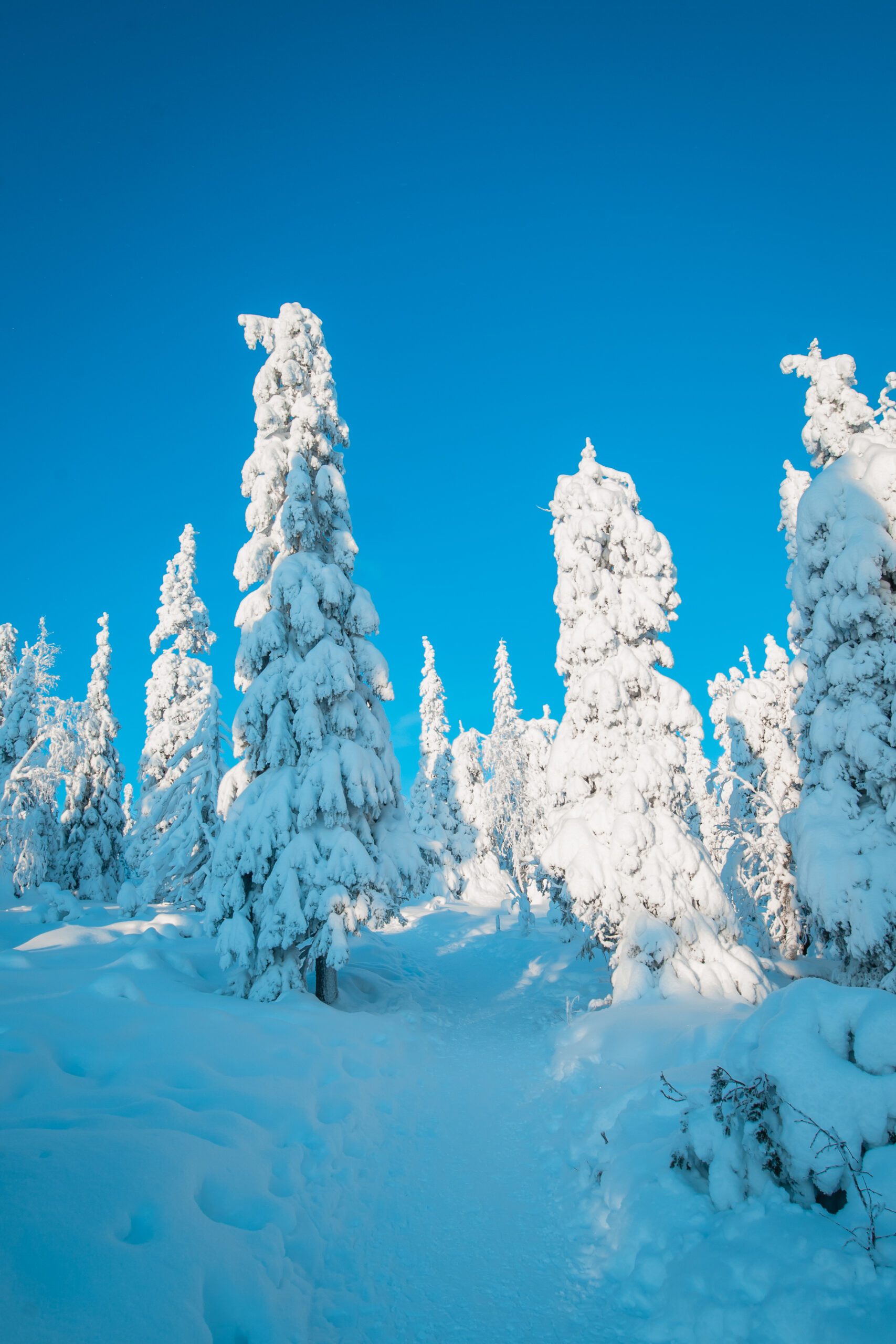
Every week in summer, tourists land in Rovaniemi, spend two days near Santa Claus Village, take the same Arctic Circle photo, and fly home thinking they’ve seen Lapland. They haven’t. Lapland is enormous — bigger than Switzerland and Austria combined — and the part the industry packages for you is roughly the size of a town square.
We’ve lived here long enough to know what gets skipped. This guide is not a list of Instagram-worthy spots you haven’t tagged yet. It’s a genuine attempt to show you a different version of the place we call home — the Lapland that doesn’t appear in package deals, doesn’t have a tourist office, and doesn’t know it’s supposed to be picturesque.
Most visitors see a 10 km radius around Rovaniemi and call it done. The real Lapland — the fell landscapes of the western arm, silent river valleys, long light on unmarked lakes — is a rental car and two hours away. This guide shows exactly what tourists miss and how to find it yourself.
What tourists actually see in Lapland
Let’s be precise. The average visitor spends roughly two to three nights in or near Rovaniemi. In that time, they visit Santa Claus Village (8 km north of the city center), do one snowmobile or husky activity, eat reindeer soup at a hotel restaurant, and take a photo at the Arctic Circle marker. In summer, the snowmobile is replaced by a quad bike and the photo is the same.
None of that is fake. The huskies are real, the reindeer are real, the aurora really does appear above Rovaniemi roughly 200 nights a year. But Lapland is not just a 10 km bubble around an airport. The municipality alone is the size of a small country. The fell landscapes, river valleys, and unmarked forest roads begin the moment you leave the main highway — and almost nobody does.
Why this happens
Tourism infrastructure in Lapland is deliberately concentrated. Hotels, tour operators, and airport transfers funnel visitors to three or four key destinations because those are the ones with the capacity, the signage, and the English-speaking staff. That concentration is efficient for the industry and comfortable for first-time visitors. It’s also genuinely limiting as an experience of a place this size.
The gap between marketing and reality
- Marketing Lapland: snow-covered fells, glowing glass igloos, reindeer at dusk, northern lights over a frozen lake.
- Real Lapland: also all of that — but most of the time, on a normal day, it is an enormous boreal forest with a low sky and a silence so total it slightly alarms people from cities.
- What tourists miss: the silence, the scale, the way light behaves differently here than anywhere else in Europe, and the particular texture of a Finnish summer that has nothing to do with Santa Claus.
The Lapland nobody talks about: fell country
The tourist version of Lapland centers on Rovaniemi and, to a lesser extent, Levi and Saariselkä in winter. But the western and northwestern arm of Finnish Lapland — the fell country — is something else entirely. The fells (tunturi in Finnish) are rounded mountain ridges above the treeline, ranging from about 300 to 1,300 metres. They feel like Scotland crossed with something even more ancient and less tamed.
Pallas-Yllästunturi National Park
This is the third largest national park in Finland and one of the most spectacular landscapes in the country. The fell-to-fell walking route between Pallastunturi andYlläs is 60 km of marked trail through open fell landscape, spruce valleys, and suspension bridges over fast rivers. Most Finnish outdoor enthusiasts consider it one of the best multi-day hikes in the country. Most international tourists have never heard of it.
The park is accessible from Muonio (about 180 km west of Rovaniemi) and has free wilderness huts for overnight stays. In summer, the sun barely sets. In ruska — the Lapland fell autumn, when the landscape turns copper and gold — it is genuinely one of the most beautiful things we have seen in 25 countries of travel.
Kilpisjärvi and the Three-Country Cairn
At the very tip of Finland’s northwestern arm, where Finland, Norway, and Sweden meet on the water, sits Kilpisjärvi. It’s a small village at the base of the fell Saana — a flat-topped ridge that rises dramatically from the lake shore. The Three-Country Cairn hike (about 11 km one-way) takes you across open, treeless fell landscape to a point where you can stand in three countries simultaneously. The trail runs along the Norwegian border and passes through scenery that does not resemble anything else in Finland. Fewer than 5% of international visitors to Lapland ever make it here.
Eight things tourists skip completely
These are not hidden gems in the influencer sense. They’re simply places and experiences that fall outside the standard package tour radius.
- Rent a canoe on the Ounasjoki river. The Ounasjoki runs from the fells near Enontekiö all the way south through Rovaniemi. A two- or three-day canoe trip on its upper reaches passes through wilderness without a building in sight. No significant rapids, just water and forest and the sound of birds — and the midnight sun if you’re out in June or July.
- Drive Highway 21 (the King’s Road of the North). This road follows the Muonio and Könkämä rivers along the Swedish border for about 200 km. It is one of the most scenic drives in Finland — open fell country, small villages, riverside pull-offs — and it appears in almost no English-language travel content about Lapland.
- Watch the midnight sun from a fell summit, not a hotel terrace. The midnight sun from a fell above the treeline — somewhere like Pallastunturi or Saana — is categorically different from watching it through glass or from a city park. Pack sandwiches, drive up in the evening, stay until 2 am. The light at that hour is unlike anything you’ve seen.
- Swim in a fell lake. The lakes above the treeline are cold, clear, and almost always empty. Bring a towel and a windproof jacket, wade in, and experience the specific joy of being the only person in a body of water the size of a suburb.
- Eat a real Finnish lunch in a local café, not a hotel. Every small Lapland town — Kittilä, Sodankylä, Salla, Posio — has at least one place where local workers eat: a daily-changing lounas menu of pea soup, salmon soup, meatballs, and rye bread for around €10–12. It is uniformly good. Almost no tourist ever finds it.
- Visit during ruska. September is the fell autumn in Lapland. The fells and forests turn orange, red, copper, and gold. The hiking conditions are arguably the best of the year. Almost nobody visits during ruska. This is a mistake.
- Go fishing with an everyman’s rights permit. Finland’s jokamiehenoikeus (everyman’s right) allows fishing any water with a basic permit available at local outdoor shops. In Lapland, grayling, perch, pike, and arctic char are all catchable. A local fishing supply shop in Rovaniemi can sell you the permit and recommend a river within 30 minutes of the city.
- Attend the Midnight Sun Film Festival in Sodankylä. This small, internationally respected film festival runs every June in a town 130 km north of Rovaniemi. It screens art house and international films under the midnight sun, entirely outdoors. It is one of the genuinely unusual cultural events in Finland and requires almost no planning to attend.
Get our best travel tips in your inbox
Monthly stories from Rovaniemi — Arctic tips, packing lists, and the places we keep coming back to.
How to avoid the tourist trap timeline
The standard Lapland itinerary collapses into a loop: airport → hotel → activity → husky farm → airport. It’s not a bad trip, but it’s a very small trip for a very large place. Here is how we’d structure an alternative for summer.
- Day 1 — Arrive, get a car, don’t book a full activity day. Walk the city. Eat at a local lunch place. Drive to Ounasvaara at 9 pm and watch the midnight sun from the ridge. This costs almost nothing and is genuinely spectacular.
- Day 2 — Drive west. The drive from Rovaniemi to Pallas-Yllästunturi (about 2.5 hours) takes you through increasingly open landscape. Spend the night in Muonio or at a wilderness cabin at the park edge.
- Day 3 — Walk a fell. Even a short fell hike of 8–10 km at Pallastunturi gives you views that no hotel terrace or tour bus window can replicate. The fells are above the treeline; the horizon is vast and treeless and somehow exactly what Lapland is actually about.
- Day 4 — River or lake time. Find a river to canoe or a fell lake to swim. This is the version of Finland that Finns love and tourists almost never reach.
- Day 5 — Return, slowly. No need to rush back on the same highway you came in on. Take Highway 21 or Route 79 through Kittilä. Stop when something looks interesting. This is how you actually see a place.
Where locals actually swim, eat, and walk
Here is a more specific version, for the summer season specifically.
- Swimming: Rovaniemi locals swim at Ounasvaara beach or at small lake pull-offs on the road toward Sinettä. The tourist swim spots near the city center are fine; the unmarked lake 20 km out is better. Water temperatures in mid-July reach 18–20°C in sheltered bays.
- Walking: The Arktikum shoreline walk, the ridge at Ounasvaara, and the forest tracks on the Oinas peninsula — a forested headland a few kilometres from the city center that almost no visitor finds. In summer the Oinas trail is entirely green and follows the riverbank for several quiet kilometres.
- Eating: Try Ravintola Nili for genuinely local Finnish cooking. For lunch under €15, any of the city’s smaller lounas restaurants serve better food than most hotel dining rooms. Ask your accommodation for the nearest one — they’ll know.
- A genuine local timing tip: get up at 4 am on a clear summer morning and drive 15–20 km out of the city on any northward road. The light at that hour is unlike anything. The sun drops low on the horizon around 2 am and comes back golden by 4. That two-hour window is the most beautiful time of day in Lapland in summer, and almost no tourist ever sees it because they’re asleep.
- Culture: Rovaniemi has a surprisingly good art museum (Korundi) and the Arktikum science center — not the most thrilling afternoon, but context-giving in a way that helps Lapland make sense as a place with a real history.
What we got wrong our first years here
- We underestimated the scale. Lapland looks manageable on a map until you drive it. Two hours north of Rovaniemi and you are genuinely in the middle of nowhere, with no services and a horizon that barely changes. Tourists who expect a dense schedule of activities get rattled by the emptiness. The emptiness is the point.
- We assumed summer was the off-season. The first summer we spent in Rovaniemi, we expected quiet and got instead one of the most extraordinary seasons of our lives: 24-hour light, green so intense it barely looks real, silence interrupted only by birds at 3 am. Summer is not Lapland’s off-season. It is Lapland’s best-kept secret.
- We didn’t go far enough west soon enough. We spent two years within 100 km of Rovaniemi before driving west to the Pallas fells. When we finally did, we were frustrated it had taken so long. The fell country is the most dramatic landscape in Finland and it is not even particularly difficult to reach.
- We skipped the local calendar. There are events in Lapland — the Midnight Sun Film Festival in Sodankylä (genuinely excellent, runs in June), reindeer racing in Inari, fishing competitions on the Teno river — that never appear on tourist radar but are memorable. Checking the regional event calendar before a trip always pays off.
- We over-photographed instead of experiencing. Every sunset in Lapland looks like it was filtered. After a while you learn to put the phone away for 20 minutes before picking it up again. The best Lapland memories we have are wordless ones — fog on the Ounasvaara ridge at 5 am, a lake swim in near-darkness at midnight, a fell that went on further than we expected and was better for it.
Frequently asked questions
When is the best time to visit Lapland beyond the standard winter season?
Late June and August are both exceptional. Late June gives you peak midnight sun and warm enough temperatures for hiking and swimming. August brings the first hints of ruska and cooler air. September is the fell autumn proper — arguably the most beautiful month in Lapland — but it comes with an early frost risk and requires warm layers.
Do I need a car to see the real Lapland?
Yes, essentially. Public transport in Lapland is very limited outside the Rovaniemi–Kittilä–Inari corridor. A rental car from Rovaniemi airport opens up everything described in this post. Without one, you’re largely limited to organised tours, which are good but don’t go where a car goes.
Is Lapland expensive for independent travel?
It’s cheaper than you’d expect for Finland. Accommodation at wilderness cabins and local B&Bs costs €60–100 per night for two. Petrol is the main expense if you drive a lot. Eating local lounas keeps food costs to €10–15 per person. The expensive part is the international flight to Rovaniemi — once you’re here, costs are manageable.
What exactly is the midnight sun and when does it happen in Lapland?
The midnight sun is the period when the sun stays above the horizon continuously for 24 hours. In Rovaniemi it runs from roughly June 6 to July 7. From late May through early August the sky never gets fully dark, though it gets beautifully golden and low around midnight. For the full above-the-horizon sun, aim for June.
What is ruska and when does it happen?
Ruska is the Finnish word for the autumn colour season in Lapland — when the fells and forests turn orange, red, copper, and gold before the first frost. It runs roughly from mid-September in the northernmost fells to early October around Rovaniemi. The hiking conditions are arguably the best of the year, it’s quieter than winter, and the colours are extraordinary. Almost no tourist visits during ruska.
How do you handle the language barrier in rural Lapland?
In towns and at any tourist-adjacent place, English is spoken without problem. At small local cafés or rural petrol stations, you may encounter Finnish only. Finns are accommodating and most situations resolve with pointing and a smartphone translator. We’ve lived here for years and have never had a meaningful problem with language.
A final word from Rovaniemi
We’re not trying to make the tourist version of Lapland sound bad. If you’ve never been here, the packaged experience — huskies, the aurora, the Arctic Circle sign, a night in a glass igloo — is genuinely joyful. It’s just not the whole picture.
The whole picture is enormous, mostly empty, occasionally stunning in ways that don’t translate to photographs, and very well suited to people who are willing to get in a car, drive past the last petrol station, and trust that what’s at the end of the road is worth it. In our experience, it always is.
We come from very different backgrounds — Joona from South Finland, Alla from Ukraine — and we both find that Lapland surprises us continuously, even now. That’s unusual for a place you call home. It’s why we keep writing about it.
Joona & Alla
A Finnish-Ukrainian couple living in Rovaniemi, Finland. Joona is a marketing professional in Lapland tourism; Alla is an AI engineer. Together we’ve visited 25 countries and share honest, locally-grounded travel writing from our home in the Arctic.
Read our full story →