What Fish You Can Catch in Finland — A Local’s Honest Guide
From a Rovaniemi couple who grew up beside Finnish lakes: the fish species worth knowing, where to find them, and how the seasons shape every cast.
J&A Joona & AllaRovaniemi, Finland · May 2026 · 11 min read · Updated seasonally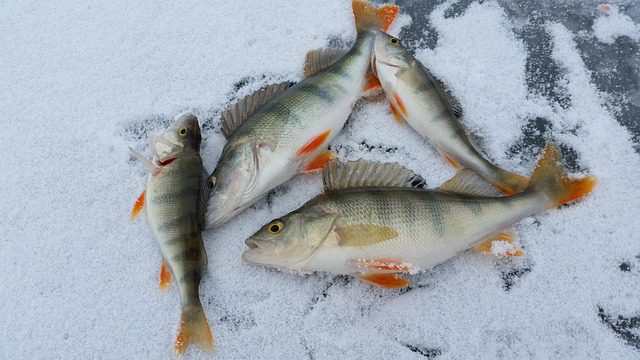
Finland has 188,000 lakes. That is not a round number we invented to make a point — it is the actual count, give or take a few dozen depending on how small you are willing to go. Living in Rovaniemi, on the edge of Lapland, we are surrounded by rivers, lakes, and the kind of quiet that only exists when you are sitting in a rowing boat at 10 pm under the midnight sun, waiting for a float to dip. Finnish fishing is not a sport here. It is just part of summer.
Over the years, neighbours have handed us perch they caught that morning, Joona has stood in the Kemijoki with a rod his father used, and we have eaten more fresh pike than we can count. This guide covers every fish species you are realistically likely to encounter — and catch — in Finland, when and where they appear, and what first-time visitors should know before they wet a line.
Short answerFinland’s most common sport fish are pike, perch, pikeperch (zander), brown trout, grayling, and Atlantic salmon. Pike and perch are everywhere year-round; salmon and grayling thrive in fast northern rivers; pikeperch prefer deeper, slightly warmer lakes in the south. A basic fishing permit (kalastonhoitomaksu) covers most species in most waters for just €7/day or €21/year.
In this guide- Why Finland is a fishing destination
- The main fish species you can catch
- Where to fish in Finland
- Seasons, rules, and size limits
- Gear, licences, and what you actually need
- Our own fishing moments
- Frequently asked questions
- A final word from Rovaniemi
Why Finland is one of Europe’s best fishing destinations
The numbers alone tell a story most Europeans have not heard. Finland has more lakes per square kilometre than almost any country on earth. Add thousands of kilometres of rivers — including the Kemijoki, Tornionjoki, and Ounasjoki running right through Lapland — and you have a freshwater fishing resource most anglers never find on their radar.
The quiet advantage nobody mentions
The fish-to-angler ratio here is exceptional. While popular rivers in Scotland or Norway are booked years ahead, you can often walk up to a stretch of Finnish river, buy a day permit online, and cast for Atlantic salmon the same afternoon. Outside of a few iconic spots, the water is simply not crowded.
Everyman’s right and the fishing permit
Finland’s jokamiehenoikeus (Everyman’s Right) means you can access most natural waters freely — rowing across a lake, swimming, walking a shoreline. Fishing, though, needs a small paid permit in most cases (more on that in section 5). The cost is remarkably low by European standards, and the system is genuinely simple.
- No boat, no problem: hundreds of pier and shore spots exist on every major lake.
- Year-round access: ice fishing in winter is as popular as open-water casting in summer.
- Children under 18 and adults over 65: exempt from the national fishing permit entirely.
The main fish species Finland you can catch
Finland has around 60 native freshwater fish species plus a handful of introduced or anadromous sea fish. These are the ones that matter to anglers — the ones you will actually target, eat, or photograph and release.
Pike — the Finnish freshwater king
- Finnish name: hauki
- Where: every lake, river backwater, and bay in the country — literally everywhere.
- Season: year-round; banned only during spring spawning (roughly March–April in southern Finland, a little later in Lapland).
- Size: typical catches 1–4 kg; trophy fish over 10 kg exist in most large lakes.
- Method: spinning lures, jigs, surface plugs, live bait. Pike are aggressive and beginner-friendly.
- Eating: mild white flesh, great fried or baked. Finnish grandmothers have a thousand recipes.
Perch — the everyday catch
- Finnish name: ahven
- Where: every Finnish lake and slow river. Possibly the most abundant fish in the country.
- Season: year-round (no closed season for perch in most waters).
- Size: mostly 100–400 g; “plate perch” over 500 g are prized locally.
- Method: light spinning, jigging, fly fishing. Extremely easy for beginners and children.
- Eating: the finest-tasting freshwater fish in Finland, full stop. Pan-fried whole in butter.
Pikeperch (zander)
- Finnish name: kuha
- Where: mainly larger lakes in southern and central Finland; scarcer in Lapland.
- Season: open year-round in most areas, but a spring spawning ban applies in some waters.
- Size: typical 0.5–2 kg; fish over 5 kg are caught regularly on Lake Saimaa and Päijänne.
- Method: jigging, trolling, spinning at dusk. Pikeperch are most active in low light.
- Eating: the premium restaurant fish — firm, mild, expensive to buy but free to catch.
Brown trout and sea trout
- Finnish name: taimen
- Where: cold, fast rivers and streams throughout Finland; sea trout run the coastal rivers.
- Season: heavily regulated; varies by river. Many rivers have catch-and-release rules for wild fish.
- Size: lake-run fish reach 5–10 kg; river browns are typically smaller (300 g–2 kg).
- Method: fly fishing, spinning light spinners. One of the most prized targets in Finnish angling.
Atlantic salmon
- Finnish name: lohi
- Where: Tornionjoki (shared with Sweden) — one of Europe’s last large wild salmon rivers. Also Teno/Tenojoki on the Norway border in Lapland.
- Season: June–August typically; Teno River has strict rules and requires a local permit quota.
- Size: 3–12 kg is typical; Tornionjoki produces fish over 20 kg every summer.
- Method: fly fishing, spinning. This is world-class fishing and draws anglers from across Europe.
Grayling
- Finnish name: harjus
- Where: cold, clear rivers in Lapland — Ounasjoki, Muonionjoki, and their tributaries near Rovaniemi.
- Season: spring and autumn are peak; summer works in fast sections with cooler water.
- Size: typically 200–600 g; anything over 1 kg is a proper trophy.
- Method: dry fly fishing; grayling are notoriously selective and reward patience.
- Eating: delicate, sweet flesh — highly regarded if you keep one.
Other species worth knowing
- Burbot (made): a weird, eel-like bottom fish caught through ice in winter. Beloved in Lapland for its liver.
- Vendace (muikku): tiny whitefish; not sport-fished but famously netted and eaten fried — a Finnish summer street-food icon.
- Ide (säyne): carp-family fish common in southern lakes; fair sport on light tackle.
- Bream (lahna): larger waters in the south; a classic coarse-fishing target.
- Ruffe and roach: everywhere, mostly used as live bait for pike or pikeperch.
Where to fish in Finland — the best regions
Finland’s fishing landscape breaks into three broad zones, each with a distinct character. Here is where to head depending on what you want to catch.
Lapland — rivers and wilderness
- Best for: grayling, salmon, brown trout, pike in remote lakes.
- Key waters: Tornionjoki (salmon), Ounasjoki near Rovaniemi (grayling), Lemmenjoki wilderness rivers.
- Access: many sections are walk-in only; some require boat or kayak. Day permits available at local sport shops or online at eräluvat.fi.
- Rovaniemi specifically: the Kemijoki and Ounasjoki run right through or beside the city. You can fish within walking distance of the train station.
Lake Finland — the central lake district
- Best for: pikeperch, pike, perch, brown trout in big open water.
- Key waters: Lake Saimaa (Europe’s fourth-largest lake), Päijänne, Pielinen, Inari.
- Access: boat strongly recommended for serious fishing; shore fishing works for perch everywhere.
Coastal rivers and sea fishing
- Best for: sea trout, Baltic salmon, Baltic herring (silakka), flounder.
- Key waters: rivers running into the Gulf of Finland and Gulf of Bothnia; archipelago bays.
- Access: sea fishing requires a boat or charter; river access is usually permit-based.
Seasons, rules, and size limits you need to know
Finnish fishing regulations are managed at national level by the Finnish Food Authority (Ruokavirasto) and at local level by fishing area cooperatives. The key rules every visiting angler should know:
The quick-reference rules table
- Pike: minimum size 40–45 cm (varies by water); closed season during spring spawning (typically March 1–May 31 in most southern waters, check locally in Lapland).
- Perch: no minimum size in most waters; no closed season.
- Pikeperch: minimum 37–42 cm; some spring bans apply.
- Brown trout: minimum 35–60 cm depending on the water; many rivers require full catch-and-release for wild fish.
- Atlantic salmon: heavily regulated per river; Tornionjoki has a daily bag limit and a season quota. Always check the river-specific rules at kalastuslaki.fi.
- Grayling: minimum 25–30 cm; no closed season in most Lapland rivers but check locally.
- Bag limits: most waters have no daily limit for pike, perch, and pikeperch, but the fishing area rules may set one. Ask at the local permit office.
One rule that surprises visitors: it is illegal to use live fish as bait throughout Finland. Use lures, dead bait, worms, or artificial flies.
Gear, licences, and what you actually need to fish in Finland
The Finnish permit system was simplified in 2016 and it is genuinely easy. Here is the full picture.
The three-tier permit system
- National fishing management fee (kalastonhoitomaksu): €7/day or €21/year, bought online at verkkokauppa.eräluvat.fi. This covers spinning, fly fishing, and trolling in most public waters across Finland. Required for ages 18–64. Children under 18 and adults 65+ fish for free.
- Local fishing area permit (lupa): most rivers and some lakes also require a permit from the local fishing cooperative on top of the national fee. Typically €10–30/day. Buy at local sport shops, petrol stations, or online at the cooperative’s own site.
- Salmon-specific quota permit: Tornionjoki and Teno require a separate, numbered quota permit. Buy early — these sell out. Check eräluvat.fi in March/April for the new season.
Gear essentials for Finland
- Pike: medium-heavy spinning rod 15–60 g lure weight; wire trace to prevent bite-offs; large snap swivels.
- Perch: light spinning rod 2–15 g; small jigs in chartreuse or natural colours.
- Grayling/trout: fly rod 3–5 weight; dry flies (elk hair caddis, comparadun); polarised sunglasses to spot fish in clear water.
- Salmon: fly rod 9–10 weight or heavy spinning rod; large wet flies or 20–40 g spinners.
- Winter/ice fishing: short ice rod, auger (you can rent one), jigging spoons or small perch jigs.
You can rent basic gear from tourist operators in Rovaniemi, Saariselkä, and most fishing lodges. You do not need to bring rods from home for a first trip.
Our own fishing moments in Finnish waters
We are not competition anglers. We fish the way most Finns fish — casually, often with a thermos and sandwiches, sometimes with results and often just for the feeling of being on the water.
- Joona’s first serious pike: caught in Kemijoki with a red-and-white spoon that had belonged to his grandfather. It was maybe 2.5 kg. He has caught larger fish since but that one has the story.
- The grayling that humbled us: we spent a full afternoon on a small Ounasjoki tributary targeting grayling we could see rising. We changed fly patterns eleven times. We went home with zero fish and enormous respect for the species.
- Midnight sun perch: during our first summer with visitors from Ukraine, we rowed out at 11 pm on Alla’s birthday. The sun was still above the horizon. We caught perch for two hours and ate them the next morning. That is the moment that convinced both of us that Finland in summer is genuinely magic.
- Ice fishing at Sinettäjärvi: February, −22 °C, borrowed auger, a hole barely bigger than a fist. We caught nothing. We stayed two hours anyway. The silence on a frozen Finnish lake is something you do not forget.
- Buying vendace from a market boat: this is how most Finns “catch” their muikku. A wooden boat comes to the market dock in Rovaniemi on summer mornings, the fisherman tips a net of tiny silver fish into a paper bag, and you eat them fried that evening. Technically not fishing. Absolutely Finnish.
- What we have learned: Finnish fishing is less about the catch and more about choosing to be in a place where nothing urgent is happening. Even the failures feel good here.
Frequently asked questions
Do I need a licence to fish in Finland as a tourist?
Yes, in most cases. Adults aged 18–64 need the national fishing management fee (€7/day or €21/year) plus a local area permit for many rivers and some lakes. You can buy both online before you arrive. Children under 18 and adults 65+ are exempt from the national fee but may still need a local permit.
What is the most common fish in Finnish lakes?
Perch (ahven) is arguably the most abundant fish in Finland — present in virtually every lake and slow river. Pike (hauki) is a close second. If you drop any lure in any Finnish lake, you will almost certainly catch one of these two.
Can I fish for salmon in Finland?
Yes. The Tornionjoki (Finnish-Swedish border river) and Teno River (Lapland, Finnish-Norwegian border) are world-class Atlantic salmon rivers. You need a specific river permit on top of the national fee, and quota permits for Teno sell out fast — buy in March or April for the summer season.
Is ice fishing popular in Finland?
Extremely. Finland may be the world capital of ice fishing. In winter, frozen lakes are dotted with anglers sitting over small holes, targeting perch, pikeperch, burbot, and smelt. The required gear is minimal (short rod, auger, jigging spoon) and you can rent it from fishing lodges throughout Lapland.
When is the best season to fish in Finland?
It depends on the species. For pike and perch, late summer and autumn (August–October) are excellent. For salmon, June–August in northern rivers. For grayling, May and September are peak. Ice fishing runs December–March. Finland honestly offers good fishing in every season.
Can I eat the fish I catch in Finnish lakes?
Generally yes. Finnish lake water is clean and most species are safe to eat. Pike and perch are the most commonly eaten. Note that large, older pike from some waters may have slightly elevated mercury levels — Finnish food safety guidelines suggest limiting large pike consumption for pregnant women and young children. For most adults, eating your catch is completely normal and encouraged.
A final word from Rovaniemi
We wrote this guide sitting at the kitchen table in early May, when the ice on the Kemijoki has just cracked and the first fishermen of the season are already out in their rubber boots, wading the shallows with spinning rods. In a few weeks the perch will be in the shallows. A few weeks after that, the salmon runs will start up on the Tornionjoki and everything will get serious.
Finland does not advertise its fishing the way Norway advertises its fjords or Iceland its puffins. But it should. The combination of access, species diversity, clean water, and sheer quantity of available water is almost unmatched in Europe. And because most of the world has not quite figured this out yet, the rivers and lakes are still quiet in a way that feels like a privilege.
If you are visiting Lapland and wondering whether to pack a rod: yes. Bring a basic spinning outfit, buy the national permit online the night before, walk down to the nearest river, and see what happens. At minimum you will stand in clean running water with no traffic noise and watch the midnight sun reflect off the surface. That is worth the trip on its own.
— Joona & Alla, Rovaniemi
J&A Written byJoona & Alla
A Finnish-Ukrainian couple living in Rovaniemi, Finland. Joona is a marketing professional in Lapland tourism; Alla is an AI Engineer. Together we’ve visited 25 countries and share honest, locally-grounded travel writing from our home in the Arctic.
Read our full story →