Finnish Summer Traditions Explained — From Juhannus to the Midsummer Table
We live in Rovaniemi year-round. Every June, Finnish summer traditions unfold around us — bonfires, lake swims, rye bread, and a slowness that the rest of the world has mostly forgotten. Here is what they actually mean.
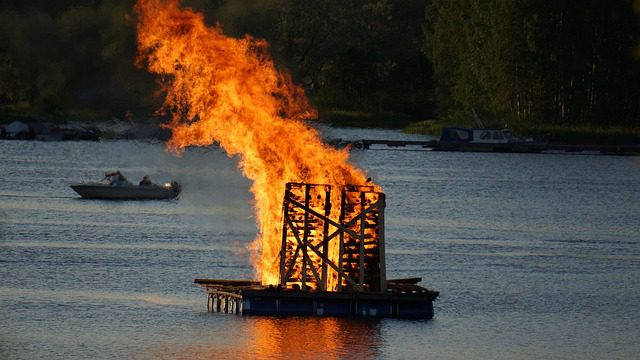
Finnish summer traditions are not a museum piece. They are living, breathing rituals that shape how people here actually spend June, July, and August. We have watched them from the inside for years — from the first smoke rising over the sauna at our lakeside spot to the silence that falls over the whole country on Juhannus Eve when even the roads go quiet.
These are not tourist experiences designed for visitors. They are what Finns actually do when they finally get their summer — and as outsiders who became insiders, we think they are some of the most honest and restorative rituals we have encountered in 25 countries of travel.
Finnish summer traditions centre on Juhannus (Midsummer), the summer cottage, the sauna, and a collective agreement to slow down completely. They are rooted in the relationship between Finns and nature — particularly water, fire, and the endless light of the midnight sun. If you are visiting Finland in summer, experiencing even one of these traditions will change how you understand the country.
What Juhannus actually is — and why Finland basically shuts down
Juhannus is the Finnish word for Midsummer. It falls on the Saturday between June 20 and June 26 each year, always timed around the summer solstice. In 2026, Juhannus Eve is Friday, June 19, and Midsummer Day is Saturday, June 20.
The holiday has roots that go back centuries before Christianity arrived in Finland. Long before it was associated with the feast of Saint John the Baptist, Finns marked the solstice as the hinge of the year — the moment when light was at its absolute peak and everything growing in the brief northern summer was at full force. Even today, the pagan undercurrent is obvious. The bonfire, the lake, the sauna, the staying up through the night — none of it is about church. It is about fire and water and the midnight sun.
What actually happens on Juhannus weekend
- Thursday–Friday: Finland empties. Roads fill with cars heading to summer cottages. Helsinki and Tampere and Turku become eerie ghost cities by Friday afternoon. Shops close. Restaurants close. Even petrol stations thin out.
- Friday evening (Juhannus Eve — Juhannusaatto): the core of the celebration. Bonfires are lit by lakes across the country at around 10–11 pm. Saunas are heated. Families and friend groups gather to eat, swim, and stay up through the white night.
- Saturday (Juhannus Day): quieter. More swimming, more sauna, more food. Many people sleep late and spend the day slowly unwinding.
- Sunday: the drive back. Monday, Finland switches back on.
If you are visiting Finland during Juhannus weekend without a Finnish host who has invited you to their cottage, you will find the cities strangely empty. It is worth knowing this before you plan a city break.
The midsummer bonfire — what happens at the lake
The kokko — the Midsummer bonfire — is the visual centrepiece of Juhannus. In the old tradition, the fire was lit to protect the community, to ward off evil, and to summon the spirits of the land. Today, it is mostly just a reason to stand outside at midnight with a cold drink while the sky glows copper and the lake reflects everything perfectly.
In Lapland, we sometimes build our own small fire by the river. In the rest of Finland, communities often organise large public bonfires at lakeshores or beaches — these are a good option if you are visiting without an invitation to a private cottage.
The lake swim at midnight
No description of Finnish Midsummer is complete without the lake swim. This is not a poetic exaggeration — Finns genuinely go swimming in lakes at midnight on Juhannus Eve, often immediately after the sauna, while the sky is still light. The water in southern Finland can reach 20–22°C by late June. In Lapland, it is colder but no less compelling.
- Sauna first: the traditional sequence is sauna → swim → sauna → bonfire → swim again. This can go on for hours.
- The silence: Finnish lakes on Juhannus night have a particular quality of stillness. Even in a group, people often go quiet by the water. It is not awkward — it is expected.
- The light: in most of Finland, it never gets fully dark on Juhannus night. The sky stays a pale blue-gold. In Lapland, the sun does not set at all.
- No fireworks: Finland does not use fireworks on Midsummer. The bonfire is the fire tradition. This keeps the night genuinely quiet.
The midsummer table — what Finns actually eat and drink
Finnish Midsummer food is simple by design. The point is not a complicated meal — it is food that can be prepared at a cottage with limited equipment and eaten outside or in a simple kitchen. These are the staples you will find at almost every Finnish Juhannus gathering.
The Juhannus food checklist
- Uudet perunat (new potatoes): the most emotionally loaded item on the Finnish summer table. Tiny, thin-skinned potatoes boiled and served with butter and dill. Finns will tell you these taste better at Midsummer than at any other time of year. They are probably right — the first new potatoes of the season arrive just in time.
- Grillimakkara (grilled sausage): Finland’s true national food, at least in summer. A thick pork sausage cooked directly over coals or an open fire, served with mustard. No Juhannus bonfire is complete without it.
- Silli (pickled herring): a Nordic staple that appears on every Finnish festive table. Usually served in several preparations — in cream, with mustard, with dill.
- Smetana or crème fraîche with herring: the richer, tangier pairing that divides Finns into camps.
- Mansikka (strawberries): Finnish strawberries arrive exactly in late June and they are extraordinary — small, intensely flavoured, nothing like the year-round supermarket variety. Eaten plain or with cream.
- Rye bread (ruisleipä): dark, dense, slightly sour. Present at every Finnish meal of any significance.
- Koskenkorva or beer: Koskenkorva is a Finnish vodka-adjacent spirit, drunk cold and plain. Beer is the more universal choice. Both flow freely on Juhannus Eve.
- Kahvi (coffee): always. Finland is the world’s highest per-capita coffee consumer. The pot goes on at all hours, including midnight.
Stories from Finnish Lapland, delivered slowly.
We write about life at the Arctic Circle — what summer really feels like, what the light does to you, and where we go when we need to disappear into the forest.
The summer cottage (mökki) and what it really means
Finland has roughly 500,000 summer cottages — one for every ten people in the country. The mökki is not a luxury escape. It is a deeply ordinary Finnish institution, and the summer cottage mentality shapes Juhannus as much as any specific ritual.
What makes the mökki different from the idea of a holiday home elsewhere is the degree of intentional simplicity. Many Finnish summer cottages still have no internet. Some have no running water. The point is to be somewhere that makes demands of you in a manageable way — carry the water, chop the wood, heat the sauna — while removing the demands of city life completely.
Tips for visitors who want to experience mökki culture
- Rent one: platforms like Lomarengas and Mökkimaailma list thousands of rentable cottages across Finland. Book early for Juhannus — most are reserved by February.
- Choose lakeside: the lake is non-negotiable. A cottage without direct water access misses the central point.
- Plan for self-sufficiency: bring your groceries before you arrive. Village shops near popular cottage areas often run out of new potatoes, strawberries, and sausage by Friday noon on Juhannus weekend.
- Accept the slowness: Finnish cottage time is different from city time. Meals take longer. Silences last longer. This is the tradition — not a sign that something has gone wrong.
- The sauna is not optional: even rental cottages with electric saunas should be used properly — heat it, sweat, swim, repeat.
Sauna in summer — how it is different from winter
We have written elsewhere about Finnish sauna etiquette in general. But summer sauna deserves its own mention because it is genuinely different from the winter experience, and many visitors only encounter the winter version.
In winter, the sauna is about warmth — warming up after coming in from −25°C, the relief of the heat, the contrast between extreme cold outside and extreme warmth inside. In summer, the sauna serves a different function. The temperature outside is already pleasant. The swim is warm enough to enjoy at length. The sauna becomes meditative rather than survival-oriented — a place to sit with people you care about, in near-silence, and genuinely unwind.
What changes in summer sauna
- Löyly (steam): in summer, Finns often throw more water on the stones because you are not trying to heat up — you are trying to sweat. The steam is more generous.
- Birch whisk (vihta or vasta): a bundle of fresh birch branches, used to gently beat the skin in the sauna. This is a summer-specific tradition — birch leaves are only available in June and July. The vihta improves circulation and smells extraordinary. If you are at a proper Finnish summer sauna, there will almost certainly be one.
- Multiple rounds: summer sauna often stretches over three or four hours, with rounds of heat, swimming, sitting outside, eating something, and going back in. Winter sauna is more often a single session.
- Smoke sauna: the most traditional sauna type, heated by a wood fire with no chimney — the smoke fills the sauna, then is ventilated before you enter. These are rare but unforgettable, and summer is the ideal season to try one.
Mistakes visitors make around Finnish summer traditions
- Arriving in Helsinki on Juhannus weekend expecting a lively city. Helsinki on Juhannus Eve is quieter than most European cities on a Tuesday morning. If you want to experience Juhannus, you need to be at a lake — not in a city.
- Treating the sauna casually. The sauna is a cultural institution, not a hotel amenity. Going through it quickly, not sweating properly, or treating it as a photo opportunity misses everything that makes it Finnish.
- Skipping the new potatoes. We know they sound unexciting. We are asking you to trust us. Finnish new potatoes with butter and dill at a lakeside cottage in June are a specific experience.
- Expecting to find open restaurants or shops. On Juhannus Eve and Juhannus Day, most of Finland shuts down. Plan your food and supplies before the holiday weekend begins.
- Missing the light. If you are in Finland around the solstice and you sleep through the white nights, you have missed something irreplaceable. Set an alarm for 2 am at least once. Go outside. Look at the sky.
- Underestimating the insects in early summer. In Lapland especially, mosquitoes peak in June and July. A lightweight layer and insect repellent matter more than you expect.
Other Finnish summer traditions beyond Juhannus
Juhannus is the peak, but Finnish summer traditions extend through July and August. These are the ones we notice most from our home in Rovaniemi.
Traditions that continue all summer long
- Berry picking (marjanpoiminta): wild strawberries in June, blueberries and cloudberries in July, lingonberries in August. Under Finland’s everyman’s right (jokamiehenoikeus), you can pick berries anywhere in nature, including private forests. Locals do this seriously — not as a quaint activity but as a real source of food.
- Fishing: freshwater fishing is central to Finnish summer. Perch, pike, trout. Many Finns fish from a rowboat in the early morning, before the wind picks up. It is another form of the quiet that defines Finnish summer.
- Outdoor music festivals: Finland has a remarkable festival culture — Ruisrock in Turku (one of Europe’s oldest rock festivals), Provinssi in Seinäjoki, Flow in Helsinki. These are serious events, not tourist-facing fairs.
- Terrace eating (terassi): Finnish summers are short enough that the moment the sun comes out, every café and restaurant opens an outdoor terrace. Sitting outside with coffee is practically a national sport from May to September.
- Swimming in the sea: the Finnish coastline — particularly the archipelago around Turku and the southwest — warms up enough in July for comfortable sea swimming. Finns take this very seriously and will swim in conditions that would horrify most southern Europeans.
- Vappu hangover recovery by the lake: technically a spring tradition (Vappu is May 1), but it bleeds into early summer. Finns celebrate Vappu outdoors with sparkling wine and balloons, and the recovery typically involves fresh air and silence — another form of the summer reset.
Frequently asked questions about Finnish summer traditions
When is Juhannus 2026 and what will be open?
In 2026, Juhannus Eve is Friday June 19 and Midsummer Day is Saturday June 20. Expect most shops, restaurants, and services across Finland to be closed or on reduced hours on June 19–20. Major supermarkets in cities may have limited hours on the Friday but will typically be closed Saturday. Plan your supplies by Thursday evening.
Can tourists join Juhannus celebrations in Finland?
Yes, but you need to find your way to a lakeside setting rather than staying in a city. Public Juhannus events with bonfires are held at many lakeshores and beaches across Finland — search for your nearest city’s public Juhannus event. If you have Finnish friends or contacts, a cottage invitation is the real experience. Failing that, renting a cottage yourself is entirely feasible and gives you the full picture.
Is the birch whisk (vihta) really used in sauna?
Yes, and it is not just ceremonial. A fresh birch vihta smells like a Finnish forest and genuinely improves the sauna experience — the light beating stimulates circulation and the leaves release tannins into the steam. It is only available in June and July when birch trees are in full leaf. If you are at a Finnish summer sauna and there is one available, use it.
Why do Finnish new potatoes taste so special?
The short growing season concentrates sugars and flavour in a way that year-round commercial potatoes cannot replicate. Finnish new potatoes in June are genuinely a different product from the potatoes sold in supermarkets the rest of the year. They are thin-skinned, sweet, and waxy. The traditional preparation — boiled with dill, served with butter — lets the flavour speak.
Does it get dark at all in Finland during summer?
It depends on where you are. In Helsinki, nights in June are very brief and twilight-like — the sky never gets fully dark. In Rovaniemi, which is right on the Arctic Circle, the sun does not set at all from around June 6 to July 7. Further north in Lapland, polar day extends even longer. For the midnight sun experience in its most complete form, you need to be above the Arctic Circle.
What is the best way for a visitor to experience Finnish summer traditions authentically?
Rent a lakeside cottage for at least three nights around Juhannus weekend. Buy new potatoes, strawberries, grillimakkara, and rye bread before you arrive. Heat the sauna. Swim in the lake at midnight. That is the tradition, and it is completely accessible to visitors who plan ahead. No Finnish friends required — though they help.
A final word from Rovaniemi
Finnish summer traditions are easy to describe and genuinely hard to prepare for emotionally. Nothing quite readies you for the feeling of standing at a Finnish lake at 1 am in full light, with a coffee in one hand and the smell of birch wood smoke in the air, while the water sits perfectly still in front of you.
We have spent summers in Greece, Portugal, Italy, and Singapore. We have sweated through July in countries where summer is a thing to be endured. And we keep coming back to the Finnish version — not because it is the warmest or the most exotic, but because it is the most deliberate. Finns wait all year for this light. When it arrives, they know exactly what to do with it.
If you are planning a trip to Finland for summer, try to be here for at least part of Juhannus weekend. Even a single night at a lake with a proper sauna and a fire by the water will tell you more about this country than a week of museum visits.
Joona & Alla
A Finnish-Ukrainian couple living in Rovaniemi, Finland. Joona is a marketing professional in Lapland tourism; Alla is an AI Engineer. Together we have visited 25 countries and share honest, locally-grounded travel writing from our home at the Arctic Circle.
Read our full story →