Choosing the Right Car for Iceland — A Practical 2026 Guide
We’ve driven Iceland twice — once in the wrong car, once in the right one. Here’s everything that actually matters when choosing the best car for Iceland, from rental categories to F-road rules to what nobody tells you about gravel damage.
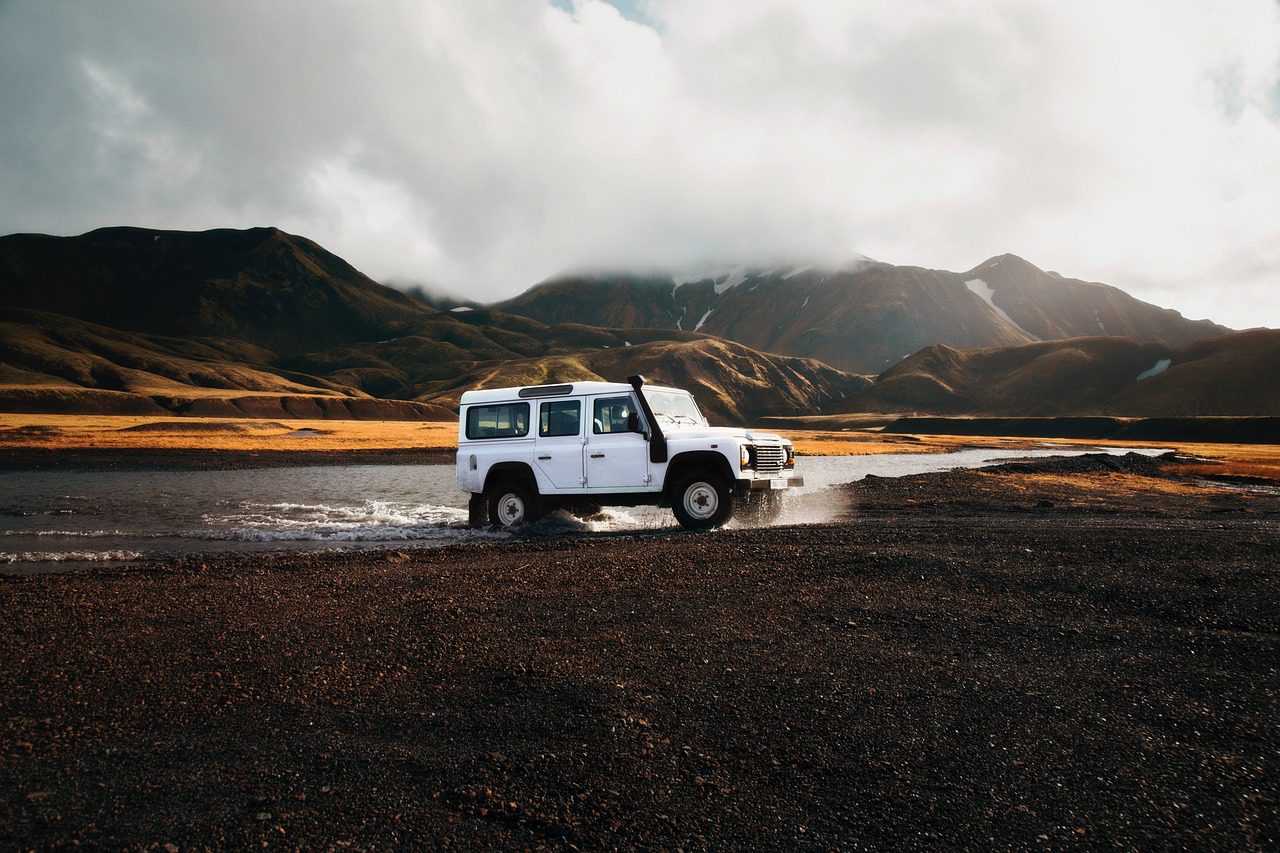
The first time we drove Iceland, we rented a compact car because it was the cheapest option and we figured Iceland was Iceland — dramatic enough that the car barely mattered. We were wrong. We got a gravel chip through the windscreen on day two, spent half an hour deciding whether to attempt a road our rental contract explicitly excluded, and spent the entire Ring Road worrying about every piece of loose stone. We had a fine trip. But we could have had a much better one.
The second time, we chose the right car. It changed everything. This guide is what we wish someone had given us before that first booking — a clear, practical answer to the question that actually matters before you land in Reykjavik: what is the best car for Iceland, and how do you choose it?
The best car for Iceland depends on your itinerary. For the Ring Road and popular day trips, a mid-size 4WD or large SUV is the sweet spot — not mandatory, but it buys you peace of mind on gravel sections and credibility at rental desks. For the Highlands and F-roads, a high-clearance 4WD with a portal axle is non-negotiable and legally required by most rental contracts. For a pure urban trip, a regular compact is fine. Pick your roads first, then pick your car.
- Iceland’s road categories — and why they determine your car
- The main rental car categories explained
- Quick-reference: which car for which trip
- What to watch out for in the rental contract
- Seasonal differences — summer vs winter car choices
- Our honest tips from two Iceland road trips
- Mistakes we made (and how to avoid them)
- FAQ
Iceland’s road categories — and why they determine your car
Iceland’s road system has a classification that most travel articles gloss over. Understanding it takes five minutes and is the single most useful thing you can do before clicking “reserve” on a rental.
Paved roads (Route 1 / Ring Road and major numbered routes)
These are Iceland’s best-maintained roads. The Ring Road — Route 1 — circles the entire island on mostly paved tarmac, though short sections near the east and north can turn to gravel without much warning. Any rental car can handle these. The limiting factor isn’t the road, it’s the wind: Iceland’s crosswinds can push a small, light car across a lane if you’re not ready for them. A heavier vehicle is more stable.
Gravel roads (numbered routes with gravel surfaces)
Many of Iceland’s secondary roads — those leading to waterfalls, remote farmsteads, and less-visited corners of the country — are well-graded gravel. These are driveable in a standard rental, but most budget rental contracts exclude gravel road damage, which is where things get expensive. Windscreen chips, tyre sidewall damage, and stone scratches to paintwork are not covered under basic insurance. You need either a gravel protection add-on or a car with robust enough tyres and clearance that you drive them with less anxiety.
F-roads (Highland roads, prefix “F”)
These are the roads that change everything. F-roads are unsealed highland tracks, often requiring river crossings, and are open only from mid-June to late September depending on snowmelt. They are legally off-limits to standard 2WD rental cars. If you drive an F-road in an excluded vehicle and need rescue — or just get a puncture — you are personally liable for the full recovery cost, which in Iceland’s highlands can run to thousands of euros. F-roads require a genuine high-clearance 4WD, and in many cases a vehicle with a portal axle (for deeper river crossings).
The main rental car categories explained
Iceland’s rental market runs a slightly different category system from mainland Europe. Here’s what you’ll actually encounter when you land at Keflavík and walk to the rental desk.
Economy and compact (2WD)
A Hyundai i10, Dacia Sandero, or similar. Perfectly adequate for Reykjavik, the Golden Circle, and the Blue Lagoon. Fine on Route 1 in dry summer conditions. Not suitable for F-roads, and gravel road damage typically not covered. If your itinerary is urban and Golden Circle only, this is a reasonable choice that saves money.
Mid-size 4WD / AWD crossover
A Toyota RAV4, Nissan Qashqai, or Subaru Forester. This is our recommendation for most Ring Road trips. It has all-wheel drive, decent ground clearance (around 20 cm), and is approved by most rental companies for gravel secondary roads. It won’t get you onto F-roads, but it covers 95% of what most Iceland visitors want to do. Gravel protection add-ons are worth buying for this category.
Large 4WD SUV
A Toyota Land Cruiser, Toyota Hilux, or Mitsubishi Pajero. Higher clearance, more capable on rough gravel, and better in stream crossings if you’re doing supervised Highland tours. Not necessarily F-road approved for solo driving — check the contract. These are expensive but genuinely comfortable for a week on Iceland’s roads.
Campervan
A separate category worth mentioning. Iceland’s campervans are almost always built on 4WD bases (Mercedes Sprinter 4×4, VW Crafter 4MOTION). They’re heavier and taller, which means wind sensitivity on exposed coastal sections. Iceland’s campervan scene is well-developed, with official campsites around the Ring Road — wildcamping is not permitted outside designated areas.
Quick-reference: which car for which trip
This is the section to screenshot before you go to the rental desk. Six scenarios, one clear recommendation each.
- Reykjavik + Golden Circle + Blue Lagoon only: Economy or compact 2WD. Save your money for the Geysir parking fees.
- Full Ring Road (Route 1), summer: Mid-size AWD crossover. Add gravel protection insurance. Budget 7–10 days.
- Ring Road + popular waterfalls and South Coast: Mid-size AWD crossover, gravel protection included. The road to Fjaðrárgljúfur canyon, for instance, is gravel.
- Snæfellsnes Peninsula: Mid-size AWD crossover minimum. Several roads on the peninsula are rough gravel and the wind exposure on the peninsula tip is significant.
- Westfjords: Large 4WD SUV. The Westfjords roads are some of the most remote and challenging in Iceland. Not dangerous if you’re careful, but you want proper clearance and a full-size spare.
- Highlands / F-roads (Landmannalaugar, Sprengisandur, Kjölur): High-clearance 4WD, portal axle, specifically approved for F-roads in your rental contract. The Kjölur route (F35) is one of the milder highland options and doesn’t require river crossings. Landmannalaugar (F208/F224) does. Know which one you’re targeting.
Letters from Rovaniemi
Real stories from the road, sent once a month. No filler, no sponsored fluff.
What to watch out for in the rental contract
Iceland’s rental contracts have more clauses than almost anywhere else we’ve hired a car. These are the five that trip people up most often.
- Gravel road exclusion: Most basic rental agreements exclude damage caused on gravel roads, including windscreen chips and tyre damage. This is not covered by your travel insurance either, in most cases. Buy the gravel protection add-on, or accept the risk knowingly.
- F-road prohibition: Explicitly stated in virtually every contract. Breaching it voids your insurance entirely and makes you liable for full recovery costs. There is no grey area here.
- River crossing prohibition: Even with a 4WD, most contracts prohibit unsupported river crossings. If you want to cross rivers in the Highlands, you need a specific contract that permits it — or join a guided Highland tour.
- Windscreen: Windscreen chips are the most common Iceland rental claim. The standard Super Collision Damage Waiver (SCDW) often covers body damage but not glass. Check the glass protection specifically.
- Single-driver clause: Some Icelandic rentals require all drivers to be listed. If you plan to share driving with a travel partner, make sure both of you are on the contract — getting caught with an unlisted driver driving can void your cover.
Seasonal differences — summer vs winter car choices
Iceland driving changes considerably between seasons, and so does the optimal car choice.
- Summer (June–August): F-roads open from mid-June (check road.is for live status). Gravel roads are at their most accessible. Ground clearance and AWD matter more than winter tyre type. The biggest hazard in summer is actually loose gravel chips — hence the windscreen insurance emphasis.
- Shoulder season (May, September–October): F-roads are either just opening or closing. Snow can appear at any elevation above 400m. An AWD vehicle becomes more valuable. Check road.is obsessively in October — mountain roads can close overnight.
- Winter (November–March): All rental cars in Iceland come with studded winter tyres by law. Route 1 is maintained but can close in blizzards. Side roads are often impassable for days after heavy snow. A larger, heavier 4WD is more reassuring in winter not because of traction (the winter tyres do that) but because of stability in wind and the psychological comfort of more metal around you on icy single-lane roads. For a winter trip, we would not go below a mid-size 4WD.
- The midnight sun factor: In June–July, you can be driving at 2am in full daylight, which means driver fatigue is a real risk. The car doesn’t change this, but it’s worth noting that larger, more comfortable vehicles are simply less tiring to drive for long stretches.
Our honest tips from two Iceland road trips
These are things we learned firsthand — not things we read in a brochure.
- Pay for the windscreen cover, no exceptions: Iceland’s gravel roads make windscreen chips a near-certainty on any trip longer than four days. The standard excess on a windscreen claim without cover is €200–400. The cover costs €8–15 per day. It always pays off.
- Book a 4WD even if you only plan paved roads: Iceland’s weather is changeable and so is your itinerary. More than once we added a detour we hadn’t planned, and the 4WD meant we could take it without anxiety.
- Bigger isn’t always better on single-lane bridges: Iceland has numerous single-lane bridges, including on the Ring Road. A long wheelbase vehicle handles them fine, but parking near them to take photos of the river is easier in a smaller car. It’s a minor point but worth knowing.
- Ask the rental desk specifically about road approvals: When you pick up the car, ask: “Which roads is this vehicle approved for?” Get them to confirm gravel roads and confirm F-roads are excluded. This five-minute conversation clarifies everything and is on record if there’s ever a dispute.
- Download the Vegagerðin app before you leave: Iceland’s road authority app shows live road conditions, closures, and highland road status. It’s more reliable than Google Maps for road type classification.
- Fuel up in Reykjavik before any long leg: Reykjavik has the best fuel prices on the island. The further east and north you go, the more expensive it gets. Fill up fully before leaving the capital.
Mistakes we made — and what we’d do differently
- Booking the cheapest car without reading the contract: On our first Iceland trip, we booked a compact online through a comparison site, chose the cheapest option, and didn’t read the rental agreement until we were at the desk. Three clauses were surprises. Read it at home, in advance, when you’re not jet-lagged and pressed for time.
- Assuming AWD meant F-road approved: It doesn’t. AWD is about traction. F-road approval is a separate contractual permission, based on the vehicle’s clearance, axle design, and the rental company’s risk assessment. Confirm the two things separately.
- Skipping the pre-rental photo walk-around: On the first trip, we didn’t photograph the car at pick-up. There was a small pre-existing scratch on the rear bumper that became a heated conversation at drop-off. We had no evidence it was already there. Now we spend five minutes on photos before we leave any rental lot, anywhere in the world.
- Trusting Google Maps road classification: Google Maps will draw a route onto a road without knowing its classification. It has no awareness of which roads are F-roads. Always cross-reference with road.is before deviating from the Ring Road.
- Not asking about the spare tyre: Some newer rental cars come with only a tyre repair foam kit. On Iceland’s gravel roads, a foam kit is better than nothing, but a full spare is significantly better. On our second trip we specifically asked and got a car with a mounted spare. Worth asking.
- Underestimating driving times: Iceland’s distances look short on a map. They are not short in time. The Ring Road is roughly 1,300 km and most of it has a 90 km/h speed limit, but gravel sections, single-lane bridges, wind, and photo stops mean daily driving times consistently run 30–50% longer than a map-based estimate. We now budget 6 hours of driving for what looks like a 4-hour day.
Frequently asked questions
Do I really need a 4WD for Iceland?
For the Ring Road and most popular routes in summer, a 4WD is not strictly mandatory — but it’s genuinely useful. AWD/4WD gives you peace of mind on gravel sections, stability in crosswinds, and the ability to take spontaneous detours on secondary gravel roads. If your itinerary is Reykjavik plus the Golden Circle only, a regular 2WD car is fine. For anything more adventurous, a 4WD crossover is worth the extra cost.
Can I drive Iceland’s F-roads in a regular rented SUV?
Almost certainly not — and you should check your contract before assuming you can. Most rental SUVs are not approved for F-roads, even if they’re 4WD, because F-roads involve river crossings and terrain that requires specific vehicle clearance and axle specifications. Driving an unapproved vehicle on an F-road voids your insurance and makes you personally liable for rescue costs. Always confirm F-road approval explicitly with the rental company.
What does “gravel protection” insurance cover?
Gravel protection specifically covers damage caused by gravel and stones on unpaved roads — primarily windscreen chips, small paint scratches from flying stones, and tyre sidewall damage. It does not cover driver error accidents, collision damage, or theft. It’s a separate add-on from the standard Collision Damage Waiver (CDW) and Super CDW. In Iceland, it’s almost always worth adding because gravel road damage is the most common claim on the island.
Is it cheaper to rent a car in Reykjavik city or at the airport?
Keflavík Airport rentals have a small surcharge — typically €15–30 total — compared to city pick-ups. However, picking up at the airport is almost always more practical because you arrive there and immediately start your trip. The surcharge is rarely worth saving by organising a bus transfer into the city and back. Book airport pick-up and factor the surcharge into your budget.
How does Iceland driving in winter compare to summer?
Winter driving in Iceland is a different experience. All rental cars come with studded winter tyres, which handle the ice well. The bigger challenges are daylight (5–6 hours in December–January), frequent road closures after blizzards, and the psychological weight of driving in complete darkness across remote terrain. We’d recommend summer for a first Iceland drive, and reserving winter for experienced winter drivers who are comfortable with whiteout conditions and icy single-lane roads.
What size car is best for two people doing the Ring Road?
For two people with standard luggage, a mid-size AWD crossover — a Toyota RAV4 or similar — is the sweet spot. It’s manageable to drive on Iceland’s narrower roads, has enough boot space for two people’s gear plus a spare wheel and emergency kit, and is comfortable for the long stretches between stops on the Ring Road. Going bigger is fine but adds wind sensitivity and fuel cost. Going smaller saves money but sacrifices both AWD comfort and luggage space.
A final word — from Rovaniemi, where we’ve learned to read road signs carefully
We’ve driven cars across 21 countries now, and Iceland remains the one destination where the choice of vehicle matters most. Not because Iceland’s roads are the most technically demanding — Norway’s mountain passes and Finland’s wilderness tracks have their own challenges — but because the gap between “right car” and “wrong car” in Iceland carries real financial and logistical consequences that other destinations don’t.
The good news is that choosing the right car for Iceland isn’t complicated once you know your itinerary. Figure out whether you’re staying on Route 1, venturing onto gravel, or aiming for the Highlands. Match that to the rental category. Add gravel protection and windscreen cover. Photograph the car before you leave the lot. And then get out there and drive — because Iceland from a car window, regardless of which car it is, is one of the most extraordinary things you can do as a traveller.
We’ll be back. We always come back to Iceland.