Camping in Iceland: What You Need to Know
From the rules that actually matter to the gear we genuinely used, here is our honest guide to camping in Iceland — written by a couple who’ve done it in wind, rain, and surprise sun.
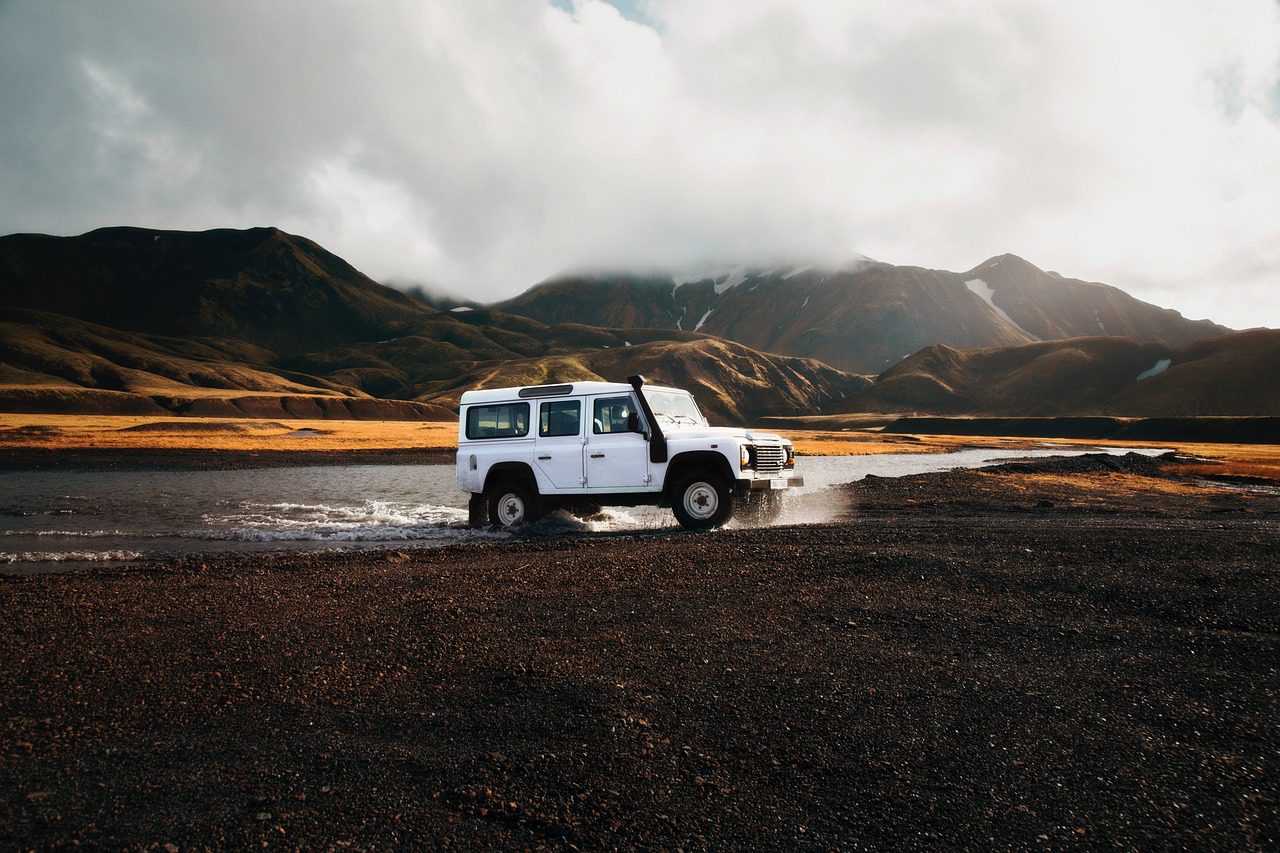
We drove Iceland’s Ring Road in summer and camped almost every night. The scenery kept changing so fast we barely wanted to sleep. Lupine fields, lava plateaus, glacier rivers, and one night a rainbow directly over our tent. Camping in Iceland is genuinely unlike anywhere else we’ve been in our 25 countries — partly because of the landscapes, and partly because the rules are clear, the facilities are decent, and almost every campsite accepts card payment at some tiny hut by the entrance.
This guide shares what we learned: the regulations you actually need to follow, how to book, what gear holds up in the weather, and the mistakes we made so you don’t have to repeat them.
Camping in Iceland is legal only in designated campsites — wild camping was banned nationwide in 2015. Most campsites are open June through August, cost roughly €10–18 per person per night, and require wind-proof gear, rain layers, and a sleeping bag rated to at least −5 °C even in July. Pre-book popular sites like Þórsmörk, Landmannalaugar, and Skaftafell in advance.
Is wild camping legal in Iceland?
This is the first question we get, and the answer is straightforward: no, wild camping in Iceland is not legal — and hasn’t been since a nationwide ban came into force in 2015. Before that, tourists were pitching tents on sensitive lava fields and fragile moss landscapes, and the damage was real. Iceland’s vegetation takes decades to recover; the ban was not optional.
What the law actually says
The Regulation on Camping (nr. 1200/2014) requires all camping to take place at designated, registered campsites unless you have the landowner’s explicit written permission. The rule applies to tents, campervans, and motorhomes equally. On national parks and protected reserves, permits are strictly enforced.
In practice, enforcement varies. On the Ring Road and in the Highlands, rangers do check. We saw a campervan fined near Landmannalaugar for parking off-site. Don’t risk it — the fines are meaningful and the ecosystem genuinely can’t handle the footfall.
What about campervan parking?
If you’re in a campervan (which is by far the most popular way to camp Iceland), you still need a registered campsite. Sleeping in a layby or at a petrol station is not legal camping, even if locals turn a blind eye in low season. Use the Camping Card system or book individual sites in advance — more on that below.
How to find and book campsites in Iceland
The ecosystem for finding Iceland campsites has improved enormously in the last few years. You have three main options:
The Iceland Camping Card (Tjaldkortet)
This is the best deal if you’re camping for more than 10–12 nights. A single card covers 28 nights for two adults at over 40 participating campsites across the island, for a flat fee of around €170–185 depending on the year. Children under 16 are free. For a 2–3 week Ring Road trip, it pays for itself easily.
You buy the card online before arrival. Check the list of participating sites carefully — Landmannalaugar and Þórsmörk are not included, which are two of the most spectacular spots. Budget separately for those.
Booking individual sites
For the most popular spots — Þórsmörk, Landmannalaugar, Skaftafell, Mývatn — pre-booking is essential in July and August. Each site has its own booking system. Check the Icelandic Forest Service (Skógrækt) for Highland sites, and the national park website for Vatnajökull / Skaftafell. We booked Þórsmörk four weeks out and there were already limited spots left for our dates.
Staying flexible on the Ring Road
Outside the Highland hot-spots, most Ring Road campsites in smaller towns — Vík, Höfn, Borgarnes, Akureyri — are walk-up in low season and easy to book last-minute. The app Campsites in Iceland is genuinely useful: it shows open sites, real-time reviews, and distance from your current location.
Campsite checklist: 8 things to confirm before you arrive
Not all Icelandic campsites are equal. Some are purpose-built with heated bathrooms and kitchen huts; others are a flat field with a cold-water tap. Before confirming a booking, check:
Many sites open only June 1 and close August 31 or September 15. Arriving in late May or early September to a locked gate is more common than you’d think.
Basic sites have only a toilet block. Better sites have hot showers (often coin-operated, 200–500 ISK for 5 minutes). Check reviews — “basic facilities” can mean anything.
Some sites have a communal kitchen hut with gas rings. Others have nothing. If you’re camping in a tent without a stove, a kitchen hut makes a huge difference on cold evenings.
Wind in Iceland is not gentle. Check whether the site has natural or built wind breaks. Open flat sites near the south coast or in the Highlands can be brutal for standard tents.
Iceland is almost cashless, so most sites take card. But a few rural spots require the Camping Card or app payment. Confirm before driving 40 km down a dirt track.
Highland campsites like Landmannalaugar require driving F-roads, which are closed until late June or even July depending on snowmelt. Check the Vegagerðin road website before planning your Highland nights.
If you have a campervan, check whether hookup points are available. Highland sites rarely have them; Ring Road town sites usually do. An extra €3–5 per night is typical.
Open fires are not permitted at most Icelandic campsites. Bring a gas stove. Some sites have designated fire pits — it’ll say so clearly in the site listing.
We write from the Arctic. Every two weeks.
Practical trip ideas, honest destination takes, and the occasional post from somewhere remote. No noise.
💡 Our campervan tip: prices for the same van vary a lot between rental brands. We compare Iceland campervans across 160+ rental companies on CampervanPlanet — and code HUNGRYTRAVELFAMILY5 takes 5% off.
What gear you actually need
This is where most first-time Iceland campers get it wrong. You pack for a Scandinavian summer and arrive to four-degree rain and horizontal wind at 10 pm. Iceland’s weather is genuinely unpredictable even in July — we had brilliant sunshine for four days and then a full day of sleet in the Westfjords.
The non-negotiables
- A four-season or 3+ season tent with a full-coverage inner: freestanding, with taped seams and a sturdy pole system. Cheap festival tents collapse. We used a Hilleberg Niak and would do so again without hesitation.
- Sleeping bag rated to −5 °C minimum: even mid-July nights can drop to 5–7°C. A 0°C bag is fine for most of summer; −5°C gives you margin.
- Sleeping mat with R-value 3+: ground cold is underrated. An inflatable mat with insulation beats a cheap foam pad massively.
- Waterproof rain jacket and trousers: not water-resistant — waterproof. Same for boots. We went through waterproof socks too and they were worth every cent.
- Windproof layers: fleece or a light down jacket under a shell. Temperatures feel 8–10 degrees colder in wind.
- Headtorch: technically unnecessary in June/July (midnight sun), but essential if you’re camping in May or August.
- Gas stove and fuel: buy fuel on arrival in Reykjavik — don’t fly with it. MSR or Primus canisters are widely available at outdoor shops near Laugavegur.
- Tent pegs appropriate for lava: standard pegs don’t hold in loose lava gravel. Bring a mix of V-pegs and longer sand/snow pegs for soft ground near rivers.
Iceland camping vs camping elsewhere in the Nordics
We’ve camped across Finland, Norway, Sweden, and the Faroe Islands, so the comparison is real. Iceland is its own thing.
- Wild camping: Sweden and Finland have allemansrätten / jokamiehenoikeus — the right to roam and camp freely in nature. Norway has similar rights. Iceland does not. If you’re used to pitching anywhere in Scandinavia, reset your expectations completely.
- Cost: Iceland campsites are more expensive than Norwegian or Finnish ones, but still the cheapest accommodation option on the island by far. Expect to pay 2–3x more per night than in Finland.
- Weather unpredictability: Norway and Finland can be cold and rainy, but Iceland is in a class of its own. The wind especially. Camping in the Faroe Islands is the closest comparison — both are Atlantic islands with weather that changes in 20 minutes.
- Facilities: Icelandic campsite infrastructure has improved rapidly. Many Ring Road sites now have modern heated bathrooms, which beats most of the Norwegian backcountry sites we’ve used.
- Midnight sun: all the Nordic countries north of the Arctic Circle have midnight sun in summer, but Iceland’s it adds a surreal quality to camping — the light at 1 am is golden and the landscape looks like a film set. Bring an eye mask regardless.
Mistakes we made on our Iceland camping trip
- Underestimating the wind. Our tent pegs pulled out twice near Vík. Iceland’s south coast is infamous for gusts that appear out of nowhere. Guy-rope everything, even in calm weather.
- Not pre-booking Þórsmörk early enough. We arrived mid-July and had to take the last remaining spot on the edge of the site, next to the generator. Book Þórsmörk at least 3–4 weeks ahead.
- Assuming F-roads were open. We drove 30 minutes down a highland F-road in early June before hitting a closed gate at a river crossing. Check Vegagerðin the morning you depart, every time.
- Packing a 0°C sleeping bag for a May trip. May evenings in Iceland drop further than you expect. We were cold every night until we hired a liner in Reykjavik. Add a liner or bring a warmer bag.
- Forgetting the eye mask. Midnight sun means your tent is bright at 2 am. This sounds like a small thing until you’ve slept badly three nights in a row.
- Buying gas canisters at the airport. They’re both expensive and limited there. The outdoor shops in Reykjavik city center have far better range and prices.
Book your Iceland campervan
Compare prices across 160+ campervan and motorhome rental brands, get a free 1GB eSIM with every booking — and 5% off with code HUNGRYTRAVELFAMILY5.
Check prices & availability →Frequently asked questions
Is camping in Iceland free?
No. All camping in Iceland must be at designated paid campsites. Prices typically range from €10–18 per adult per night. The Iceland Camping Card is the best value for trips of 12+ nights, covering 28 nights at participating sites for roughly €170–185.
Can I wild camp in Iceland?
No — wild camping has been illegal in Iceland since 2015 unless you have explicit written permission from the landowner. The law applies to tents, campervans, and motorhomes equally. Fines are issued, particularly in national parks and highland areas.
When is camping season in Iceland?
Most campsites are open from June 1 to August 31. A smaller number open from late May and stay open through mid-September. Highland sites (Landmannalaugar, Þórsmörk) depend on F-road access, which typically opens in late June. Outside this window, options are very limited.
Do I need to book campsites in advance?
For the most popular sites — Þórsmörk, Landmannalaugar, Skaftafell, Mývatn — yes, absolutely and as early as possible for July/August dates. Ring Road town sites in smaller villages are usually fine on a walk-up basis outside peak weeks.
What sleeping bag do I need for camping in Iceland in summer?
At minimum, a bag rated to 0°C for June through August. For May or September, bring a −5°C bag or add a liner to a summer bag. Even July nights can dip to 5°C, and the wind makes it feel colder. Don’t underestimate Iceland’s summer temperatures.
Is the Iceland Camping Card worth it?
Yes, if you’re camping for more than 10–12 nights across the island. One card covers 28 nights for two adults at 40+ participating sites. At around €170–185, it saves significantly versus paying individually. Check the participating site list first — Þórsmörk and Landmannalaugar are not included.
A final word from Rovaniemi
We came home from Iceland with damp gear, a camera full of lava landscapes, and a slightly irrational affection for a country that tried to blow our tent down on three separate occasions. That’s what camping there does to you.
The regulations are not obstacles — they’re the reason Iceland still looks the way it does. The moss you walk through near Landmannalaugar took 50 years to grow. The campsite system works precisely because everyone uses it. Follow the rules, book ahead for the popular spots, bring gear that can handle real weather, and you’ll have one of the best camping experiences you can get in Europe.
We’d go back tomorrow if it weren’t for the small matter of living above the Arctic Circle and having a wedding business to run between road trips. But we’re already looking at the map again.
Joona & Alla
A Finnish-Ukrainian couple living in Rovaniemi, Finland. Joona is a marketing professional in Lapland tourism; Alla is an AI Engineer. Together we’ve visited 25 countries and share honest, locally-grounded travel writing from our home in the Arctic.
Read our full story →