How Cold Is Too Cold for a Husky Ride? (Real Lapland Numbers): Real Lapland Numbers
We live in Rovaniemi and have done husky tours at −28 °C. Here's the honest breakdown: the official temperature cut-off, what to wear at each range, and whether cold weather should actually worry you — spoiler, it usually shouldn't.
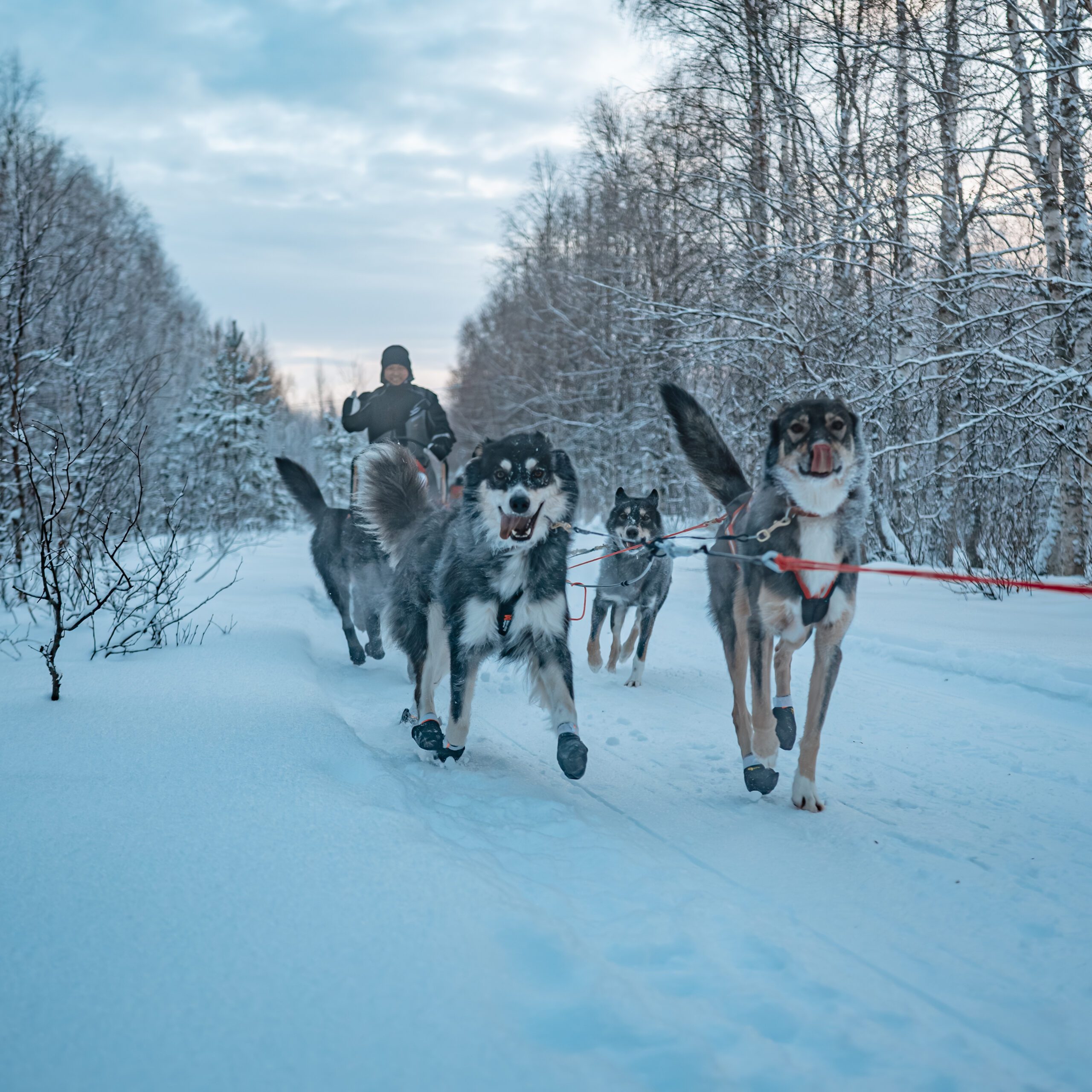
This guide is built from what we have learned living in Rovaniemi and writing about Lapland travel for years. Every detail below is from first-hand experience or from the live StayLapland product pages — never invented.
The official temperature cut-off for the Nulkki Husky Adventure is −35 °C for adults — below that, tours are rescheduled or shortened for safety. For young children the limit is stricter: −25 °C. Between −20 °C and −35 °C the tours run as normal — just make sure you're wearing the thermal overalls and boots included in the price. We've done it at −28 °C and it was fine. Book the Nulkki Husky Adventure5% off · HUNGRYTRAVELFAMILY5 with our discount code and dress for the cold.
Our pick · 5% off with code HUNGRYTRAVELFAMILY5
Nulkki Husky Adventure
Live dates and prices open right here on this page — you book directly with StayLapland and stay on hungrytravelfamily.com.
Get our 3-Day Rovaniemi Planner (PDF)
Which tour on which day, real prices, what to wear, and the six mistakes that waste a night. We also send the code that takes 5% off every husky, aurora and snowmobile tour.
One email a month from Rovaniemi, unsubscribe any time. Check your inbox to confirm and the planner opens instantly.
- How cold does Rovaniemi actually get?
- The official temperature limit for husky tours
- What happens when it's too cold?
- What to wear at −20 °C, −25 °C, and −30 °C
- How to check the temperature before your tour
- Cold vs. good conditions: what we prefer
- Is cold weather worth worrying about?
- Frequently asked questions
- Final word
How cold does Rovaniemi actually get?
We live in Rovaniemi year-round, and yes — it gets genuinely cold. The average January temperature sits around −13 °C to −16 °C, but night-time dips to −25 °C or colder happen several times each winter. The record lows brush −40 °C, though that's rare. The practical range for most visitors who book a December–March trip is somewhere between −5 °C and −30 °C. Most days fall in the −10 °C to −20 °C window, which is perfectly manageable with the right clothing.
What catches many visitors off guard isn't the thermometer reading — it's the wind chill. In Rovaniemi's forests and open fields, even a light breeze at −15 °C can feel considerably colder. On a husky tour you're moving through the trees on a sled, which creates its own wind. That's why layering matters more than fixating on a single temperature number.
The good news: the most brutal cold snaps — −30 °C and below — typically last only a few days at a time, not weeks. If your trip spans several days, chances are you'll see temperatures across a fairly wide range.
The official temperature limit for husky tours
StayLapland publishes clear cut-offs for the Nulkki Husky Adventure: the tour operates down to −35 °C for adults. Below that threshold, it can be rescheduled or converted into a guide-driven experience for safety. For small children, the limit is tighter at −25 °C — at colder temperatures the risk of cold-related injury rises fast for little ones.
These aren't arbitrary numbers. At −35 °C, exposed skin can get frostbitten within minutes, and controlling a husky sled requires removing gloves briefly to handle the brake. The guides monitor forecasts daily and communicate changes as early as possible. If you're travelling with children under 13, book with the −25 °C limit firmly in mind — and check the forecast for your specific date a day or two before.
There's also a minimum group size rule: at least 2 people are needed on weekdays and Saturdays, and at least 4 on Sundays and public holidays. If the group is too small, the tour may also be cancelled or rescheduled — worth keeping in mind if you're planning a solo trip.
What happens when it's too cold?
If temperatures drop below the safety threshold for your booking, StayLapland will contact you. The options are typically: reschedule to another date, convert the experience to a guide-driven sleigh ride (you ride as passenger rather than driver), or cancel with a full refund. The 24-hour free cancellation policy applies — if you need to cancel due to weather at shorter notice, the situation is usually handled case by case.
In our experience living here, true −35 °C events are uncommon. Over a typical three-day Rovaniemi stay in January or February, you might hit one such day at most. The smarter concern isn't whether the tour gets cancelled — it's whether you are comfortable at −20 °C to −28 °C, which is the most common range. That comes down entirely to clothing, which we cover next.
One more note: even at temperatures well within the operating range, the guide reserves the right to shorten the route if conditions deteriorate suddenly. Finnish winter weather can shift quickly. Build a little flexibility into your schedule.
What to wear at −20 °C, −25 °C, and −30 °C
The Nulkki Husky Adventure includes full winter clothing in the price: thermal overalls, insulated boots, gloves, and socks. These are purpose-built Lapland activity suits — far warmer than anything most visitors pack. You do not need to bring your own snowsuit. What you should bring from home is a solid base layer: thermal leggings and a long-sleeve merino or synthetic top. On your torso, a mid-layer fleece helps at the colder end of the range.
Here's how we think about dressing by temperature:
- −10 °C to −20 °C: Base layer + fleece + the included overalls. Light wool hat, liner gloves under the provided outer gloves. Comfortable and enjoyable.
- −20 °C to −30 °C: Thermal base layer (top and bottom) + mid-layer fleece + overalls. Wool hat covering your ears, a neck gaiter or balaclava. Hand warmers in your pockets as backup. Manageable for most adults — this is the range we've mushed in ourselves.
- −30 °C to −35 °C: Everything above, plus a second mid-layer, a balaclava covering your nose and cheeks, and chemical heat packs. At this range, moving parts of your face quickly becomes uncomfortable. The guides will brief you specifically and keep an eye on the group.
For children, dress them two layers warmer than you'd dress yourself. Small bodies lose heat faster. At −25 °C with a well-dressed child, the experience is still very doable — they often love the sled more than adults do.
How to check the temperature before your tour
We use two sources: foreca.fi (very accurate for Rovaniemi specifically) and the Finnish Meteorological Institute (ilmatieteenlaitos.fi). Both show hour-by-hour forecasts. The Nulkki tour departs at 10:00, so check the 10:00–14:00 window for your date. Forecasts beyond five days are rough guides only — for a December or January booking, don't panic about a −30 °C forecast in October. Check again the week before and the night before.
StayLapland monitors conditions themselves and will reach out if cancellation or rescheduling looks likely. Their response time is good — we've seen communications go out 18–24 hours before problematic dates. That said, it's worth checking your booking confirmation email for a contact number in case you want to reach them directly.
One local tip: temperature in the Kuoksajärvi Forest area (where the Nulkki tour runs) can be 2–4 degrees colder than the Rovaniemi city centre reading. If the city is showing −28 °C, plan for −30 °C out in the trees.
Cold vs. good conditions: what we prefer
Here's the honest answer from two people who spend entire winters here: −15 °C to −22 °C is the sweet spot. Cold enough that the snow is dry and powdery (better for the sled runners, better photos), but not so cold that your face needs constant attention. At these temperatures the huskies are visibly energised — they move faster and with more enthusiasm than on milder days.
The worst conditions for a husky tour aren't actually cold temperatures — they're warm and wet ones. Above −5 °C the snow becomes slushy, visibility can drop in heavy snowfall, and the huskies tire more quickly. We'd genuinely rather do the tour at −25 °C than at −2 °C. Counterintuitive but true.
Very cold days (−28 °C to −32 °C) have a magical quality — the trees are frosted, the air is completely still, and the silence is extraordinary. If you're properly dressed, these can be the most memorable Lapland days of your trip. We don't encourage chasing extreme cold, but don't dread it either.
Is cold weather worth worrying about?
Not particularly — not if you approach it practically. The tour operators know the limits, the included clothing is genuinely adequate for Lapland conditions, and the guides watch out for their guests. The biggest cold-weather risk isn't the tour operator's fault: it's visitors who leave their hotel in jeans and a city jacket and then discover they forgot their warm base layers at home.
If you're flying in for a short trip, pack your thermals and a hat in your carry-on, not checked baggage. That way even if your suitcase is delayed, you're covered. Rental thermal gear is available in Rovaniemi, but sorting it on the morning of your tour adds stress. Bring your own base layers and let the included overalls handle the rest.
Children get cold faster than adults and are less good at saying so. Build in time to warm up between activities, make sure they're fed and hydrated, and have a plan for heading indoors if they need it. The Nulkki Husky Adventure is 4 hours in duration — that's manageable for kids who are properly dressed and excited, which most are.
Frequently asked questions
What is the coldest temperature the Nulkki Husky Adventure runs at?
The tour operates down to −35 °C for adults. Below that, it may be rescheduled or run as a guide-driven experience. For small children the limit is −25 °C.
Do I need to bring my own winter clothing?
No. The Nulkki Husky Adventure includes full winter clothing: thermal overalls, boots, gloves, and socks. Bring a base layer (thermal leggings and top) from home — that's the main thing most visitors forget.
What happens if the temperature drops below the limit on my booking date?
StayLapland will contact you and offer to reschedule, run a guide-driven version, or cancel with a full refund. Free cancellation applies up to 24 hours before the tour.
Is it safe for children at −20 °C?
Yes, with proper clothing. Children must be at least 3 years old to participate. Under 13s must be accompanied by an adult paying the full price. Dress children two layers warmer than adults and check the specific forecast for your date.
Is there a temperature above which husky tours are also affected?
Above around −5 °C, snow conditions deteriorate. Tours still run but sled performance and the overall aesthetic changes. Huskies also tire more quickly in mild weather. Cold, dry days are genuinely better for the experience.
What time does the tour start and do pickups run in very cold weather?
The tour starts at 10:00 daily with hotel pickup included from Postmaster Hotel, Aurora Hill Resort, Rovaniemi City, and Santa Claus Holiday Village. Pickup runs in cold weather — just be ready 10 minutes before your scheduled collection time.
Final word
Cold weather is part of Lapland — it's the reason the snow is here, the reason the huskies love running, and the reason the forest looks the way it does. The temperature limits exist and they're sensible, but most visitors will never come close to hitting them. The real question isn't "is it too cold?" — it's "am I dressed correctly?" Sort your base layers, trust the included thermal suit, and let the huskies do the rest.
The Nulkki Husky Adventure runs from €189 and includes everything you need for a 5 km self-driven husky sleigh ride through the Kuoksajärvi Forest. Hotel pickup, winter clothing, a guide, cookies and juice — it's a properly put-together experience. We've done it in deep cold and it remains one of our favourite Lapland mornings.
Check live dates and prices for Nulkki Husky Adventure
Pick your date below to see real-time availability. Enter HUNGRYTRAVELFAMILY5 at checkout for 5% off.
Browse our Rovaniemi picks
Tap a category to see every tour with live prices — it opens right here. Code HUNGRYTRAVELFAMILY5 gives you 5% off at checkout.
Code HUNGRYTRAVELFAMILY5 works on every StayLapland activity. We work with StayLapland and may earn a small commission — it does not change your price.
Get our 3-Day Rovaniemi Planner (PDF)
Tour-by-tour plan with real prices, plus the code that takes 5% off every StayLapland activity. One email a month, from Rovaniemi.