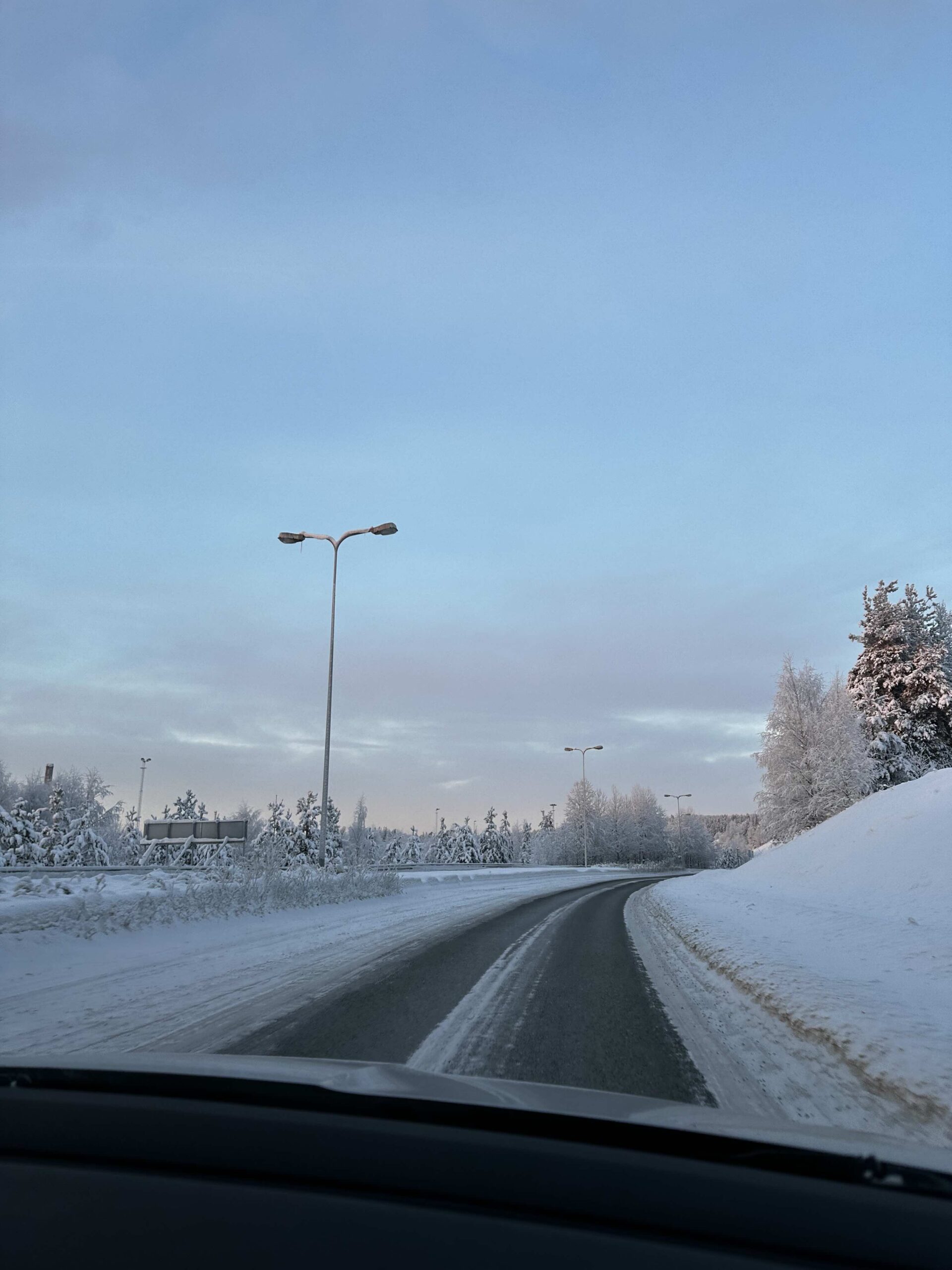
Every campervan rental page in Finland shows you a daily price, and then, once you get to checkout, a second screen full of insurance options that can add anywhere from a few euros to €30 or more a day. Most of the questions we get from readers heading here aren’t about the campervan itself — they’re about that second screen, and whether they’re about to pay twice for the same cover or leave a real gap uncovered.
We’re not insurance brokers, and Finland doesn’t have some special campervan-specific insurance regime you need a law degree to parse. The mechanics are the same ones behind any car or motorhome rental, worldwide. What follows is how we’ve come to understand the layers, in plain language, so the checkout screen stops feeling like a trick question.
Rental insurance in Finland works in the usual three layers: a baseline Collision Damage Waiver (CDW) that comes with an excess (a chunk you’re liable for before the waiver kicks in), an optional super-CDW or zero-excess add-on that reduces that number, and — separately — whatever your own credit card or travel insurance claims to cover, which is worth checking rather than trusting on faith. On Finland’s gravel forest roads specifically, ask what happens to windscreen and undercarriage damage before you sign, since that’s where basic cover most often falls short.
What “insurance” actually means when you rent a campervan
Strip away the branding and every rental company’s insurance menu boils down to the same idea: someone has to be financially responsible if the van gets damaged, and the question is how much of that responsibility sits with you versus the rental company. Nothing here is unique to campervans — it’s the same structure as renting a regular car, just with a bigger, more expensive vehicle attached to the numbers.
The rental price you see upfront on Finland campervan rental comparisons like CampervanPlanet almost always includes some baseline cover already, because no rental brand hands over the keys with zero protection. The part you’re actually deciding at checkout is how much of the financial risk you personally want to keep, and how much you’d rather pay a daily fee to hand back to the rental company.
CDW: the baseline, and where it stops
Collision Damage Waiver (CDW) is the standard layer bundled into most campervan rentals in Finland by default. In plain terms, it waives your liability for damage to the vehicle itself, up to a point — that “up to a point” is the excess, which we’ll get to next. CDW typically covers the obvious stuff: another car hitting you, a dent from a car park mishap, storm damage.
What it typically does not cover, across most rental agreements we’ve seen (always confirm the specific terms with your provider, since this varies): damage to the underside of the vehicle, tyre and windscreen damage, and anything caused by driving somewhere the rental agreement says you shouldn’t have — reversing off marked roads, for instance, or ignoring a weight-restricted bridge. Those exclusions matter more here than in a lot of countries, for reasons we’ll get into in the Finland-specific section.
Excess: the number that decides your bad day
The excess (sometimes called the deductible) is the amount you’re on the hook for before CDW starts paying out. It’s usually the single most important figure on the whole insurance page, and it’s often printed smaller than the daily price. On standard rental vehicles across the Nordics we’ve generally seen excess figures running into four figures — sometimes well over €1,000 — and campervans, being bigger and pricier to repair, tend to sit at the higher end of that range rather than the lower one.
Practically, this means: if you scrape a wing mirror on a narrow forest track, the CDW-with-standard-excess route can still leave you paying a meaningful sum out of pocket, even though “you have insurance.” That gap between “covered” and “fully covered” is exactly what the next tier of options is trying to close.
💡 Our campervan tip: prices for the same van vary a lot between rental brands. We compare Finland campervans across 160+ rental companies on CampervanPlanet — and code HUNGRYTRAVELFAMILY20 takes €20 off.
Zero-excess and super-CDW: worth it?
Most providers you’ll find through a Finland campervan comparison offer an upgrade — often called super-CDW, zero-excess, or a “premium protection” package — that reduces or eliminates that excess figure for a daily fee. Whether it’s worth paying comes down to simple maths: multiply the daily fee by the length of your trip, and compare that total against the excess amount you’d otherwise be exposed to.
On a two-week Finland trip, if the upgrade costs €15–25 a day, you’re looking at roughly €210–350 total to protect against an excess that might run to €1,000–2,000 or more. We tend to take this kind of upgrade on longer trips or in a vehicle we’re not used to driving, and skip it on very short rentals where the maths tips the other way. There’s no universally “right” answer here — it’s a straightforward bet on how likely you think a scrape is, weighed against what you’re comfortable losing if it happens.
Credit card cover: the real small print
This is the one that catches people out the most, and it’s worth being blunt about it: a lot of travellers assume their credit card’s built-in rental car insurance means they can decline everything at the counter. In our experience talking to other road-tripping families, that assumption is risky for a few common reasons, all worth checking against your specific card’s terms before you rely on it.
First, many card-based rental cover policies explicitly exclude campervans, motorhomes and larger vehicles above a certain size or value — the fine print is usually written with an ordinary hire car in mind, not a 6-metre motorhome. Second, some policies only apply if you paid for the entire rental on that card, not just a deposit. Third, card cover is frequently an excess-reimbursement product rather than primary insurance — meaning you still pay the rental company’s excess upfront if something happens, then claim it back from the card issuer afterwards, which is a very different cash-flow situation than “covered” implies. None of this means card cover is useless; it means it’s worth reading your own card’s actual terms rather than assuming, and treating it as a possible reimbursement layer rather than a reason to skip the rental company’s own cover entirely.
Finland’s specific risks on gravel and forest roads
Finland’s road network is excellent by international standards on the main routes, but a genuine chunk of the most scenic campervan driving here — down to a lakeside cabin, out to a quiet wild-camping spot — happens on unsurfaced forest roads (metsätie) and gravel stretches where standard CDW’s exclusions become relevant rather than theoretical. A kicked-up stone chipping a windscreen, or a rougher-than-expected gravel track putting a dent in the underside, are the kind of incidents that fall squarely into the gaps we described in the CDW section above.
The other Finland-specific risk worth naming plainly: wildlife on the road, particularly reindeer in the north and moose further south, especially around dawn, dusk and the darker months. A wildlife collision is usually covered as a standard insured event rather than an exclusion, but it’s a real enough risk on rural Finnish roads that it’s worth driving cautiously at low-light hours regardless of what your policy says — no insurance tier makes that kind of impact pleasant. If you’re heading into Rovaniemi and want to compare a campervan against just renting a car for your Lapland activities specifically, we’ve written separately about motorhome versus campervan for a Finland trip, which goes into vehicle size trade-offs that affect your insurance decision too — a smaller van is simply less to worry about on a narrow forest track.
How we’d actually choose cover for a Finland trip
For a short trip sticking mostly to sealed main roads — say, Rovaniemi to Helsinki and back on the E75 — we’d probably take the standard CDW that comes bundled with the rental and skip the upgrade, since the odds of a serious incident on well-maintained roads are genuinely low. For a longer trip that includes forest roads, wild-camping detours, or driving in winter conditions, we’d lean toward the zero-excess upgrade, simply because the maths on a two- or three-week trip usually favours it once you’ve priced out the excess exposure.
Either way, our actual process is the same every time: compare the base rental price and the insurance options together, not separately, across a few providers — which is the entire reason we use our campervan rental guide to compare Finland rentals rather than booking the first listing we see — and read exactly what’s excluded before deciding. If you’re renting through CampervanPlanet’s Finland listings, code HUNGRYTRAVELFAMILY20 takes €20 off whichever cover level you land on. And if you haven’t settled on automatic versus manual transmission yet, that’s a separate practical question we cover in our guide to automatic campervans in Finland — worth sorting before insurance, honestly, since it affects which vans are even on your shortlist.
Book your Finland campervan
Compare prices across 160+ campervan and motorhome rental brands, get a free 1GB eSIM with every booking — and €20 off with code HUNGRYTRAVELFAMILY20.
Check prices & availability →Frequently asked questions
Is campervan insurance different from car rental insurance in Finland?
Not structurally — it’s the same CDW-plus-excess model used for car rentals generally. The main practical difference is that excess amounts and daily upgrade fees tend to run higher, simply because campervans cost more to repair than a small hire car.
What is CDW and does it cover everything?
Collision Damage Waiver reduces your liability for damage to the vehicle, but it isn’t full cover — it typically leaves you liable up to the excess amount, and commonly excludes things like tyres, windscreens, and underside damage. Always check the specific exclusions with your rental provider.
Should I buy the zero-excess or super-CDW upgrade?
It depends on your trip. Compare the total upgrade cost (daily fee × number of days) against the excess figure you’d otherwise carry. For longer trips or ones including gravel and forest roads, we generally think the upgrade is worth it; for a short trip on main roads, it’s a closer call.
Does my credit card’s travel insurance cover a campervan rental?
Maybe, but check the fine print rather than assuming. Many card-based rental policies exclude motorhomes and larger vehicles, require the full rental to be paid on that card, and often work as excess reimbursement rather than upfront cover — you may still need to pay the rental company’s excess first and claim it back afterwards.
Are gravel roads in Finland covered by standard rental insurance?
Usually the roads themselves aren’t the issue — driving on a public gravel road is normal and expected in Finland. The risk is specific damage types (windscreen chips, underside scrapes) that many standard CDW policies exclude regardless of which road you were on. Ask your provider directly if you’re planning much unsurfaced driving.
What happens if I hit a reindeer or moose while driving a rental campervan?
A wildlife collision is generally treated as a standard insured incident rather than an exclusion, but you’ll still want to report it and follow your rental agreement’s process. It’s a real enough risk in rural Finland, especially at dawn, dusk, and in darker months, that slowing down in those conditions matters more than which insurance tier you picked.