What’s It Actually Like to Drive Through Swedish Lapland in Winter?
We’ve driven Arctic roads from our home in Rovaniemi across into Sweden more times than we can count. Here is the honest account of what the Swedish Lapland winter drive is really like — roads, darkness, wildlife, and all.
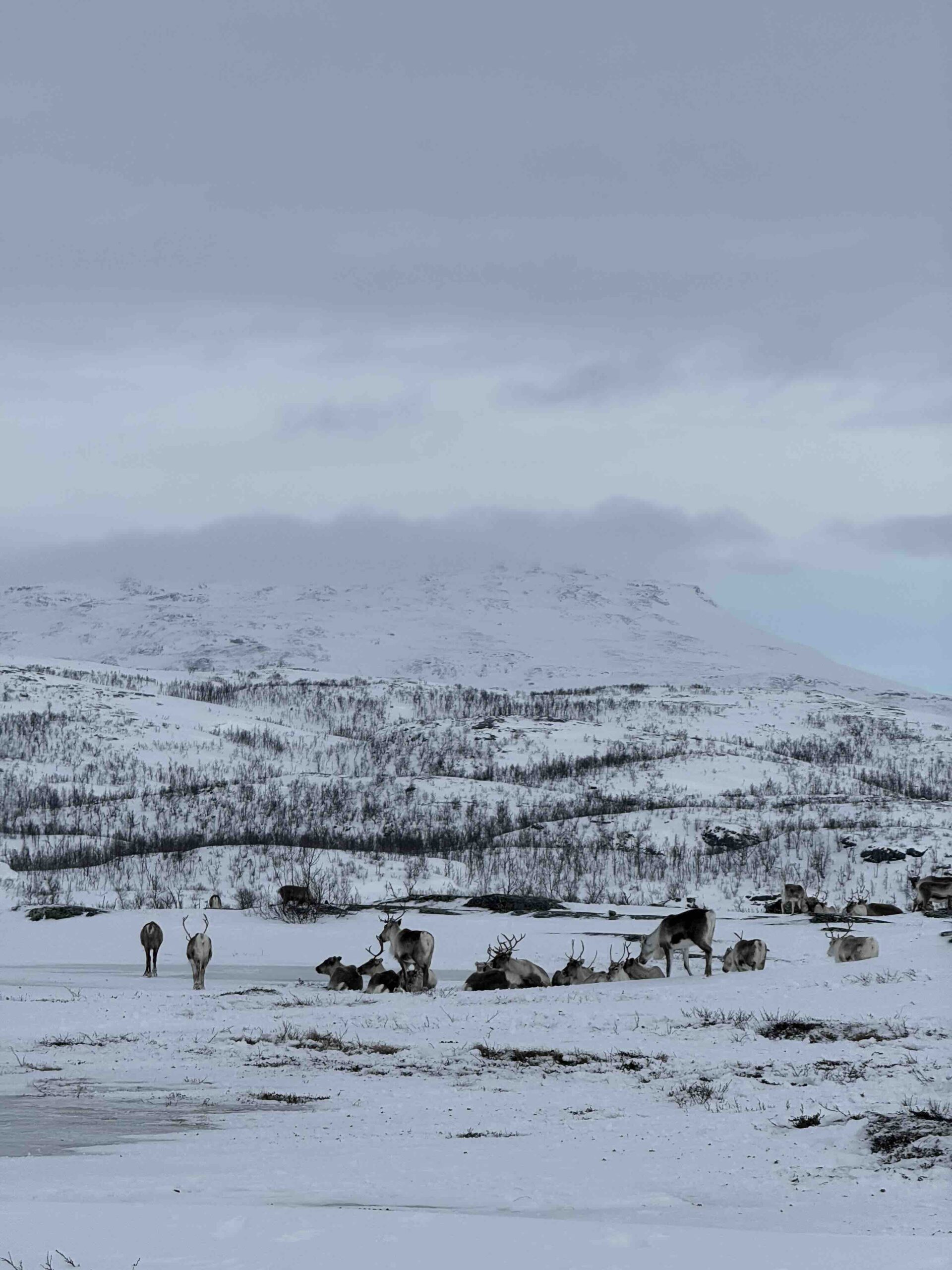
Living in Rovaniemi, we are closer to Swedish Lapland than most people realise. The border crossing at Karesuando is roughly a three-hour drive from our front door. We have done the crossing in late November polar night, in February deep-freeze at −30 °C, and in the faint blue light of March when the sun just starts to creep above the horizon for an hour or two. Each time feels different. Each time leaves the same impression: this is one of the most beautiful and quietly demanding drives in the world.
If you are planning a Swedish Lapland winter drive, this guide is the honest version you won’t find in a tourist brochure.
Driving through Swedish Lapland in winter is absolutely doable with the right car (winter tyres mandatory), patience, and realistic expectations. Roads are well-maintained but conditions change fast. Distances are vast, fuel stops are sparse, and daylight is measured in minutes during polar night — but the silence, the forest, and the wildlife make it one of the most memorable drives in Scandinavia.
What the roads are actually like — the honest version
Swedish road authorities (Trafikverket) do a genuinely excellent job of keeping the main routes clear. The E10, E45, and Highway 98 through Swedish Lapland are ploughed regularly and gritted on the worst days. On a typical winter morning you will find packed snow or ice on the surface — not the icy glaze you might imagine, but a compressed white layer that studded winter tyres bite into confidently.
That said, conditions can shift within an hour. A clear, cold morning at −18 °C with perfect grip can turn into a blowing snowstorm that cuts visibility to fifty metres. The Swedes drive in this as normal. We do too, now. But if you are not used to it, slow down and pull over if you need to.
Road conditions by month
- November: early winter. Snow arrives but lakes are not yet frozen solid. Roads are icy but manageable. Expect darkness from mid-afternoon.
- December–January: polar night or near-polar night. Roads are at their most consistently frozen. Grip is actually better on a cold dry day than on a milder slushy one. Plan every fuel stop in advance.
- February: cold, clear, and crisp. Our favourite driving month. Light is returning but still very short. Roads are reliable. Aurora conditions are excellent.
- March: daylight grows fast. Snow bridges over rivers can weaken. Spring thaw may arrive late March, making some smaller forest roads temporarily impassable.
The route: getting into Swedish Lapland from Finland or the south
There are several ways in, depending on where you are starting. We typically cross from Rovaniemi via Finland’s Highway 21 to the border bridge at Karesuando/Pajala, but there are routes further north and south too.
Main entry points
- Karesuando (Finland–Sweden border on the Torne River): the most natural crossing from Finnish Lapland. Small villages on both sides. The crossing itself is a bridge over the frozen Torne River in winter.
- Riksgränsen (via Norway’s E10): if you are coming from Narvik or the Lofoten direction, the E10 crosses into Sweden at Riksgränsen, giving you immediate access to the mountains around Abisko.
- From the south via E45: the “Inland Road” running north through Östersund and Gällivare. Slower but quieter than the coastal E4.
The absolute key towns to know are Kiruna (the major hub with fuel, food, and accommodation), Gällivare, Jokkmokk, and Abisko near Torneträsk lake. Plan fuel stops around these. Between them, hundreds of kilometres can pass with nothing but forest.
Related read Looking to add Norway to your Arctic drive? See our guide to driving Norway’s fjord country — we combine both countries regularly into a single winter road trip loop.
Winter driving essentials — the quick-reference checklist
This is the non-negotiable list we run through before every Arctic road trip. Print it, photograph it, or just read it twice.
- Winter tyres with studs: required by law in Sweden from 1 December to 31 March (and whenever conditions demand it). Do not rent a car in the Arctic without confirming studded tyres. Rental companies in Lapland know this — but always ask explicitly.
- Full fuel tank before every long stretch: between Jokkmokk and Kiruna, for example, you may pass through 90 km with no petrol station. Fill up whenever you drop below half.
- Emergency kit in the car: tow rope, ice scraper, jump leads, warm blanket, and a small shovel. We also carry a spare two-litre fuel can on very cold trips.
- Offline maps downloaded: mobile signal disappears for long stretches. Download the full northern Sweden region in Google Maps or Maps.me before you go.
- Swedish weather and road condition app: SMHI (Swedish Met) and Trafikverket Vinterväglag give real-time road condition ratings. Bookmark them.
- Drive on low beam at all times: required on Swedish roads at all hours, year-round. High beams in blowing snow make visibility worse, not better.
- Reindeer are unpredictable: slow to 30 km/h when you see one on the road. There are always more just off the verge that you can’t see yet. More on this below.
- Charge your phone and bring a power bank: at −25 °C, phone batteries discharge in under an hour. Keep yours warm in a chest pocket.
Arctic stories in your inbox
We write monthly from Finnish Lapland — road-trip reports, seasonal guides, and the things worth knowing before you go north.
Daylight, darkness, and polar night — what to realistically expect
This is the part most travel guides skim. The lack of light in Swedish Lapland in winter is not a small inconvenience — it fundamentally changes how you plan and experience the drive.
- Kiruna in December: roughly two hours of twilight “daylight” around midday. No true sunrise or sunset. It never gets fully bright. You will drive in darkness to your destination, unpack in darkness, and wake to darkness.
- Kiruna in January: the sun technically rises but skims the horizon. You get an hour of dramatic golden-pink light, then it’s gone. Plan your drive to be on the road for that hour.
- February: light returns quickly now. By late February you have four to five hours of proper daylight. The quality of that light — low-angled and golden over white snow — is extraordinary. This is peak driving season for photography.
- March: nearly normal daylight hours by the end of the month. Spring light in the north is its own phenomenon: bright, almost clinical, bouncing off the snow so brightly you need sunglasses at 9 am.
Wildlife on the road — the biggest hazard nobody warns you about properly
We have hit a reindeer. Or rather, a reindeer hit us — stepping sideways off the verge directly into the side of our car at 60 km/h. It was December, dark, and we were doing everything right: speed appropriate, lights on, alert. It still happened. The reindeer survived and wandered off. The car needed a new door panel.
We tell this story not to frighten you but because the Swedish Lapland winter drive has a wildlife hazard that genuinely changes how you should drive, and most guides undersell it.
- Reindeer: semi-domesticated and largely indifferent to cars. They stand on the road because the ploughed tarmac is easier to walk on than deep snow. They move unpredictably. Slow to 30 km/h when you see any on or near the road. There are almost always more out of sight.
- Elk (moose): larger and rarer than reindeer but much more dangerous if you hit one. Elk-warning signs mean it — take them seriously. Dawn and dusk are peak collision times.
- Arctic foxes and wolverines: occasionally seen crossing the road, especially around Abisko and the treeline. No crash risk, just a thrill.
- Birds: ptarmigans and Siberian jays often sit on road margins in winter, feeding on grit. They flush unpredictably but pose no collision risk.
Related read Wondering how Finnish and Swedish Lapland compare for a road trip? We break down the differences in Finland vs Sweden road trip — distances, roads, and what each side of the border does better.
Mistakes we made on our first winter crossing
- Not checking road conditions before setting off. We drove into a “warning: risk of black ice” situation we could have avoided if we had looked at Trafikverket’s road status that morning.
- Underestimating fuel consumption in the cold. Cold temperatures cut fuel efficiency noticeably. We nearly ran out on the Jokkmokk stretch because we were tracking the gauge the same way we do in summer.
- Driving the prettiest section at the wrong time. The Abisko–Kiruna stretch along the southern shore of Torneträsk is jaw-dropping in proper light. We drove it at midnight in January. We saw nothing. Do it in February, at midday.
- Forgetting that darkness is disorienting. On our first trip we genuinely lost track of time and distance. When everything outside the headlights is uniform black, your sense of how far you’ve come evaporates. Use your GPS, not your gut.
- Relying on the inn being open. Some smaller “stuga” guesthouses and roadside diners run very reduced hours in January. Two trips we arrived at a listed open restaurant to find it closed mid-week. Eat in Kiruna or Gällivare before venturing deeper.
- Leaving the car unlocked to “warm up”. We left our car running and unlocked outside a petrol station. Standard up here, and entirely fine — but worth noting that Swedish Lapland operates on a level of trust that feels unfamiliar to urban visitors. Enjoy it; it’s real.
Frequently asked questions
Do I need a 4WD to drive through Swedish Lapland in winter?
Not necessarily. A standard front-wheel-drive car with good studded winter tyres handles the main roads perfectly well. All-wheel drive gives extra confidence on icy hills but is not a strict requirement if you are sticking to the major highways (E10, E45, Highway 98). 4WD becomes more useful if you plan to leave the main roads for forest tracks.
Is it safe to drive at night in Swedish Lapland in winter?
It is manageable but demands more focus. The main hazards are reindeer (which reflect headlights but often appear suddenly), occasional black ice, and fatigue from sensory monotony. Drive at moderate speed, use your high beams only in clear open stretches, and take regular breaks. Many locals prefer daytime driving and simply factor it into their schedule.
What is the temperature like on a Swedish Lapland winter drive?
Expect −10 to −30 °C depending on month and weather event. January and February record the coldest nights. The car heater handles this easily once running, but if you break down, temperatures become a serious concern within 20–30 minutes. Always have warm layers accessible, not just packed in the boot.
Can you see the northern lights from the road in Swedish Lapland?
Yes, and it is spectacular. The E10 between Riksgränsen and Kiruna, and the highway around Torneträsk, are some of the best roadside aurora viewing spots in Scandinavia. Pull fully off the road onto a lay-by, switch off your headlights, and wait. The aurora appears regularly from October to March with clear skies and a KP of 2 or above.
Where should I stay on a Swedish Lapland winter drive?
Kiruna is the obvious hub — it has multiple accommodation options, good restaurants, and the famous ICEHOTEL nearby at Jukkasjärvi. For a more remote experience, book a cabin (“stuga”) ahead in Abisko, along Torneträsk, or near Jokkmokk. Always book in advance in winter; availability is limited and the best places fill up months ahead.
How long does it take to drive through Swedish Lapland?
That depends on your route and how much you stop. From the Finnish border at Karesuando to Kiruna is roughly 1.5 hours. From Kiruna down to Gällivare is another 1.5 hours. Abisko is 100 km west of Kiruna, about 1 hour. Jokkmokk to Gällivare is 90 km, around 1 hour. Add 50–100% extra time in winter for slower speeds, stops, and conditions.
A final word from Rovaniemi
We have driven a lot of Arctic roads — across Finnish Lapland, through Norwegian fjord country, along the Norwegian coast to the North Cape. The Swedish Lapland winter drive sits at the quieter, more introspective end of that spectrum. It is not the most dramatic (Norway wins that), not the most convenient (Finland edges it), and not the warmest (nothing in the Arctic is warm). But it has a quality that is harder to name: the feeling of being genuinely remote in a place that is also perfectly managed for your safety, if you follow the rules.
Drive slowly. Fill up when you can. Dress for the temperature, not just the plan. And when you see reindeer standing in the road at dusk, stop — not because the law requires it, but because they were here first, and the forest belongs to them more than it does to any road.
— Joona & Alla, Rovaniemi, Finnish Lapland
Joona & Alla
A Finnish-Ukrainian couple living in Rovaniemi, Finland. Joona is a marketing professional in Lapland tourism; Alla is an AI Engineer. Together we’ve visited 25 countries and share honest, locally-grounded travel writing from our home in the Arctic.
Read our full story →