Swedish Road Trip: The Best Drives From Stockholm to the Arctic
We drove Sweden from the capital to Lapland and back — through forests, fjords, and midnight sun. Here is the route, the highlights, and the drives worth doing in 2026.

We live on the Arctic Circle in Finnish Lapland, and Sweden is our western neighbour. Over the years we have driven in and out of Sweden more times than we can count — sometimes on long road trips from Stockholm, sometimes just crossing the border for a weekend. The Sweden road trip from Stockholm to the Arctic is one of our favourite Scandinavian drives, and it is underrated compared to Norway’s famous fjord routes.
The scenery is quieter, the roads are wider, the prices are lower, and by the time you reach Swedish Lapland you have the midnight sun, reindeer, and genuine wilderness almost entirely to yourself. This is the route we would do again — and the drives worth your time along the way.
The best Sweden road trip from Stockholm to the Arctic takes 7–10 days and follows the E4 north through Gävle and Sundsvall, then cuts inland toward Östersund and up through the High Coast before reaching Swedish Lapland. Key stops: Stockholm, High Coast (Höga Kusten), Åre, Östersund, Storuman, Arvidsjaur, and Abisko. Best time: June and July for midnight sun; August for quieter roads and lingering warmth.
The route: Stockholm to the Arctic, step by step

The full route from Stockholm to Abisko (the gateway to Swedish Lapland) covers roughly 1,700 km. Most people drive it over 7–10 days, which gives time for stops without feeling rushed. Here is how we break it down.
Days 1–2: Stockholm
Start with a full day in the capital before you leave. The city is easy to navigate and genuinely enjoyable in summer — the archipelago ferries, Djurgården island, and Gamla Stan are all worth a morning each. If you arrive by plane, pick up your rental car on Day 2 morning and leave after breakfast to beat city traffic.
Days 3–4: High Coast (Höga Kusten) — UNESCO World Heritage
The High Coast is Sweden’s most dramatic coastal scenery and one of the most underrated stops in all of Scandinavia. The land here is still rising from the last Ice Age — the geological rebound is measurable — and the result is a rocky, forested coastline with enormous cliffs dropping into the Baltic. The Högasten trail (2 km, easy) gives you the best viewpoint. Stay overnight in Kramfors or Härnösand.
Days 5–6: Östersund and Åre
Östersund sits on Lake Stor-sjön and is a great mid-route base. The old town is charming, the lake is calm in summer, and the drive west to Åre — Sweden’s biggest mountain resort — takes just 90 minutes. In summer, Åre trades its ski lifts for mountain biking and hiking trails with views across the Jämtland fells. It is a worthwhile half-day detour if you like mountains.
Days 7–8: Swedish Lapland — Storuman to Arvidsjaur
Once you cross the Arctic Circle (marked by a roadside monument on the E45), the character of the drive changes completely. Towns thin out, the forests deepen, and you start seeing reindeer on the road. Storuman has a beautiful lake, and Arvidsjaur is famous for its Lapp Village (Lappstaden) — a well-preserved Sami settlement that is UNESCO-listed and often overlooked.
Days 9–10: Abisko and the Kungsleden
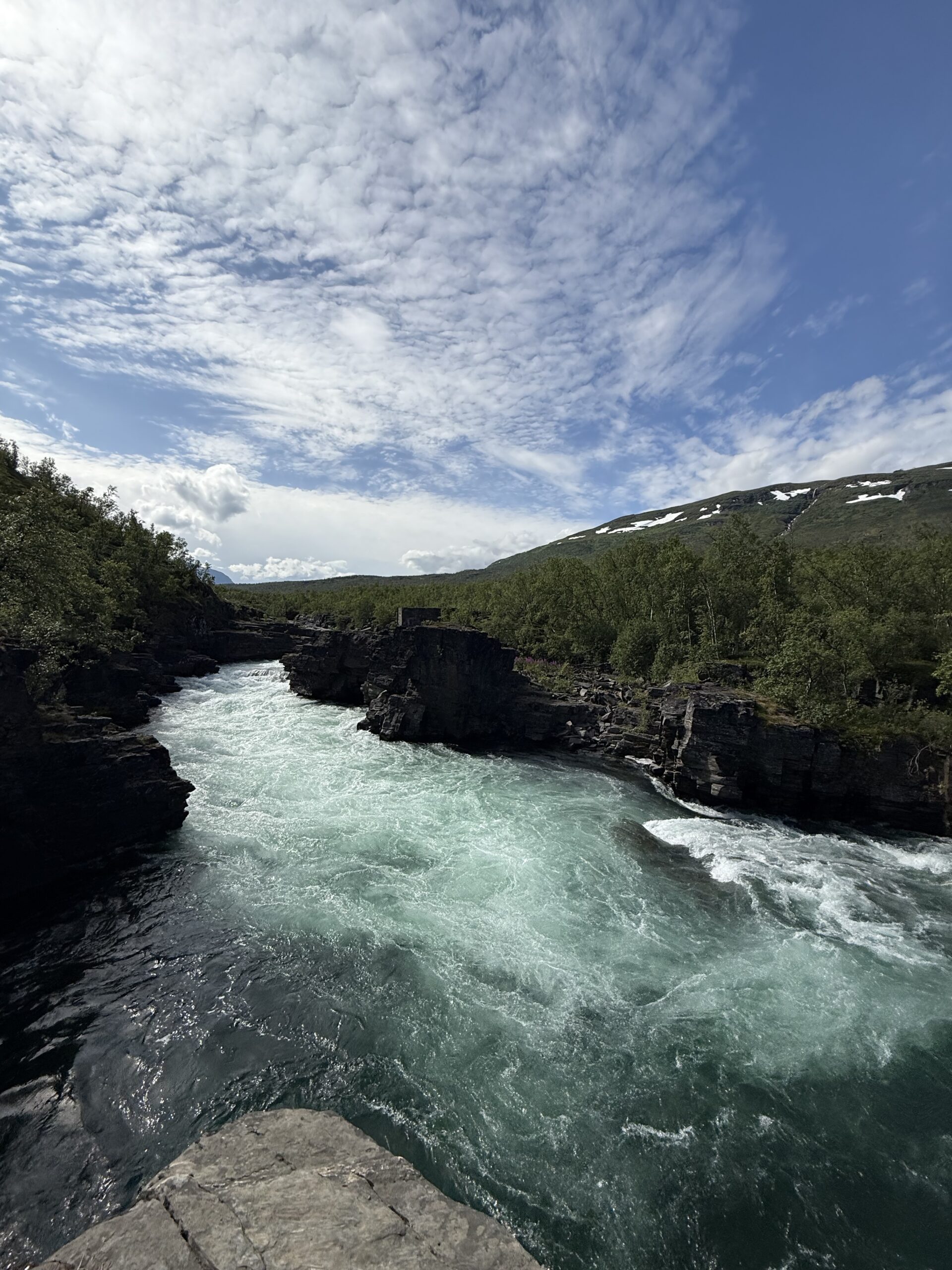
Abisko, near Kiruna in the far northwest of Swedish Lapland, is the endpoint we recommend. It sits on Lake Torneträsk with the Scandinavian mountains behind it, and it is the starting point of the Kungsleden trail (King’s Trail) — one of Scandinavia’s great long-distance hikes. In summer you get the full midnight sun here, and the aurora oval means that even in late August you can catch a faint display if you stay up past midnight.
The best individual drives along the way
Not all of the route is equally scenic. These are the stretches worth slowing down for — and the ones you can skip.
The E4 north of Stockholm: skip it for the coast
The E4 motorway is fast and efficient but not particularly interesting north of Uppsala. If you have time, leave the E4 at Gävle and take the coastal route toward Sundsvall and the High Coast. It adds an hour but the scenery is significantly better.
High Coast Road (Route 90 to Kramfors): worth every kilometre
This stretch hugs the Baltic coast through forested hills and little fishing villages. In June and July, the light on the water in the evening is extraordinary. There are almost no other tourists here — the High Coast remains one of Sweden’s best-kept secrets despite its UNESCO status.
Östersund to Åre (Route 75 west): best mountain drive
The road from Östersund toward Åre follows the Indal River valley through increasingly dramatic mountain scenery. It is a short drive but it is the point where you first feel like you are genuinely in the Scandinavian mountains rather than the Swedish lowlands.
The Inlandsvägen (Inland Highway): the classic Sweden road trip route
The Inlandsvägen is an old route running the full length of Sweden’s interior — from Mora in Dalarna all the way to Gällivare in Lapland. It is slower than the coast road but passes through some of the least-visited landscapes in Sweden: high fells, mirror-flat lakes, and villages where you might see more reindeer than cars. If you have 10+ days, take it for at least a section north of Östersund.
E10 from Luleå to Abisko: the Arctic highlight
This is the jewel of the whole trip. The E10 follows the Lule River valley northwest through Lapland toward the Norwegian border. The road passes through Kiruna (Sweden’s iron ore city, currently being relocated due to mining subsidence — genuinely fascinating to drive through) before climbing into mountain terrain at Abisko. On a clear summer day the light here is unlike anything else in Scandinavia.
Related reading Continuing north from Abisko into Norway? Read our guide to Norway vs Finland for a Road Trip — the honest comparison from people who live between both countries.
Quick-reference Sweden road trip checklist
Here is the at-a-glance version for people who are planning and need facts fast.
- Total distance (Stockholm to Abisko): roughly 1,700 km one way. Allow 7–10 days minimum.
- Best time to go: June–July for midnight sun. August for fewer bugs and slightly quieter roads. September for autumn colour and early aurora.
- Road quality: Excellent throughout. Swedish roads are some of the best-maintained in Scandinavia. Even minor routes in Lapland are well-paved.
- Tolls: Sweden has no road tolls outside major city congestion zones (Stockholm and Gothenburg). Free to drive almost everywhere.
- Speed limits: 110 km/h on motorways, 70–90 km/h on rural roads, 50 km/h in towns. Speed cameras are common — respect the limits.
- Fuel: Petrol stations are plentiful as far as Östersund. In Lapland, fill up whenever you see a station. The distances between towns grow quickly north of the Arctic Circle.
- Wild camping: Sweden’s Allemansratt (Everyman’s Right) allows camping anywhere for up to two nights, as long as you stay away from private property and leave no trace. Use it — wild camping in Lapland is genuinely magical.
- Mosquitoes: July in Swedish Lapland means mosquitoes. Pack DEET-based repellent. Not optional.
Road trip notes from the Arctic, sent monthly
We write about the drives we actually do — routes, campsites, detours — from our home on the Finnish-Swedish border corridor.
Practical tips before you go
These are the things that caught us off guard on our first big Sweden road trip — and things we now tell every friend doing the same drive.
- Book accommodation in Abisko early. Abisko Mountain Station (STF) is the main base near the national park and it fills up fast in summer, especially for the June midnight sun period. Book 2–3 months ahead.
- Download offline maps before you leave the cities. Mobile coverage drops significantly in inland Lapland. OsmAnd or Google Maps offline covers the whole route well.
- Reindeer are a real driving hazard. North of Arvidsjaur, reindeer roam freely and often stand on or near the road, especially at dusk and dawn. Drive at a speed you can stop from at short notice. Hitting a reindeer destroys a car.
- Stockholm parking is painful. If you are starting or ending in Stockholm, book a parking facility outside the congestion zone and take public transport in. The city is genuinely not designed for driving through — use it as a walking/cycling city.
- Kiruna is in the middle of a relocation project. The entire city centre is being moved 3 km east due to iron-ore mining beneath it. It is fascinating and worth a stop, but do not expect a conventional city centre — buildings are actively being dismantled and rebuilt.
- The midnight sun is disorienting at first. At Abisko in late June, the sun does not set at all. Your body clock goes haywire. Bring an eye mask and blackout curtains if you are light-sensitive.
- Swedish supermarkets (ICA, Coop) are excellent for road trip food. They are open late, well-stocked, and significantly cheaper than restaurants. Stock up at the larger ICA stores in Östersund or Umeå before heading deep into Lapland.
Sweden vs Norway for a road trip: which to pick
We get this question constantly. Both countries offer extraordinary driving — but they deliver very different experiences. Here is the honest breakdown.
- Scenery drama: Norway wins. The fjords are genuinely jaw-dropping in a way that Swedish landscapes, for all their beauty, are not. If raw visual drama is your priority, Norway first.
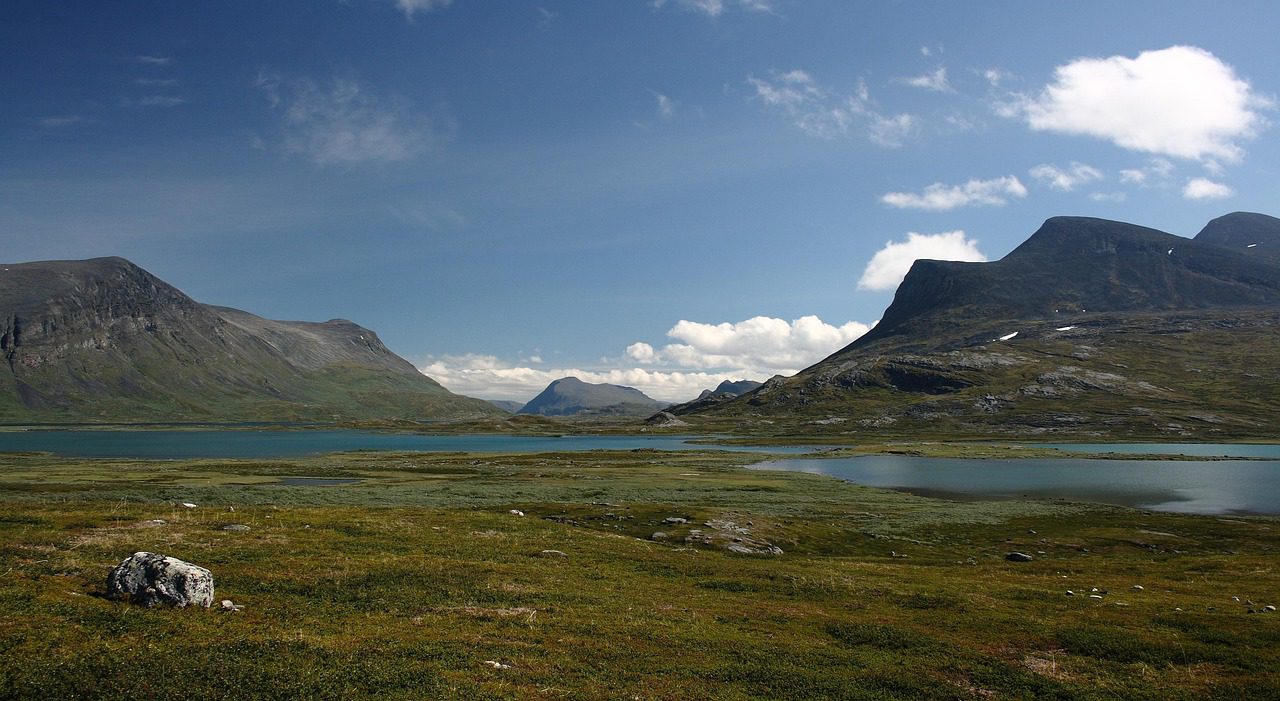
- Peacefulness and space: Sweden wins. Even in summer, the Swedish interior is remarkably empty. You can drive the Inlandsvägen through Lapland for hours without seeing another tourist.
- Cost: Sweden is cheaper. No tolls, lower accommodation costs than Norway, and food prices that are high by EU standards but noticeably below Norwegian levels.
- Ease of driving: Sweden wins easily. The roads are wide, straight, and well-signed. There are no Norwegian-style hairpin mountain passes. It is a relaxed country to drive through.
- Cultural stops: Sweden offers more along the route — Gamla Uppsala, the Höga Kusten, Östersund, Kiruna, Sami culture in Arvidsjaur. Norway’s best stops are mostly natural, not cultural.
- Midnight sun experience: Both Abisko (Sweden) and Tromsø (Norway) offer extraordinary midnight sun. Abisko is slightly easier to reach from the south via road; Tromsø requires the extra commitment of northern Norway driving.
- Who we’d recommend Sweden to: First-time Scandinavia road trippers, families with children, budget travellers, anyone who loves forests and lakes over mountains and fjords, and people doing a longer trip who want to combine both countries.
Also on the blog Want to extend the trip into Finnish Lapland? Read our 14-day Finland road trip itinerary — the exact route from locals who live on the Arctic Circle.
Mistakes we made on the Sweden road trip
We have done this drive enough times to give you a genuinely useful list of what not to do.
- Underestimating the distances in Lapland. The north of Sweden looks compact on a map. It is not. Between Storuman and Abisko there are very few towns, and even “nearby” attractions can be 80–100 km apart. We ran low on fuel twice before we learned to fill up at every opportunity north of the Arctic Circle.
- Skipping the High Coast because it was “off-route.” This was our biggest mistake on the first trip. The detour to Höga Kusten adds maybe three hours to the journey and it is one of the most beautiful things we have seen in Sweden. Never again will we skip it.
- Not booking Abisko far enough ahead. We arrived in July once to find the main STF hostel fully booked. Had to drive back 60 km to Kiruna. Book Abisko a minimum of 8 weeks ahead in summer.
- Driving at night in Lapland in July. There is no night in July in Lapland, which is wonderful for photography but genuinely confusing for your body clock. We once drove at what felt like afternoon only to look at the clock and realise it was 2 am. Set alarms and be disciplined about rest.
- Not bringing enough cash. Many small cabins, farm stays, and roadside stalls in rural Sweden do not accept cards. Swedish Swish (mobile payment) is everywhere for locals but tourists cannot use it easily. Keep a small amount of SEK on hand.
- Treating Östersund as just a transit stop. We rushed through it on two trips before finally spending a night and discovering it is genuinely lovely — a real town with good food, a beautiful lakeside, and the peculiar local legend of the “Stor-sjöodjuret,” Sweden’s own Loch Ness monster.
Frequently asked questions
How long does a Sweden road trip from Stockholm to the Arctic take?
Allow 7 days minimum if you are driving fairly directly with short stops. 10 days is comfortable for the route with proper time at the High Coast, Östersund, and Abisko. If you want to hike or explore Lapland deeply, two weeks is better.
Do you need a 4×4 or high-clearance vehicle for a Sweden road trip?
No. Swedish roads are very well maintained and a normal hatchback or family car handles the entire route comfortably. You only need a 4×4 if you plan to take forest tracks or unofficial roads off the main route, which is optional.
What is the best time of year for a Sweden road trip to the Arctic?
June and July are the peak months for the midnight sun experience, with the longest days and warmest temperatures. August is also excellent — fewer mosquitoes, still warm, and the first hints of autumn colour start appearing in Lapland. September brings vivid autumn colours (rüska) but shorter days and a real risk of early snow in the mountains.
Is the Sweden road trip suitable for families with children?
Very much so. Swedish roads are easy and safe, campsite and cabin facilities are excellent and child-friendly, and the wildlife — reindeer, elk, birds of prey — is endlessly entertaining for kids. The midnight sun can disrupt sleep for young children, so pack blackout blinds. Overall it is one of our top recommendations for family Scandinavia road trips.
Can you combine Sweden and Norway on the same road trip?
Yes, easily. The most natural combination is to drive the Sweden route north to Abisko or Kiruna, then cross into Norway via the E10 to Narvik or the border road toward Tromsø. From Tromsø you can explore the Norwegian fjords and fly home. This is one of the great Scandinavian road trip loops and it requires no special paperwork — both countries are in the Schengen Area.
Are there any road tolls on a Sweden road trip?
Almost none. Sweden has congestion charges in Stockholm and Gothenburg city centres, which rental cars are automatically billed for (your rental company handles it). Outside these two cities the roads are essentially toll-free, which makes the Sweden road trip significantly cheaper than Norway, where toll costs can add up quickly on a long trip.
A final word from the Arctic Circle
We moved to Rovaniemi because we wanted to live in the kind of landscape that most people only drive through. The road north through Sweden — through the birch forests, past the mirror-calm lakes of Lapland, into the treeless fells around Abisko where the sky takes over — is exactly the kind of drive that reminds you why you travel at all.
It is not Norway. It does not have the fjords, the drama, the instant Instagram recognition. What it has is something rarer: the feeling that you are somewhere genuinely wild, and that almost nobody else bothered to find it. The Sweden road trip to the Arctic is one of the best drives in Europe, and it is ours to recommend without hesitation.
If you go, let us know how it felt crossing the Arctic Circle for the first time. There is a monument by the road. Most people stop, take a photo, and drive on. We always stop for a bit longer — because it still gets us every time.
Joona & Alla
A Finnish-Ukrainian couple based in Rovaniemi, Finland. Joona works in Lapland tourism marketing; Alla is an AI engineer. Together we have visited 25 countries and driven both Scandinavia and the Nordic interior extensively. We write honest, locally-grounded travel content from our home on the Arctic Circle.
Read our full story →