Small Villages in Denmark: Hidden Charm Beyond the Cities
Denmark’s postcard countryside — half-timbered houses, cobbled market squares, and harbours where the only sounds are gulls and rigging — exists mostly off the tourist trail. We drove through it, and here’s what we found.
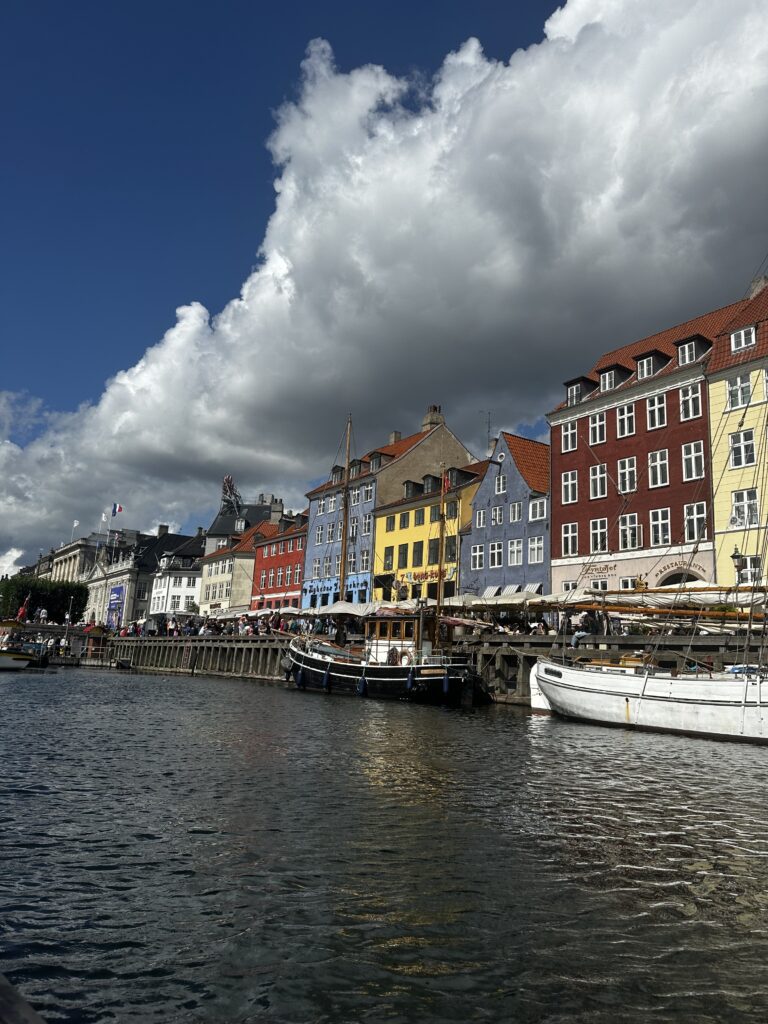
Denmark is easy to underestimate. You fly into Copenhagen, fall in love with the harbour and the bikes and the smørrebrød, and then — the city pulls you in for two or three days and you go home. We did exactly that on our first visit. It was only on a later road trip from the Øresund bridge down through Jutland that we discovered what most travellers never see: a country laced with small villages so quietly beautiful it felt almost unfair that nobody had warned us.
We are not Danish. We are a Finnish-Ukrainian couple who have driven through Denmark between ferry connections and longer Nordic road trips. But we have been to enough countries across Europe to say with confidence: Denmark’s small villages punch well above their weight for charm, history, and the particular feeling of arriving somewhere that has not yet been optimised for Instagram.
Denmark’s best small villages include Ribe (the oldest town in Scandinavia), Ærøskøbing on the island of Ærø, the harbour villages of Fanø, Dragør near Copenhagen, and medieval Møgeltønder near the German border. Most reward an overnight stay and are best reached by car or local ferry.
Why small-village Denmark is worth a deliberate detour
The country has been doing this for a thousand years
Many of the villages we visited pre-date the unification of Denmark. Ribe, for example, is the oldest town in Scandinavia — it had a bishop and a mint in the 8th century, long before most European capitals existed. Walking its cobbled lanes feels genuinely different from walking a restored historic quarter: it is not restored, it just never fell apart. The half-timbered houses are original, the storks nest on real chimneys, and the locals seem mildly baffled that you are there, which is exactly the right sign.
The geography enforces quietness
Much of Denmark is flat, agricultural, and threaded with estuaries. Villages sit at the end of peninsulas, on actual islands reachable only by small ferry, or tucked behind dykes on the North Sea coast. That geography enforces a certain quietness — you do not drive through these places on the way to somewhere else. You have to mean it. And the places where people meant it, historically, are the ones whose streets survive intact.
The best small villages in Denmark, by region
Jutland: the old west
Jutland is where the small villages in Denmark hit hardest. The peninsula shares a land border with Germany and a long, often brutal coastline with the North Sea — a combination that shaped a particular no-nonsense, whitewashed, deeply practical kind of beauty.
- Ribe: Non-negotiable. The oldest town in Scandinavia, a Viking museum, and a medieval centre so intact that even the street furniture looks like it belongs to 1100. Stay a night — the evening light on the cathedral and the empty streets after the day-trippers leave are worth it alone.
- Møgeltønder: One linden-lined main street (one of the most beautiful in Denmark), a manor house at one end and a church at the other, and almost no tourists. A thirty-minute detour from the German border that most people drive straight past.
- Skagen: Technically a town, but the old fishing quarter — yellow houses, bleached wood, smell of herring — feels like a village. The light at Grenen, where the Kattegat meets the Skagerrak, has been drawing painters for two hundred years.
- Fanø’s villages (Nordby and Sønderho): A ten-minute ferry from Esbjerg and a different world. Nordby has flower-painted chimneys; Sønderho is so quiet it feels like a held breath. No cars in the village cores, no chains, no crowds.
The Danish islands
Island Denmark is where village character becomes most concentrated. Ferries run on schedules that have not changed much in decades — and that is not a complaint. It is the point.
- Ærøskøbing (island of Ærø): Three-hundred-year-old merchant houses in pastels, a main street that ends at the water, a bottle-ship museum, and the distinct sense that time moves differently here. The ferry from Svendborg takes about an hour. Book ahead in July.
- Marstal (also Ærø): The working-harbour contrast to Ærøskøbing — traditional shipbuilding town, maritime museum, smaller crowds, and pride in its seafaring history that feels genuinely earned.
- Stege (island of Møn): The gateway to the white chalk cliffs of Møns Klint. The village itself is quietly faded in the best possible way — medieval gatehouse, local bakeries, cyclists passing through in the morning light.
Zealand: not just Copenhagen
The island of Zealand holds more than its capital, but you have to drive deliberately south or east to find what we mean.
- Dragør: Twenty minutes by bus from Copenhagen Airport, and a complete tonal shift — a preserved fishing village of yellow and ochre houses that somehow survived postwar development. Local Danes come for brunch on Sundays. It is one of the few places near the capital where you feel genuinely outside it.
- Præstø: Small market town on a fjord, medieval church, a good bakery, and the kind of harbour where a single swan is always gliding past. No single reason to go — and somehow all the more pleasant for it.
Quick-reference: eight villages, one sentence each
If you are skimming this over coffee before a road trip, here is the compressed version of what we learned from Danish back roads:
- Ribe — the oldest town in Scandinavia; go for at least one night.
- Ærøskøbing — arguably Denmark’s most photogenic village; ferry required from Svendborg.
- Møgeltønder — one perfect street; worth a thirty-minute detour near the German border.
- Dragør — preserved fishing village, twenty minutes from Copenhagen Airport.
- Sønderho (Fanø) — flower-painted chimneys, no cars, best reached by ferry from Esbjerg.
- Skagen — the painter’s light at the tip of Jutland where two seas meet.
- Stege — medieval gateway town for the Møns Klint chalk cliffs.
- Marstal — working maritime history on Ærø, less visited than Ærøskøbing.
Our weekly travel letter
Honest notes from the Arctic — road trips, places worth the detour, and things we learned the slow way.
Tips for actually getting to small villages in Denmark
Car versus public transport
- A car is the right tool for Jutland. Buses connect the larger towns, but the really interesting villages sit at the end of roads nothing scheduled stops on. We rented in Copenhagen and drove south; it changed everything.
- Ferries are part of the experience, not just the logistics. The Ærø ferry from Svendborg, the Fanø crossing from Esbjerg, the Møn approach — none of these are inconveniences. They are the natural boundary that kept these places quiet for this long.
- On-island transport varies. Ærø has a bus, but it runs infrequently. Cycling is the local choice — the island is flat, the distances are short, and there are hire shops near the ferry terminal. Fanø essentially bans cars from its village cores, which is the right call.
When to go
- May to September is the natural window — long days, mild weather, ferry services on full schedules.
- June is perhaps the sweet spot — before the main Danish holiday crush (July), with the longest daylight and the front gardens in full bloom.
- October is underrated for Jutland specifically — the angle of light on whitewashed houses and the wide North Sea sky in autumn is extraordinary, and the tourists are largely gone.
- Avoid high July weekends on the island villages. Danes know about Ærøskøbing. Ferries book out and accommodation prices spike. If you are planning to stay overnight, book well ahead.
What to actually look for in a Danish village
We spent some time trying to understand what makes a Danish village feel different from a small town in the Netherlands, Belgium, or even southern Scandinavia. A few things stood out consistently.
- The half-timbered house (bindingsværk). Black wooden frames, whitewashed plaster infill, small-paned windows with geraniums. In preserved villages the entire street reads as one composition, because it was essentially built by the same hands and materials over a hundred-year window.
- The village well or pump. Still present in most market squares, even if decorative now. The square is the original social infrastructure — farmers, fishermen, and the church all needed it.
- Stork nests. In Ribe and parts of western Jutland, white storks have nested on chimneys for centuries. The town of Ribe has maintained nesting platforms above the old buildings since at least the 12th century. Seeing one in use is oddly moving.
- The local bakery (bageri). Open by seven, smells of cardamom and butter, sells rundstykker for breakfast and wienerbrød by mid-morning. A functioning bageri is the single best sign that a village is actually lived in, not just preserved.
- The church. Whitewashed, Romanesque, often the oldest structure in the village by several centuries. The Danish village church is rarely spectacular but almost always the spatial anchor of the settlement — visible from the road, from the fields, from the water.
- The votivskib. In most old Danish coastal churches, look up. You will often find a hanging ship model — a votive offering from sailors who survived a storm. They are beautiful objects and a reminder of how close the sea has always been here.
Mistakes we made on Danish back roads
- Not staying overnight in Ribe. We arrived late afternoon, walked the centre, and left before dinner. Everyone who has stayed says the village empties after six and becomes something else. We are going back to fix this.
- Underestimating Jutland distances. The peninsula looks compact on a map. If you stop properly in each village (which you should), days fill faster than expected. We had planned four villages in one day and did two well, two badly.
- Not booking the Ærø ferry early enough. We checked the morning of, in July, and had to wait five hours for a car space. Walk-on passengers have much more flexibility. Book the car ferry early if you are going in summer.
- Skipping the village churches. The Danish village church is almost always unlocked, always free, and almost always contains something worth the five minutes — a medieval fresco, a votivskib, rune stones built into the walls. We started going in and stopped leaving quickly.
- Not carrying cash for small village bakeries. Most of Denmark is aggressively cashless. But in very small villages, the local bageri or farmstand sometimes still operates on cash. Keep a small amount just in case.
- Treating Dragør as a suburb of Copenhagen. It is close enough that it is easy to give it only an hour. Give it a morning, walk to the harbour, have lunch there. The proximity is logistical, not atmospheric.
Frequently asked questions
What is the most beautiful small village in Denmark?
Ærøskøbing on the island of Ærø is the answer most Danes and most experienced travellers give, and having been there we agree. The combination of preserved merchant houses, the island’s quiet scale, and the ferry approach makes it unlike anywhere else in Scandinavia. Ribe is the most historically significant, but Ærøskøbing wins on pure atmosphere.
Do I need a car to visit small villages in Denmark?
For Jutland, yes — a car makes the difference between seeing one or two larger towns and actually exploring the back roads. For the islands (Ærø, Fanø, Møn), a car is optional or actively discouraged. Ærø is best cycled; Fanø bans cars from its village centres. The ferry ride is part of the experience regardless.
How far are these villages from Copenhagen?
Dragør is 20 minutes by bus. Ribe is about a 3-hour drive or train journey. Ærøskøbing is roughly 3.5 hours by car plus an hour on the ferry. Most Jutland villages require at least half a day’s travel from the capital, which is precisely why they remain quiet.
Are Danish villages expensive to visit?
Denmark is an expensive country, but small villages are somewhat cheaper than Copenhagen — accommodation is meaningfully lower, and eating in a local café rather than a capital restaurant saves noticeably. The main added cost is the ferry (the Ærø car crossing runs around 400–500 DKK). Budget roughly as you would for Denmark overall, minus the premium urban restaurants.
What is Ribe famous for?
Ribe is the oldest preserved town in Scandinavia, with records going back to around 700 AD. It is famous for its intact medieval centre, its Romanesque cathedral, its white stork colony (one of the longest-running in Denmark), and the Viking Museum Ribe, which holds genuine archaeological finds from the earliest trading settlement on the site.
Can you visit multiple Danish villages in a single road trip?
Yes, and it is the ideal way to see them. A Jutland loop from Aarhus down through Ribe, Møgeltønder, and back up via the west coast can be done in three or four days and covers the best of the peninsula. Adding Fanø requires only a short Esbjerg detour. Islands like Ærø deserve a separate overnight — they reward the commitment.
A final word from Rovaniemi
We came to Denmark expecting the cities and left thinking about the villages. That is how it tends to go with countries that do quietness well — you do not find it by accident, you find it by paying attention to what is at the end of the smaller roads.
From our home in Finnish Lapland, we think a lot about the difference between places that are preserved and places that are simply still alive. The villages we loved in Denmark — Ribe and Ærøskøbing in particular — are alive. The bageri opens at seven, the storks return in spring, the ferry runs on a schedule that has barely changed in forty years. The tourists arrive and they leave, and the village remains exactly what it was before they got there.
That is worth driving to the end of a road for.
Joona & Alla
A Finnish-Ukrainian couple living in Rovaniemi, Finland. Joona is a marketing professional in Lapland tourism; Alla is an AI engineer and content creator. Together we have visited 25 countries and write honest, locally-grounded travel stories from our home in the Arctic.
Read our full story →