Is It Worth Renting a 4WD in Iceland? (F-Roads and Highland Reality)
We drove Iceland in both a standard car and a 4WD on separate trips. Here is our honest answer on when the upgrade actually matters — and when the rental company is simply upselling you.
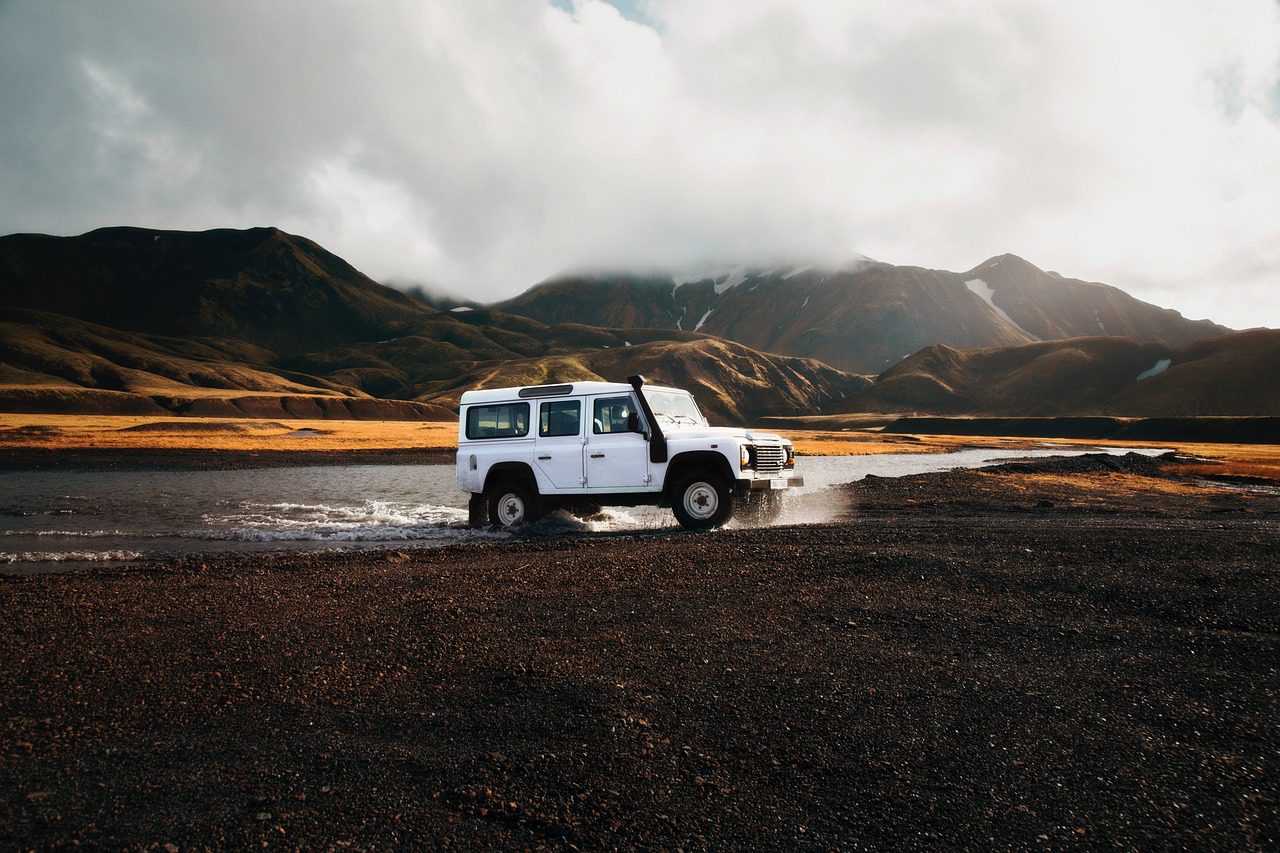
The question we get asked more than almost any other about Iceland: do I actually need a 4WD? Rental companies nudge you toward one. Instagram makes it look essential. But the answer is genuinely more nuanced than either extreme — and we learned it the hard way on two separate Iceland road trips from our home in Rovaniemi, Finland.
Short version: for the Ring Road in summer, you probably do not need one. For F-roads and the highlands, you absolutely do. Here is the full picture.
Renting a 4WD in Iceland is worth it if you plan to drive any F-roads or highland routes (legally required). For the Ring Road alone in summer, a standard 2WD is usually sufficient — but a high-clearance 4WD adds meaningful peace of mind on gravel detours and river crossings, and we would still recommend one for most first-timers.
The legal reality of F-roads — and why it matters more than grip
F-roads are not just rough — they are legally off-limits to 2WD
Iceland’s F-roads are designated highland mountain tracks, marked with an “F” prefix on maps (F26, F35, F210, and so on). Driving them in a standard 2WD vehicle is not just inadvisable — it voids your rental agreement and your insurance. If you get stuck or damaged on an F-road in a 2WD, you pay every krona of the rescue and repair.
We cannot stress this clearly enough: most rental contracts in Iceland explicitly exclude 2WD vehicles from F-roads, and Icelandic rangers do check. On our second trip, we saw a hire car with standard plates getting turned back at the entrance to Landmannalaugar.
What counts as an F-road?
- Any road with an F prefix on Icelandic road maps and the Vegagerðin road authority site.
- Typically unpaved, rocky or volcanic gravel, with river crossings (fords) that can be knee-deep or deeper.
- Seasonal: F-roads open in late June or July depending on snow melt, and close again in September or October. Safetravel.is posts current openings daily.
- Not all gravel roads are F-roads — many perfectly driveable gravel stretches around the Ring Road are fine in a 2WD. The F designation is specific.
4WD vs 2WD: what the difference actually means in Iceland
On the Ring Road in summer
Route 1 — the Ring Road — is paved almost in its entirety. In summer, a confident driver in a 2WD (even a small hatchback) can complete the full circuit without drama. We did it ourselves on our first Iceland trip and had zero moments where we wished for more traction.
That said, even Ring Road trips include gravel detours to waterfalls, viewpoints, and coastal cliffs that a 2WD handles fine at low speed but where a high-clearance 4WD gives you more confidence. The key variables:
- Your driving experience on gravel and loose surfaces. If you grew up driving in Finland or Norway, gravel is normal. If you learned in central London or suburban Ohio, it is less so.
- The season. Summer (June–August) is dramatically safer than shoulder season for 2WD. In October, even Ring Road stretches near the south coast can be icy.
- Your planned detours. The moment you start browsing “hidden gems” and “off the beaten path” Iceland blogs, you are drifting toward roads that reward a 4WD.
On F-roads and highland routes
Here the answer is simple and non-negotiable: 4WD only. Not just for traction — F-road river crossings require high ground clearance and all-wheel drive to read and cross safely. A standard SUV with 4WD but low clearance can still get flooded out. We will talk about which vehicle type to pick in Section 5.
The quick-reference checklist: do you need a 4WD?
Use this to settle the question before you book. Tick everything that applies to your trip:
- You plan to drive any F-road (Landmannalaugar, Þórsmörk/Thorsmork, Askja, Kerlingarfjöll, Sprengisandur) → 4WD required, no exceptions.
- You are travelling in June–August, Ring Road only, no detours off-piste → 2WD is technically sufficient, though a 4WD is still a more relaxed choice.
- You plan to visit between September and May → 4WD strongly recommended even for Ring Road due to ice, snow, and wind.
- Your itinerary includes the Westfjords → Several Westfjords roads are steep, narrow, and gravel; 4WD is highly advisable.
- You are travelling with children or elderly passengers → The added stability and height of a proper 4WD is worth it psychologically and practically.
- You want to wild camp or park in remote locations → Access tracks to many wild camping spots are gravel or soft; 4WD helps you self-rescue.
- You are a first-time Iceland visitor → Weather can change in 20 minutes. A 4WD gives you more options when it does.
💡 Our campervan tip: prices for the same van vary a lot between rental brands. We compare Iceland campervans across 160+ rental companies on CampervanPlanet — and code HUNGRYTRAVELFAMILY5 takes 5% off.
Tips for driving Iceland’s highlands safely
Assuming you have the right vehicle, here is what actually keeps you safe on F-roads. We compiled these from our own experience and from talking to Icelandic rangers.
F-roads open and close with little notice. Check road.is and safetravel.is on the day of travel, not the day before. A route that was open on Monday can close Tuesday after heavy rain floods a ford.
If you arrive at a ford and you are the only vehicle, wait for another 4WD. Watch how deep it reads. Glacial rivers shift daily in summer as meltwater peaks in the afternoon. Crossing in the morning when water levels are lowest is always smarter than crossing at 3 pm.
Most hire 4WDs use part-time systems. Switch into 4WD mode before you reach the difficult section, not when you are already stuck on a loose slope. On river crossings, engage low-range 4WD, drive in first gear at walking pace, and do not stop mid-river.
Mobile signal in the highlands is intermittent to non-existent. Download the maps.me or Gaia GPS app with Iceland data loaded offline before you leave Reykjavík. A tow rope weighs nothing and has saved trips.
Iceland’s moss and lava-field vegetation takes hundreds of years to recover from a single tyre track. Driving off marked roads is illegal, carries heavy fines, and leaves visible damage that other travellers will see for decades. We take this personally.
Before heading into the highlands, register your planned route at safetravel.is. It is free, takes two minutes, and means search and rescue knows where to look if you do not check in. Icelandic rescue teams respond to dozens of preventable incidents each summer.
Real travel from the Arctic Circle
We write every two weeks from Finnish Lapland — road trip notes, driving guides, and honest takes from 25 countries. No sponsored fluff.
Which 4WD type to pick — and which to skip
Not all 4WDs are created equal in Iceland. Rental companies lump everything from a crossover SUV to a fully lifted truck under “4WD.” Here is how to think about it:
- Small crossover SUV (e.g., Toyota RAV4, Nissan Qashqai) with 4WD: Fine for gravel Ring Road detours and light off-road. Not ideal for deep F-road river crossings — ground clearance is the limiting factor, not four-wheel drive itself. Adequate for Þórsmörk on a dry summer day; not for Askja or Sprengisandur.
- Mid-size 4WD (e.g., Toyota Land Cruiser 200, Mitsubishi Pajero): The sweet spot for most highland itineraries. High clearance, genuine low-range 4WD, and enough interior space for gear. This is what we rented for our F-road trip and it handled everything we threw at it.
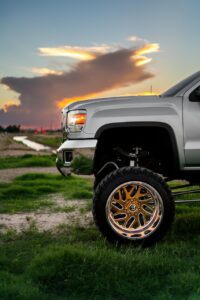
- Super Jeep (lifted truck with giant tyres): Overkill for most travellers but legitimately useful for deep river crossings and genuinely remote terrain. Also the most expensive option. Rent one if you are heading to Askja or the interior in shoulder season.
- Campervan with 4WD: Increasingly popular, and they do exist. Be careful — a heavy 4WD campervan has a higher centre of gravity and will be more difficult to recover if stuck. Check the ground clearance spec specifically.
- 2WD “automatic upgrade” offer: If a rental company upgrades you from a 2WD to a crossover “for free,” check whether it actually has a proper 4WD system or is just a front-wheel-drive car on a higher platform. Ask for the specific model and look it up.
Mistakes we made on our Iceland drives
- Booking too small a vehicle for our ambitions. Our first Iceland trip was in a 2WD compact. We made it round the Ring Road without incident, but we skipped Þórsmörk and regretted it the whole way. Upgrade your ambitions before you book, then match the vehicle to those ambitions.
- Trusting that “4WD” meant high clearance. On our second trip we initially had a crossover SUV labelled as 4WD. It was perfectly capable on gravel but we switched to a Land Cruiser after realising the clearance was borderline for one ford on the route to Landmannalaugar. Always check the ground clearance specification — 200mm is roughly the floor for serious F-road use.
- Not checking road.is before an afternoon drive. One afternoon we planned a short F-road segment that had been fine in the morning. By 2 pm it was flagged yellow for high water in a ford. We turned back. Checking that morning would have saved two hours of driving and a u-turn.
- Underestimating fuel distances in the highlands. There are petrol stations on the Ring Road roughly every 50–100 km. In the highlands there are none. We filled up in Selfoss and it was still a tighter margin than we liked. Fill to 100% before every highland entry point.
- Forgetting to pack a tow rope and a physical map. We could not find either in Reykjavík shops on a Sunday. Both are cheap and weigh nothing. Pack them from home or buy them the moment you land.
- Rushing river crossings. On our second trip we crossed a ford too fast because a queue of vehicles was forming behind us. We got through fine but it was the wrong call. Glacial rivers are unforgiving of impatience. Make the cars wait.
Book your Iceland campervan
Compare prices across 160+ campervan and motorhome rental brands, get a free 1GB eSIM with every booking — and 5% off with code HUNGRYTRAVELFAMILY5.
Check prices & availability →Frequently asked questions
Is a 4WD legally required for all F-roads in Iceland?
Yes. Iceland’s F-roads are legally restricted to 4WD vehicles. Driving them in a 2WD voids your rental insurance and exposes you to full repair and rescue costs. The rule is enforced and rangers do check at entry points to popular highland destinations.
Can I drive the Ring Road in Iceland without a 4WD?
In summer (June–August), yes — Route 1 is paved and a confident driver in a standard 2WD can complete it without significant issues. In spring, autumn, or winter, a 4WD is strongly recommended due to ice, snow, and wind. Even in summer, a 4WD makes gravel detours to viewpoints and waterfalls more relaxed.
What ground clearance do I need for Icelandic F-roads?
For most F-roads in good summer conditions, aim for at least 200mm of ground clearance. For the most challenging highland routes or shoulder-season crossings, 220–250mm is a more comfortable margin. Always check the specific clearance of the vehicle model, not just the category name the rental company uses.
How do I cross rivers safely on F-roads in Iceland?
Engage low-range 4WD before entering the water. Drive at walking pace in first gear. Do not stop mid-crossing. Cross early in the day when glacial meltwater is at its lowest. If you are the first vehicle at a ford, wait to watch another cross, or wade it on foot first to check depth. Never cross alone if the water looks fast or opaque.
Is renting a Super Jeep worth it over a standard 4WD?
For most itineraries — including Landmannalaugar and Þórsmörk in summer — a standard Land Cruiser-class 4WD is sufficient. A Super Jeep earns its extra cost on the very deepest river crossings (Askja in early July, for instance) and in shoulder-season highland travel. If you are not sure, rent the mid-size 4WD and leave the Super Jeep upgrade for a future dedicated highland trip.
When do Icelandic F-roads open and close?
Most F-roads open between mid-June and mid-July depending on snowmelt, and close again in September or early October. Exact dates vary year to year. Check the Vegagerðin road authority site (road.is) and safetravel.is on the day of travel — not just before you leave home — as openings and closures happen with very little notice based on current conditions.
A final word from Rovaniemi
We have driven on rough roads our whole lives — Finnish winter tracks, Norwegian mountain passes, gravel routes across Lapland in October slush. Iceland’s F-roads felt familiar to us in some ways and genuinely humbling in others. The rivers, the isolation, and the scale of the landscape are unlike anything in mainland Europe.
Our honest advice: if there is even a 20% chance you will want to go somewhere beyond the Ring Road, book the 4WD from the start. The upgrade cost is trivial compared to the difference in what you can access — and what you will remember. The Icelandic highlands are one of the few places on earth that look exactly as dramatic as the photographs suggest. Get the vehicle that lets you reach them.
And if you are staying on the Ring Road this time? Drive it confidently in a 2WD, save the highland permit for next trip, and come back for the F-roads when you have a full week to give them.
Joona & Alla
A Finnish-Ukrainian couple living in Rovaniemi, Finland. Joona is a marketing professional in Lapland tourism; Alla is an AI Engineer. Together we have visited 25 countries and share honest, locally-grounded travel writing from our home in the Arctic.
Read our full story →