Hiking in Sweden During Summer — A Practical Guide for First-Timers
From the Arctic highlands of Abisko to the island paths of Gotland, Sweden’s summer trails are genuinely extraordinary — and far less crowded than the Alps. Here’s everything we’ve learned hiking across Sweden as a couple based in the Nordic north.
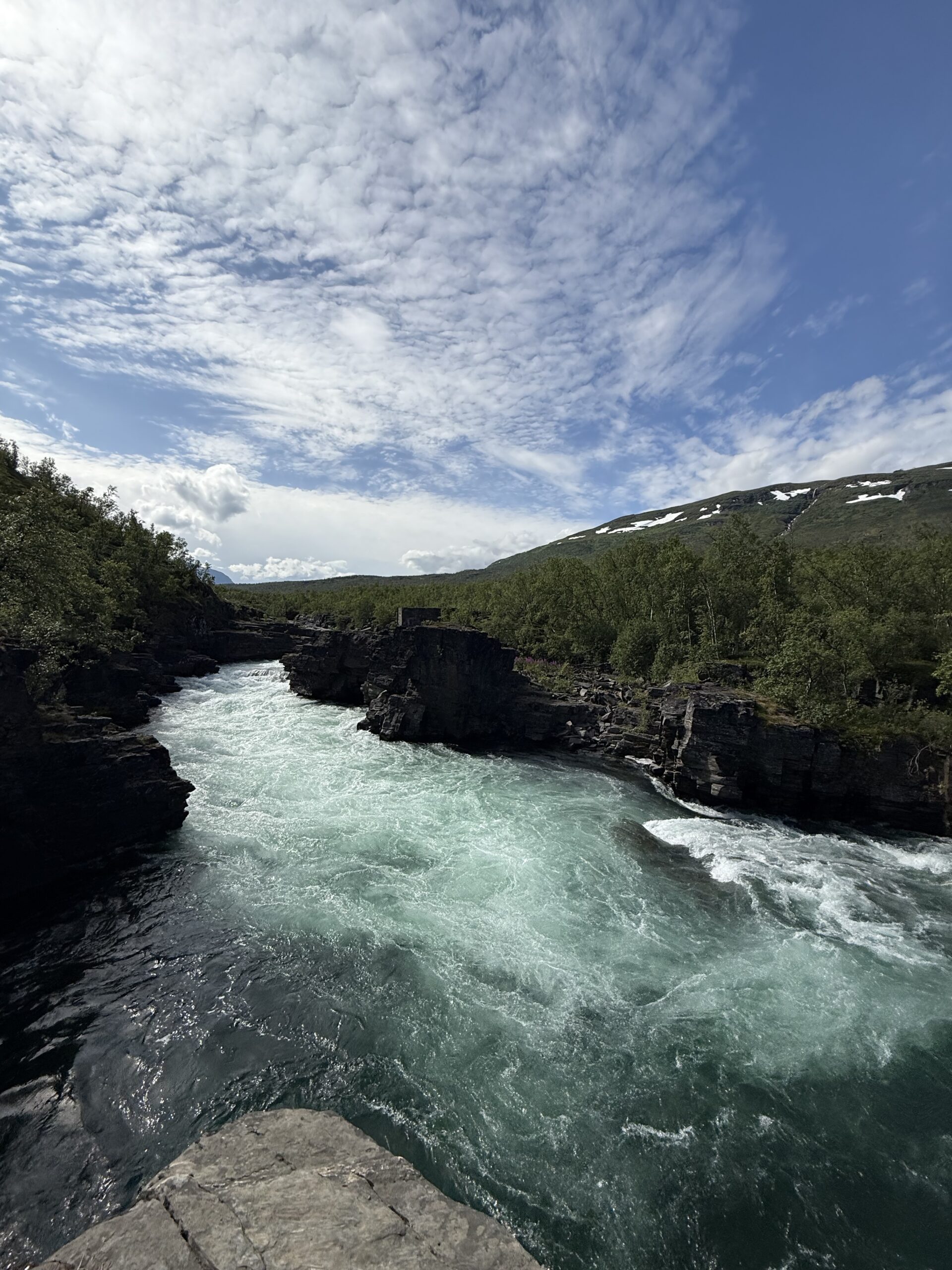
We have hiked Sweden in summer more than once, and every time we come back from a trip across the border — even just a long weekend in the fells — we ask each other why we don’t do it more often. Sweden shares a long border with Finland, and from Rovaniemi you can be on a Swedish mountain trail in under four hours. The landscape is similar in some ways but feels wilder, emptier, and in July, almost otherworldly under the midnight sun.
This guide covers hiking in Sweden during summer: when to go, which trails suit which travellers, what you need to know about allemansrätten (the right to roam), and the practical details that make the difference between a good trip and a great one.
Sweden’s best summer hiking runs from late June through August, with peak conditions in July when snow has melted and trails are fully open. The Kungsleden (King’s Trail) in the north is the most iconic route, but regional trails across Dalarna, Jämtland, and even Skåne offer accessible day hikes without the logistics of a multi-day expedition. Thanks to allemansrätten, you can camp almost anywhere in Sweden — a freedom that transforms hiking here into something genuinely special.
When to hike in Sweden in summer
The Swedish summer hiking season officially opens when the high mountain trails are free of deep snow — typically around late June in the north and early June in the south. The season closes in late September, though conditions deteriorate quickly after mid-August at higher elevations.
The sweet spot: July
July is consistently the best month for hiking Sweden. The snow is gone from all but the highest passes, the days are extraordinarily long (in northern Sweden the sun barely sets), the mountain huts along Kungsleden are staffed and stocked, and the weather — while never guaranteed — is as stable as it gets. Mosquitoes peak in late June and early July in the north, especially around marshy ground, so insect repellent is not optional.
June and August
Early June is wonderful in southern and central Sweden — lush, green, and relatively quiet. In the north, snow can still block higher passes until the third week of June, so check trail reports before committing to routes above the treeline. August is excellent: cooler than July, fewer insects, and the birch trees in the fells start turning gold by late August, which is honestly one of the most beautiful things we’ve seen in Scandinavia.
- Late June – July: Best for northern mountain trails (Kungsleden, Padjelanta, Sarek). Midnight sun in effect above the Arctic Circle.
- Early June – August: Best for central Sweden (Jämtland Triangle, Södra Kungsleden). Good balance of access and conditions.
- June–September: Best for southern Sweden (Skåneleden, Bohusleden). Longer season, milder weather, no snow concerns.
The best summer hiking trails in Sweden
Sweden has an extraordinary network of marked trails, from short day hikes in forest reserves to the 440-kilometre Kungsleden through the Arctic highlands. Here are the main options, from north to south.
Kungsleden (The King’s Trail) — Abisko to Hemavan
This is Sweden’s most famous long-distance trail, and for good reason. The northern section between Abisko and Kebnekaise is the most dramatic — open fjell, reindeer herds, turquoise mountain rivers, and the chance to summit Sweden’s highest peak. The trail is broken into day-sections between staffed STF mountain huts where you can eat, sleep, and resupply, which means you can walk it with a lighter pack than most wilderness routes require.
- Distance: 440 km end to end, but most walkers do 3–7 day sections
- Best section for first-timers: Abisko to Kebnekaise (5–7 days)
- Difficulty: Moderate — well-marked, huts available, but long days and some elevation
- Midnight sun: Yes, above the Arctic Circle from mid-June to mid-July
The Jämtland Triangle
A circular route linking three STF mountain stations — Storulvån, Sylarna, and Blåhammaren — through some of central Sweden’s most beautiful fell country. The loop is roughly 55 km, takes 3–4 days, and is one of the most manageable introductions to Swedish mountain hiking. We recommend this for anyone who wants the Kungsleden experience without the logistics of a longer route.
Skåneleden (Scania Trail)
In the far south, Skåneleden is Sweden’s longest regional trail network — over 1,250 km across the beech forests, coastal cliffs, and meadows of Skåne. It’s completely different from northern mountain hiking: gentler, greener, and ideal for those who want multi-day walking without altitude. Section IFL (the Ydreleden, 100 km) is particularly popular in summer.
Allemansrätten: the right to roam explained
Allemansrätten is the Swedish concept of universal access to nature — a legal right (not just a tradition) that allows anyone to walk, camp, and forage on essentially all land in Sweden, whether it’s privately owned or not. Understanding it is the single most important thing you can do before hiking in Sweden.
What you can do
- Walk, cycle, or ride across any land, including private fields and forests
- Camp in one place for up to two nights (in practice, one night is the norm)
- Pick berries, mushrooms, and wildflowers for personal use
- Light a campfire where it’s safe and not prohibited (fire bans apply in dry summers — always check)
- Swim in any lake or river
What you must not do
- Camp in someone’s garden or within sight of a house without asking
- Drive off-road or on private roads without permission
- Leave any litter or damage vegetation
- Light fires during a fire ban or in areas with dry conditions
- Pick protected plant species
In practice, allemansrätten means that wild camping in Sweden feels completely natural and guilt-free. On the Kungsleden, we’ve pitched a tent beside a lake we had entirely to ourselves at midnight — the sun still just above the horizon — and it cost nothing. That freedom is genuinely rare in Europe.
What to pack for Swedish summer hiking
Sweden’s mountain weather is unpredictable. A warm, sunny morning can turn cold and rainy by afternoon, especially above the treeline. The list below is what we actually carry on a 4–7 day summer hike in northern Sweden.
STF mountain huts on Kungsleden provide meals and bedding, so if you’re staying in huts, you can leave the tent and cooking gear at home. If you’re camping wild, bring a reliable three-season tent, a sleeping bag rated to at least −5°C, and a water filter (Swedish mountain water is clean, but giardia exists in areas with heavy reindeer use).
Hiking routes, honest packing lists, and stories from the north
We write from Finnish Lapland about slow, real travel across Scandinavia and beyond. Join us.
Common mistakes and how to avoid them
- Underestimating the boggy ground. Kungsleden and many northern trails cross wet, marshy terrain. Waterproof boots are not optional — trail runners get soaked within an hour. We learned this the hard way on our first Swedish mountain trip.
- Not booking STF huts in advance. Popular sections of Kungsleden — especially Abisko to Kebnekaise — fill up weeks in advance in July. Book online through the STF website (www.swedishtouristassociation.com) as early as possible.
- Ignoring fire ban updates. Sweden has had increasingly strict fire bans during dry summers. Check Naturvårdsverket’s site or the Swedish Met Office before lighting any campfire — the fines are real.
- Bringing too much food. If you’re using STF huts, their kitchens and shops are stocked with everything you need. Carrying five days of food when you’re passing a stocked hut every day adds unnecessary weight.
- Arriving without cash or cards that work. Some remote huts are card-only; a few accept Swish (Swedish mobile payments). Notify your bank before travelling and bring a card that works internationally without fees.
- Skipping the summit attempt on Kebnekaise. On a clear day in July, summiting Sweden’s highest peak (2,096 m) is manageable as a day hike from Kebnekaise mountain station. It’s a 19 km round trip with 1,400 m elevation gain — tough but not technical, and the views are unforgettable.
Sweden vs Finland: which is better for summer hiking
We get asked this a lot, partly because we’re Finnish (well, one of us is) and partly because our blog covers both countries. The honest answer is that they offer genuinely different experiences — neither is strictly better.
- Sweden has bigger mountains. The Scandinavian Alps straddle the Swedish-Norwegian border, giving you proper above-the-treeline fell hiking with dramatic relief. Finland’s highest point is 1,324 m; Sweden’s is 2,096 m. If you want mountain drama, Sweden wins easily.
- Finland has better wilderness isolation. The Kungsleden is a popular trail — you’ll see other hikers every day. Finland’s Karhunkierros or the routes around Kilpisjärvi are equally beautiful but much less busy. If you want to feel genuinely alone, Finland often edges ahead.
- Sweden’s hut network is unmatched. STF runs a system of staffed mountain huts that allows multi-day hiking without heavy camping gear. Finland’s network (Metsähallitus huts) is good but more basic and sometimes unmanned.
- Both have allemansrätten / jokamiehenoikeus. The right to roam exists in both countries — camp freely, swim freely, forage freely. This is the fundamental Nordic outdoor freedom that makes both countries exceptional for hiking.
- For a first Nordic hike: We’d suggest Sweden (specifically the Jämtland Triangle or the southern Kungsleden) as the more structured, accessible entry point. For experienced hikers who want rawer wilderness, Finland’s Lapland trails or the routes in Sarek National Park (Sweden’s most remote park) step up the adventure.
What we wish we’d known before our first Swedish hike
- The mosquitoes in late June are worse than you expect. We are Finnish — we thought we knew mosquitoes. Northern Sweden in late June, especially near marshes, is genuinely relentless. A head net is not excessive; it’s essential.
- Midnight sun hiking is surreal and also disorienting. When it’s 1 am and the light looks like 7 pm, you will keep walking longer than you planned. Set a turnaround time based on hours walked, not light levels.
- Swedish trails are often wetter than the maps suggest. Even well-marked trails cross boggy sections that aren’t obvious from route descriptions. Budget extra time and energy for bog crossings in the north.
- Reindeer are everywhere in summer — and mostly unbothered. They’ll wander through your campsite, nudge your tent, and eat your sweaty hiking socks if you leave them out. Keep food sealed and socks inside.
- The STF huts serve surprisingly good food. Hearty dinners, fresh coffee, home-baked bread. After a long day on the trail, walking into a lit hut with a hot meal waiting is genuinely one of the best feelings in outdoor travel.
- Sarek is for experienced, self-sufficient hikers only. Sweden’s most famous wilderness park has no marked trails, no huts, and no rescue stations. It’s extraordinary — but come unprepared and it can turn dangerous quickly. Do at least one season on Kungsleden before considering Sarek.
Frequently asked questions
Is Sweden good for hiking in summer?
Yes — Sweden is one of the best countries in Europe for summer hiking. The combination of extensive marked trails, the right-to-roam law (allemansrätten), midnight sun in the north, and a well-run mountain hut network makes it exceptionally accessible for both beginners and experienced hikers.
What is the most famous hiking trail in Sweden?
The Kungsleden (King’s Trail) is Sweden’s most iconic long-distance hiking route — 440 km through the Arctic highlands from Abisko in the north to Hemavan in the south. The northern section between Abisko and Kebnekaise is the most popular and can be completed in 5–7 days.
Can you camp anywhere in Sweden?
Under allemansrätten (the right to roam), you can camp almost anywhere in Sweden for one to two nights — including on private land, as long as you’re not within direct sight of a house and leave no trace. Campfires require caution and are prohibited during fire bans, which are increasingly common in dry summers.
Do you need to book mountain huts on Kungsleden in advance?
Yes, especially for July. Popular huts on the northern Kungsleden section sell out weeks in advance. Book through the Swedish Tourist Association (STF) website as early as possible — ideally in spring for a July trip.
Are there mosquitoes on Swedish hiking trails in summer?
Yes — particularly in late June and early July in northern Sweden, near marshy ground. Bring DEET repellent and consider a head net for camping. By late July and August, insects diminish significantly at higher elevations.
How do you get to Abisko for the Kungsleden?
Abisko is served by the Arctic Circle railway line between Kiruna and Narvik. From Kiruna, the train takes about an hour; Kiruna has flights from Stockholm. From our home in Rovaniemi, we drive across the border to Kiruna (about 3.5 hours) and take the train from there — it’s a genuinely beautiful approach.
A final word from Rovaniemi
We live at the Arctic Circle, and the Swedish mountains are, for us, practically a backyard — close enough for a long weekend, dramatic enough to keep pulling us back. What makes hiking in Sweden special isn’t just the trails or the scenery, though both are genuinely world-class. It’s the freedom. Allemansrätten means you can put your tent wherever the view is best, without permission, without a fee, without a designated pitch. In an era when most of Europe’s wilderness is increasingly managed and ticketed, that freedom feels rare and precious.
If this is your first time hiking in Sweden, start with the Jämtland Triangle or the Abisko–Nikkaluokta section of Kungsleden. Get the waterproof boots, accept that it will probably rain at least once, and don’t skip the summit if the weather holds. You’ll come back wanting more.
Joona & Alla
A Finnish-Ukrainian couple living in Rovaniemi, Finland. Joona is a marketing professional in Lapland tourism; Alla is an AI Engineer. Together we’ve visited 25 countries and share honest, locally-grounded travel writing from our home in the Arctic.
Read our full story →