Fishing in Norway: Rules, Costs, and Reality — 2026 Guide
Norway lets travellers fish in the sea for free — but freshwater is different. We break down the real rules, what licences cost, where we actually fished, and what surprised us most on a road trip through the fjords.
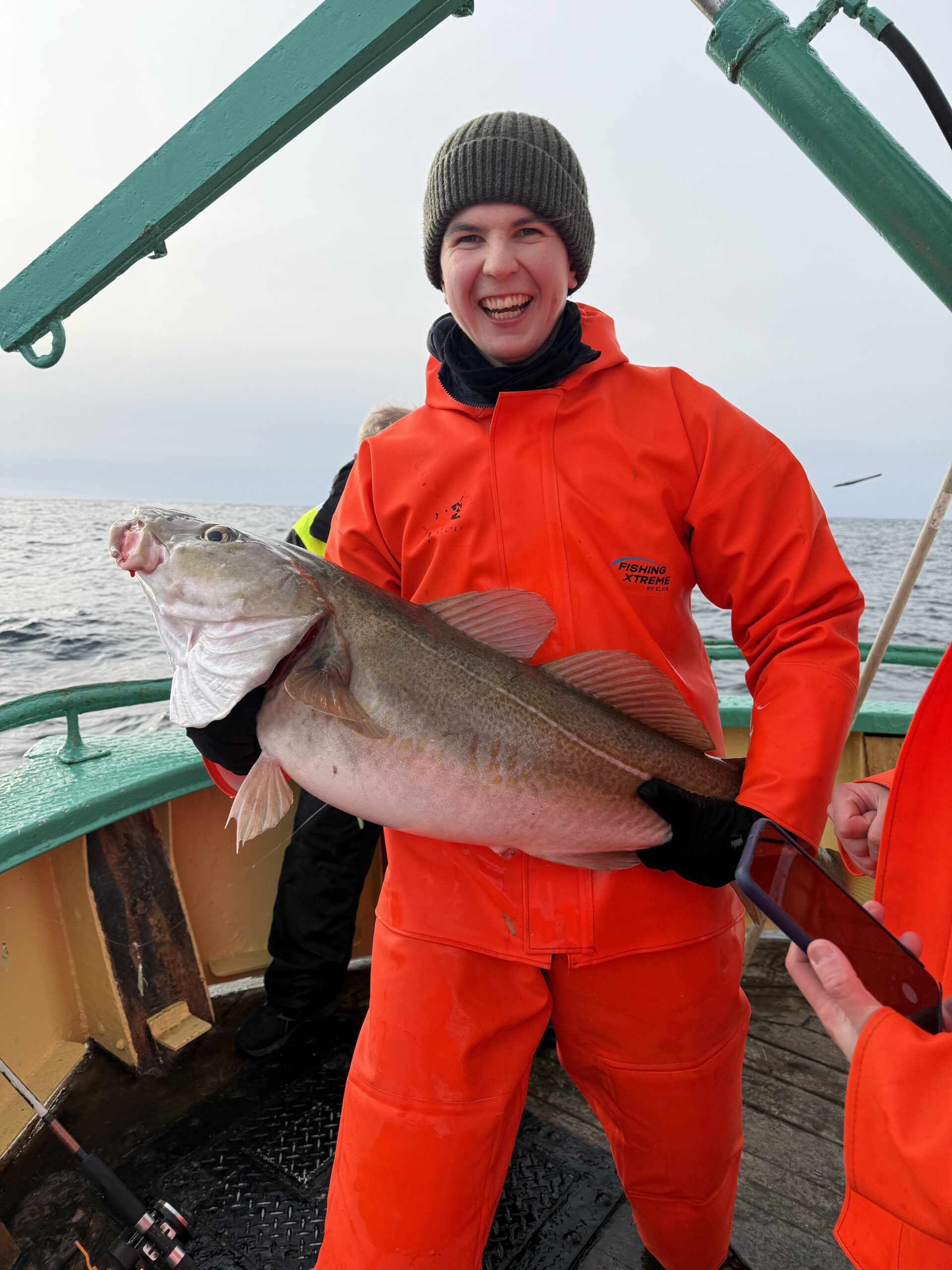
Finland gave us the fishing bug. Joona grew up with a rod in hand on Lapland lakes, and when we started road-tripping Norway — the Atlantic coast, the fjords, Lofoten — the first question we had wasn’t about hikes or viewpoints. It was: can we just fish here?
The answer is yes, but with asterisks. Norway has one of the most generous fishing frameworks for visitors in Europe — the sea is genuinely open to anyone, free, year-round. Freshwater is tighter, and salmon is a whole other chapter. This guide is what we wish we’d had before our first Norwegian fishing stop.
Saltwater fishing in Norway is free for everyone, no licence required. For freshwater fishing you need a national fishing licence (around NOK 400 / ~€35) plus a local landowner permit. Salmon and sea-trout rivers require a separate paid permit on top of that — costs vary wildly by river. Most visitors stick to sea fishing and never need a single piece of paperwork.
Sea fishing in Norway — the free rules
This is the headline fact that surprises almost every visitor: Norway’s saltwater is open to everyone. No licence. No permit. No fee. You can fish from the shore, from a kayak, from a rented boat, anywhere along the Norwegian coast — as long as you’re not using a commercial net or long-line setup.
What “free” actually means in practice
The right to fish in the sea comes from the Norwegian Marine Resources Act. Recreational fishing from shore or a private/rented boat with rod and line is completely unrestricted for anyone — Norwegian or foreign. What is restricted:
- Net fishing from shore: allowed only for Norwegian residents, with strict rules on net length and mesh size. As a tourist you shouldn’t be using nets.
- Bag limits: there’s a catch limit of 15 kg of fish per person per day for saltwater recreational fishing. If you catch one fish over 15 kg (a large cod, for example), that whole fish counts.
- Gear limits: a maximum of 10 hooks per line, and no more than two rods per person at a time.
- Protected species: certain species have seasonal closures or size limits. Atlantic halibut, for instance, has a minimum landing size of 80 cm. Check the Fiskeridirektoratet (Norwegian Directorate of Fisheries) website for current rules.
- Salmon and sea-trout in the sea: you can’t fish for anadromous species (salmon, sea-trout, arctic char) in saltwater either without a licence, even close to river mouths. This is a common mistake.
Where to fish from shore
Almost anywhere the sea meets land is technically accessible, but the best spots tend to be:
- Harbour breakwaters and jetties (most small Norwegian harbours have railings perfect for rod holders)
- Rocky headlands at low tide — these are the spots locals know
- Bridges over tidal channels, especially in the Lofoten archipelago
- The coast road pull-outs all along the E10 in Lofoten — you can pull off, rig up, and be fishing within minutes
Freshwater fishing — licences and permits explained
Freshwater is where Norway gets more complicated, and where we’ve seen travellers get tripped up. There are two separate layers of permission required — and you need both.
Layer 1: The national fishing licence (Fiskeravgift)
Anyone aged 18 or over who wants to fish in Norwegian freshwater must first buy a national fishing licence from the Norwegian Environment Agency. In 2026 this costs NOK 400 (around €35) and is valid for the whole calendar year. You buy it online at inatur.no or at some sports shops and post offices. It covers you to fish in principle — but it doesn’t give you the right to fish anywhere specific.
Layer 2: The local landowner permit
Most freshwater fishing rights in Norway are owned by the landowners adjacent to the water. To fish a specific river, lake, or stretch of water, you need to buy a permit from whoever owns the fishing rights there. Prices range from as little as NOK 50 (a small local lake) to several thousand NOK for a famous salmon river. You buy these at inatur.no, at local sporting goods shops, via the fishing association app Norsk Jeger- og Fiskerforbund (NJFF), or directly from local lodges and cabins.
Salmon and sea-trout rivers — a separate chapter
Salmon fishing in Norway is world-famous, and world-priced. The most sought-after rivers — Gaula, Alta, Namsen, Lærdal — issue a very limited number of permits by ballot or seasonal booking. Costs can run from NOK 500 to NOK 10,000+ per day on the top rivers. Our honest advice: if salmon is your main goal, book a dedicated fishing lodge well in advance. As a spontaneous road-tripper, you’re unlikely to get access to the top rivers on short notice. There are more affordable mid-tier rivers where walk-up permits are available — check inatur.no.
Quick-reference: costs and licence checklist
Here is what you actually need to prepare before fishing in Norway, depending on what you’re after.
- Sea fishing from shore or boat: nothing. Show up, fish. Obey the 15 kg daily limit and gear rules.
- Freshwater non-salmonid (trout, grayling, pike, perch): national fishing licence (NOK 400 / ~€35 per year) + local permit (NOK 50–500 depending on location). Total for a few days: €40–80 realistic.
- Salmon / sea-trout in rivers: national fishing licence + local salmon river permit. Budget NOK 500–2,000 for a good day on a mid-tier river; €200–1,000+ on famous rivers.
- Under 18: national licence not required, but local permits may still apply.
- Where to buy: inatur.no (English available), NJFF app, local sports shops, or directly from fishing lodges.
- When to buy: before you arrive at the water. Rangers do check, especially on salmon rivers.
- Season: most rivers have a defined open season — typically June–August for salmon, sometimes September. Outside the season, fishing is closed. Always verify per river.
- Bag limits in freshwater: vary by permit. Read the conditions when you buy.
Our monthly travel letter
Stories, trip notes, and honest guides from a Finnish–Ukrainian couple living at the Arctic Circle — direct to your inbox, no noise.
Where we actually fished (and what we caught)
We’ve driven Norway’s coast several times now, and fishing has become a ritual part of the road trip — usually nothing more technical than dropping a jig from a harbour wall after dinner. Here’s what we’ve found.
- Svolvær harbour, Lofoten: the classic Lofoten cod experience. We fished at the town jetty using simple jigs. Cod between 1–4 kg, and the occasional pollock. Zero licence required — saltwater. The harbour has regular tourist fishing boats too, but fishing yourself is free.
- Henningsvær bridge area, Lofoten: the tidal current running under the bridge concentrates fish. Early morning or evening are better. We caught saithe (pollock) here consistently.
- Ålesund area — E136 coast road pull-outs: less famous but productive. Rocky coastline, clear water, mackerel in summer, cod and pollock year-round. We pulled over three times in one afternoon.
- Geirangerfjord — trout lake (Grotlevatnet area): we bought a NOK 150 day permit at the local shop and fished a small lake above the fjord. Small brown trout on a spinner. Quiet and beautiful.
- E6 Saltfjellet plateau (north of Mo i Rana): several accessible small lakes right off the road. We had national licences and bought a cheap local permit online. Grayling and trout. Worth a detour if you’re driving north.
Gear you actually need
Norway is not a destination where you need fancy gear for casual fishing. For sea fishing especially, simple setups catch fish reliably. Here’s what we travel with and what we’d recommend.
- A telescopic travel rod: 2.1–2.4 m, packs to 60 cm, handles everything from harbour jigging to light freshwater. Doesn’t need to be expensive — NOK 200–400 at any Norwegian sports shop.
- A small spinning reel + braided line: braid (0.15–0.20 mm equivalent strength) gives better sensitivity and lasts longer than mono for sea use.
- Jig heads (15–40g): this is the main lure for Norwegian harbour cod and pollock. Sizes vary with depth and current. White, pink, or chartreuse rubber tails. Essential.
- Mackerel feathers: a rig of 3–6 feather lures, dropped vertically in harbour water during summer, is one of the most effective methods for mackerel and saithe.
- A simple spinner (Mepps #2–3): covers most freshwater fish — trout, grayling, perch. A silver or gold Mepps is in every Finnish tackle box for a reason.
- A fishing licence printout or PDF on your phone: if you’re buying the national licence and a local permit, keep confirmation accessible.
- A small knife and a rubber mat: for handling and releasing fish cleanly. Norway has strong catch-and-release culture on many freshwater waters.
Mistakes we made fishing in Norway
- Trying to fish salmon without a permit. On our first trip we didn’t realise that sea-trout near a river mouth also falls under the salmon licence rules. A local angler politely corrected us. Always check what species are present and what rules apply.
- Underestimating current in Lofoten channels. The tidal current under the Lofoten bridges is strong. We started with 20g jigs that went horizontal within seconds. Go heavier than you think — 40–60g for deeper channels.
- Buying the national licence but forgetting the local permit. These are two separate purchases. The national licence alone does not give you the right to fish any specific water.
- Fishing outside season dates. One of our freshwater stops turned out to have a season that ended in August. We were there in September. Always check the permit conditions, not just the map pin.
- Not bringing gear and regretting it. On our first Norwegian trip we didn’t pack rods because we thought it was too complicated. It isn’t — at least for sea fishing. We spent three evenings watching other people pull cod out of a harbour wall and kicking ourselves.
- Ignoring the 15 kg saltwater limit. It sounds like a lot until you’re pulling in decent-sized cod. If you’re keeping fish, count weights as you go. The limit exists for a reason.
Frequently asked questions
Do tourists need a fishing licence to fish in Norway?
For saltwater fishing — no licence required. For freshwater fishing, you need a national fishing licence (NOK 400 per year) plus a local permit for the specific water. For salmon and sea-trout rivers, an additional permit is required on top of those two.
Can I fish in Norwegian fjords without a licence?
Yes. Fjords are saltwater, so fishing with a rod from shore or a rented boat is free and requires no licence. Just respect the 15 kg daily catch limit and gear restrictions.
Where do I buy a Norwegian fishing licence?
The national fishing licence (Fiskeravgift) is bought at inatur.no — the website has an English option. Local permits for specific rivers and lakes are also available on inatur.no, through the NJFF app, or directly from local lodges and sports shops.
How much does fishing cost in Norway as a tourist?
Sea fishing: free. Freshwater non-salmonid fishing: roughly €35–80 for a few days (national licence + local permit). Salmon river fishing: NOK 500–2,000+ per day for most accessible rivers, with top rivers costing significantly more.
Is Lofoten good for fishing as a tourist?
Excellent — and very easy. Lofoten’s harbours offer free saltwater fishing for cod, pollock, and saithe year-round. Just bring a rod and some jigs. The winter cod season (January–April) is legendary, but summer is perfectly productive too.
Can I fish for salmon in Norway as a tourist?
Yes, but you need both a national fishing licence and a separate permit for the specific salmon river. The top rivers are booked out months in advance. More accessible rivers have walk-up permits through inatur.no. Salmon season is typically June to August, varying by river.
A final word from Rovaniemi
We live in Finnish Lapland — a place built around lakes, rivers, and the right to fish freely under the principle of Everyman’s Right. Norway’s saltwater generosity surprised us. You really can pull up anywhere on the E10 in Lofoten, drop a jig into the water, and catch cod without asking anyone’s permission or paying a single krone. That kind of freedom feels rare in Europe.
Freshwater is more structured, but not complicated once you know the two-layer system. Buy your national licence before you leave, download the inatur.no app, and spend ten minutes finding a local permit for wherever you’re planning to stop. The fishing is there — you just have to give yourself permission to try it.
If you’re driving Norway and want to fish, the real barrier isn’t bureaucracy. It’s remembering to pack the rod.
Joona & Alla
A Finnish-Ukrainian couple living in Rovaniemi, Finland. Joona is a marketing professional in Lapland tourism; Alla is an AI Engineer. Together we’ve visited 25 countries and share honest, locally-grounded travel writing from our home in the Arctic.
Read our full story →