First Impressions of Norway: What Surprised Us
We’ve driven through 21 countries, but Norway still caught us off guard. Here’s the honest, unfiltered version of what first-time Norway visitors need to know — from the couple who drove there straight from Rovaniemi.
J&A Joona & AllaRovaniemi, Finland · July 29, 2026 · 10 min read ·Updated seasonally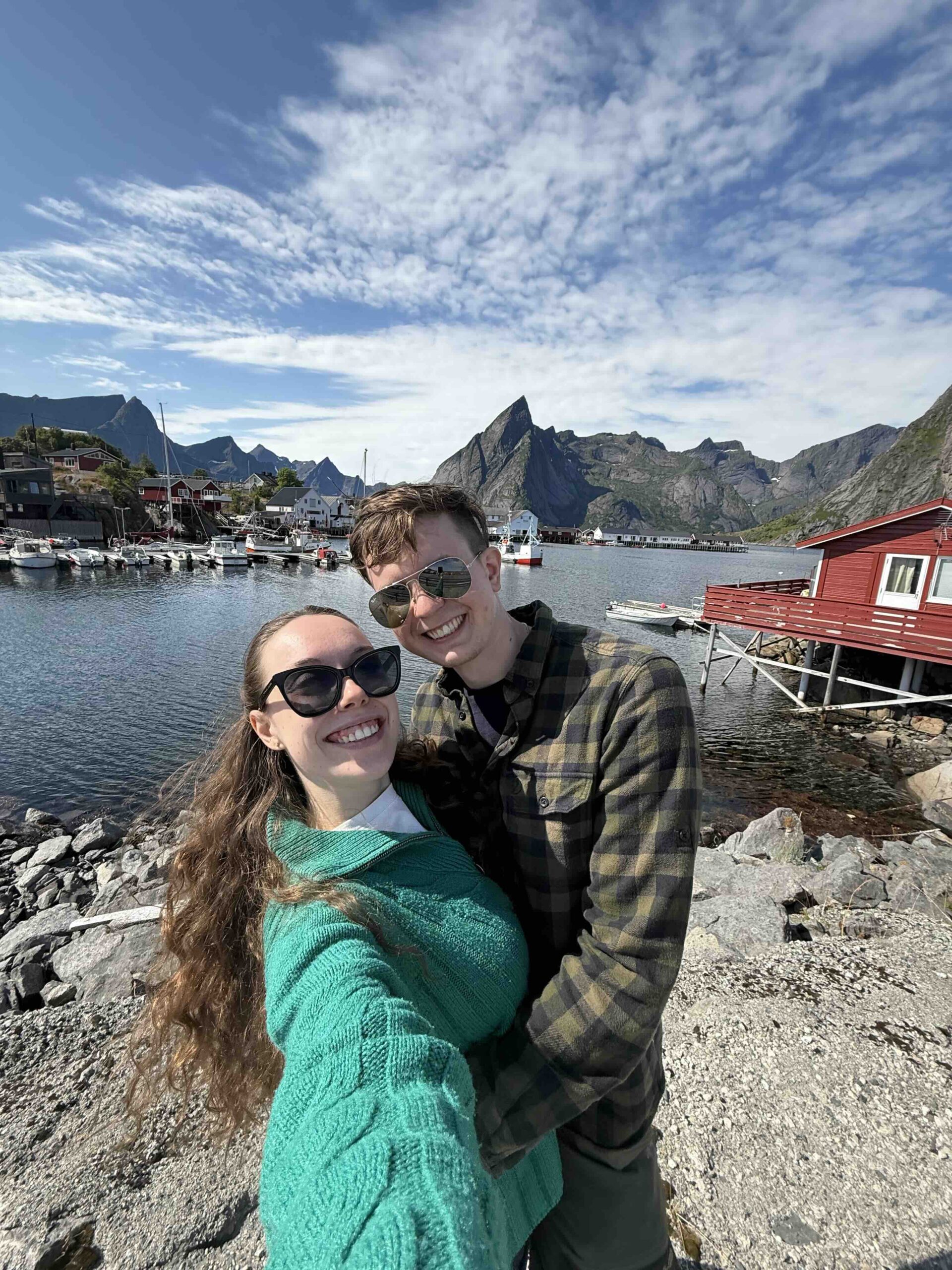
When you drive south from Rovaniemi toward the Norwegian border for the first time, you think you know what to expect. You’ve seen the fjord photos, scrolled the Instagram reels, maybe bookmarked a few “Norway travel tips” articles. We thought the same. Then we crossed into Norway and realised almost everything we assumed was either wrong, incomplete, or just unprepared for the scale of it.
This is not a standard Norway travel guide. It’s our honest record of first impressions — the things that genuinely surprised us on our first trip through Norway, driving from Finnish Lapland down through Tromsø and into the fjord country. We’ve since returned multiple times, but we’ve never forgotten that first crossing.
Short answerNorway surprises first-time visitors with its sheer scale and emptiness, the steepness of costs (a coffee can hit €7), the dramatic contrast between tunnel darkness and fjord light, and the way the landscape changes every twenty minutes. It’s one of the most staggeringly beautiful countries we’ve visited across 21 countries — and also the one that required the most recalibration of expectations before we felt ready for it.
In this guide- The scale of Norway surprised us most
- The road network: tunnels, ferries, and mountain passes
- Norway costs: what we actually spent
- The people and the culture
- The best unexpected moments
- Norway travel warnings we wish we’d read first
- Mistakes we made on our first trip
- FAQ: first time in Norway
The scale of Norway surprised us most
Coming from Finland, we assumed Norway would feel roughly similar in scale. Finland is a big, empty country too — we live in Lapland, we know long distances. What we didn’t anticipate was how Norway uses its space. Finland is flat and forested. Norway is vertical. Mountains don’t just rise in the distance; they drop straight into the water, and the water drops back down under them. The fjords are not scenic detours on the way somewhere — they are the country.
The distances are deceptive on the map
Norway’s coastline is famously one of the longest in the world because of the fjords, but that complexity doesn’t translate to map distance. What looks like a 200 km drive can take five hours because the road doesn’t go in a straight line — it goes over a mountain, down through a tunnel, onto a ferry, up the other side, and through another tunnel. We planned our first day in Norway for about 280 km and arrived at dark, exhausted, four hours behind schedule. Budget at least 50% more time than the map suggests for any drive involving fjord crossings.
The midnight sun in northern Norway is genuinely disorienting
- Above the Arctic Circle: from late May to late July, the sun does not set. If you cross into northern Norway in June, you will eat dinner in full daylight, go to bed in full daylight, and wake up in full daylight. This sounds romantic; after three days it starts to affect your sleep and your sense of time.
- In the fjord regions: even south of the Arctic Circle in summer, it stays light until after 11 pm and gets bright again by 4 am. You need blackout curtains or an eye mask.
- Our fix: we started treating the light as weather rather than a clock. Eat when hungry, sleep when tired, drive when alert. Norway rewards flexibility.
The road network: tunnels, ferries, and mountain passes
Norway has invested extraordinary sums in infrastructure — and it shows. The roads are generally excellent, the tunnels are long and well-lit, and the ferry connections are frequent. But none of this prepares you for actually using it if you’ve never driven here before.
The tunnels go on far longer than feels possible
The Laerdal Tunnel is the longest road tunnel in the world at 24.5 km. When you enter it and your GPS shows “exit in 22 minutes,” you start to genuinely question the life choices that led you here. Some tunnels have underground roundabouts. Some spiral downward through the mountain and emerge at sea level on the other side. None of this is frightening, exactly — but it is deeply surreal on a first visit. Expect it, so you’re not white-knuckling it when the tunnel just keeps going.
Ferries are not a last resort — they’re the system
- Many fjord crossings require a car ferry even on major routes. The ferries run frequently (often every 30–60 minutes), accept card payment, and are rarely more than 15 minutes. They’re also scenic and a good chance to stretch your legs.
- Check ferry timetables in advance if you’re on a schedule. Some crossings, especially on the Hardangerfjord and Naeroyfjord approaches, have limited sailings.
- AutoPASS for tolls: Norway charges tolls on most roads and all tunnels. Foreign cars are automatically photographed; the bill arrives digitally. Register your car with AutoPASS before you arrive or expect an administrative surcharge on the invoice weeks later.
Norway costs: what we actually spent
We are not going to pretend Norway is affordable. It isn’t. But it’s also not as binary as “Norway is expensive, avoid it” — the costs hit in specific, predictable ways, and once you know where the pain points are, you can budget around them.
- Coffee and cafes: A flat white in a Norwegian café runs €5–7 in most cities. In Oslo it can hit €8. We stopped buying café coffee after day two and made it at the accommodation — saving €20–30 per day.
- Supermarkets vs restaurants: Rema 1000, Kiwi, and Bunnpris are expensive by Finnish standards but dramatically cheaper than restaurants. Full day groceries for two: €30–40. Restaurant dinner for two: rarely under €80.
- Fuel: budget roughly €1.80–2.10 per litre for petrol (2026). Norway has an extensive EV charging network, but that doesn’t help you in a rental petrol car.
- Accommodation: wild camping under allemannsretten is free. Hostels: €40–70/person. Guesthouses: €80–150/night. We mixed camping with guesthouses and averaged €55/person/night.
- Tolls: expect €10–25/day depending on route. Register with AutoPASS before arrival to avoid surcharges.
- Activities: hiking is free. Fjord kayaking tours: €60–100/person. Most of the best Norway experiences cost nothing beyond fuel and food to reach them.
- Daily budget summary: frugal (camping, self-catering): €70–90/person/day. Mid-range: €130–180/person/day. Comfortable: €220–300+/person/day.
- Honest verdict: Norway cost us roughly 60–70% more per day than Finland. But we never once felt the scenery didn’t justify it.
Get our best travel tips in your inbox
Monthly stories from Rovaniemi — Arctic tips, packing lists, and the places we keep coming back to.
The people and the culture: quieter than we expected
We arrived in Norway expecting something broadly Nordic — composed, polite, slightly reserved. What we found was similar, but with a quiet confidence that comes from knowing you live somewhere genuinely remarkable. Norwegians don’t perform that for tourists.
- Friluftsliv is real, not a tourism slogan. Ordinary Norwegians are outdoors constantly — hiking, kayaking, cycling, fishing. This isn’t a weekend hobby; it’s the organising principle of how people structure their time.
- You will rarely be approached first. Norwegians are warm when engaged but unlikely to start a conversation with a stranger. Don’t mistake reserve for unfriendliness — ask a question and you’ll get a genuinely helpful answer.
- The cabin culture (hytte). Norwegians own cabins at a remarkable rate — roughly one for every five inhabitants. On long weekends, whole cities effectively empty. If you’re travelling around major Norwegian holidays, expect some services reduced.
- English is universal. Every Norwegian under 60 speaks fluent English. You will never be in a situation where you can’t communicate. We still tried a few Norwegian phrases — it was warmly received.
The best unexpected moments from our first trip
The grand things — Geirangerfjord, the Lofoten midnight sun, the Flam valley — lived up to every expectation. It was the unplanned moments we still talk about most.
- Stopping at a roadside waterfall that wasn’t on any list. Norway has so many waterfalls that locals don’t bother naming most of them. We stopped at what looked like a minor trickle on the map and stood under a 200-metre cascade. No signage, no car park, just a pull-in and a path.
- A ferry crossing at 2 am under full midnight sun. We misjudged our driving time and caught a late ferry in northern Norway with no other cars and a sky that looked like 3 pm. The fjord was mirror-flat. We stood on the deck for the whole 15-minute crossing and said almost nothing.
- The smell of the sea changing suddenly. Driving through a mountain tunnel and emerging on the far side to Atlantic wind and sea spray — the landscape shift is so abrupt it’s almost comical. Rock and dark to salt and brightness in the time it takes to blink.
- A conversation in a petrol station about elk. The attendant spent twenty minutes telling us about the elk corridor near his area, which trails to avoid in calving season, and where to spot them from the road. This kind of unhurried local knowledge is why you slow down in Norway.
- The silence above the tree line. We hiked above 1,200m on a clear July day, the wind dropped, and there was simply no sound at all — no road noise, no town, no aircraft. We sat for an hour and neither of us looked at a phone.
Norway travel warnings we wish we’d read first
Not warnings as in danger — Norway is extremely safe. These are the practical things that would have saved us time, money, and roadside bewilderment on our first visit.
- Don’t rely on Google Maps ETA in the fjord regions. It doesn’t account for ferry wait times, mountain pass speed limits, or road closures. Build in 40% buffer time on any multi-stage fjord drive.
- Some mountain passes close in winter and open late in spring. The Aurlandsvegen (Snow Road) and Trollstigen are typically closed October–May. Check vegvesen.no before you plan a route around them.
- Alcohol is expensive and restricted. Wine and spirits are sold only through Vinmonopolet stores, which close early (and all day Sunday). Stock up if this matters to you.
- AutoPASS tolls add up fast in cities. Oslo, Bergen, and Stavanger all have urban toll rings. If you’re driving through rather than stopping, you’ll still be charged.
- Weather changes in minutes. We packed for Finland summer and were underdressed for Atlantic weather. Bring a real waterproof for any outdoor activity.
Mistakes we made on our first Norway trip
We’ve made most of the avoidable Norway mistakes at least once. Here’s the list so you can skip the learning curve.
- Under-estimating driving times. Every single day took longer than planned. The landscape invites stopping. Factor in at least one unplanned hour per driving day.
- Not registering for AutoPASS before arriving. We received a toll invoice with a 20% administrative surcharge two months after returning home. Takes five minutes to register online.
- Booking too few nights on the west coast. We gave ourselves two nights in the Hardangerfjord region. It needed four. We felt rushed and still regret it.
- Skipping the supermarket in favour of convenience stops. Petrol station food in Norway is expensive. A Rema 1000 stop takes ten minutes and saves €30 on the same calories.
- Treating the fjords as photo stops rather than places. Day one we drove quickly between “viewpoints” and felt oddly unsatisfied. Day two we parked and sat by the water. The fjords reward patience, not efficiency.
- Not asking locals which roads to avoid. The tourist routes are excellent. The local routes are often better — quieter, equally beautiful. Ask at any guesthouse. Norwegians love telling you where to go.
Frequently asked questions: first time in Norway
How long do you need for a first trip to Norway?
A minimum of 10 days to get beyond surface impressions. Two weeks lets you do the fjords, at least one long hike, and reach northern Norway. Anything less and you’ll spend most of your time in the car without time to slow down.
Is Norway safe for solo travellers?
Yes, extremely. Norway consistently ranks among the safest countries in the world. The main practical risks are weather-related mountain conditions and standard petty-theft caution in Oslo’s busiest tourist areas.
What is the best season for a first visit to Norway?
June to August gives you the best driving conditions, open mountain passes, and midnight sun in the north. Late May and September are beautiful and far less crowded. Winter is spectacular but requires more planning for road conditions and reduced ferry schedules.
Can you do Norway on a budget?
Yes, with the right approach. Wild camping under allemannsretten is free. Supermarket self-catering cuts costs dramatically. Hiking is free. Budget €70–90/person/day for a genuinely frugal but enjoyable trip.
Do you need a car, or can you visit Norway by public transport?
Both are viable. Public transport covers the main routes well. But Norway’s most spectacular landscapes are off the main corridors and require a car to reach on your own schedule. For fjords and mountains, a rental car is strongly recommended.
What surprised you most about Norway as Finns?
The scale, genuinely. We live in Lapland and thought we understood big Nordic landscapes. Norway is vertically large in a way Finland isn’t — the fjords dropping below the road, the mountains rising from the sea, the tunnels cutting through geology that would stop any other road. It’s a country of extraordinary engineering and extraordinary indifference to human-scale convenience, and we loved it completely.
Norway changed how we think about Scandinavia. We’d visited Sweden, Denmark, Finland for years and thought we understood the Nordic register. Norway has a different energy — wilder, steeper, more expensive, and in some ways more demanding of the traveller. But the reward is a landscape and a culture that are genuinely unlike anything else in Europe.
We crossed from Rovaniemi to Tromso on our first trip and told each other we’d be back within the year. We were. And the year after that.
J&A Written byJoona & Alla
A Finnish-Ukrainian couple living in Rovaniemi, Finland. Joona is a marketing professional in Lapland tourism; Alla is an AI Engineer. Together we’ve visited 21 countries and share honest, locally-grounded travel writing from our home in the Arctic.
Read our full story →