Driving Through Denmark: What to Expect
A Rovaniemi couple who has driven across 25 countries shares what surprised them about Danish roads — the speed cameras, flat landscapes, toll bridges, and the moments that made it worth slowing down.
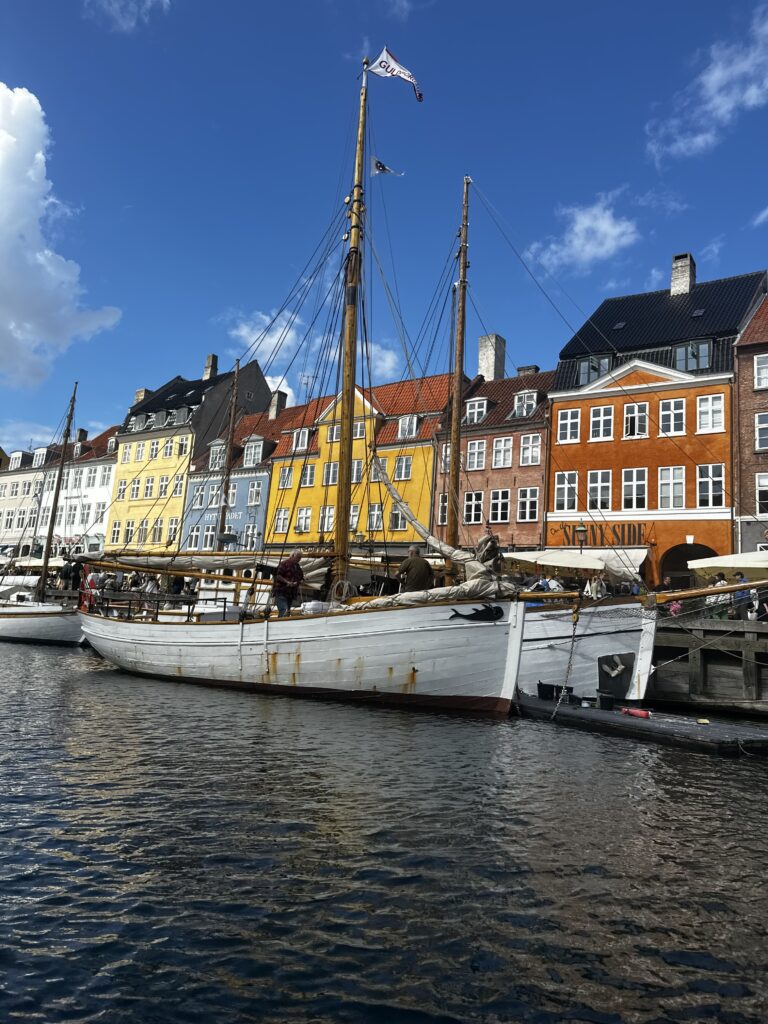
We have driven across 25 countries, and Denmark is one of the few where we went in with low expectations and came out wanting more. The roads are smooth, the signs are in English half the time, and the landscape — flat, green, dotted with red farmhouses — rewards you if you slow down and take the smaller roads.
That said, Denmark has a few things that catch first-time drivers off guard: a speed-camera network so thorough it feels like a running commentary, a toll bridge that costs more than you expect, and parking culture in the cities that genuinely requires a plan. Here is what we learned.
Driving Denmark is straightforward and very road-trip friendly. Roads are well-maintained, signage is clear, and distances are short — you can cross the country in about three hours. Watch your speed carefully (cameras are everywhere), budget for the Øresund Bridge toll if you cross to Sweden, and embrace the scenic coastal routes on Jutland and the smaller islands. Denmark rewards drivers who go slow.
Danish roads and what they’re actually like
Denmark is one of the most compact countries we have driven, and its road network reflects that. The motorvej (motorway) system connects Copenhagen to Jutland’s western coast efficiently, and the secondary roads through the countryside are genuinely pleasant. We spent two days on roads we had no particular reason to be on, simply because the villages and harbours kept pulling us off the main route.
The three types of road you’ll use
- Motorvejen (M roads): Denmark’s motorways, speed limit 130 km/h. Well-maintained, clear markings, good service areas. Free except for bridge crossings.
- Landevej (regional roads): the backbone of any road trip through Denmark. Speed limit typically 80 km/h, sometimes 90 km/h on wider stretches. These are where the farmhouses, windmills, and coastal scenery live.
- Byvej (town and city roads): inside towns the default is 50 km/h, often dropping to 30 km/h in residential zones. Clear signing but very strictly enforced.
Road quality and driving conditions
In our experience, Danish roads rank among the best-maintained in Scandinavia. Potholes were rare, markings were fresh, and we never felt uncertain about which lane to be in. The country is flat — even by Finnish standards — which means visibility is excellent and overtaking on regional roads is rarely a problem.
One thing worth noting: Denmark has a very strong cycling culture, and dedicated cycle paths run alongside many regional roads. This is mostly a non-issue for drivers, but in coastal towns and smaller villages, expect cyclists to be part of the traffic flow and give them proper space.
Speed limits and speed cameras in Denmark
If there is one thing every driver needs to know about driving Denmark, it is this: speed enforcement is relentless. Denmark has one of the densest fixed speed-camera networks in Europe, supplemented by mobile police speed checks on secondary roads. We were warned before we went. We still got comfortable and found ourselves watching the GPS more carefully than usual.
Speed limits at a glance
- Motorway (motorvej): 130 km/h
- Expressway / dual carriageway: 110 km/h
- Rural roads: 80 km/h (sometimes 90 km/h when signed)
- In towns / urban areas: 50 km/h default, 30 km/h in residential zones
- School zones and some residential streets: as low as 15–20 km/h
Tips for staying legal
- Use Google Maps or Waze — both alert to fixed speed cameras in Denmark reliably.
- Do not assume the limit has changed just because the road widened or traffic thinned. Wait for the sign.
- Speed tolerance is narrow. Danish speeding fines climb quickly with every km/h over the limit, and they are painful for visitors too.
- In rain or fog, limits may effectively feel too fast — locals drive carefully and you should too.
We have driven in Norway and Iceland where the speed limits feel similarly strict, but Denmark is the one where cameras are so frequent that we noticed them almost every few kilometres on the motorway. Treat every stretch as monitored and you’ll be fine.
Tolls, bridges, and what it costs to cross Denmark by car
Denmark itself has no road tolls — driving the motorway network is free. The cost comes at the two major crossings that connect Denmark to its neighbours.
The two crossings you need to know
- Øresund Bridge (Denmark → Sweden, or vice versa): the iconic 16 km crossing to Malmö. Toll is around DKK 430–530 per car each way (approximately €57–70 depending on exchange rates). Pay by credit card at the toll booth or register at BroBizz in advance for a discount. No cash. No free alternatives.
- Storebælt Bridge (Little Belt / Great Belt, Jutland → Fyn → Zealand): if you are driving from Jutland to Copenhagen, you cross Storebælt. Cost is around DKK 240 per standard car. Again, card only at the booth, or BroBizz.
Free alternatives?
For the Great Belt there is no practical free alternative if you are driving — it is either the bridge or a much longer detour south through Germany. For the Øresund, the Helsingborg–Helsingør ferry (HH Ferries) is the cheaper and slower option: roughly €15–20 per car, 20-minute crossing, runs frequently. We used it once and found it charming — the views of the two towns from the water are worth it.
Road trip notes from the Arctic
Every few weeks we send out a short letter — honest notes from our drives, places we are planning, and the occasional local insight from life at 66°N. No spam, no algorithm.
Parking in Danish cities — what actually works
Danish cities, especially Copenhagen and Aarhus, have some of the most structured parking systems we encountered in Scandinavia. The system works well once you understand it; it catches visitors who assume they can park the same way they would in Norway or Finland.
The basics of Danish city parking
- Paid street parking zones (P zones): colour-coded by maximum stay — red (1 hour), green (2 hours), blue (3 hours), white (unlimited but paid). You need a parkeringsskive (parking disc) for the time-limited free zones, or use a pay machine / the EasyPark app for paid zones.
- EasyPark app: works across most Danish cities and is by far the most convenient option. Download it before you arrive.
- Multi-storey car parks (parkeringshus): readily available near city centres. Often cheaper than street parking for stays over 2 hours.
- Park-and-ride: Copenhagen’s Metro and S-train network makes park-and-ride genuinely practical. Leave the car at a suburban station and ride in — cheaper and less stressful than city centre parking.
Watch for these parking traps
- Parking wardens in Copenhagen are efficient and active. Even 15 minutes over your time limit can result in a fine.
- Some streets change parking rules by day of week. Read the signs carefully — they are in Danish but the symbols are standard European.
- In smaller Danish towns, parking is often free and unmetered. This throws you off if you have been white-knuckling it in central Copenhagen.
The best driving routes in Denmark
Denmark’s driving distances are deceptive in the best way. What looks like a long journey on the map often takes under two hours. This means you can drive multiple distinct landscapes in a single day — which is exactly what we did on our first trip through Jutland.
Routes worth your time
- The west coast of Jutland (Vestkysten): from Skagen in the north to the German border in the south. Long beaches, dunes, fishing villages. The road runs close enough to the shore that you can stop every 20 minutes without planning ahead.
- The Lake District (Sjælland → Jutland inland): Denmark’s answer to hilly terrain. Not dramatic, but genuinely beautiful — glacial lakes, beech forests, small market towns. Great for a slow day.
- Funen (Fyn) countryside: the island between Jutland and Zealand, known as the garden of Denmark. Perfect for a single scenic day between larger cities.
- Copenhagen to Helsingborg (via Øresund or the ferry): a classic short drive that connects two countries and gives you the full bridge experience or the ferry alternative.
- The Marguerite Route (Margueritevej): Denmark’s official scenic road network, marked by a daisy symbol. 3,500 km of roads through the countryside — you don’t have to follow the whole thing, but picking up a section is always rewarding.
Things that surprised us about driving Denmark
We went in expecting Denmark to feel like a tamer version of Norway — neat, orderly, slightly expensive. Some of that was true. But there were things we genuinely did not anticipate.
- The flatness is actually freeing. After years of mountain driving in Norway and Iceland, Denmark’s flat landscape felt almost meditative. Long views, no switchbacks, no stress. It is a different kind of road trip energy.
- The small islands are accessible. Denmark has hundreds of islands, many reachable by short ferry from the mainland. We took a spontaneous 20-minute ferry to a small island with one road, one village, and one café. That afternoon became one of our favourite memories of the whole trip.
- Traffic in Copenhagen is genuinely brutal. We made the mistake of driving into central Copenhagen on a weekday afternoon. It took 45 minutes to go 4 km. Park outside, use public transport, do not repeat our error.
- Wind affects fuel economy noticeably. Denmark is very exposed — the west coast of Jutland especially. On a headwind day, our diesel consumption went up meaningfully. Not a problem, just worth knowing if you are planning a tight fuel budget.
- Roadside stands are a thing. We stumbled across multiple unmanned farm stalls on country roads — strawberries, eggs, potatoes, honey — with an honesty box. This is very Denmark and worth stopping for.
Mistakes we made driving through Denmark
We do this section in every road-trip post because, honestly, the mistakes are usually more useful than the tips.
- Driving into Copenhagen instead of around it. Copenhagen has a good ring road system. Use it. We didn’t on day one and spent an hour moving slowly past beautiful buildings we couldn’t stop to appreciate.
- Not downloading EasyPark before arriving. We wasted 15 minutes finding a pay machine in the rain in Aarhus. Download the app at the airport.
- Underestimating the Øresund toll. We budgeted €30 and spent €65. It is not the most expensive toll crossing in Europe, but it is one where the price surprises first-timers. Budget DKK 450+ per car.
- Skipping Funen because it seemed “in the way.” We treated it as a link road between Jutland and Zealand the first time. On a return trip, we gave it a full day. It was one of the loveliest drives of the whole journey. Do not skip it.
- Not checking ferry timetables for the small islands. Ferries to the smaller Danish islands run on fixed schedules, often with long gaps. We nearly spent an unexpected night on one because we missed the last crossing.
- Leaving the car unlocked while we walked on the beach. Petty theft from cars is uncommon in Denmark but not zero. Leave nothing visible, lock up. Basic habits.
Frequently asked questions about driving Denmark
Is driving in Denmark easy for first-timers?
Yes. Roads are well-signposted and well-maintained, distances are short, and English is widely understood at petrol stations and service areas. The main adjustment is getting used to the dense speed-camera network and the city parking systems.
Do I need to pay tolls to drive through Denmark?
Danish motorways are free. You only pay at bridge crossings: the Storebælt Bridge (Jutland to Zealand, ~DKK 240) and the Øresund Bridge to Sweden (~DKK 430–530). Card payment only at both.
Can I drive from Germany to Copenhagen in one day?
Easily. Hamburg to Copenhagen is about 380 km, roughly 4 hours without stops. Add the Storebælt crossing and you’ll have time for lunch en route. It is one of the most straightforward long drives in Scandinavia.
What is the speed limit in Denmark outside towns?
80 km/h on most regional roads, 110 km/h on expressways, and 130 km/h on motorways. Inside towns the default is 50 km/h. Speed cameras enforce these limits strictly across the country.
Is the Øresund Bridge worth paying for, or should I take the ferry?
Both are valid. The bridge is faster (10 minutes) and more convenient. The Helsingborg–Helsingør ferry is cheaper (~€15–20 per car), takes 20 minutes on the water, and gives you a great view of both towns. We recommend the ferry if you are not in a hurry.
How do I park in Copenhagen without getting a fine?
Use the EasyPark app (download before you arrive), or use a multi-storey car park near your destination. For stays over a few hours, park-and-ride at a suburban Metro or S-train station is the most practical and cheapest option.
A final word from Rovaniemi
We live in Finnish Lapland, so Denmark — compact, flat, and civilised — is almost the opposite end of the Scandinavian spectrum from what we see every day. And yet, every time we drive through it, we end up lingering. The country rewards a slower pace: a detour onto the Marguerite Route, a short ferry to an island you’ve never heard of, a stop at a roadside strawberry stand in Funen.
If you are planning a Nordic road trip and treating Denmark as a transit country, we’d gently push back on that. It earns at least two or three days of actual attention. The roads are good, the costs are manageable (bridge tolls aside), and the landscape — once you stop expecting fjords and start accepting flat green fields stretching to the horizon — is quietly beautiful in a way that stays with you.
Any specific Danish routes you’re planning? Drop a question below — we’re happy to share what worked for us.