Catching a 20kg Cod in Lofoten: Our Story
We drove from Rovaniemi to the Lofoten Islands on a whim, rented a rowing boat for 40 euros, and hauled up the biggest fish either of us had ever seen. Here is exactly what happened — and how you can fish the same waters.
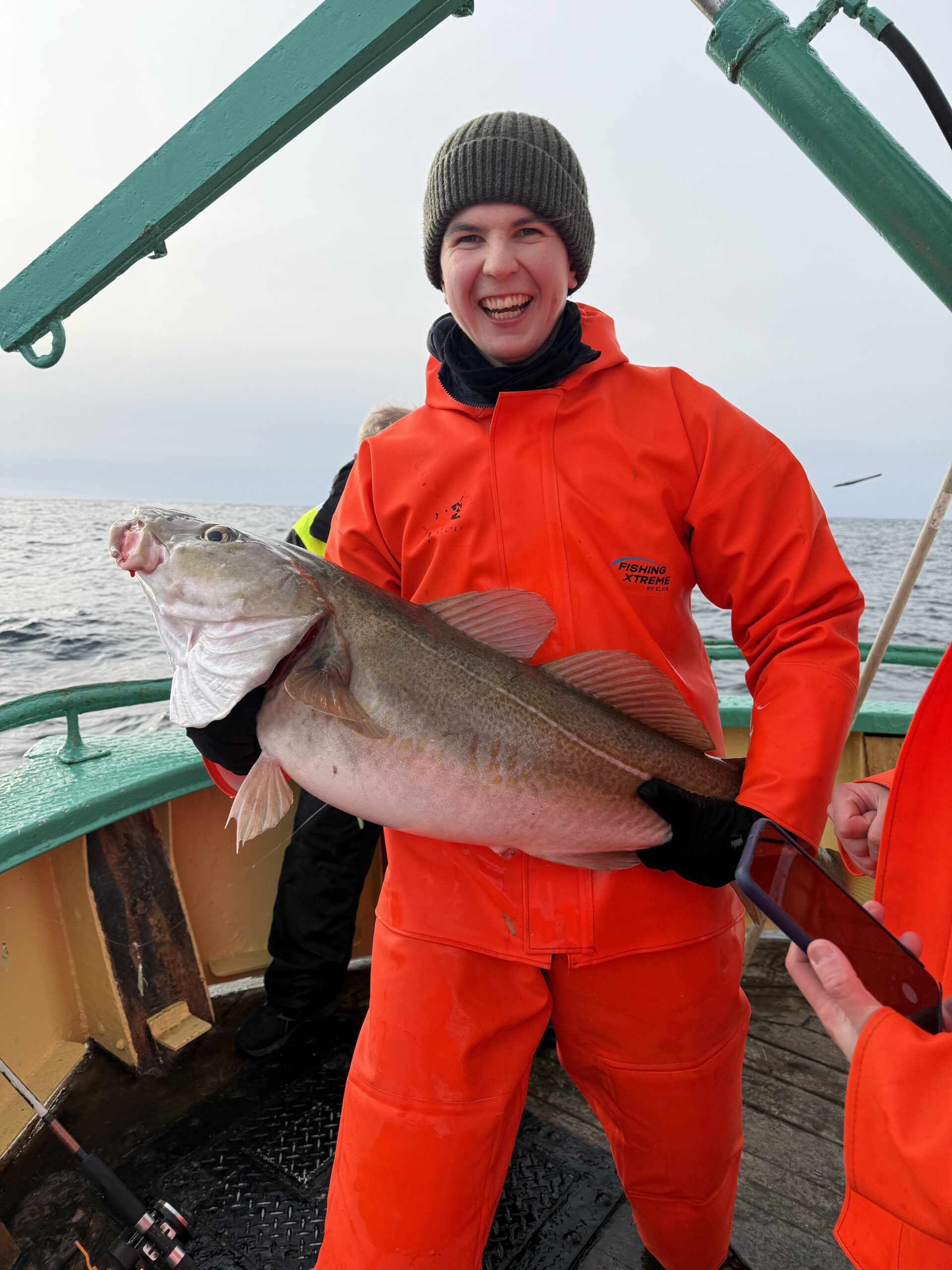
We had no plan, no guide, and no fishing licence beyond the one that comes automatically with being a tourist in Norway. It was late June, the sun hadn’t set in three days, and we found ourselves on the dock in Henningsvær with a borrowed hand-line and absolutely no idea what was lurking beneath us. Two hours later, Joona was in a wrestling match with something that felt, in his words, “like the bottom of the ocean had grabbed back.”
Lofoten cod fishing is one of those experiences that sounds like a thing only serious anglers do — and then you actually try it and realise the fish practically volunteer themselves. This is the story of the day we caught a 20kg skrei (Atlantic cod), and the complete practical guide for doing the same thing yourself.
Lofoten cod fishing is accessible to complete beginners — you don’t need a licence for shore or boat fishing in Norwegian saltwater as a tourist, gear rental costs 30–60 euros, and Atlantic cod (skrei) run large from January through April with smaller year-round catches possible from boat throughout summer. Our biggest fish weighed just over 20kg and took 45 minutes to land from a rented rowing boat off Henningsvær.
How we ended up fishing in Lofoten — and why you don’t need a plan
The drive from Rovaniemi
Living in Rovaniemi has its privileges. One of them is that Norway is closer than most maps suggest — it’s roughly 600km from our front door to Tromsø, and another four hours south to the tip of the Lofoten archipelago. We’d been meaning to go for years. This particular trip was triggered by a quiet weekend, a tank of petrol, and Joona reading about the skrei run on a fishing forum at 11pm on a Tuesday.
Skrei is the Norwegian word for the Atlantic cod that migrates from the Barents Sea to spawn in Lofoten waters each winter and early spring. It’s the same fish that built Norwegian civilisation — dried on wooden racks called hjell, it fed the country and half of Europe for centuries. We arrived in late June, which is technically outside the main skrei season, but local knowledge and a rented boat changed the odds considerably.
What kind of fishing is actually legal for tourists in Norway
Before we set out, we did the research so you don’t have to. In Norway, tourists can fish in saltwater — fjords, open sea, from a boat or from shore — completely free of charge and without any licence. This applies to rod fishing and hand-lines. The only restriction is that you may not sell your catch, and there are bag limits on certain species (for cod, the personal daily limit is 15 fish per person when fishing recreationally from a small boat). For freshwater fishing, you do need a licence, but that’s a separate matter. The Lofoten experience we’re describing is entirely legal and free to attempt.
The morning of the catch — what actually happened
Renting the boat in Henningsvær
Henningsvær is the one Lofoten village you’ve seen in a hundred Instagram posts — red and yellow rorbu cabins balanced on stilts over glassy water, with the jagged peaks of Vagakallen rising behind. We rented a small aluminium rowing boat with a 5hp outboard motor from the local harbour office for 40 euros for half a day. No prior booking required, just show up and ask.
The harbour master handed us two hand-lines already rigged with a heavy lead jig and three feathers, pointed roughly south-west, said “go out past the first island, drop to the bottom, jig slowly,” and that was the extent of the instruction. We motored out for about 20 minutes into open water, the midnight sun still high despite it being 6am, and dropped the lines.
The fish — and what landing it actually involved
Joona felt the first hit within four minutes. He assumed it was a small pollock — the feather rig often picks up multiple smaller fish at once, and the initial weight felt like two or three of those. Then the fish started pulling back. Seriously pulling. The line cut into his fingers through the gloves, the boat swung sideways, and Alla grabbed the gunwale while simultaneously trying to film on her phone and mostly failing at both.
The fight lasted 45 minutes. We later weighed the fish at the fish merchant in the village: 20.4kg. The man at the counter didn’t blink — he sees big cod regularly — but he did offer to fillet it on the spot, which saved us trying to deal with a fish the size of a small child on a camping stove.
Quick-start checklist: Lofoten cod fishing for tourists
- No licence required for saltwater boat or shore fishing in Norway as a tourist — this includes fjords and open sea.
- Boat rental costs typically range from 30–80 euros for a half-day, depending on the village and the season. Henningsvær, Svolvær, and Reine all have rentals at the harbour.
- Best spots include the open water south of Henningsvær, the deeper channel between Moskenesøya and Flakstadøya, and the mouth of Vestfjorden — ask locally, conditions change daily.
- Peak skrei season is January through April, when the big spawning cod migrate in from the Barents Sea. Summer fishing still works but targets smaller resident cod, pollock, and halibut.
- Gear to bring or rent: a heavy jig (200–400g), feather rigs (available at petrol stations and fishing shops throughout Lofoten), warm waterproof layers, gloves with grip, and a cloth for handling the fish.
- What to do with a big catch: the fish merchants in most villages will fillet, salt, or dry your fish for a small fee — or you can take fillets to your rorbu and cook them that evening.
- Catch limit: 15 cod per person per day for recreational fishing from a small boat. You will almost certainly not hit this limit on a half-day trip.
- Safety basics: always check the wind forecast before going out, tell the harbour where you’re heading, and wear a life jacket — the waters around Lofoten are cold even in summer.
Stories from the road — no algorithm required.
We write about Nordic adventures, slow travel, and the places most guides skip. New letter every two weeks.
Tips for improving your odds on the water
- Go early or late. Cod feed most actively at dawn and dusk — even in the midnight sun, the low-angle light of 2am triggers feeding behaviour. Our catch came at 6am.
- Find the depth break. Lofoten cod like to hang at the boundary between shallow shelves and deeper water, typically 40–80 metres. Most rental boat operators know these spots and will mark them on a map.
- Jig slowly, not frantically. The instinct is to work the lure hard. What actually works is a slow 1-2 metre lift, a pause, and a controlled descent. Cod are ambush predators, not speed chasers.
- Use heavy enough gear. A 200g jig is the minimum in Lofoten’s currents; 300–400g is better. Light lures get swept sideways and never reach the feeding zone on the bottom.
- Stay over the marks. If you had a strike or a catch, mark the GPS coordinate on your phone and return to it. Cod school up and the same spot will often produce multiple fish.
- Ask before you go. The harbour master, the rorbu owner, or the bloke buying bait at the petrol station will know where the fish were yesterday. This information is freely shared — Norwegians love fishing and love talking about fishing.
- Bring a bucket. The fish will be alive and active when you haul it up. A bucket of seawater keeps it calm and lets you handle it safely without thrashing.
- Dress for the sea, not the shore. Even on a sunny June day, the wind on the water can drop the feels-like temperature by 10 degrees. Oilskin trousers and a proper windproof jacket are not optional.
What the locals told us vs what we learned ourselves
- Locals said: June is too late for the real cod. Reality: we caught a 20kg fish in June. Smaller than peak skrei season, yes. Too late, no.
- Locals said: hand-lines are old-fashioned. Reality: every serious Lofoten fisherman we watched from the dock was using a hand-line for jigging. It’s simpler, more tactile, and perfectly effective from a small boat.
- Locals said: you need to go far out. Reality: we caught our biggest fish about 2km from the harbour. Depth matters more than distance.
- Locals said: fresh ling is better than cod. We’d believe it: we didn’t catch ling, but the fillet the harbour master pulled out of a cooler was extraordinary. Target cod, but be happy if something else takes your line.
- We learned: patience counts more than technique. The first hour we jigged too fast, moved around too much, and caught nothing. The moment we slowed down and committed to one spot, the fish started hitting.
Mistakes we made (so you don’t repeat them)
- Forgetting gloves. A 20kg cod on a hand-line will destroy your palms. We had thin wool gloves that helped marginally. Bring proper grip gloves or at least wrap the line around a cleat when the fish runs.
- Not bringing a camera mount. Alla spent the entire fight trying to film with one hand and steady the boat with the other. A clip mount for the gunwale costs five euros and saves you an embarrassing 47-minute video of blurry water.
- Underestimating how big a 20kg fish actually is. We had no plan for getting it into the boat, no gaff hook, no landing net. We improvised with a rope loop around the tail. It worked, but only barely. Rent a gaff if you’re going for big fish.
- Not checking the filleting option first. We spent 20 minutes trying to fit the whole fish into our coolbox before someone told us the fish merchant 200 metres away would fillet it in four minutes for three euros.
- Booking only one day. We should have booked three. One successful catch and we immediately wanted to go back the next morning. We couldn’t — we had a ferry to catch. Plan for more time than you think you’ll need.
- Ignoring the wind forecast. The day after our trip the harbour was closed to small boats due to a sudden swell. We were lucky our timing worked out. Always check Yr.no (the Norwegian weather service) before launching.
Frequently asked questions
Do I need a fishing licence to fish in Lofoten as a tourist?
No, not for saltwater fishing. Tourists can fish freely in Norwegian saltwater — from shore, a pier, or a rented boat — without any licence or fee. This covers cod, pollock, halibut, and most other sea fish. The rule is simple: no selling your catch, and respect the daily bag limits (15 cod per person from a small recreational boat).
When is the best time of year to fish for cod in Lofoten?
January through April for the main skrei (spawning cod) run, when the largest fish migrate down from the Barents Sea. Fish over 15kg are common during this period. Summer fishing still works — we caught our 20kg fish in June — but the biggest concentrations are in the winter-spring run. March is the single most reliable month for large skrei.
How much does it cost to fish in Lofoten?
Very little. A half-day boat rental runs 30–80 euros depending on the village and whether a small motor is included. Hand-line rigs with jigs cost 5–15 euros at any petrol station or outdoor shop. If you’re shore fishing, your only cost is getting there. Filleting at the fish merchant is typically 3–6 euros per fish. It’s genuinely one of the most affordable unique experiences in Norway.
Can complete beginners catch big cod in Lofoten?
Yes — this is genuinely beginner-accessible fishing. The technique is simple (drop to the bottom, jig slowly upward), the cod are numerous, and the local harbour staff will point you in the right direction. You do not need previous fishing experience to land your first cod. You might need previous fishing experience to land a 20kg one without dropping it back, but even that is manageable with a bit of patience.
What should I do with a fish I catch in Lofoten?
Most villages have a fish merchant or a rorbu host who will fillet it for a small fee. You can cook fresh fillets at your accommodation that evening — pan-fried with butter is the local method and it’s outstanding. You can also ask for the fish to be salted (klippfisk) or dried (stockfish) and collected later, though that requires planning. We ate our cod for dinner the same day and it was the best fish we’ve ever tasted.
Is Lofoten cod fishing possible without a boat?
Yes. Shore fishing from piers and rocky points along the islands produces pollock, smaller cod, and coalfish year-round. The fish are not as large as what you pull from deeper water, but it’s perfectly enjoyable and completely free. The pier in Svolvær harbour and the rocky points near Å (the most southerly village) are popular shore spots.
A final word from Rovaniemi
We drove home from Lofoten with a cooler full of cod fillets, two pairs of ruined gloves, and a memory that’s been brought up at almost every dinner party since. The fish was extraordinary — the experience even more so. There’s something that happens when you’re out on the water at 6am with the sun still high, the mountains rising straight out of the sea around you, and a living thing on the other end of your line that has absolutely no intention of coming quietly.
Norway is full of expensive experiences. Lofoten cod fishing is not one of them. A boat, a hand-line, and a single morning is all it takes. We’ve been to 25 countries and done a lot of things that claimed to be bucket-list. This one actually was.
If you’re driving north from Finland, or flying into Bodø, put the Lofoten Islands on your list and rent a boat for a morning. You don’t need a plan. The fish will take care of the rest.
Joona & Alla
A Finnish-Ukrainian couple living in Rovaniemi, Finland. Joona is a marketing professional in Lapland tourism; Alla is an AI Engineer. Together we’ve visited 25 countries and share honest, locally-grounded travel writing from our home in the Arctic.
Read our full story →