Best Time to Visit the Faroe Islands
A month-by-month guide from a couple who visited in summer and wishes they’d known all of this before booking flights.
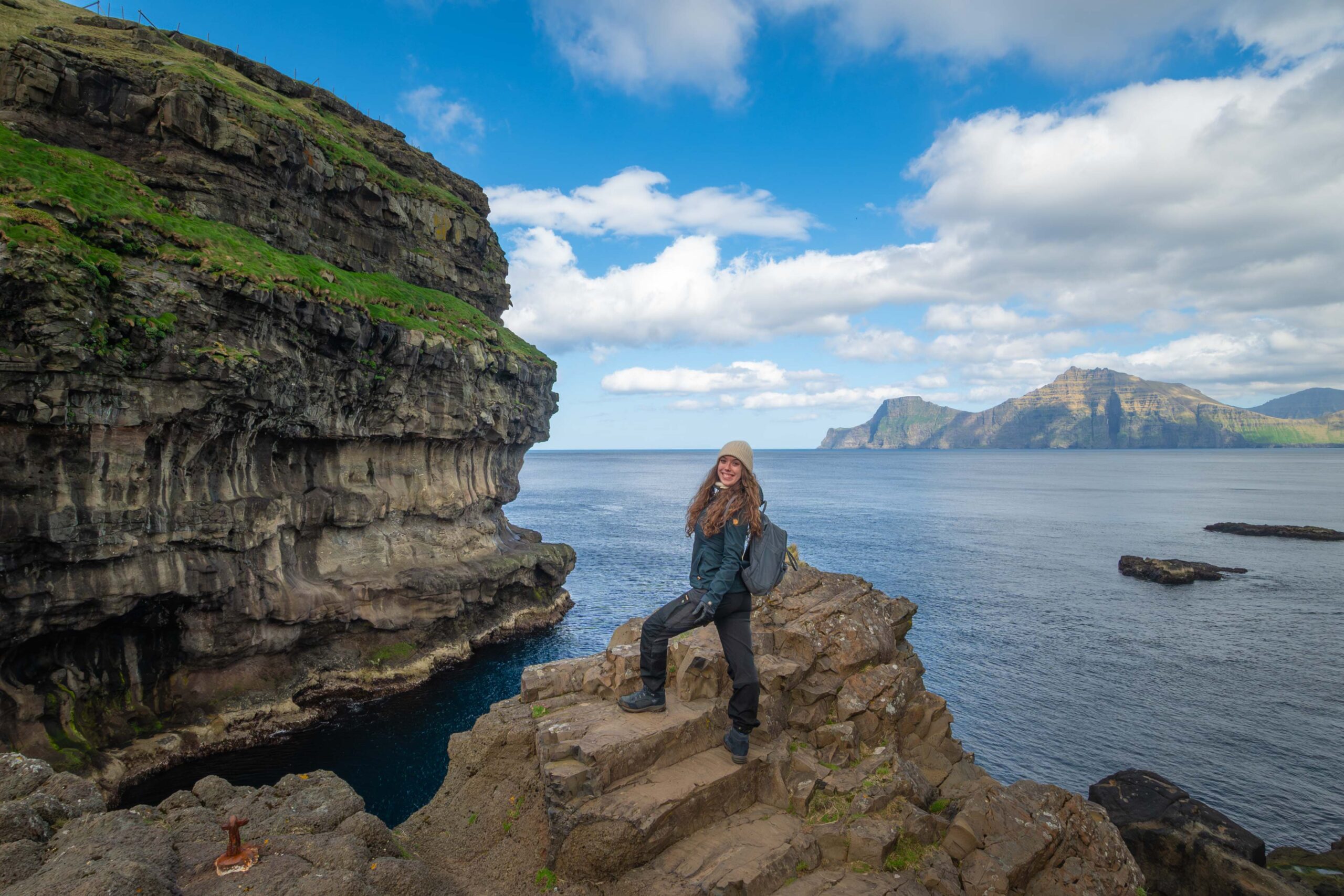
The best time to visit the Faroe Islands is June to August for the warmest weather, longest daylight, and puffin season — but May and September offer fewer crowds and lower prices. There is no truly bad month; every season has a draw, and the weather is unpredictable year-round.
Faroe Islands weather: what to actually expect
Before we get into the month-by-month detail, a disclaimer that every Faroese local will tell you: the weather changes four times before lunch. We visited in summer and experienced sun, horizontal rain, dense fog, and a wind that nearly pushed Alla off a cliff path — all in the same afternoon. That is not an exaggeration. It is the Faroe Islands.
Temperature ranges
The Faroe Islands sit in the North Atlantic at 62°N — the same latitude as southern Greenland — but the Gulf Stream keeps temperatures surprisingly mild. Summer highs hover around 11–13°C (52–55°F) and winter rarely drops below 1–3°C (34–37°F). The word “warm” does not apply here in any month. Pack layers regardless of when you go.
Rain, wind, and fog
It rains roughly 300 days per year. Not always heavily, but the islands sit in a permanent moisture cycle. Wind is the bigger factor — gusts regularly exceed 60 km/h and can make otherwise easy hikes feel serious. Fog rolls in without warning, especially in valleys and near the coast. The upside: when the clouds break, the light is extraordinary. Some of the most dramatic skies we have ever seen were between rain showers on Vágar.
- Average annual rainfall: 1,200–1,500 mm (more in the mountains)
- Windiest months: October through March
- Foggiest months: June and July (warm air meets cold sea)
- Best sunshine odds: May and early June, though “best” is relative
Month-by-month breakdown
January & February — the quiet deep
Short days (6–8 hours of light), frequent storms, and most hiking trails are slippery or closed. But Tórshavn has a quiet charm, accommodation is at its cheapest, and the moody landscapes feel cinematic. Northern lights are theoretically possible, though cloud cover often hides them. Best for: photographers chasing drama, budget travelers, anyone who enjoys solitude.
March & April — early spring, slowly
Daylight increases rapidly. Snow lingers on the peaks but grass starts greening at sea level. Puffins begin arriving offshore in late April. Ferry schedules ramp up. Accommodation is still affordable and tourist infrastructure is waking up. March can still be harsh; April is a genuine shoulder month with real upside.
May — the sweet spot for low crowds
This is when we would go next time. Wildflowers appear, daylight stretches past 20 hours by month-end, and puffins are nesting. Trails are generally passable. Prices are lower than June–August, and you can still get accommodation without booking months in advance. The only catch: some boat tours and village festivals do not start until June.
June — peak light, puffins, everything open
The longest day is around June 21, with near-continuous twilight. Everything is open: ferries, helicopter routes, hikes, festivals like Ólavsøka preparations. Puffin colonies are at full capacity on Mykines. This is the most popular month, so book flights and accommodation early. Expect fog, but also the greenest landscapes you have ever seen.
July — the warmest month (relatively)
Temperatures peak — though “peak” means 12–13°C. This is the busiest month. Mykines puffin hikes sell out daily. The national holiday Ólavsøka falls on July 28–29 and is genuinely worth planning around if you enjoy festivals, rowing races, and local culture. Prices are at their highest. Worth it if you prioritise warmth and maximum daylight.
August — summer winds down
Still warm enough, daylight shortening but generous. Puffins begin leaving by late August. Crowds thin slightly after mid-month. A good compromise between summer conditions and slightly lower prices. Some boat tours reduce frequency toward month-end.
September & October — autumn and storms
September is an underrated shoulder month: autumn colours, fewer tourists, reasonable prices. October brings serious storms and shorter days. Both months can deliver spectacular weather windows between fronts. If you are flexible with dates and comfortable with cancellations, September rewards you. October is for the committed.
November & December — Nordic darkness
Very short days (5–7 hours of weak light), frequent gales, limited infrastructure. But December has Faroese Christmas traditions, and Tórshavn’s harbour is atmospheric. Not for first-time visitors unless you specifically want the dark-season experience.
Quick-reference: best month for each activity
- Puffin watching (Mykines): late April to mid-August; peak June–July
- Hiking (Kalsoy, Vágar, Streymoy): May to September; safest footing June–August
- Photography (moody skies): October to March for drama; June for green + light
- Budget travel: January to April, or late September to November
- Whale watching: June to September from Tórshavn or Vestmanna
- Northern lights: September to March (cloud cover is the real challenge)
- Festivals (Ólavsøka): July 28–29 in Tórshavn
- Fewest tourists: November to February
Trips we’re planning, mistakes we’ve made, things we’d pack differently.
One email when we publish something worth reading. No spam, no fluff, unsubscribe anytime.
When to go for the best prices
The Faroe Islands are not a budget destination in any month, but timing makes a real difference. Here is what we learned about costs and when to save.
- Flights are cheapest in January–March and November. Atlantic Airways and Scandinavian Airlines both drop prices outside summer. We have seen Copenhagen–Vágar fares under €120 return in February.
- Accommodation peaks June–August. Tórshavn guesthouses that cost €90/night in April can hit €180+ in July. Book 3–4 months ahead for summer.
- Car rental is essential and expensive in summer. A small car runs €80–120/day in July. In April it is closer to €50. Book early regardless — the islands have limited fleet.
- Shoulder months (May, September) offer the best value-to-experience ratio. Weather is reasonable, prices are moderate, and most attractions are open.
- Food costs are constant year-round. Expect €15–25 per meal at casual spots. Self-catering from Bonus or FK supermarkets saves significantly.
- The Mykines puffin hike ferry (boat to Mykines) books out weeks ahead in summer. Off-peak you can sometimes get same-week slots.
Summer vs winter: which season suits you
This is the real decision most travelers face. Both seasons are legitimate — they are just completely different trips.
- Summer (May–August): long days, green landscapes, puffins, hiking, boat tours, festivals. Temperatures around 8–13°C. Fog is common. Crowds peak June–July. Best for first-time visitors and anyone who wants to hike or see wildlife.
- Winter (November–February): short days, dramatic storms, northern lights potential, Faroese Christmas, almost no tourists. Temperatures 1–5°C. Many trails are unsafe. Best for photographers, repeat visitors, and people comfortable with limited infrastructure.
- Shoulder (March–April, September–October): unpredictable but rewarding. Fewer crowds than summer, more daylight and access than winter. Best for flexible travelers who can adjust plans around weather windows.
- For couples: we found summer ideal for a first visit — the landscapes need to be seen green to be believed. But we are genuinely tempted to return in November for the darkness and solitude.
- For photographers: winter delivers moody conditions and empty compositions that summer cannot match. But summer light between rain showers is extraordinary.
- If you only have one trip: June. It is the safest bet for weather, daylight, puffins, open infrastructure, and dramatic light.
Timing mistakes we made (so you don’t)
- We did not book the Mykines ferry early enough. It sold out for our preferred date three weeks before we arrived. We got a slot two days later by refreshing the booking page obsessively. Lesson: book Mykines the moment you confirm flights.
- We assumed summer meant warm. It does not. Alla packed one light jacket and spent the trip borrowing Joona’s fleece. Bring proper windproof layers even in July.
- We underestimated fog cancellations. Our helicopter to Mykines was cancelled twice due to visibility. Internal flights and ferries follow the same pattern. Build buffer days into your itinerary — rigid schedules do not work here.
- We did not check Ólavsøka dates before booking. We just missed the festival by three days. If we had checked the calendar, we would have shifted our trip. Ólavsøka (July 28–29) is the one event worth planning around.
- We skipped March because it sounded too cold. Friends who visited in late March say it was magical — empty islands, snow on peaks, green valleys below, and lamb season starting. We regret not considering shoulder months more seriously.
- We tried to do too much in peak season. Four islands in five days with weather delays meant we rushed everything. The best time to visit also depends on how long you stay. Give yourself at least one extra day beyond what feels sufficient.
Frequently asked questions
What is the best month to visit the Faroe Islands for the first time?
June. You get the longest daylight, the greenest landscapes, puffins on Mykines, and all infrastructure (ferries, helicopters, tours) is fully operational. It is the most popular month for a reason.
Can you see the northern lights in the Faroe Islands?
Yes, between September and March when skies are dark enough. However, the Faroe Islands have heavy cloud cover, so sightings are less reliable than in northern Scandinavia. Clear nights do happen — just do not plan your entire trip around it.
Is it worth visiting the Faroe Islands in winter?
For the right traveler, absolutely. Winter offers dramatic storms, empty landscapes, Faroese Christmas traditions, and aurora potential. But hiking is limited, daylight is short (5–7 hours), and some services are reduced. It is best suited to repeat visitors or photographers.
How far ahead should I book a summer trip?
Three to four months for accommodation and flights. The Mykines ferry and popular tours should be booked the moment you confirm travel dates. Car rental books out fast — reserve early even if your plans are tentative.
Does it rain every day in the Faroe Islands?
Nearly. It rains about 300 days per year, though not always heavily. Many days alternate between rain and sun within hours. A good waterproof jacket and layers are essential in every season. Do not let the rain statistics put you off — the breaks between showers are stunning.
What is the warmest month in the Faroe Islands?
July, with average highs around 12–13°C (54–55°F). It is the warmest, but “warm” is relative. Even in July you will want windproof layers and a fleece. Swimming is for the brave.
A final word from Rovaniemi
We live above the Arctic Circle. We know dark winters and unpredictable weather. And the Faroe Islands still surprised us — not because they were harsh, but because every hour delivered something different. The best time to visit the Faroe Islands is whenever you are ready to stop planning and start packing layers.
If you want the safest bet, go in June. If you want value, try May or September. If you want to see the islands the way the Faroese see them — windswept, fog-wrapped, honest — go whenever you can and stay longer than you think you need.
We are already looking at flights back. This time, we are thinking November.
A Finnish-Ukrainian couple living above the Arctic Circle in Rovaniemi. We have visited 25 countries together and write about the places we actually go — with honesty, warm layers, and a carry-on each. Hungrytravelfamily is our corner of the internet for travelers who plan with intent.