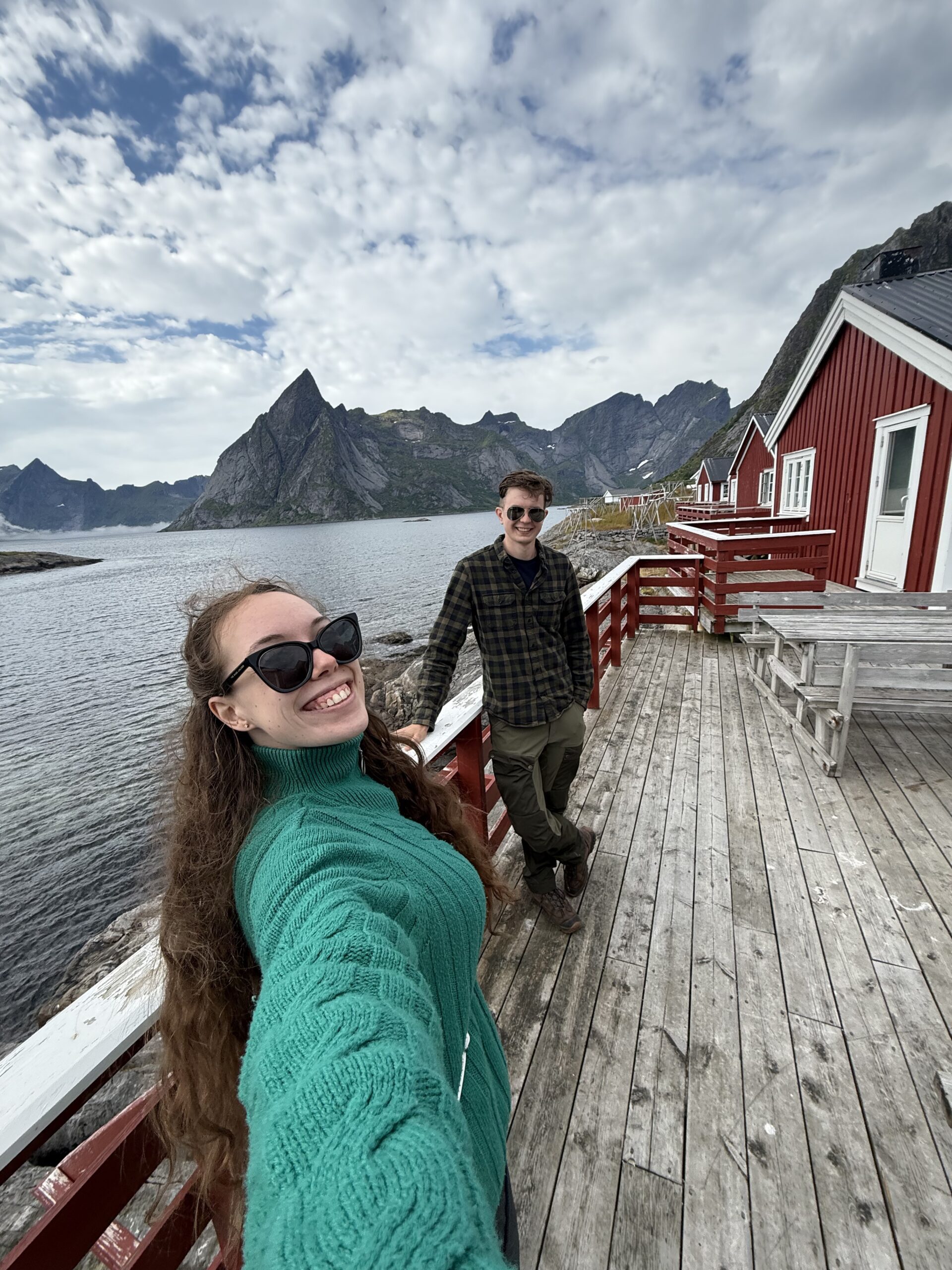
We live in Rovaniemi, in Finnish Lapland. Joona works in tourism marketing; Alla is studying AI engineering. Between us we earn normal salaries, not influencer retainers. And yet, over the past several years, we’ve managed to visit 25 countries — Finland, Sweden, Norway, Denmark, Iceland, the Faroe Islands, Estonia, Latvia, Poland, Germany, the Netherlands, Belgium, Luxembourg, France, Ireland, Portugal, Italy, Greece, Hungary, Singapore, and Ukraine — without going into debt or sacrificing the trips entirely.
This post is the honest system behind that. Not a listicle of hacks you’ve read before. The real framework: how we think about money, how we book, how we eat, and where we refuse to compromise — because long-term budget travel isn’t about being cheap everywhere. It’s about being intentional.
Short Answer
Long-term budget travel works when you treat travel like a subscription you manage, not a holiday you survive. That means tracking your daily spend, booking transport early and accommodation late (or not at all), eating where locals eat, and identifying the two or three experiences per trip you’ll actually pay full price for — then protecting those.
In this guide
The mindset shift that changes long-term budget travel
The first mistake most people make is treating a long trip as one big expense. You look at the total — €3,000, €5,000, €8,000 — and it feels abstract and terrifying. You either overspend because it doesn’t feel real, or you under-travel because you’re paralysed by the number.
The shift that worked for us was treating travel as a daily cost of living. What is our budget per day on the road? For us, that number is around €80–100 for two people in Northern Europe (excluding flights), dropping to €50–60 in Eastern Europe, and rising to €120+ in Iceland or the Faroes. Once you have a daily number, you can make real-time decisions that actually hold.
Spending versus splurging — the distinction that matters
We don’t avoid spending. We’re very deliberate about where we spend. Before any trip, we decide on the two or three moments worth the full price: a cabin on the Faroe Islands cliff edge, a sauna evening on a frozen lake in Finland, a Michelin-adjacent dinner in Copenhagen. We protect those. Everything else — the hotel room we sleep in for six hours, the lunch between sights, the city bus instead of a taxi — we optimise hard.
- High value to us: unique nature experiences, local guides for remote areas, one exceptional meal per destination.
- Low value to us: central hotel location (we prefer quiet and cheap), airport transfers (public transport almost always works), branded gear (any warm layer does the job in Lapland).
- The test we use: “Will we remember this in five years?” If yes, pay. If no, find the cheaper version.
How we plan and book on a budget
We have a two-tier booking philosophy: book transport early, book accommodation late — or not at all. Transport prices in Europe (flights, ferries, trains) are lowest 6–12 weeks out and rise sharply in the final two weeks. Accommodation in most of Europe does the opposite: last-minute rates drop, especially in non-peak destinations.
Flights and trains — the early-booking rule
We watch routes for 3–4 weeks before committing. Tools we actually use:
- Google Flights with price tracking: set an alert and wait. The price will drop at least once, usually midweek.
- Finnair’s Lapland routes: as residents of Rovaniemi, we know the Helsinki–Rovaniemi corridor cold. Prices spike in February and December — book 8+ weeks out or take the overnight train from Helsinki instead.
- Rail passes for the Nordic countries: the Interrail Nordic pass pays off if you’re doing three or more countries in a single trip. For a single country, point-to-point is almost always cheaper.
- Ferry routes (Baltic + Norway): Tallink Silja, Viking Line, Fjord Line all offer early-bird pricing that can be 60% cheaper than booking the week before departure.
Accommodation — the flexible-date advantage
- Booking.com’s flexible cancellation filter: book a room with free cancellation 4–5 weeks out, then watch for cheaper options as the date approaches. Cancel and rebook when a better deal appears.
- Apartments over hotels: in cities where we stay 4+ nights, an apartment with a kitchen saves 30–40% on the trip total because we cook 3–4 meals ourselves.
- Lapland in shoulder season: Rovaniemi in October or April is 40–60% cheaper than December or February. The nature is just as remarkable and the crowds are gone.
Our daily spend system — the sheet that keeps us honest
We track every euro. Not obsessively — we use one shared note in our phones, updated once per day over coffee. The categories are simple: transport, accommodation, food and drink, and activities. Each evening, one of us adds the day’s total. At the end of a trip, we average it and compare it to our target.
Our typical daily budgets by region (for two people)
- Finland (Rovaniemi, Lapland): €70–90 excluding accommodation (we’re home). Hotel nights add €80–150.
- Nordic capitals (Helsinki, Stockholm, Copenhagen): €100–130 per day, all-in, if we cook most meals.
- Iceland / Faroe Islands: €120–160 per day. These are genuinely expensive — you can’t budget-hack your way around it, but you can reduce days and increase intentionality.
- Baltic countries (Estonia, Latvia): €45–60 per day, all-in. Incredible value and wildly underrated.
- Central Europe (Poland, Hungary, Germany): €55–75 per day. Poland especially — Krakow and Gdańsk run almost as cheap as the Baltics.
- Western Europe (France, Netherlands, Belgium, Ireland): €90–120 per day. Paris and Amsterdam are the expensive outliers; smaller French cities and Belgium run cheaper.
- Southern Europe (Portugal, Italy, Greece): €70–100 per day. Portugal is the bargain of the group. Greece outside of Mykonos and Santorini is still very manageable.
- Singapore: €110–140 per day, but street food brings food costs way down — hawker centres are extraordinary value.
Letters from Rovaniemi
Travel smarter. From the Arctic.
Monthly dispatches on budget travel, Nordic destinations, and life as a couple always hungry for the next trip.
Accommodation without overpaying
Accommodation is usually the biggest variable in a travel budget — and the place where most people overpay because they book on autopilot. We’ve slept in wilderness cabins for €25 a night and city-centre apartments for €180. The pattern that determines which one is always the same: how long are we staying, and what do we actually need the room for?
Tips that actually work
- The “sleep hours” rule: if you’ll spend fewer than 7 hours in the room, spend the minimum. Location and aesthetics are irrelevant when you’re sleeping.
- Hostel dorms are still the best value in Europe — and the modern generation of design hostels in Tallinn, Krakow, and Lisbon are genuinely comfortable. We stay in dorms on shorter legs of a trip and private rooms when we’re based for 4+ nights.
- Guesthouses over chain hotels in Scandinavia: family-run guesthouses (pensionat in Sweden, gjestehus in Norway) are consistently 30–50% cheaper than branded hotels and often include breakfast.
- Wild camping in Finland: Finnish everyman’s rights allow free camping across most of the country. In Lapland, we camp on riverbanks and forest clearings at no cost — and these are often the most memorable nights of a trip.
- Cabins in the Faroe Islands: the Faroes have a small, excellent network of self-catering cottages managed by Visit Faroe Islands. Cheaper than hotels and far more interesting.
- Avoid summer peak pricing in Iceland: June–August in Iceland adds 40–60% to accommodation costs. Go in May or September and see almost identical nature for much less.
Food on the road — the honest approach
Food is where most travel budgets fall apart silently. Three restaurant meals a day in Scandinavia will cost you €80–100 for two. Three meals from supermarkets and markets costs €20–30. The middle path — one restaurant meal, one market meal, one cook-at-home — is what we actually do, and it works in every country we’ve visited.
How we eat on the road
- Breakfast at the apartment or hostel: rye bread, local cheese, whatever the supermarket has that morning. In Finland, this is a genuine pleasure — ruisleipä, mustard, and good coffee.
- Lunch from the market or a street stall: every city we’ve visited has some version of a market hall (Riga Central Market, Helsinki’s Hietalahti, Budapest’s Great Market Hall). These are the best food you’ll eat on any trip, for a fraction of the restaurant price.
- One proper dinner: we pick one restaurant per destination that we’ve researched, eat well, and don’t apologise for the bill. This is the experience worth paying for.
- Supermarkets we trust: Lidl across Europe, Rimi in the Baltics, Kiwi in Norway, Netto in Denmark. All carry good-quality local produce.
- Singapore is the exception: hawker centres serve better food for €3–5 than most restaurants charge €20 for. Maxwell Food Centre and Lau Pa Sat are worth the detour on any budget.
What we never cut — and why
Budget travel doesn’t mean minimising everything. There are categories we protect explicitly because the ROI on quality is real. Cutting them doesn’t save the trip — it undermines it.
- Travel insurance: we use annual multi-trip policies (around €150–200 per person per year). A single hospital visit in Iceland without coverage would cost more than a decade of premiums.
- Warm and waterproof gear: in Lapland and the Nordic countries, cheap base layers fail in actual cold. We invest in good merino wool and a real waterproof shell. These pay back over dozens of trips.
- One unique experience per destination: a kayak on the Faroe Islands sea stacks, a husky safari from Rovaniemi, a smoke sauna evening on a Finnish lake. These are what we travel for. We protect the budget for these early and don’t let them get squeezed by incidental spending.
- Good sleep before long travel days: sleeping in a noisy €20 hostel dorm the night before a 6 am flight sounds like saving money. It usually costs you the next two days in exhaustion.
- A data plan that actually works: we use eSIM cards (Airalo or Holafly) in every country. Navigating, finding the cheap supermarket, checking train platforms in real-time — these save far more than the €10–15 the eSIM costs.
The mistakes we made early on
We’ve been doing this long enough to have made most of the classic errors. Here they are, so you don’t have to repeat them.
- Booking too many nights in expensive cities. Three nights in Oslo for sightseeing is fine. Seven nights because you didn’t plan forward is expensive. Nordic capitals are best as short, purposeful stops.
- Not tracking spending in real-time. We once spent three days in Iceland before realising we’d already hit our week’s budget. Daily tracking takes two minutes and prevents this entirely.
- Flying between Nordic countries instead of taking the ferry. Helsinki to Tallinn by high-speed ferry costs €25–40 return. Flying costs €100+ once you add bags and transfers. The ferry is faster door-to-door from most of Helsinki.
- Ignoring shoulder season. We went to Iceland in July on our first trip. It was extraordinary — and 50% more expensive than it needed to be. We’ve since learned that September in Iceland is arguably better: golden light, no tourist crowds, and prices that make sense.
- Treating every city equally. Not every city on a route deserves three nights. Some are transit hubs (Riga is better as a 2-night base for day trips; Warsaw is easy to see in 36 hours). Moving faster through less interesting legs saves money for the places that deserve more time.
- Buying airport food and drink. This one is trivially small per instance and surprisingly large over a year of travel. Pack a water bottle, buy food before security, and you’ll save €15–20 per journey.
Frequently asked questions
What is a realistic daily budget for long-term travel in Europe?
For two people, €70–100 per day covers accommodation, food, and local transport across most of Europe if you cook some meals and stay in mid-range guesthouses or apartments. Nordic countries and Iceland push this to €100–150. Eastern Europe and the Balkans can run €45–65.
How do you manage money access while travelling long-term?
We use two cards: a Wise multi-currency card and a Revolut card as backup. Both convert at mid-market rates with low fees. We never use airport ATMs for cash, and we always notify our bank before a trip. Having two cards from different networks (Visa + Mastercard) protects you if one stops working.
Is long-term budget travel harder in the Nordic countries?
Yes — the Nordics are genuinely more expensive than Southern or Eastern Europe. But they’re not as ruinous as people expect if you self-cater, use public transport, and visit in shoulder season. Finland and Sweden also have strong everyman’s rights traditions, so wild camping and free nature access offset a lot of the accommodation cost.
How far in advance should you book flights for budget travel?
For European routes, 6–10 weeks ahead is usually the sweet spot. Any earlier and prices haven’t dropped yet; any later and they’ve started climbing again. Use Google Flights price tracking to alert you when a route drops to its target. For Iceland and the Faroes, book 10–14 weeks out in summer — fewer seats and high demand narrow the window.
Do you need to quit your job to travel long-term on a budget?
No — and we haven’t. We travel mostly in concentrated blocks: two to three weeks at a time, twice a year, plus occasional long weekends in the Baltic or Nordics. The “long-term” refers to making travel a sustained, year-on-year lifestyle, not to being perpetually on the road. Good planning makes this work on a regular salary.
What’s the single biggest money-saver you’ve found in 25 countries?
Cooking your own breakfast and lunch. It sounds mundane, but it reliably saves €25–40 per day for two people compared to eating every meal out. Combined with one good restaurant dinner per destination, it actually improves the food experience — you shop at local markets, eat what locals eat for lunch, and save the restaurant budget for somewhere worth it.
A final word from Rovaniemi
We get asked a lot whether it’s really possible to travel this way — consistently, sustainably, without a trust fund or a remote tech salary. The answer, from 25 countries of actual evidence, is yes. But it takes a system, not just optimism.
The system is simpler than it looks: know your daily number, book transport early and accommodation flexibly, eat well by shopping smart, and protect the one or two experiences per trip that actually matter to you. Everything else is detail.
If you’re planning a longer trip through the Nordics, the Baltics, or anywhere else we’ve been, feel free to reach out. We’re always happy to share what worked and what we’d skip next time.
Keep your crypto offline, not in an exchange app
Any crypto we hold lives on a Trezor hardware wallet — a small offline device in a drawer in Rovaniemi, not on a phone that crosses borders every month. If you’ve been meaning to sort that out, this is the link we’d send a friend.
Joona & Alla
Rovaniemi, Finland · 25 Countries
A Finnish-Ukrainian couple living on the Arctic Circle. Joona is a marketing professional in Lapland tourism; Alla is an AI Engineer. Together we’ve visited 25 countries and share honest, locally-grounded travel writing from our home in Rovaniemi.
Read our full story →