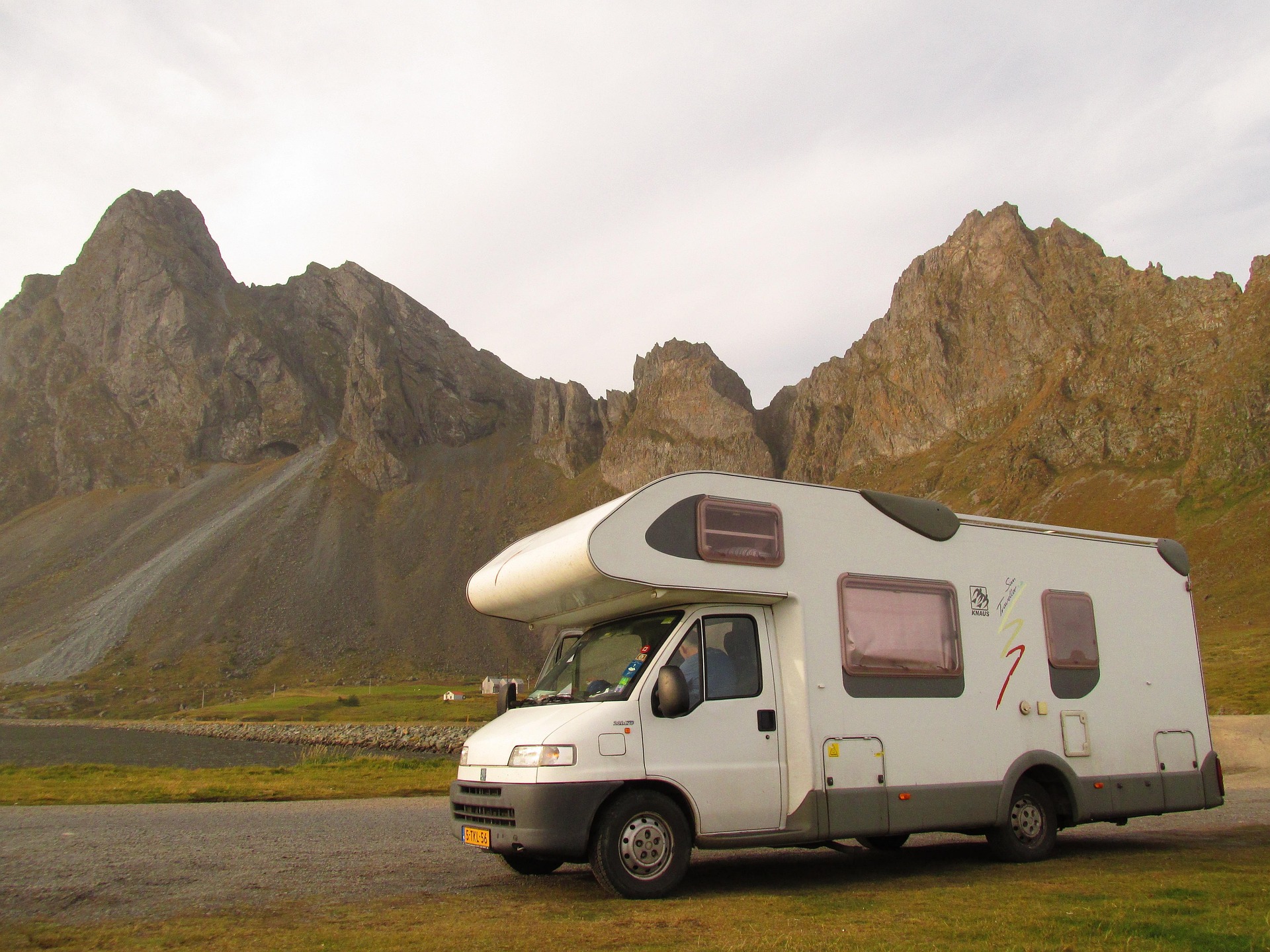
We get this question a lot from people planning a Norway trip that doesn’t loop back on itself — fly into Bergen, drive the fjords and the coast road, fly home from Tromsø or Alta without ever backtracking. On paper it’s the obvious way to see more of the country in less time. In practice, the one-way drop-off fee is where a lot of good campervan plans quietly fall apart, usually because nobody prices it properly until they’re deep into planning the rest of the trip.
We’ve road-tripped Norway more than once, in both directions, with and without a fixed return point. Here’s the honest version of when a one-way rental actually pays for itself, and when a loop route or a different pickup city is the smarter call — with the actual reasoning, not just a rule of thumb we made up to sound decisive.
One-way campervan rentals in Norway are usually worth it when your route genuinely covers new ground in one direction — Bergen to Tromsø, for instance — and the one-way fee is smaller than the fuel and time you’d burn driving back to your start point. They’re rarely worth it for short hops or when the same route is well served by loop-friendly roads. Compare live one-way availability and fees for your dates on CampervanPlanet, where code HUNGRYTRAVELFAMILY5 takes 5% off whichever route you book.
What a one-way fee actually is
A one-way fee (sometimes called a repositioning or relocation fee) is what a rental company charges to cover getting the vehicle back to its home depot after you drop it somewhere else. It isn’t a fixed, published number the way a daily rate usually is — it depends on the distance between your pickup and drop-off cities, the season, and sometimes how badly that depot needs vehicles back. On a route like Bergen to Tromsø, that’s roughly the length of the country, so the fee reflects a genuinely long drive back for someone.
The fee is separate from your daily rental rate and is usually shown at checkout once you’ve picked your two cities, rather than upfront on a landing page — which is exactly why it catches people out. Always check the total price with both cities selected before you commit to a route, not just the daily rate for the vehicle.
It’s also worth knowing that the fee isn’t always symmetric. Dropping off in a smaller depot that the company then has to reposition a vehicle away from can cost more than the reverse direction, where a van conveniently ends up back near a busier hub. If your dates are flexible, it’s worth pricing the route both directions — Bergen to Tromsø and Tromsø to Bergen — before assuming the fee is the same either way, because it sometimes genuinely isn’t.
When a one-way route is genuinely worth it
We’d book one-way in a few specific situations. First, when the route is long enough that driving back would eat a meaningful chunk of your trip — a week isn’t much time if two of those days are spent retracing your own tyre tracks. Second, when your flights are already fixed into two different cities for reasons outside the campervan booking, like a cheap flight deal that only worked one-way. Third, when the one-way fee, once you’ve actually priced it, comes out lower than the fuel and extra nights you’d spend driving back — which does happen more often on longer coastal routes than you might expect, since Norway’s road network genuinely doesn’t loop efficiently in a lot of places.
When it isn’t — and a loop beats it
For shorter trips of under a week, or routes where your start and end points are within a few hours of each other, the one-way fee is rarely worth it. Bergen and Ålesund, for example, are close enough that a loop route covering the same fjords and roads back to Bergen usually costs less overall once you compare it against a Bergen-to-Ålesund one-way fee plus a flight or bus back to Bergen. If your itinerary already forms a natural loop — fjord country especially lends itself to this — a round-trip rental from a single city is almost always the cheaper and simpler option, and you avoid the admin of coordinating two different flight cities.
Routes that justify the fee
The clearest case for one-way in Norway is the long north-south run — Bergen or Oslo up to Tromsø, Alta or the North Cape area, or the reverse. It’s a genuinely different country at each end: fjords and mountains in the south, the Arctic coast and the midnight sun or polar night further north, depending on season. Doing that as a loop would mean either flying both ways to the same city and driving the whole distance twice, or giving up on reaching the far north within a normal two-to-three-week trip. A shorter version of the same logic applies to Å in the Lofoten Islands to Tromsø — a spectacular but one-directional route along the coast that most people wouldn’t want to reverse by road.
What makes these routes different from a shorter one-way hop isn’t just distance — it’s that the driving itself is genuinely the point of the trip, not just a way of getting between two sights. A Bergen-to-Tromsø drive passes through several distinct regions with their own character, and doubling back would mean either seeing everything twice from the same direction or skipping the second half entirely to keep the loop manageable. Neither is a great outcome on a trip you’ve likely spent months planning, which is why we think the fee is worth treating as part of the sightseeing budget rather than a pure loss.
💡 Our campervan tip: prices for the same van vary a lot between rental brands. We compare Norway campervans across 160+ rental companies on CampervanPlanet — and code HUNGRYTRAVELFAMILY5 takes 5% off.
How to keep the fee down
A few things genuinely move the number. Travelling in shoulder season (May or September rather than peak July) tends to bring one-way fees down, since rental companies have more flexibility repositioning vehicles when demand is lower. Choosing a route the company already relocates vehicles along for its own reasons — ask directly when you enquire — can sometimes mean a reduced or even waived fee, since you’re doing them a favour rather than creating extra work. And comparing several rental brands rather than booking the first one you see matters more for one-way routes than for standard loop rentals, because the fee varies a lot company to company for the exact same two cities. We compare campervan and motorhome rental brands across Norway on CampervanPlanet, which makes that comparison quicker than checking each rental company’s site individually — and code HUNGRYTRAVELFAMILY5 takes 5% off whatever you end up booking.
What we’d actually book
For a first Norway campervan trip of two weeks or more with genuinely different start and end regions in mind, we’d pay the one-way fee for a Bergen-to-Tromsø style route without much hesitation — the country you’d see in that direction is worth more than the money saved looping back. For anything under ten days, or a trip focused on one region like the fjords or Lofoten specifically, we’d book a loop from a single city instead and spend the money we saved on a nicer few nights or one more activity along the way. It’s also worth reading our first-time campervan rental guide for Norway before you book either way, since a lot of the licence, insurance and deposit questions are the same regardless of route, and our comparison of motorhomes and campervans for Norway’s roads if you’re still deciding on the vehicle class itself.
Book your Norway campervan
Compare prices across 160+ campervan and motorhome rental brands, get a free 1GB eSIM with every booking — and 5% off with code HUNGRYTRAVELFAMILY5.
Check prices & availability →Frequently asked questions
How much does a one-way campervan fee cost in Norway?
It varies by distance, season and rental company rather than sitting at a fixed rate, so the honest answer is to price your exact two cities directly rather than trust a single average figure — always check the total with both cities selected before booking.
Is it cheaper to do a loop route instead of one-way?
For shorter trips or routes where the two cities are close together, usually yes. For long, genuinely one-directional routes like Bergen to Tromsø, the one-way fee can work out reasonable compared with the fuel and days you’d spend driving all the way back.
Do all rental companies charge the same one-way fee?
No — it varies noticeably between companies for the same two cities, which is why comparing several rather than booking the first result matters more for one-way routes than standard rentals.
Does travelling in shoulder season reduce the one-way fee?
It often helps, since rental companies have more flexibility repositioning vehicles when overall demand is lower, though this isn’t guaranteed and varies by company.
Is HUNGRYTRAVELFAMILY5 valid on one-way bookings specifically?
Yes — the code applies at checkout regardless of whether you book a loop or a one-way route.
What’s the most popular one-way route in Norway?
Bergen to Tromsø (or the reverse) is the classic long one-way route, covering fjord country in the south and the Arctic coast in the north within a single, non-repeating drive.