Driving in the Balkans: an honest survival guide for Nordic-style drivers
Beeping as a second language, overtakes on faith and a Google Maps shortcut that cost us paint. What two calm Nordic drivers learned in a rental car across Croatia, Bosnia, Montenegro and Albania — and why none of it should keep you home.
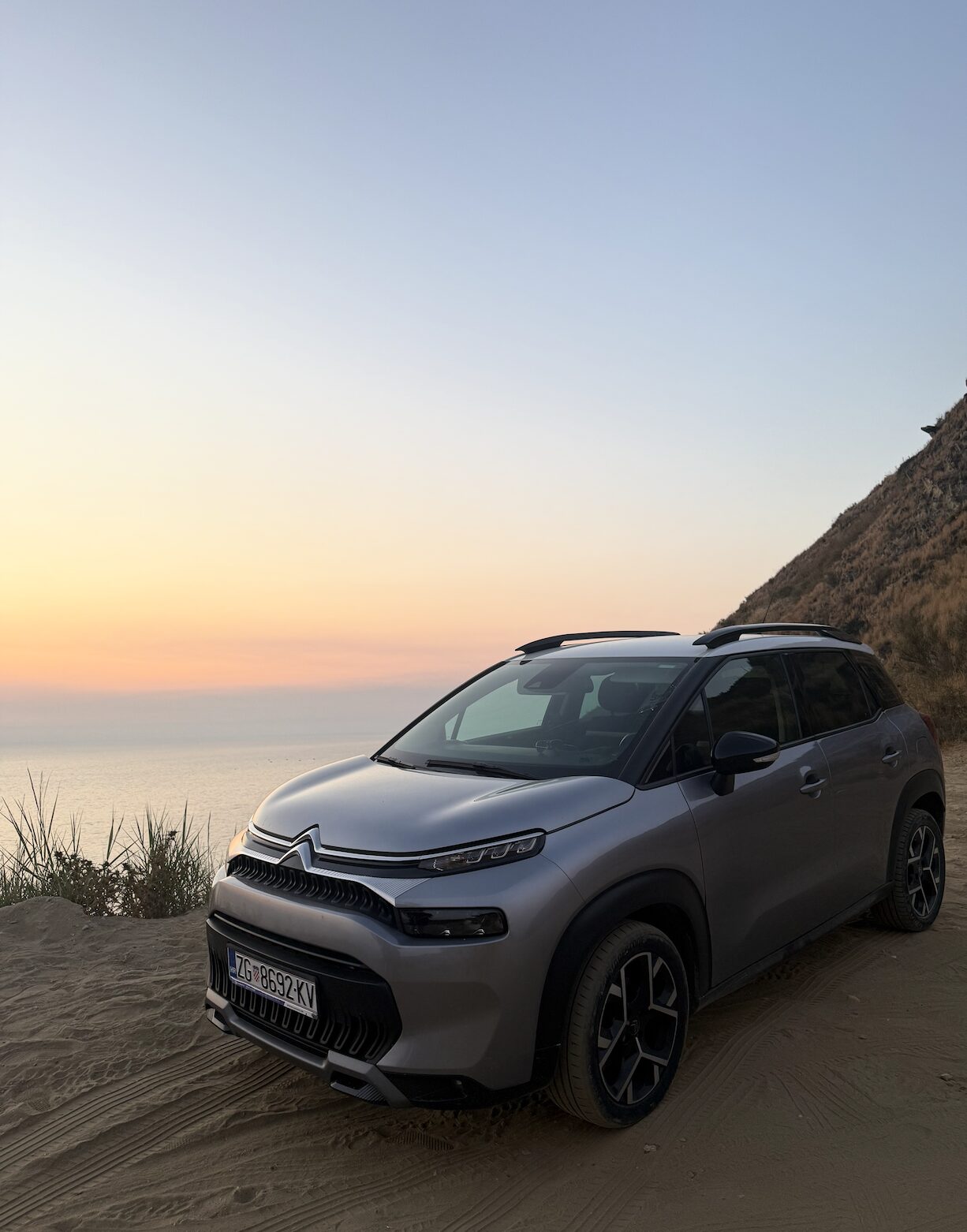
We live in Rovaniemi, Finland, where drivers wave each other through junctions and a horn is something you test once a year at the inspection station. So when people ask us whether driving in the Balkans is as chaotic as the internet claims, we can answer from the most honest possible baseline: two mild-mannered Nordic drivers who spent almost two weeks in August behind the wheel in Croatia, Bosnia & Herzegovina, Montenegro and Albania.
The short version: yes, it is livelier than anything we had driven in before. And no, it is absolutely not a reason to stay home. This is the guide we wish we had read before picking up the rental car near Split — what the driving culture actually feels like, where it caught us out (including the scratch we put on our rental), and the small mindset shift that turned it from stressful to almost fun.
Driving in the Balkans is noisier and less patient than Nordic or Western European driving — expect constant beeping, overtaking without signals and cars popping out of side streets — but it is entirely manageable for a careful driver. Drive slowly, let faster locals past, never take a horn personally, and don’t blindly follow Google Maps onto tiny shortcut roads in high season. Do that, and a self-drive trip through Croatia, Bosnia, Montenegro and Albania is one of the best road trips in Europe.
What driving in the Balkans actually feels like
The first thing you notice is the sound. Beeping in the Balkans is constant background music — a tap of the horn to say I’m here, hurry up, hello, or sometimes apparently nothing at all. Coming from Finland, where a horn means someone is about to have a very bad day, this took recalibrating. Nobody is angry with you. It is simply how the road talks.
The second thing is the pace. Overtaking happens often, frequently without indicators, and sometimes in places that made us hold our breath. Cars pop out from side streets with a confidence we never quite developed ourselves. The unwritten rule seems to be that everyone assumes everyone else is paying attention — and, to be fair, everyone mostly is. We saw far more assertiveness than actual aggression.
What we want to stress, because the scare stories put people off: at no point did we feel unsafe enough to regret bringing a car. A car is by far the best way to see this region — our whole four-country Balkan route would have been impossible on public transport in the time we had. The driving culture is a thing to adapt to, not a thing to fear.
The mindset shift that changed everything
Somewhere in Montenegro we stopped fighting it and adopted three rules that carried us through the rest of the trip. First: drive slower than you think you need to. You are on holiday; the person behind you is commuting. Speed was never the thing that kept us safe — margin was.
Second: let people overtake, and help them do it. Ease right when it’s safe, and the beeping behind you evaporates. The local drivers know these roads bend by bend; we did not, and pretending otherwise helps nobody.
Third, and most important: never take a horn personally. The moment we stopped hearing beeps as criticism and started hearing them as radar pings, the stress simply drained out of the trip. By Albania we were tapping the horn ourselves before blind corners — when in Rome. If you internalise nothing else from this guide, make it this paragraph.
Country by country behind the wheel
Croatia was the calmest of the four — when we looped back to Split at the end of the trip it honestly felt like arriving back in familiar Europe: patient merging, working indicators, predictable roundabouts. If you are nervous, Croatia is the gentle on-ramp to the region.
Bosnia & Herzegovina surprised us most. The roads we drove were in great condition, petrol and groceries were the cheapest of the whole trip, and people were exceptionally friendly. Our only drama was a long traffic jam on the way to Kravica Waterfalls — arriving late in the afternoon, as we eventually did, turned out to be the better plan anyway, as the crowds were leaving. One practical warning: EU roaming does not cover Bosnia, so sort out connectivity before you cross (more on that below).
Montenegro packs dramatic coastal and mountain roads into a tiny country, which in August means traffic. The main coastal road moves slowly through the Budva–Petrovac stretch in high season, and the temptation to shortcut is exactly how we damaged our rental — the full story is in the next section. The driving style sits somewhere between Croatia and Albania: assertive, but readable.
Albania is the liveliest of the four, especially around Tirana and Durrës, where lane markings are treated as gentle suggestions. Yet outside the cities we found driving genuinely enjoyable — and some of the best moments of our trip, like the Komani Lake ferry, only work if you arrive on four wheels. Watch for pedestrians, scooters and the occasional livestock, keep your speed down, and you will be fine.
Get our 3-day Rovaniemi planner + 5% activity discount
Honest travel letters from the Arctic — real trips, real costs, no sponsored fluff.
The Google Maps trap that cost us paint
Here is the single most valuable warning in this article. In high season, Google Maps sees the queues on the main Montenegrin roads and helpfully reroutes you — and seemingly half the other tourists — onto tiny one-lane mountain roads to dodge the jam. These are roads where two cars physically cannot pass each other, with stone walls or drops on either side.
We ended up in one of these standoffs: a line of roughly ten cars meeting oncoming traffic, everyone reversing in turns around blind bends while the drivers negotiated in three languages. Somewhere in that slow-motion chaos we scratched our rental car against the rock. Nothing dangerous, but an expensive souvenir and an hour of our holiday we will never get back.
The fix is simple: when navigation offers you a suspiciously clever shortcut off a main road in Montenegro (or anywhere mountainous in the region), take the bigger road anyway, even if it claims to be 10–20 minutes slower. Glance at the route it is proposing — if it is a grey squiggle through nothing, refuse. Sitting in a queue with ice cream beats reversing uphill past a stone wall every single time.
Renting a car for a four-country route
A multi-country Balkan loop is very doable with a rental car, but the paperwork needs a little more attention than a single-country hire. The non-negotiable step: tell the rental company every country you plan to enter, and get the cross-border permission and insurance documents (often a Green Card) in writing. Bosnia, Montenegro and Albania are outside the EU, and border officers may ask for proof the car is allowed to be there. Fees and rules vary by company, so confirm current terms when you book.
After our Montenegro scratch, our other firm advice is to take the fullest insurance cover you can justify, with the smallest excess. On narrow roads shared with assertive local drivers, small cosmetic damage is a realistic outcome even for careful drivers — it happened to us, and the calmest thing in that moment is knowing it is covered. Check how the policy treats unpaved roads too, since some scenic detours in Albania and Montenegro involve stretches of gravel.
Size matters more than horsepower here. A smaller car is a gift on old-town streets, tight parking and those one-lane mountain roads; we would happily trade engine power for ten centimetres of width. Whatever you choose, photograph the car thoroughly at pickup, including the roof and wheel rims, and keep the photos until the deposit is released.
Fuel, tolls, connectivity and heat
Fuel and costs. Petrol prices vary noticeably between the four countries — Bosnia was clearly the cheapest place we filled up, noticeably below Montenegro and Croatia, so it is worth planning a full tank there if your route allows. Croatian motorways are tolled, and other paid roads and tunnels exist around the region; carry a bank card and some euros in cash and check current prices before you go, as they change often.
Connectivity. Navigation is your co-driver on a trip like this, and the catch is that EU roaming packages do not cover Bosnia, and non-EU Montenegro and Albania depend on your operator’s terms. We used a YesSim eSIM in Albania — the best rate we found, and the internet worked flawlessly the whole time — and Airalo is a solid alternative with regional Balkan packages. Install the eSIM before you cross the border, and download offline maps as a backup for the mountain stretches.
Heat. An August road trip here is hot — we saw around +35°C on a typical day and a few days above +40°C. For driving, that means checking the air conditioning works before you leave the rental lot, carrying more water than feels reasonable, using a windscreen sunshade at every stop, and planning the longer driving legs for mornings. As Lapland residents we structured whole days around avoiding the midday sun, and the car was our refuge as often as our transport.
Frequently asked questions
Is driving in the Balkans safe for foreign drivers?
In our experience, yes — with adjustment. The style is more assertive than Western or Northern Europe: expect frequent horn use, bold overtaking and cars emerging from side streets. Drive defensively, keep your speed down and stay predictable, and it is entirely manageable. We completed a four-country loop as cautious Nordic drivers without a single dangerous incident — our only damage was a cosmetic scratch in a mountain-road standoff.
Do I need an International Driving Permit for Croatia, Bosnia, Montenegro and Albania?
An EU/EEA licence is generally accepted across the region, and many other national licences are too, but requirements can differ by country and by rental company — some recommend or require an International Driving Permit alongside certain licences. Check the current rules for your specific licence with each country’s authorities and your rental company before you travel.
Can you take a rental car across Balkan borders?
Usually yes, but only with the rental company’s written permission and the right insurance paperwork, and often for an extra cross-border fee. Declare every country on your route when booking — Bosnia, Montenegro and Albania are outside the EU, and turning up at a border without the documents can end the trip there. Terms vary a lot between companies, so confirm before paying.
What are the roads actually like?
Better than the region’s reputation suggests. The main roads we drove in Bosnia were in great condition, Croatia’s network is excellent, and the principal routes in Montenegro and Albania were perfectly drivable. The problems live on the small stuff: one-lane mountain shortcuts, unpaved scenic detours and old-town streets built for donkeys. Stay on the bigger roads and road quality will rarely be your issue.
Should I take full insurance on a Balkan rental car?
We would, and after scratching our own rental in Montenegro, we speak from experience. Narrow roads, tight parking and assertive traffic make small cosmetic damage a realistic outcome even for careful drivers. Full cover with zero or minimal excess turns that from a holiday-souring dispute into a shrug. Read the small print on gravel roads and cross-border validity too.
When is the best time of year for a Balkan road trip?
We drove in August and it worked, but we paid for it in heat — around +35°C most days, above +40°C on a few — plus high-season traffic and the Google Maps rerouting problem at its worst. If your dates are flexible, the shoulder months of roughly May–June or September–October promise cooler driving and quieter roads; we would pick a cooler season for our own return trip.
Our final word from Rovaniemi
Back home in the Arctic, where the loudest thing on our commute is a reindeer, we keep being asked whether we would drive the Balkans again. Without hesitation. The beeping, the bold overtakes, the one scratch we brought home on the paperwork — none of it outweighs what the car gave us: waterfalls at closing time, mountain viewpoints no bus reaches, and the freedom to base ourselves in quiet places we would never have found otherwise.
Go slowly, take the bigger road, get the good insurance, and let the horns wash over you. Driving in the Balkans is not an obstacle to the trip — a few days in, we realised it was the trip, and we were somehow enjoying it. If two polite Finnish-resident drivers who apologise to furniture can learn to love it, so can you.
Planning your own drive? Compare rental cars for your own Balkan loop — and whatever you pick, take the full insurance: GetRentacar
Joona & Alla
A Finnish-Ukrainian couple living in Rovaniemi, Finland. Joona is a marketing professional in Lapland tourism; Alla is an AI engineer. Together we have visited 25 countries and write honest, locally-grounded travel content from our home in the Arctic.
Read our full story →