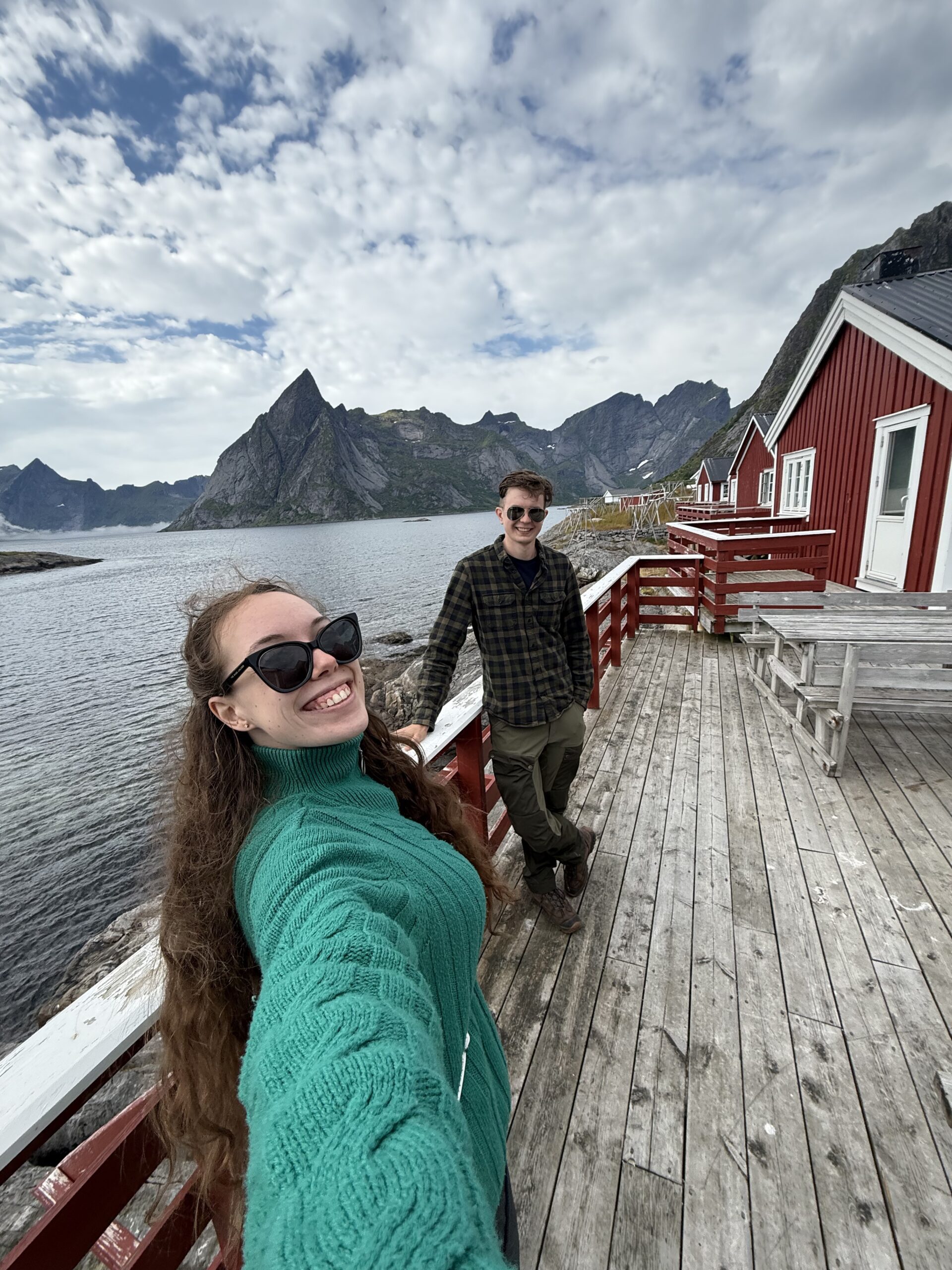
We first drove into Norway from our home in Rovaniemi on a whim — a long weekend that turned into two weeks on the road. Norway has a reputation for being brutally expensive, and honestly, it is if you lean into hotels and restaurants. But we’ve crossed the border enough times now to know where the money actually goes and where you can cut without sacrificing a thing.
This isn’t a guide built on theoretical savings. It’s the real numbers from our Norway trips — what we paid for camping, fuel, ferries, food, and the occasional splurge we did not regret.
Norway on a budget is absolutely possible. A couple can travel Norway comfortably for €60–90 per day by using Everyman’s Right for free camping, cooking most meals, and timing ferry crossings carefully. The fjords, hikes, and midnight sun cost nothing — it’s accommodation and restaurants that drain accounts.
Our real Norway budget — the numbers
We’ve done Norway three times now: once in a rented campervan, once in our own car with a rooftop tent, and once staying mostly in cabins for a different experience. The cheapest trip — rooftop tent, own car, mostly self-catering — averaged €68 per day for two people. The cabin trip averaged €195 per day. The difference was almost entirely accommodation.
Where the money actually goes in Norway
Norway’s prices feel shocking at first because the categories that hurt you elsewhere — transport fuel, attractions, sim cards — are manageable here. What is genuinely expensive:
- Accommodation: Budget hostels start around €35–45 per person. A simple cabin or hytte rents for €100–180 per night. This is where Norway breaks budgets.
- Eating out: A sit-down dinner for two with drinks rarely comes in under €80–100, and usually lands higher.
- Ferries: A car ferry crossing for two adults plus a vehicle can run €25–60 depending on the route and time of day.
- Alcohol: A beer in a bar costs €9–12. Wine at a restaurant is similarly painful. The Vinmonopolet state stores are much cheaper for take-home bottles.
- Tolls and tunnels: Norway’s AutoPASS toll system is automatic. Budget €5–15 per day in the busier regions, more around Bergen or Oslo.
What costs surprisingly little
- Fuel: Norway’s petrol prices are high per litre but distances between attractions are short and EV charging infrastructure is excellent if you go electric.
- Hiking: Every trail, national park entrance, and viewpoint is free. The Lofoten ridge hike, Trolltunga, Preikestolen — all free.
- Wild camping: Legal and free under Allemannsretten (Everyman’s Right).
- Grocery stores: Rema 1000, Kiwi, and Extra are genuinely reasonable for Scandinavia. A full day’s food shopping for two costs €20–30.
How to sleep for free in Norway
This is the single biggest lever you have. Norway’s Allemannsretten law gives everyone the right to camp on uncultivated land for up to two nights, free, as long as you stay 150 metres from the nearest house. We have slept in fjord valleys, beside glacier lakes, on Lofoten headlands, and once on a ridge above a sheep field with a view that no hotel in the country could have matched. All free.
Practical rules for free camping in Norway
- 150-metre rule: Stay that far from any dwelling — farmhouse, cabin, or year-round home.
- Leave no trace: Pack out everything, use a portable toilet or bury waste far from water, leave the spot as you found it.
- Two-night limit: Move on or ask the landowner’s permission for a longer stay.
- Fire rules: Open fires are banned from 15 April to 15 September. Use a camping stove, not a campfire, in summer.
- Water: Norwegian mountain and river water is almost universally clean and safe to drink. We’ve been filtering and drinking wild water here for years.
When to pay for a campsite instead
Free camping doesn’t work when you need a shower after a week on the road, when you want electrical hookups, or when you’re near a popular viewpoint where wild camping spots fill early. Norwegian campsites (NAF-affiliated) typically cost €25–40 per night for two people with a car — still reasonable and often beautifully situated.
The Norway budget cheat sheet
Eight rules we follow every time we cross the border. Print this or screenshot it for the road:
- Shop at Rema 1000 or Kiwi, not 7-Eleven. Convenience stores in Norway charge a premium that adds up fast on a multi-week trip. Budget grocery chains have the same quality at half the price.
- Buy alcohol at Vinmonopolet. The state-run shops close early (Saturday at 3 pm, no Sunday sales), so plan ahead. A bottle of wine costs €12–18; the same bottle in a restaurant is €70+.
- Book ferries in advance for bigger crossings. The Bodø–Lofoten and Stavanger–Tau ferries get full in high season. Booking ahead also sometimes unlocks cheaper fares.
- Avoid toll roads into Oslo and Bergen. Both cities are ringed by toll cordons. If you’re just passing through, route around rather than into the city center — saves €10–20 each way.
- Use iOverlander or Park4Night for wild camping spots. Both apps have user-submitted spots with notes on ground conditions, privacy, and views. Filters out the guesswork.
- Eat your main meal at lunch, not dinner. Lunch menus (today’s special — dagens rett) at Norwegian cafes and restaurants typically run €14–18 and include a drink. The same dish at dinner is €28–35.
- Fill your gas tank in Sweden before crossing. Petrol and diesel are cheaper across the border in Sweden. If you’re entering Norway from the east, fill up just before the border.
- Carry a Nalgene and filter straw. Eliminating bottled water saves €3–5 per day per person, and Norwegian tap water is among the world’s best.
Get our honest travel notes
Real budgets, firsthand routes, and the things we wish we’d known — straight from Finnish Lapland to your inbox.
Food and drink without going broke
Food is where most travelers unknowingly haemorrhage money in Norway. The restaurants are genuinely excellent — fresh Arctic fish, locally sourced game, incredible bakeries — but they’re priced for a country with some of the world’s highest wages. You can eat very well on a budget if you treat eating out as an occasional event rather than a daily habit.
What we actually eat on Norwegian road trips
- Breakfast and lunch at camp: Rye bread (rugbrød), salted butter, Norwegian brown cheese (brunost — worth trying at least once), cured meats, yoghurt, coffee. Cost for two: €5–7.
- Lunch splurge 2–3 times per week: A fish and chips portion at a harbour kiosk in Lofoten, a bowl of bacalao at a Bergen market stall, or a dagens rett at a petrol station cafe in Nordland. Budget €16–22 for two.
- Dinner at camp: We cook on a camping stove — pasta, rice, instant noodles supplemented with fresh vegetables from the grocery store, and occasionally a piece of locally caught or smoked fish from a roadside seller.
- One proper restaurant meal per trip: We budget one genuinely good meal — usually somewhere with a view, a recommended local specialty, or a place we’ve been meaning to try. Budget €80–100 for two with drinks.
The one food line we never cut: rakfisk, gravlaks, and fresh fish from harbour vendors. These roadside and market purchases are affordable (€8–15 for a generous portion), deeply local, and among the best food experiences Norway offers.
Getting around Norway cheaply
Norway’s geography — fjords, islands, peninsulas, mountain plateaus — means you will almost certainly need either a car or a combination of ferries and buses. There’s no way around this, but there are ways to manage it.
The honest transport comparison
- Own car or campervan: The cheapest option for couples and families once fuel and tolls are split. Full flexibility, free camping access. Tolls €5–20 per day; fuel roughly €0.10–0.14 per km at current prices.
- Rented campervan: More expensive upfront (€120–200 per day for a basic van in summer) but removes hotel costs entirely. Breaks even versus a hotel + car combo if you use it well.
- Bus + ferry (Hurtigruten, Fjord1, Norled): Possible but slow and, for a couple, often costs nearly as much as driving without the flexibility. Best for solo travelers.
- Sleeper train Oslo–Bergen / Oslo–Trondheim: An underrated option if you’re entering via Oslo. The Bergen Railway (€25–40 per person in advance) is one of Europe’s most scenic train journeys and competes with the cost of driving and paying tolls.
Our go-to on Norwegian road trips: our own car (or a rented economy car), rooftop tent, and a route planned around Allemannsretten camping spots. Ferry crossings are pre-booked where they’re on a defined route; smaller crossings we just show up for.
What’s actually worth spending on
Budget travel doesn’t mean spending nothing — it means spending intentionally. These are the things we gladly pay for in Norway even when we’re being careful everywhere else.
- A night or two in a genuine Norwegian hytte (cabin). Not a chain hotel — a proper wooden cabin by a lake or fjord. Prices drop in the shoulder season and the experience is irreplaceable. Split between two people, €60–80 per person per night doesn’t feel extravagant for what you get.
- A ferry crossing you don’t need to take. The Geirangerfjord ferry, the Nærøyfjord shuttle, the crossing from Bodø to the Lofoten islands — these cost money but they’re not just transport. They’re the experience.
- A public sauna session. Norwegian public saunas (Bergen’s Nordnes Sjøbad, several in Tromsø) cost €15–25 and are a genuinely local cultural experience. Skip the hotel spa; use the public one.
- Fresh fish from a harbour vendor. Not a restaurant — the guy with the boat. €10–15 for salmon, cod, or Arctic char that was alive yesterday. Cook it at camp.
- A good rain jacket. If you’re heading to western Norway, the Lofoten islands, or anywhere near Bergen, budget for gear before you go. Getting drenched without the right kit makes everything miserable, and Norwegian outdoor stores are expensive. Buy before you cross the border.
Mistakes we made with money in Norway
- Eating at petrol stations out of convenience. Norwegian petrol station food — sandwiches, hot dogs (polse) — costs more than supermarket food and less than a real restaurant. It’s the worst of both worlds unless you’re in a hurry. We now keep the cooler stocked so we’re never in that position.
- Not checking ferry booking deadlines. We missed a pre-booking window for the Bodø–Moskenes crossing and waited 5 hours for the next available sailing. Pre-book the big island ferries. Always.
- Crossing into Norway with an empty tank. Petrol on the Norwegian side of the border is noticeably more expensive than in Sweden or Finland. We’ve learned: fill up before the customs post, not after.
- Ignoring the Vinmonopolet opening hours. Arrived in a small town on a Saturday afternoon to find the only wine shop already closed. Plan alcohol purchases on Friday evening or Saturday morning. Sunday is completely dry.
- Camping too close to tourist hotspots. Popular spots like Trolltunga car park and Preikestolen base have free parking that turns into a chaotic overnight campsite in summer — noisy, crowded, and legally murky. Drive 10–15 minutes away for a proper free spot with privacy.
- Not budgeting for AutoPASS tolls. We rented a car without a transponder on our first trip and got several surprise invoice letters weeks after returning home. Tolls are registered by camera — you can’t avoid them. Either rent a car with AutoPASS included or register your vehicle at autopass.no. Budget the toll costs upfront.
Frequently asked questions
Is Norway on a budget actually possible for a couple?
Yes, genuinely. The key lever is accommodation: if you camp under Everyman’s Right (free) or use campsites (€25–40 per night), you can bring a couple’s daily budget to €60–90. That covers food, fuel, ferries, and incidentals. The same trip in hotels runs €180–250+ per day easily.
What is the cheapest way to get around Norway?
Your own car or a rented economy car, combined with free camping under Allemannsretten. Fuel and tolls are manageable when split between two or more people. Public transport in Norway is not cheap, and the schedule doesn’t serve most of the scenic routes you’ll want to reach.
Where do locals shop for groceries in Norway?
Rema 1000, Kiwi, and Extra are the main budget grocery chains. You’ll find them in almost every town. Avoid convenience stores (Narvesen, 7-Eleven) and petrol station shops for anything beyond a quick emergency purchase — the markup is significant.
Is wild camping (free camping) legal in Norway?
Yes. Under Allemannsretten, you can camp on uncultivated land for up to two nights, 150 metres from the nearest dwelling. This applies to tents, rooftop tents, and sleeping in vehicles. Open fires are banned between 15 April and 15 September. Leave the spot clean and undamaged.
How much should I budget per day for Norway as a couple?
With free camping and self-catering: €60–90 per day for two. With campsites and occasional restaurant meals: €90–130. With guesthouses and eating out regularly: €180–250+. The difference is almost entirely where you sleep and whether you cook.
Is it cheaper to travel Norway in the shoulder season?
Significantly. May and early June, and again September into October, see lower cabin and campsite prices, shorter ferry queues, and fewer crowds at major viewpoints. The weather is less predictable than July, but the landscapes are often more dramatic and the experience more genuine.
A final word from Rovaniemi
Norway costs what it costs, and there’s no trick that makes it cheap in the way Thailand or Portugal can be cheap. But here’s what we’ve learned from crossing the border more times than we can accurately count: Norway’s best things are free. The E10 threading through the Lofoten mountains at midnight. The Hardangerfjord in early morning mist. A trail up to a ridge you had all to yourself.
The money goes on the things around those experiences — where you sleep, what you eat, how you move. Get those three categories right and Norway becomes not just affordable but one of the better-value countries in Europe for what you actually get in return. The key is deciding before you arrive what kind of trip you’re on, and building your habits around it.
We drive across the border every season and we’ve never once wished we’d stayed home. We have wished, a few times, that we’d filled the tank in Sweden first.
Joona & Alla
A Finnish-Ukrainian couple living in Rovaniemi, Finland. Joona is a marketing professional in Lapland tourism; Alla is an AI Engineer. Together we’ve visited 21 countries and share honest, locally-grounded travel writing from our home in the Arctic.
Read our full story →