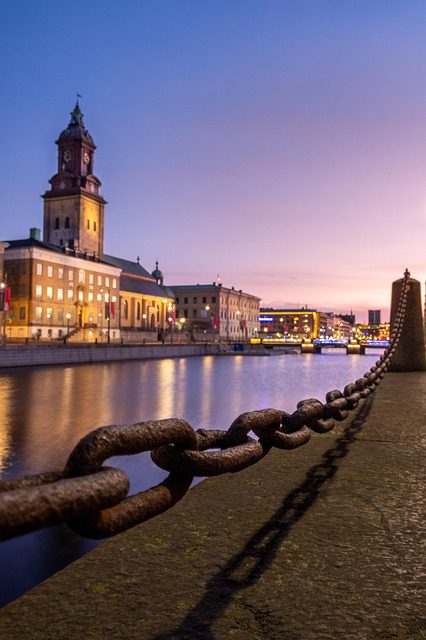
We crossed from Turku by ferry into Stockholm, drove west through Sweden’s quiet mid-country, and arrived in Gothenburg on a grey afternoon in early autumn. We had low expectations — we thought of it as “the city before Oslo” — and left three days later wondering why we hadn’t booked a week. Gothenburg is one of the most underestimated cities in the Nordic countries.
This guide is everything we wish we’d known before arriving: neighbourhoods, practical logistics, food, day trips, and the honest trade-offs between seasons. If you’re planning a Sweden trip and wondering whether Gothenburg deserves its own stop, the answer is yes.
Gothenburg is Sweden’s second city and its most liveable — a compact, walkable port city with excellent food, a strong café culture, easy access to a stunning west coast archipelago, and none of the crowds you’d find in Stockholm. Visit for at least two full days; three is better. June through August is peak season but the city is good in every month.
Is Gothenburg worth visiting?
Every time we mention Gothenburg, the response is the same: “Oh, I was going to visit but ran out of time.” Stockholm gets the headlines, Copenhagen the design tourists, Oslo the fjord-seekers — and Gothenburg quietly gets on with being one of the most pleasant cities in the Nordic region.
What makes it different from Stockholm
Stockholm is spectacular but it can feel like it knows it. Gothenburg doesn’t perform. It’s a working port city that grew into a place with exceptional food, serious coffee culture, and an archipelago fifteen minutes from the city centre by ferry. The pace is slower, the locals are famously warmer (by Swedish standards, which means they will look you in the eye), and the price of a meal is noticeably lower.
- Scale: about 600,000 people — walkable in a way Stockholm never quite is.
- Food scene: more Michelin stars per capita than anywhere else in Scandinavia outside Copenhagen. The west coast seafood alone justifies the trip.
- Canal system: a quiet, beautiful network of canals running through the centre — more Amsterdam than Venice, but entirely its own thing.
- Haga district: the city’s 19th-century wooden house neighbourhood, now lined with independent cafés and the best kanelbullar (cinnamon buns) we’ve had anywhere.
- Archipelago access: hop on a ferry from Lilla Bommen and you’re in open sea islands within half an hour.
We’ve been to 25 countries between us and driven through most of Scandinavia. Gothenburg sits near the top of the list for “cities that reward you more than you expected.”
How to get there and get around
Gothenburg sits on Sweden’s west coast — well connected whether you’re flying from the UK, arriving from mainland Europe, or doing a broader Nordic loop.
Getting to Gothenburg
- By air: Göteborg Landvetter Airport (GOT) is 25 km east of the city. Flygbussarna coaches run every 20–30 minutes to the Central Station in about 30 minutes. Most major European carriers fly here; Ryanair also uses Göteborg City Airport (GSE), a small airport 10 km south — check which one your flight uses.
- By train from Stockholm: the high-speed X2000 train takes 3 hours on a good day. SJ (Swedish Railways) sells advance tickets from around 200 SEK; last-minute is much more expensive. The train arrives at Gothenburg Central Station right in the heart of the city — no transfer needed.
- By train from Copenhagen: roughly 3–3.5 hours via Malmö. Direct services run multiple times a day. A great option if you’re combining the two cities.
- By ferry from Denmark or Germany: DFDS and Stena Line both run overnight ferries into Gothenburg’s port. A good option if you want to sleep on the boat and start fresh in the morning.
Getting around the city
- Tram network: Gothenburg has the best tram system in Sweden. A single-trip ticket works for 90 minutes; a 24-hour pass costs around 95 SEK and gives you unlimited trams and buses. Download the Västtrafik app.
- Walking: the central area — Haga, Linnéstaden, Avenyn, the canal district — is very walkable. We walked almost everywhere.
- Bike rental: Styr & Ställ city bikes are available with a day pass. The city is relatively flat and bike-friendly.
- Avoid driving in the centre: the congestion charge (Trängselskatt) applies in the city centre and parking is expensive. Leave the car at your hotel or a P&R.
Where to stay in Gothenburg
Gothenburg’s neighbourhoods are distinct enough that where you stay shapes the whole trip. We’ll give you the honest picture by zone.
The neighbourhoods in brief
- Haga: the most charming area to stay. Cobblestone streets, wooden 19th-century houses, independent cafés. Slightly further from the main tram arteries but walkable everywhere. Best for first-timers who want the “real Gothenburg” feel.
- Linnéstaden: just west of Haga, slightly quieter. Great local restaurants, fewer tourists. Our favourite area for feeling like a local.
- Avenyn (Kungsportsavenyn): the main boulevard with the highest hotel density. Convenient but touristy. Fine for business travel, less interesting for leisure.
- Vasastan: a well-located, central residential neighbourhood. Good mix of cafés and restaurants. Quieter evenings.
- Gothenburg Central / Nordstan: for those who want to be next to the station and ferry terminals. Practical, not scenic.
Budget guidance
- Budget: 400–600 SEK/night — hostels and simple hotels near Slottsskogen.
- Mid-range: 900–1,600 SEK/night — good boutique options in Haga and Linnéstaden.
- Splurge: Elite Plaza and Clarion Post Hotel, from 2,000 SEK/night.
Nordic travel, honest and unhurried
We write from our home in Finnish Lapland — trip notes, destination guides, and what’s actually worth your time across 25 countries.
What to eat and drink in Gothenburg
The food in Gothenburg surprised us more than anything else. We went in expecting standard Swedish restaurant fare and found a city with a genuinely confident culinary identity built around west coast seafood and a coffee culture that rivals Stockholm’s best.
What you should eat
- Räkmacka (open prawn sandwich): a towering pile of cold-water prawns on white bread with mayonnaise, lemon and dill. Obligatory. Order it at a harbourside spot — Feskekörka (the Fish Church market) is the iconic place to buy the prawns directly.
- West coast clams and mussels: the west coast produces some of the best shellfish in Europe. A mussel pot with sourdough at a bistro in Haga is peak Gothenburg.
- Kanelbullen: Gothenburg’s coffee shop culture is excellent but Haga specifically is famous for its enormous cinnamon buns. Café Husaren is the most famous; the queue moves faster than it looks.
- Smörgåsbord lunch: many restaurants offer a traditional Swedish lunch buffet (Dagens Lunch) for around 120–150 SEK on weekdays — outstanding value and a proper local experience.
- Natural wine bars: the city has a strong natural wine scene for its size, concentrated around Linné and Haga. SK Mat & Människor and Bhoga are often cited; both have reasonable lunch options too.
What to do: highlights and hidden spots
Two full days covers the essentials; three gives you room for a boat trip and a slow morning. Here’s what we’d prioritise.
Don’t miss
- Haga Nygata: the central street of the Haga district. Walk the full length, explore the side alleys, drink coffee, eat a cinnamon bun.
- Feskekörka (Fish Church): not a church — a 19th-century fish market that looks like one. Head there on a weekday morning for fresh west coast seafood.
- Liseberg Amusement Park: the most visited attraction in all of Scandinavia. Worth an afternoon even if you’re not a theme-park person — the summer garden section is genuinely beautiful, and the Helix roller coaster is world-class.
- The Canal Boat Tour: Paddan boats run through Gothenburg’s canal system and under some famously low bridges. A 50-minute loop gives you the city from the water. Tourist, yes — worth it, yes.
- Universeum: Sweden’s national science centre next to Liseberg. The rainforest floor section alone is extraordinary. Good for a few hours even without children.
Worth your time if you have it
- Slottsskogen Park: Gothenburg’s large free park with a small animal enclosure, walking paths, and a good café. Excellent on a sunny afternoon.
- Röhsska Museum: Sweden’s only dedicated museum of design and applied arts. Small, excellent, almost always quiet.
Day trips from Gothenburg
One of Gothenburg’s biggest advantages is what’s accessible within a day. These are the three we’d recommend, in order of how much we’d want to do them ourselves.
- The Southern Archipelago (Göteborg Archipelago): ferries leave from Stenpiren to Styrsö, Vrångö, and other islands. No cars on most islands — just rocks, sea, and wooden fishing villages. Take the ferry, walk, swim if it’s summer, eat at a harbourside smokehouse. This is the single best day trip from Gothenburg and consistently undersold.
- Marstrand: a car-free island fortress town about 60 km north of Gothenburg. Easily reached by bus then ferry. Walking the fortifications at Carlsten Castle takes an afternoon; the seafood restaurants along the harbour are excellent. Best on a clear summer day.
- Bohuslän Coast (by car): the road north through Tjörn and Orust is one of the most beautiful coastal drives in Scandinavia — bridge-hopping between islands, lobster villages, rock-carved landscapes.
Mistakes we made (and what we learned)
- We only booked two nights. We could have happily stayed four. If you’re combining Gothenburg with Stockholm or Copenhagen, build in a buffer — it’s very easy to decide you want to stay longer.
- We didn’t book dinner in advance. The best restaurants in Haga and Linnéstaden fill up on weekend evenings, even the casual ones. Book ahead, or go early.
- We underestimated the archipelago. We almost skipped it in favour of more city time. Don’t. Vrångö island on a clear day is one of the best things we’ve done in all of Sweden.
- We forgot to check the Liseberg calendar. Liseberg has major concerts and seasonal events that affect crowds and pricing — check their calendar before you arrive and decide whether to avoid or lean into it.
- We didn’t buy a transit day pass on day one. Individual tram tickets are fine but the day pass pays for itself after three rides. Download Västtrafik at the airport.
- We ate the tourist räkmacka on Avenyn. Good, but the version at Feskekörka with fresh-off-the-boat prawns is in a different category. Go to the Fish Church.
Frequently asked questions
How many days do you need in Gothenburg?
Two full days covers the main highlights: Haga, Feskekörka, the canal, Liseberg, and a good meal. Three days lets you add a proper archipelago day trip and some breathing room. If you’re combining Gothenburg with Stockholm, give each city at least two nights.
Is Gothenburg expensive compared to Stockholm?
Gothenburg is noticeably cheaper than Stockholm for accommodation and restaurants. Expect to pay 15–25% less for a comparable hotel and a similar discount at mid-range restaurants. The transit system is slightly cheaper too. It’s still a Scandinavian city — budget accordingly — but it won’t hit your wallet as hard.
What’s the best time of year to visit Gothenburg?
June through August for the classic experience: long evenings, the archipelago at its best, Liseberg in full swing. September is our personal favourite — the crowds thin out, the light turns golden, and the seafood is exceptional. December brings Gothenburg’s Christmas market at Liseberg, one of the best in Scandinavia.
Can you do Gothenburg as a day trip from Stockholm?
Technically yes — the train is 3 hours each way — but we wouldn’t recommend it. You’d spend 6 hours on trains for a few hours in the city. Gothenburg deserves at least an overnight stay, and ideally two nights. It’s very much worth it.
Is English widely spoken in Gothenburg?
Yes. Sweden has one of the highest English proficiency rates in Europe and Gothenburg is no exception. You will have no language difficulty at any hotel, restaurant, or tourist attraction. Swedish is worth learning a few words of — locals always appreciate it — but it’s entirely optional.
Do you need a car in Gothenburg?
No — the city itself is very well served by trams and is walkable in the centre. For a day trip along the Bohuslän coast, a car is useful, but the archipelago and Marstrand are both accessible by public transit and ferry. We explored the whole city without a car and didn’t miss it once.
A final word from Rovaniemi
We live 2,500 km from Gothenburg and we still talk about it. That’s the real measure of a city worth visiting. The food, the archipelago, the pacing — it all adds up to something that stays with you. Don’t let Stockholm take all your Swedish days.
Questions about Gothenburg or combining it with a broader Nordic trip? Drop them in the comments — we read every one.
— Joona & Alla, Rovaniemi
Joona & Alla
A Finnish-Ukrainian couple living in Rovaniemi, Finland. Joona is a marketing professional in Lapland tourism; Alla is an AI Engineer. Together we’ve visited 25 countries and share honest, locally-grounded travel writing from our home in the Arctic.
Read our full story →