Kuusamo & Korouoma Canyon: A Nature Guide
Finland’s wildest canyon sits just south of the Arctic Circle — and almost nobody talks about it. A Rovaniemi-based couple shares what it’s really like to hike, birdwatch, and stargaze at Korouoma and the Kuusamo wilderness.
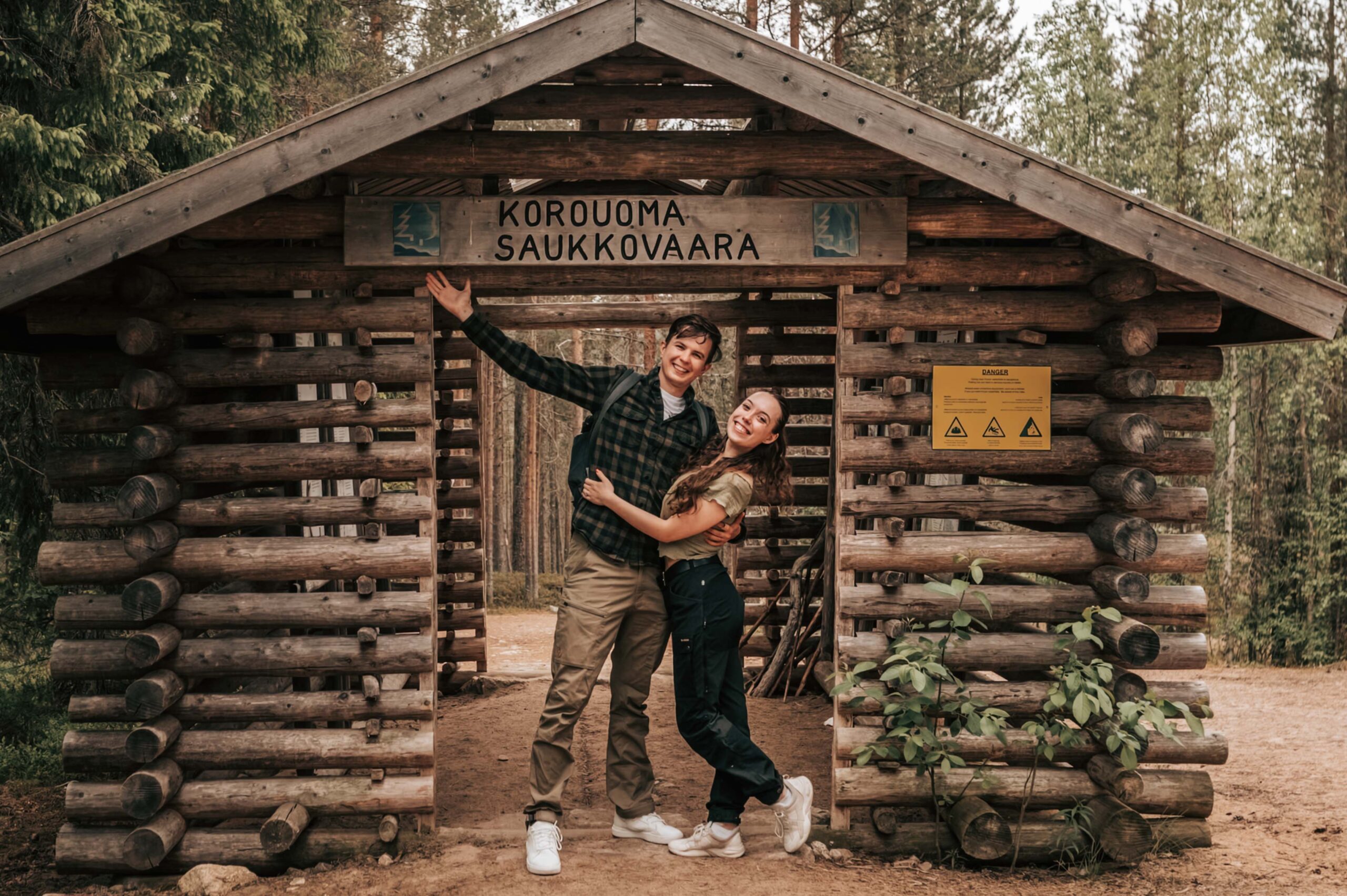
We live in Rovaniemi, about two hours’ drive from Kuusamo. That means Korouoma Canyon is one of those places we keep recommending to visitors who ask for something beyond Lapland’s usual tourist circuit — and one of those places we keep returning to ourselves. There’s no queue, no gift shop at the trailhead, and on a midweek morning in late summer you can hike for three hours and see almost nobody.
If you’re planning a trip to Finnish Lapland or northern Finland, Korouoma Canyon deserves a spot on your itinerary. This guide covers what it actually looks like to visit, what time of year works best, and the practical details that the tourism brochures skip.
Korouoma Canyon is a 40-kilometre river gorge near Kuusamo in northern Finland — one of the most dramatic natural landscapes in the country. The best seasons are late summer (August–September) for hiking and February–March for ice-climbing its frozen waterfalls. It’s free to visit, accessible by car, and largely uncrowded compared to Lapland’s more famous nature spots.
What is Korouoma Canyon — and why does almost nobody know about it?
Korouoma is a river canyon carved by the Korojoki river into the bedrock of northern Finland over thousands of years. It runs for roughly 40 kilometres through the landscape just south of Kuusamo, dropping into gorge sections where the walls rise 20–30 metres above the water. In Finnish wilderness terms, that’s dramatic.
The reason most people haven’t heard of it is simple: it’s not in Lapland province. It sits in North Ostrobothnia, technically just below the boundary that tourists mentally associate with “real” Finland wilderness. But the landscape, the light, the silence — it’s Arctic in feel, and it’s genuinely extraordinary.
Korouoma in context
- Location: Posio municipality, about 100 km southwest of Kuusamo and 135 km southeast of Rovaniemi.
- Size: roughly 40 km of canyon, with the most-visited section near Ainolanlahti bay and the Koronjyrkänne cliffs.
- Protection status: part of Korouoma Nature Reserve, managed by Metsähallitus (Finland’s national parks agency).
- Entry fee: free. No booking required for day hikes.
- Accessibility: a proper gravel road leads to the main trailhead. No 4WD needed in summer; winter tyres essential November–April.
The frozen waterfalls
Korouoma’s biggest claim to fame is its frozen waterfalls in winter. The most famous, Sarakoski and Ruskea․lä, form in January and are fully solid through March. They’ve become a major ice-climbing destination — guides from Kuusamo regularly bring groups here — but even if you’re not climbing, walking up to the base of a 20-metre wall of blue-green ice and looking up is one of those moments that doesn’t translate well into photographs.
How to get to Kuusamo and Korouoma
Getting to this area is easier than most people assume. Kuusamo has its own regional airport with direct flights from Helsinki, Stockholm, and several European cities in winter (ski season to Ruka resort). The canyon itself is about 100 km from Kuusamo town, so you’ll want your own transport or a day-trip arrangement.
From Rovaniemi (our usual approach)
- Drive southeast on the E63 / Road 5 toward Kemijärvi, then continue toward Salla and cut across to Posio. Total: about 2 hours.
- Alternatively, take the longer but more scenic route through Ranua — adds 30 minutes but passes through reindeer country and the Ranua Wildlife Park.
- There is no bus service to the canyon trailhead. Hitchhiking in summer is feasible from Posio village.
From Kuusamo town
- Drive southwest on Road 863 toward Posio, then follow signs to Korouoma. About 1 hour.
- Kuusamo has car rental options at the airport. If you’re flying in for a winter ski trip to Ruka and want to add a canyon day, this is a very doable detour.
- Some Kuusamo outdoor operators run guided day trips to Korouoma in winter, combining snowshoe hiking with frozen waterfall visits.
Practical trailhead notes
- The main parking area at Ainolanlahti is free. A day-use hut (Ainola lean-to) is a short walk from the car park.
- Mobile signal is unreliable in the gorge. Download offline maps (Outdooractive or AllTrails) before you leave.
- Toilets exist at the car park, but nowhere on the trail. Plan accordingly on a long hike.
The best trails and routes in Korouoma
The trail network in Korouoma is compact but well-designed. Metsähallitus has marked the main routes clearly, and in summer the signage is reliable enough that you don’t need a guide. Here are the routes we’ve actually walked.
The most popular circuit. Starts and ends at the main car park, follows the canyon rim to the Koronjyrkänne cliffs, descends to the river, and loops back through mixed forest. In summer, the whole loop takes 3–4 hours at a relaxed pace. This is the route we’d recommend for a first visit.
A direct out-and-back to the main frozen waterfalls. In summer these are active waterfalls in a mossy gorge — beautiful but less dramatic. In winter, plan 4–5 hours including time to actually stand and look. Crampons or Microspikes are essential from November onward.
The full canyon rim trail for serious hikers. Takes a full day with an early start. Passes the best viewpoints over the gorge. We’ve done this once in September and found it one of the most rewarding day hikes in northern Finland — but the forest sections are long and featureless in between the highlights.
Korouoma has two free lean-to shelters (Ainola and Korojoki) that can be used on a first-come basis for overnight stays. A one-night backpack covering the full canyon is a genuinely special experience. Bring a sleeping mat and your own food; no booking required.
When to visit Korouoma: a season-by-season guide
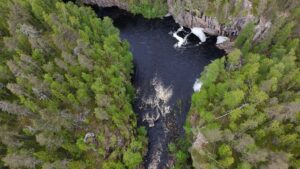
Korouoma changes character completely between seasons. We’ve visited in summer, autumn, and winter — and each felt like a different place entirely.
- June: lush green, midnight sun, long hiking days. Mosquitoes are intense from mid-June onward — bring strong repellent. Trail surfaces can be muddy after snowmelt.
- July: peak summer, warm evenings, wildflowers in the gorge. The best month for photography in pure colour terms. Still some mosquitoes but manageable.
- August: our favourite summer month. The light turns golden, bilberries are ripe along the trails, and the first hints of autumn colour appear at altitude. Insect pressure drops sharply. Highly recommended.
- September: Finnish autumn (ruska) is spectacular here. The canyon turns red, orange, and yellow. Crisp air, almost zero insects. Best month for photographs of the gorge walls.
- October–November: shoulder season. First snowfall can arrive in October. Trail surfaces become icy and slippery. Not ideal unless you’re equipped for winter conditions.
- December–January: deep winter, polar night. Beautiful but very cold (expect −15 to −25 ℃). Frozen waterfalls form from mid-January. Short daylight but dramatic blue light. Full winter kit required.
- February–March: the ice-climbing and snowshoe season. Frozen waterfalls at peak condition. Days are lengthening. The most photogenic winter month. This is when guided trips run most frequently.
- April: snowmelt, unstable trail conditions. Not recommended for hiking.
Finland’s hidden corners, straight to your inbox
We write about the places that don’t make it onto the tourist maps — from our home on the Arctic Circle.
Wildlife, birdwatching, and the quiet things that make Korouoma special
The canyon is a significant wildlife corridor. The combination of old-growth spruce forest, open gorge, and the river ecosystem creates unusually high biodiversity for this latitude. If you slow down and look, you’ll find far more than most guidebooks mention.
- Birds: Korouoma is a prime site for the Siberian jay (Perisoreus infaustus), a confiding and curious corvid that will approach hikers at rest. Dippers (Cinclus cinclus) are year-round residents on the river. In summer, listen for the fluting song of the ring ouzel on the gorge slopes.
- Raptors: the canyon regularly hosts golden eagles and rough-legged buzzards. The cliff faces of Koronjyrkänne are nest sites; binoculars are worth carrying.
- Mammals: brown bears range through the area, especially in late summer when bilberries are ripe. We’ve never had a close encounter here, but bear tracks near the trail are normal. Follow standard Scandinavian bear precautions: make noise, don’t leave food out, and don’t run if you see one.
- Moose: very likely to be seen at dawn and dusk, particularly near the river sections.
- Botany: the gorge shelters plant species uncommon this far north, including several fern and moss species that need the humidity and shade of the steep walls. If you’re interested in plants, bring a field guide — it’s unusually rich for boreal Finland.
What else to do in Kuusamo: building a longer itinerary
Kuusamo itself is a useful base for this region. It’s a small town with genuine amenities, a good supermarket, and several excellent outdoor outfitters. Combined with Korouoma, here’s how we’d build a 2–3 day trip.
- Ruka ski resort and Ruka Peak: in summer, the ski area opens its slopes for hiking, biking, and the Ruka Peak trail — one of the best summit views in northern Finland. In winter, it’s a full ski resort with a reliable snow record. About 25 km from Kuusamo centre.
- Oulanka National Park: the start of the Karhunkierros (Bear’s Ring) trail is right next to Ruka. Finland’s most popular long hiking trail, 82 km through a spectacular river gorge system. Even the short 12 km southern loop is exceptional.
- Kiutaköngäs rapids: the most famous rapids in Finland, on the Oulankajoki river inside Oulanka National Park. Easy access from the Oulanka visitor centre. In high water (May–June), the roar is extraordinary.
- Toranki wilderness village: a small traditional wilderness lodge cluster near Ruka, interesting for a sauna evening or overnight stay in a log cabin.
- Kuusamo town centre: modest but functional. The local Intersport has good outdoor gear. The K-Market on the main road has everything you need for trail food. A handful of good restaurants; we liked Ravintola Panimo for its local feel.
What we got wrong on our first Korouoma visit
- Underestimating the distance from Kuusamo. When we first planned this trip, we assumed Kuusamo was right next to the canyon. It’s not — it’s 100 km away. Factor in the drive when planning day trips.
- Not downloading offline maps. Mobile signal drops the moment you descend into the gorge. We wasted 20 minutes at a trail junction trying to load a map. Download AllTrails or Outdooractive before you leave the car park.
- Going in October without Microspikes. The first frost arrives here in late September, and north-facing trail sections can stay icy until midday. We slipped twice. Microspikes add 200 grams and change the experience completely.
- Not bringing enough water. There are no facilities on the trail. The river water is drinkable with a filter, but we didn’t have one. Bring at least 1.5 litres per person for a half-day hike.
- Skipping the cliffs at Koronjyrkänne. On our first visit we ran out of time and turned back before reaching the main cliff viewpoints. This is the highlight of the loop — don’t skip it. Add an extra hour to your schedule.
- Expecting a crowded nature reserve. We’d been to Oulanka on a summer weekend and found it packed. Korouoma in August felt like we had the trail to ourselves. If you’re looking for genuine Finnish solitude, this is an easier find than the famous parks.
Frequently asked questions about Korouoma Canyon
Is Korouoma Canyon worth visiting in summer if there’s no ice?
Yes, absolutely. The summer version — a deep forested gorge with active waterfalls and wildflowers — is genuinely beautiful. August and September are especially good. The ice gets more attention because it’s unusual, but the hiking in late summer is exceptional on its own terms.
How difficult is the main Korouoma trail?
The Ainolanlahti loop (8 km) is moderate: well-marked, no technical sections in summer, with one descent into the gorge that requires care when wet. The longer rim trail (22 km) is strenuous due to length, not technical difficulty. In winter, all routes require Microspikes or crampons at minimum.
Can I visit Korouoma without a car?
It’s difficult. There is no bus to the trailhead. From Posio village, it’s about 20 km to the main parking area. Some Kuusamo outdoor operators run guided day trips with transport included — this is the most realistic car-free option. Hitchhiking from Posio in summer is possible but not reliable.
Are there bears in Korouoma?
Bears range through the entire region. We’ve seen tracks near the trail but have never had a close encounter. Brown bears in Finland are generally very shy around humans. Make noise while hiking, especially in late summer when bilberries concentrate bear activity, and you are very unlikely to have a problem.
Is Korouoma the same as Oulanka National Park?
No, they’re separate but close. Korouoma is a nature reserve about 40–50 km south of Oulanka. Both are in the same greater wilderness region and are often combined into a multi-day trip. Oulanka is more famous; Korouoma is less crowded. We’d suggest combining both if you have 3+ days in the area.
What’s the best base for visiting Korouoma?
For a day trip, Rovaniemi (2 hours) or Kuusamo (1 hour) both work well. Kuusamo is closer, has good accommodation near Ruka, and lets you combine with Oulanka. Rovaniemi makes sense if you’re already in Lapland and want to add a day excursion southward. Posio village has a couple of small guesthouses if you want to be right next to the canyon.
A final word from Rovaniemi: why we keep going back
There’s a specific feeling you get at Korouoma that’s hard to find at more famous Finnish nature spots. The canyon is quiet in a way that feels earned — not artificially managed, not guarded by visitor-number limits, just genuinely off the main tourist current. You arrive, you walk into the gorge, and for a few hours northern Finland feels enormous and very old.
We’ve taken visiting friends there who asked “why isn’t this in every Finland travel guide?” and we genuinely don’t have a good answer. It might be the Lapland boundary effect, it might be the distance from Helsinki, it might be that frozen waterfalls only photograph well in February. Whatever the reason, Korouoma stays underrated — and for now, that’s part of the appeal.
If you’re planning a trip to northern Finland and have a spare day, or if you’re building an itinerary around Kuusamo and Ruka, put this canyon on your list. Come in August for the golden light and ripe bilberries, come in February for the ice, or come in September for the ruska colours. Each time it will feel worth the drive.
Joona & Alla
A Finnish-Ukrainian couple living in Rovaniemi, Finland. Joona is a marketing professional in Lapland tourism; Alla is an AI Engineer. Together we’ve visited 21 countries and share honest, locally-grounded travel writing from our home in the Arctic.
Read our full story →