What It’s Really Like to Live in Rovaniemi Year-Round
We moved to Rovaniemi on the Arctic Circle and stayed. A Finnish-Ukrainian couple shares the honest, season-by-season reality of living in Lapland year-round — the light, the dark, the silence, and why we wouldn’t trade it.
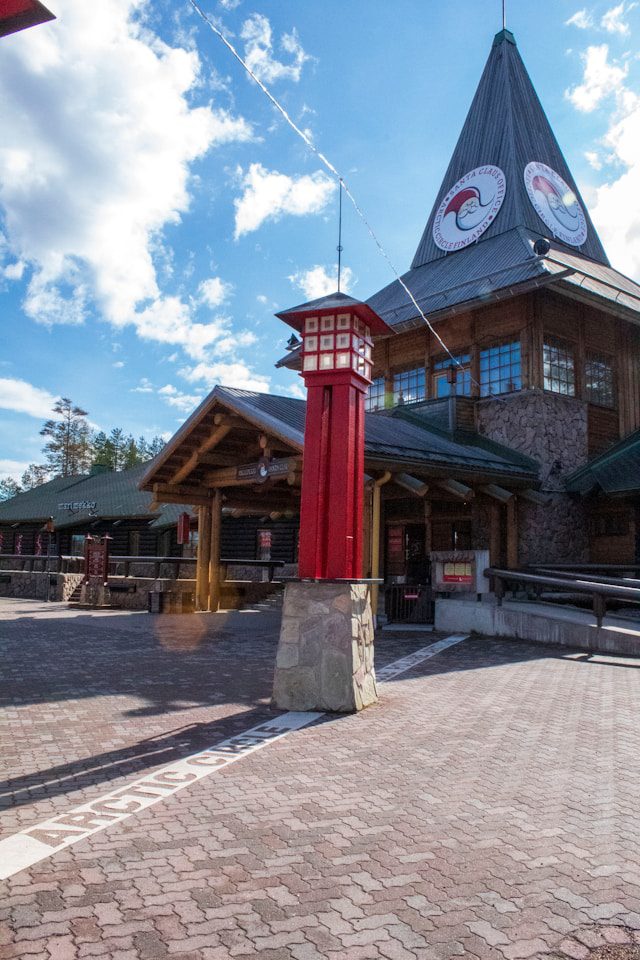
People ask us all the time: what’s it actually like to live in Rovaniemi? Not visit for a week to chase reindeer or the northern lights — but actually live here, through the polar night and the white summers and the mud seasons in between. We moved to Finnish Lapland and never really left. Joona grew up in Finland and works in Lapland tourism; Alla arrived from Ukraine and never expected to call the Arctic Circle home.
This post is our honest answer to the question we get most. Not a tourist guide. Not a relocation checklist. Just what life in living in Rovaniemi year-round actually feels like, month by month, from the inside.
Living in Rovaniemi year-round means experiencing four dramatically different worlds: a sun-flooded, mosquito-humming summer of endless daylight; a brief, golden autumn; a long polar night winter with auroras and snow; and a muddy, magical spring breakup. It’s quiet, occasionally isolated, genuinely beautiful — and more liveable than most outsiders expect. The darkness is manageable; the light is unforgettable.
The four seasons of living in Rovaniemi year-round
Rovaniemi sits exactly on the Arctic Circle at 66.5°N. That latitude makes the seasons more dramatic here than anywhere else we’ve traveled — and we’ve been to 25 countries. Each season is its own distinct world, and understanding them is the key to understanding life here.
Summer (June–August): the endless day
From roughly mid-May to late July, the sun never fully sets. You wake at 3 am and the room is bright. Mosquitoes emerge in clouds. Locals head to their lake cottages. The city is flooded with tourists in June, then strangely quiet in August when the tourist infrastructure scales back but the weather is still beautiful.
- Midnight sun: the sun is above the horizon for about 73 consecutive days at peak. Your blackout curtains become your best friend.
- Temperature: July averages around 17–19°C but can spike to 30°C. Yes, it’s hot in Lapland in summer — locals often suffer more than southerners because the buildings aren’t built for heat.
- Nature: the forests explode. Wild berries — cloudberries, bilberries, lingonberries — carpet the ground by August. Fishing is excellent.
- The feeling: euphoric and slightly unreal. You eat dinner at 9 pm and it still feels like 4 in the afternoon.
Autumn (September–October): the most underrated season
The ruska — Finnish autumn color — hits Lapland in late August and September, weeks before anywhere else in the country. The birch forests turn gold overnight, the nights go dark, the mosquitoes vanish, and the aurora season begins. This is our favorite time to live here. Locals know it; most tourists don’t.
What a typical week looks like in Rovaniemi
People imagine Rovaniemi as more extreme and more remote than it is. It’s a small city of about 65,000 people with a university, real supermarkets, restaurants, and a normal Finnish urban life running under the extraordinary light and landscape. Here’s what a week actually looks like.
The winter week
- Commuting in the dark: from late November to mid-January, you may not see sunlight at all on weekdays — leave for work in the dark, come home in the dark. The city lights up with fairy lights and the mood is genuinely cozy, not bleak, if you embrace it.
- Aurora alerts: we keep the space weather app open in winter. When a clear night coincides with a good forecast, we drive out of town after dinner to watch.
- Winter sports: Joona cross-country skis to work occasionally. The trails open in November and stay good through March. Ounasvaara ski resort is 10 minutes from the center.
- Heating bill reality: winters are cold — average January is around −13°C but can reach −35°C or lower. Heating is significant. Finnish buildings are well-insulated, but you feel it.
The summer week
- Late evenings outside: dinner at the riverside terrace at 9 pm in full sun is a very real and wonderful thing.
- Sleep management: good blackout curtains are non-negotiable. After a few summers you adapt, but the first one is genuinely disorienting.
- Weekend escapes: half the city drives north or east on Friday afternoons to their summer cottages. Traffic out of town on Friday is the closest Rovaniemi gets to a traffic jam.
The honest pros and cons of living in Rovaniemi year-round
We’ve had this conversation with every visitor who has ever asked “could you see yourself actually living here?” Here’s the version we give our honest friends, not the tourist-brochure version.
Nature access is extraordinary and immediate — we’re 10 minutes from deep forest and real wilderness. Crime is essentially nonexistent. The air quality is among the best in Europe. The community is small enough that you actually know people. And the light in summer, and the auroras in winter, never stop being magic — even after years.
Isolation is real — the nearest city of any size (Oulu) is 200 km south. Shopping options are limited. International flight connections require a connection via Helsinki. The polar night in November and December takes genuine mental effort to handle well. And mud season (March–April) is genuinely miserable: grey, slushy, and not photogenic.
How normal and functional daily life is. Finland’s infrastructure works extremely well even this far north. Internet is fast. Healthcare is accessible. The roads are plowed overnight. Rovaniemi has a university, an arts scene, good restaurants, and enough going on that you don’t feel like you’re roughing it.
“Isn’t it depressing in winter?” No — but November is genuinely hard for most people. The polar night itself (when the sun doesn’t rise above the horizon) paradoxically isn’t the difficult part; it’s beautiful and the snow reflects light everywhere. The difficult weeks are late October and November, when it’s dark but not snowy, and the world looks grey.
Traffic, crowds, city noise, and stress. Coming back to Rovaniemi after two weeks in a southern European city is always a relief. The pace of life here is genuinely different — not slow in a boring way, but calm in a deliberate way.
The sky. Whether it’s the midnight sun, the stars in October, or the aurora in February — the Lapland sky is extraordinary in a way that’s very hard to explain to anyone who hasn’t experienced it.
We write from the Arctic Circle
Monthly dispatches about life, travel, and what’s actually worth visiting in the Nordics — written from home.
How we actually handle the polar night
This gets its own section because it’s the thing people ask about most and the thing that surprises people most when they get here. The polar night in Rovaniemi lasts from December 3rd to January 8th — about five weeks when the sun doesn’t rise above the horizon. Here’s the honest approach.
What actually works
- Light therapy lamp: we use one every morning from November through February. It makes a measurable difference. Alla noticed it in the first winter; Joona has used one for years.
- Keep a routine: the temptation is to sleep in indefinitely since there’s no sunrise to wake you. Don’t. A consistent schedule anchors the day.
- Go outside at midday: even during the polar night, there’s a window of dim blue light from roughly 11 am to 2 pm. It’s not direct sun, but it’s something, and being outside in it helps.
- Make the dark beautiful: Rovaniemi in December is genuinely magical. Candles, saunas, aurora hunting, the Christmas season — lean into the darkness as atmosphere rather than fighting it as a problem.
- Plan a trip south in January or February: even a long weekend somewhere with more sun resets the clock. We usually do one trip in January. It’s not running away; it’s maintenance.
What doesn’t work
- Staying indoors all day, every day — this is the real cause of winter depression in Lapland, not the darkness itself
- Eating and drinking your way through it without any physical activity
- Comparing the darkness to somewhere else you’ve lived — Rovaniemi has its own logic, and you have to accept it on its own terms
What visitors always get wrong about Rovaniemi life
We host friends and family from across Europe and beyond. After years of doing this, we’ve noticed the same misconceptions coming up every time.
- “It must be so quiet and boring.” It is quiet. Boring is a different question. The city has a university with a lively student population, a genuine culinary scene, and a thriving arts community. Boredom here is a choice, not an inevitability.
- “You must get lonely.” The community in Rovaniemi is tight in a way that big cities aren’t. We know our neighbors. We know people at the grocery store. There’s a warmth in small-city Finnish life that you don’t get in Helsinki.
- “Isn’t everything expensive?” Yes and no. Finnish prices are higher than Southern European ones. But compared to Oslo, Stockholm, or Copenhagen, Rovaniemi is genuinely affordable. Rent is low by Nordic standards. Local food is reasonably priced.
- “What do you do for entertainment?” Nature is the entertainment. We ski, hike, forage, sauna, fish, and drive north whenever we want to. Our weekend activities would be bucket-list experiences for most of our visiting friends.
- “How do you handle the mosquitoes?” Honestly, this is the most underestimated challenge of summer here. July in Lapland without repellent is not pleasant. You adapt. You wear long sleeves more than you’d expect in 25-degree heat.
Practical life in Rovaniemi — what you actually need to know
If you’re considering a longer stay — or just curious what the infrastructure looks like for someone living year-round — here’s the honest picture.
- Healthcare: Rovaniemi has a proper regional hospital (Lapin keskussairaala). For routine care, the Finnish health system works well, though waits can be long for non-urgent appointments. Expatriates often use private clinics for speed.
- Supermarkets and shopping: two major supermarkets (K-Citymarket and Prisma) cover most needs. The range is somewhat limited compared to southern Finnish cities — we do some shopping on trips south and order things online.
- Restaurants: the scene is better than its reputation. Several genuinely excellent Lapland cuisine restaurants, a few good pizzerias, and a student bar culture anchored by the university. It’s not Helsinki, but it’s not a food desert either.
- Internet and connectivity: fast and reliable. Working remotely from Rovaniemi is entirely practical.
- Getting around: a car is essentially necessary for full life here. Public transport within the city exists but is limited. The airport connects to Helsinki multiple times daily.
- Cost of living: rent for a 2-bedroom apartment runs €700–1,000/month in 2026. Groceries, utilities, and daily costs are comparable to mid-sized Finnish cities — not cheap by global standards, but very reasonable by Nordic ones.
Mistakes we made in our first year in Rovaniemi
- Not buying proper winter gear immediately. We tried to get by with coats that were fine in Helsinki. By January we understood our mistake. Proper -30°C rated gear is not optional; it’s infrastructure.
- Underestimating the light lamp’s importance. We bought one eventually. We should have bought one in October.
- Not learning to ski properly in year one. Cross-country skiing opens up the whole winter landscape. We waited too long to invest in lessons and equipment, and that first winter was poorer for it.
- Trying to fight the summer sleep disruption instead of managing it. Blackout curtains, sleep masks, and a firm bedtime routine are the answer. Grumbling about the light isn’t.
- Missing the autumn ruska because we were traveling elsewhere. We were in Greece for a work trip during the peak ruska week of year one. We’ve never made that mistake again. September in Lapland is irreplaceable.
- Assuming everything would close in tourist off-season. Some things do. But core local life — shops, restaurants, services — runs year-round. The city isn’t a theme park; it’s a real place with real people who live here through every season.
FAQ — what readers and friends ask most
Is Rovaniemi a good place to live year-round, not just visit?
Yes, genuinely. It requires accepting a different rhythm of life tied to extreme seasons. If you like nature, quiet, and the outdoors, it’s exceptional. If you need urban density, cultural diversity, and a wide restaurant scene, it will feel limiting. We love it — but we know it’s not for everyone.
How do locals actually cope with the polar night?
Light therapy lamps, consistent routines, outdoor activity at midday, sauna culture, and a genuine mindset shift toward embracing the dark rather than dreading it. Most long-term Lapland residents don’t find the polar night depressing — they find November, before the snow arrives and the Christmas light is up, much harder than December itself.
What’s the best season to visit Rovaniemi to understand what living there is like?
Autumn (mid-September to mid-October) gives the most honest picture of year-round life without the extremes. The ruska is beautiful, the aurora season is starting, the tourists are mostly gone, and locals are living normally. Summer shows you the midnight sun. Winter shows you the tourist infrastructure at full throttle. Autumn shows you the real place.
Can you work remotely from Rovaniemi?
Entirely. Internet is fast and reliable. Remote work from the Arctic Circle is a real and growing trend — we know several people who moved here specifically to work remotely while having access to outdoor life. The time zone (EET/EEST) works well for European clients.
How do you handle social life with such a small population?
The expat and international community around the university is active and welcoming. Finnish social culture is quieter than southern European cultures, but once you’re inside a circle of friends here, the relationships tend to be deep and lasting. We’ve found genuine community here in a way that we didn’t always find in larger cities.
What’s the one thing you’d tell someone considering moving to Rovaniemi?
Buy the winter gear before you arrive, not after. And give yourself two full years before you judge it. Year one is full of adjustments; year two is when it starts to feel like home. Most people who leave do so in year one. Most who stay past year two stay much longer.
A final word from the Arctic Circle
Living in Rovaniemi year-round is one of the better decisions we’ve made. It’s not a decision we can recommend to everyone — you have to genuinely want what this place offers: extraordinary nature, seasonal extremes, a small and close community, and a rhythm of life that runs at a different speed from most of Europe.
We travel constantly. After 25 countries, we keep coming back to this one. The Aurora over the frozen Kemijoki river. The sun at midnight over Ounasvaara. The ruska turning the birch forest gold in September. The first snow of November covering everything in white silence. We’ve seen a lot of beautiful places. This one we call home.
If you’re thinking about visiting or longer, feel free to write to us at rovaniemiweddings@gmail.com — we’re happy to answer honest questions from people who are genuinely curious about life up here.
Joona & Alla
A Finnish-Ukrainian couple living in Rovaniemi, Finland. Joona is a marketing professional in Lapland tourism; Alla is an AI Engineer. Together we’ve visited 25 countries and share honest, locally-grounded travel writing from our home on the Arctic Circle.
Read our full story →