What Is Freedom to Roam? Everyman’s Right Explained for Visitors
You’re allowed to camp almost anywhere in Scandinavia — but there are real rules. A Rovaniemi-based couple who live by this right explains exactly what you can and can’t do across Finland, Sweden, Norway, and beyond.
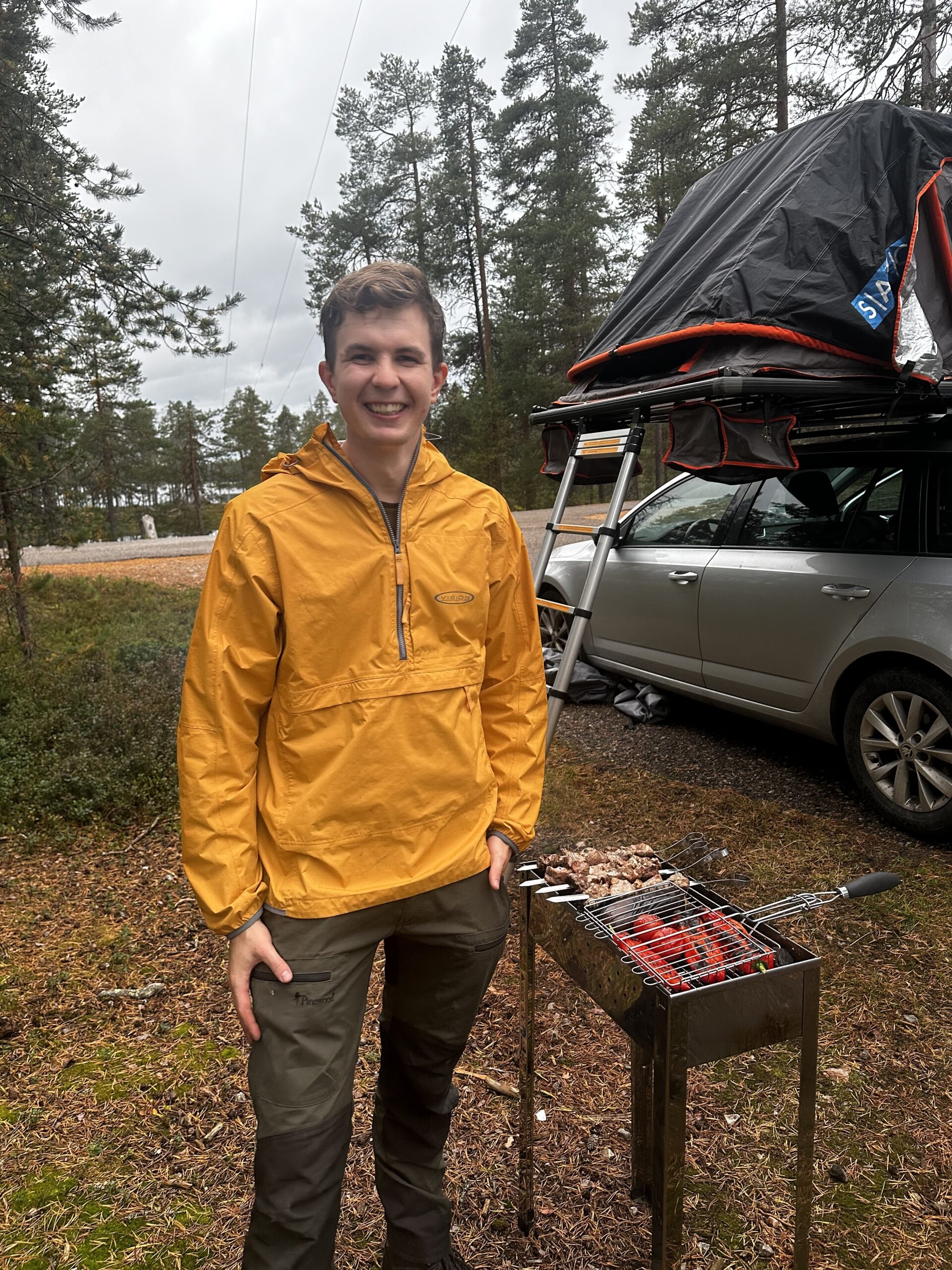
The first time Joona camped by a Finnish lake as a kid, nobody asked permission. Nobody needed to. That’s just how it works here — you walk into the forest, set up your tent, light a small fire by the shore, and in the morning you leave the place cleaner than you found it. It is the most natural thing in the world, and after 25 countries we still think it is one of the genuinely great gifts Scandinavia offers any visitor.
But we get questions about it constantly. Can I really camp anywhere? What if someone owns the land? Am I allowed to pick berries? Can I kayak through private waterways? The answers are yes — but they come with responsibilities that not every travel article bothers to spell out. This guide fixes that.
Freedom to roam (allemansrätten in Swedish, jokamiehenoikeus in Finnish) is a legal right across Finland, Sweden, Norway, and Estonia that lets anyone walk, camp, and forage on land regardless of who owns it — as long as you don’t disturb, damage, or litter. You can camp for 1–2 nights in one spot, pick berries and mushrooms freely, and canoe most waterways. You cannot camp right next to a private home, light open fires during bans, or damage crops or fences.
What freedom to roam actually means — and where it comes from
Freedom to roam is not a guideline or a tourism slogan. It is a codified legal right in several northern European countries, rooted in centuries of tradition that predate private land ownership as we understand it today. The principle is simple: the outdoors belongs to everyone, and the right to move through, rest in, and enjoy nature is fundamental — regardless of who legally owns the ground beneath your feet.
The underlying philosophy
In Scandinavian legal tradition, landowners have rights over their land, but those rights stop at the point where they would exclude others from non-damaging use of nature. This is almost the opposite of how property law works in the UK, the US, or most of continental Europe, where access to private land is the exception rather than the rule.
The result is a culture — not just a law — where people genuinely feel at home in forests, on shorelines, and on hillsides they do not own. Growing up in Rovaniemi, this was just reality. You ski across your neighbour’s field in winter. You pick cloudberries in the bog behind someone’s cabin. Nobody thinks twice about it.
Which countries have it?
- Finland — jokamiehenoikeus (literally “every person’s right”). Broad and well-established.
- Sweden — allemansrätten. The most famous version; includes rivers and coastal waterways.
- Norway — allemannsretten. Codified in the 1957 Outdoor Recreation Act; some of the most explicit rules.
- Estonia — a similar right exists for forests and uncultivated land.
- Scotland — the Land Reform (Scotland) Act 2003 introduced a formal right to roam, the most extensive in the UK.
- Denmark, Iceland, Latvia, Lithuania — partial or limited versions, with more restrictions on camping.
The countries we know best from personal travel are Finland, Sweden, Norway, and Estonia. The guidance below focuses on those four.
Country-by-country rules: what you can and can’t do
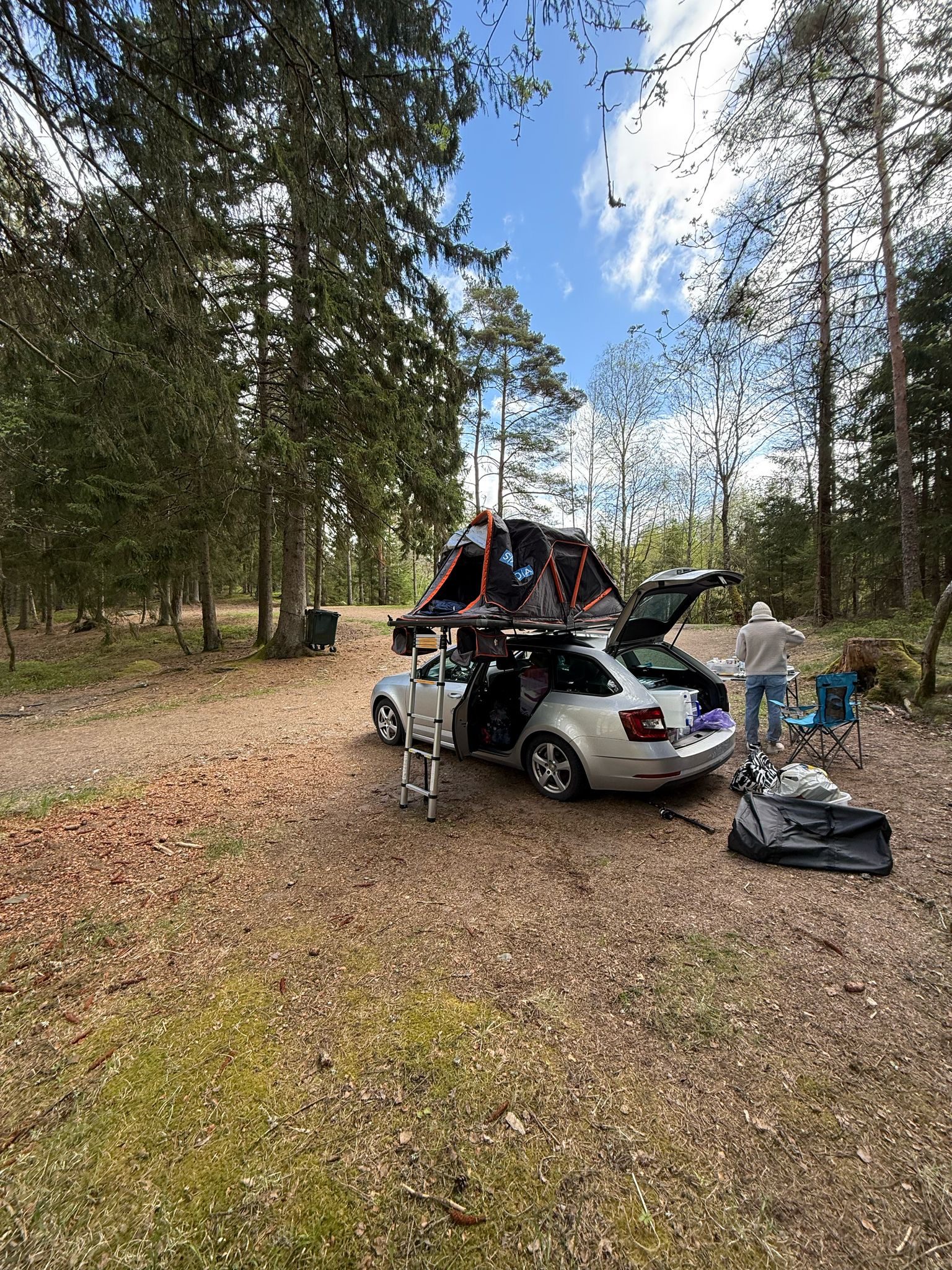
The broad principle is the same across all four countries, but the specific rules differ enough that it’s worth knowing the details before you pack your tent. We’ve camped extensively in all of them.
Finland (jokamiehenoikeus)
- Camping: You may camp for a short stay (generally understood as 1–2 nights) in one spot anywhere in nature, including forests and by lakes and rivers. Move on after that.
- Distance from homes: Stay at least 150 metres from the nearest dwelling unless you have the owner’s permission.
- Fires: Open fires are allowed in designated spots or where there is clearly no fire risk. During official fire bans (common in summer), no open fires anywhere. A camping stove is always fine.
- Berries and mushrooms: Free to pick in any quantity for personal use, even on private land.
- Motorised vehicles: Not covered by the right — you cannot drive off-road onto private land.
- Water access: You may navigate and anchor on all natural waterways. Canoes and kayaks are fully covered.
Sweden (allemansrätten)
- Camping: 1–2 nights in one spot is the accepted norm. Larger groups or longer stays require landowner permission.
- Distance from homes: “Do not intrude on the private sphere” is how the law is phrased — in practice, stay well away from any garden or house.
- Fires: Only where safe. Never on bare rock (it damages it permanently). Always check for fire bans via the Swedish Civil Contingencies Agency (MSB) before lighting anything.
- Cycling and horses: Allowed on unpaved paths, not on sensitive terrain.
- Water: You may travel on all natural waterways and land briefly on shorelines.
Norway (allemannsretten)
- Camping: The Outdoor Recreation Act is specific: you may camp anywhere in uncultivated land, but not within 150 metres of an inhabited dwelling without consent.
- Duration: More than 2 nights in the same spot requires landowner permission.
- Cultivated land: You may walk across fields and meadows when the ground is frozen or covered in snow. In summer, stay off crops and ploughed fields.
- Dogs: Must be kept on a lead near livestock and during the nesting season (April 1–August 20).
- Fires: Banned April 15–September 15 in forests and close to forests nationwide, except where conditions are obviously safe. This is stricter than Finland and Sweden.
Estonia
- You may walk in forests and on uncultivated land. Camping is permitted in forests for short stays.
- The right is narrower than the Nordic versions — waterway access and coastal camping follow separate rules.
- Berry and mushroom picking is free for personal use.
Related reading Planning a Scandinavian road trip? See our guide to Wild Camping by Car in Scandinavia for the practical setup — what gear you need, where to park overnight, and how to find good spots.
The freedom to roam quick-reference checklist
We use this checklist ourselves every time we set up camp somewhere new. Print it, screenshot it, or just read it a couple of times before your trip.
1. Am I on uncultivated land (forest, moor, shore, mountain)? ✅
2. Is there a dwelling within 150 metres? If yes, move further away or ask. ✅
3. Is there a fire ban in effect? Check before lighting anything. ✅
4. Am I planning to stay more than 2 nights? If yes, move on or ask the landowner. ✅
5. Will I leave zero trace — no litter, no damage, no disturbance? ✅
What you CAN do under freedom to roam
- Walk, cycle, ski, or ride across uncultivated land and open countryside
- Camp for 1–2 nights anywhere in nature, away from dwellings
- Light a campfire where safe and where there is no ban in effect
- Pick berries, mushrooms, flowers, and fallen branches for personal use
- Paddle, row, or sail on all natural waterways, rivers, and lakes
- Land your canoe or kayak on any natural shore briefly
- Fish with a rod and line in most waters (check local rules for some regions)
- Swim in any natural body of water
What you CANNOT do
- Camp inside someone’s garden or within 150 m of an occupied dwelling
- Light fires during an official fire ban
- Damage crops, gardens, fences, walls, or planted trees
- Drive a motorised vehicle off-road on private land
- Take commercial quantities of berries or mushrooms without permission
- Hunt or fish with nets without a licence
- Litter, dig up plants by the roots, or damage the terrain
- Camp for weeks in the same spot without asking
Get our best Nordic travel tips
We write about wild camping, road trips, and honest destination guides from our home in Finnish Lapland — a few times a month, never spam.
Fire rules and safety: what nobody tells you clearly enough
Nothing gets visitors into trouble faster than fires. The rules are not complicated, but they require a bit of attention — especially in summer, when fire bans can appear overnight after a dry spell.
- Check the fire risk map before every camp. In Finland, use the Finnish Meteorological Institute’s forest fire index. In Norway, MSB or Yr.no. In Sweden, the MSB website. All are updated daily.
- Never light a fire on bare rock. In Sweden this is specifically highlighted because it causes permanent scarring. It also causes problems on granite outcrops across Finland and Norway.
- Use established fire rings where they exist. Many popular camping spots in Scandinavian national parks have maintained fire pits. Use them instead of creating new ones.
- Bring a stove for backup. A lightweight gas stove weighs almost nothing and means you can always make a hot meal even when open fire is banned. We never camp without one.
- Norway’s April 15–September 15 blanket ban. This catches visitors completely off-guard. It is nationwide, not just in national parks. The only exception is when conditions are “obviously safe” — after rain, on a rocky beach, etc. When in doubt, use your stove.
- Always extinguish completely. Pour water, stir, pour more. The ash should be cold enough to hold in your hand before you leave the site.
What you can forage and pick — the berry and mushroom rules
Foraging is one of our favourite things about summers in Finland. The rule is beautifully simple in all three Nordic countries: berries, mushrooms, and flowers that grow wild in nature are free for anyone to pick for personal use. No permission needed, regardless of who owns the land.
Related reading We wrote about the experience of berry picking in Finland in detail — which berries grow where, when they peak, and what to bring with you.
Foraging rules at a glance
- Berries: All wild berries are free to pick. In Finland this includes blueberries, lingonberries, cloudberries, raspberries, and sea buckthorn. In practice, cloudberry bogs can be sensitive — tread carefully.
- Mushrooms: Free to pick for personal use. Take only what you know. No uprooting — cut at the base so the mycelium survives.
- Flowers and plants: Picking flowers and non-protected plants is allowed in small quantities. Do not uproot anything.
- Protected species: Some plants and animals are legally protected in all three countries. Do not pick anything you are not sure about.
- Commercial harvesting: In Finland, commercial berry picking requires landowner permission in some regions. The right applies to personal use.
Mistakes visitors make (we’ve seen them all)
- Camping too close to someone’s cabin. The 150-metre rule exists for a reason. A summer cottage in Scandinavia is deeply private space. A tent 30 metres from someone’s sauna porch is not welcome.
- Treating fire bans as optional. They are not. Fines are real in all three countries, and in dry summers fire spreads faster than you can imagine.
- Leaving traces. Litter, blackened rocks from fires, trampled vegetation. Leave-no-trace is the reciprocal duty that makes the right sustainable.
- Assuming the right extends to farmland in summer. Cultivated fields, gardens, orchards, and planted forests are not covered. Stick to uncultivated nature.
- Driving to a campsite across private land. Walking is fine. Driving a van or car across someone’s meadow is not covered.
- Camping in the same spot for a week. Two nights is the accepted norm. Long stays require the landowner’s blessing.
Frequently asked questions
Is freedom to roam the same in all Scandinavian countries?
The core principle — anyone may walk and camp in nature — is shared. But the specific rules differ. Norway’s fire ban is broader (April 15 to September 15 nationwide). Sweden’s law is more explicit about cyclists and horses. Finland’s version is perhaps the broadest in everyday practice. Always check the rules for the specific country you are in.
Can I camp anywhere in Finland for free?
Yes, in uncultivated nature — forests, shores, hillsides — as long as you stay at least 150 metres from dwellings and move on after a night or two. Established campsites charge fees, but wild camping under the right is free.
Do I need to tell the landowner before camping?
No. The right does not require any notification for short stays (1–2 nights). If you want to stay longer, it is polite and often required to ask. Many landowners are perfectly fine with it if you ask nicely and promise to leave no trace.
Can I light a campfire when wild camping?
It depends on the country and current fire risk. In Norway, there is a blanket ban from April 15 to September 15 in forested areas. In Finland and Sweden, always check the daily fire index. When in doubt, use a camping stove — that is always allowed.
Does freedom to roam cover paddling and kayaking?
Yes. In Finland, Sweden, and Norway you may navigate and paddle any natural waterway — rivers, lakes, coastal waters — and land briefly on natural shores. This is one of the great pleasures of the Nordic outdoors.
What happens if I break the rules? Is there a fine?
It depends on the violation. Lighting a fire during a ban can result in a fine in all three countries. Littering and causing damage can also lead to penalties. But in practice, most interactions involve a polite word from a landowner asking you to move. The culture is generally respectful on both sides.
A final word from Rovaniemi
We have camped by frozen rivers in January, paddled silently through midnight-sun lakes in July, and picked cloudberries from bogs that technically belonged to someone else for our entire lives. Freedom to roam is not a legal abstraction to us — it is the texture of daily life in Finnish Lapland.
What strikes us every time we travel outside Scandinavia is how rare this is. In most of the world, access to nature is filtered through ownership, fences, and fees. In the Nordic countries, the assumption is the opposite: nature is shared, and the responsibility to protect it is also shared.
When you visit Finland, Sweden, or Norway and exercise this right, you are participating in something genuinely old and genuinely valuable. Just leave the place exactly as you found it. That is the whole deal.
Joona & Alla
A Finnish-Ukrainian couple living in Rovaniemi, Finland. Joona is a marketing professional in Lapland tourism; Alla is an AI Engineer. Together we’ve visited 25 countries and share honest, locally-grounded travel writing from our home in the Arctic.
Read our full story →