How to Avoid Jet Lag When Flying from Europe to Asia
A Rovaniemi couple who regularly flies the Europe–Asia corridor shares the habits, timing tricks, and hard-won lessons that actually work for crossing 6–9 time zones without losing three days.
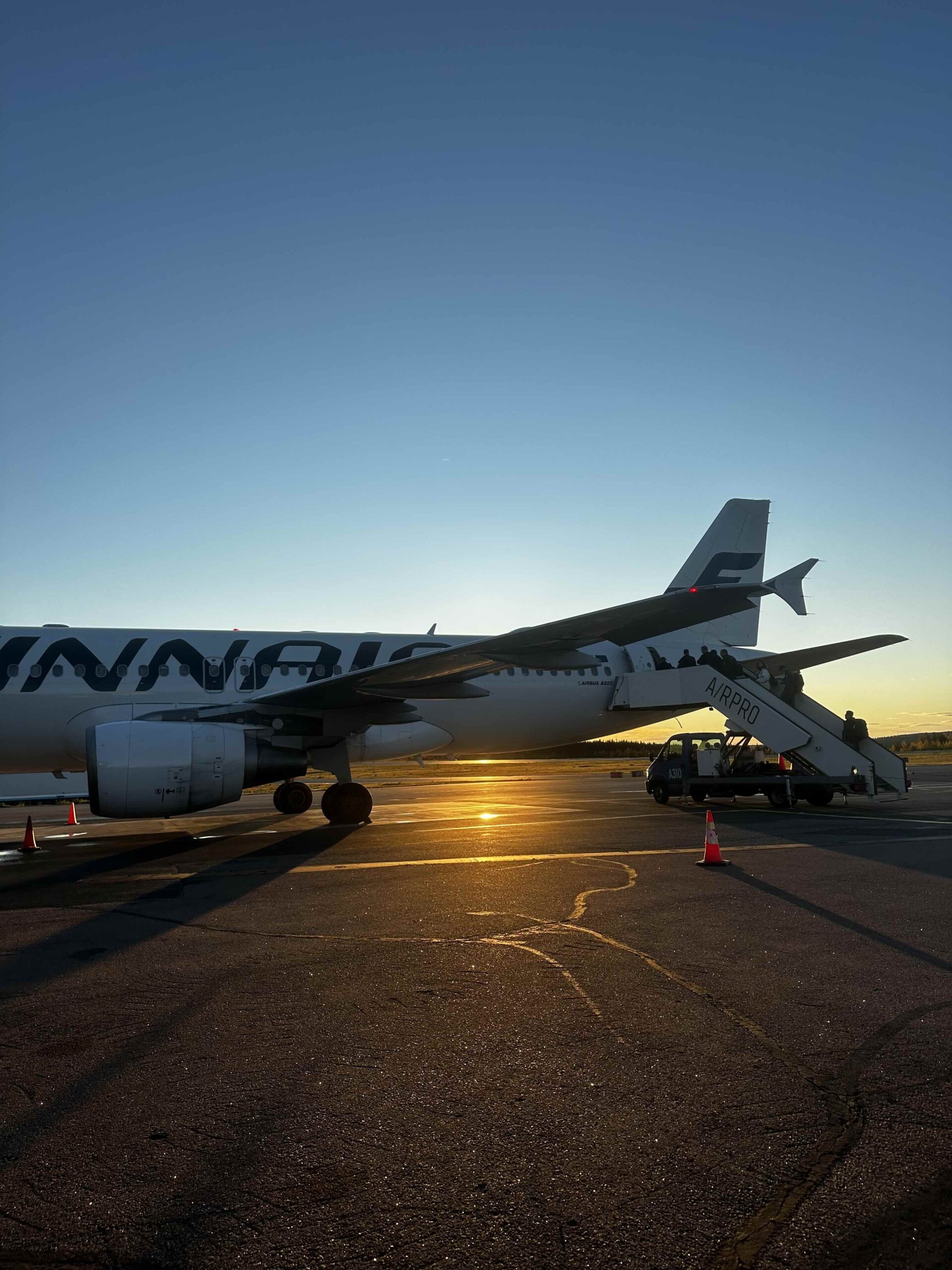
We don’t of then fly the Finland-Asia toue, but when we do you can feel the time difference. The time difference between Rovaniemi and, say, Bangkok or Singapore sits at five to six hours in summer, and the eastward direction consistently hits harder than the return leg west. We’ve tried everything: melatonin timing protocols, fasting windows, sleep-mask obsession, and the Argonne diet. Here’s what actually works — and what we quietly dropped.
To avoid jet lag flying Europe to Asia: shift your sleep schedule 2–3 days before departure, move to destination time the moment you board, avoid alcohol and heavy meals on the flight, get outside in morning light on arrival day, and resist napping past 2 pm local time on your first two days. Flying east is harder — light exposure timing is the single most powerful lever you have.
Why the Europe–Asia direction hits harder than flying back
Your circadian rhythm runs on roughly a 24-hour internal clock. Flying east means you’re asking your body to go to sleep and wake up earlier than it wants to — which is biologically harder than going later (westward). The Europe–Asia corridor crosses 6 to 9 time zones depending on your destination. Helsinki to Bangkok? Six hours ahead. Helsinki to Tokyo? Eight hours ahead.
The numbers behind the misery
- Recovery rate: most people need about one day per time zone crossed to fully re-synchronize. Cross 7 zones, expect up to a week of disrupted sleep if you do nothing.
- Eastward direction: reliably harder for most travelers than westward — your internal clock can more easily delay (stay up later) than advance (go to bed earlier).
- Finland starting point: flying from Helsinki, you’re often already adjusted to an unusually late-summer light schedule in spring and summer, which makes the eastward shift even more disorienting.
- Red-eye vs daytime flights: the overnight option from Helsinki via Doha or Dubai is common. It can help or hurt depending on whether you sleep on the plane — and most people overestimate how well they do.
Eastward vs westward: the honest comparison
- Flying east (Helsinki → Singapore): body says “it’s 10 pm” when it’s 3 am local. You’ll struggle to fall asleep at a reasonable hour, and wake up at 4–5 am wide awake for days.
- Flying west (Singapore → Helsinki): body says “it’s 3 am” when it’s 8 pm. You’ll be exhausted by dinnertime but sleep fine, and adjust faster.
- Bottom line: you have more control over eastward jet lag than it feels like — light timing is the key lever.
The pre-flight preparation routine (start 2–3 days before)
Our Nordic trip planner (PDF)
The one-page planner we use ourselves, plus the HUNGRYTRAVELFAMILY5 5% code and one short email a week with real deals. Unsubscribe any time.
The single biggest leverage point for avoiding jet lag is the 72 hours before you board. Most travelers do nothing until they’re on the plane — which is far too late. Here is the 4-step routine we actually follow.
Starting 3 nights out, go to bed 30–60 minutes earlier than usual and wake up accordingly. By departure day you’ll have nudged your rhythm 1.5–3 hours toward your destination time — a significant head start for a 6-hour zone gap.
Light is the strongest zeitgeber (time-cue) your body has. In the days before an eastward flight, get bright morning light exposure as early as possible — outside is ideal, a light therapy lamp second best. Avoid bright light in the late evening.
Cabin air runs at 10–15% humidity. Arrive at the airport already well-hydrated — aim for 2.5–3 litres of water the day before. Dehydration significantly worsens every jet lag symptom.
This is partly psychological but very real: the moment you board, commit fully to destination time. Eat, sleep, and move according to what time it is there, not at home. Don’t keep calculating “back home it would be…”
What to do (and avoid) on the flight itself
The flight from Helsinki to most Asian destinations runs 9–11 hours direct, or longer via a Gulf hub. What you do in those hours sets up — or undermines — everything that follows on arrival.
Our tested packing list for long-haul Europe–Asia trips — including the sleep kit we actually use.
On the flight: do these things
- Sleep when it’s nighttime at your destination, not when the cabin lights dim for everyone else. If it’s 2 am in Singapore while you’re over the Gulf, sleep now — even if it’s only 8 pm in Helsinki.
- Use an eye mask and earplugs even on daytime legs. Quality sleep on the plane is worth more than any in-flight entertainment.
- Move every 90 minutes — walk the aisle, stretch your calves, do a 5-minute squat sequence in the galley. Circulation affects alertness significantly.
- Drink water every hour. One small bottle per hour is a reasonable target. We carry a refillable 500ml bottle and fill it at the galley.
- Eat light and in alignment with destination meal times. If it’s 6 am in Singapore, a breakfast-sized meal makes sense. Don’t just eat because the trolley arrives.
On the flight: avoid these things
- Alcohol. Even one drink at altitude has roughly the dehydrating effect of two at sea level, and it fragments sleep architecture significantly. We skip it entirely on eastward long-haul.
- Heavy or salty meals. Airline food is already high in sodium — it accelerates fluid retention and worsens fatigue. Eat half portions if nothing else.
- Screens in the “sleep window”. Blue light suppresses melatonin. If it’s your sleep window on destination time, put on the mask and do not check your phone.
- Sleeping pills unless you know them. Over-the-counter antihistamine sleep aids leave a hangover that adds to jet lag. If you use them, test at home first.
We write from the Arctic
Honest travel writing, practical guides, and the occasional local secret — delivered from our home in Finnish Lapland.
The first 48 hours on arrival — what to do when you land
Arrival day is when most travelers make the mistakes that turn mild jet lag into a week-long slog. The decisions you make in the first six hours after landing shape your entire adjustment.
- Get outside immediately. Morning or midday light at your destination is the most powerful signal you can send to your circadian clock that it needs to reset. Walk, don’t take a taxi everywhere on day one.
- Stay awake until at least 9 pm local. However exhausted you feel, push through to a reasonable bedtime. Even four hours of “normal” sleep at local night time is more valuable than a full nap at 4 pm.
- Limit naps to 20 minutes before 2 pm. A short nap on day one is fine and helpful. A long one (90+ minutes) in the afternoon will destroy that night’s sleep.
- Eat on destination time. Have breakfast at local breakfast time even if you’re not hungry. Food timing is a secondary zeitgeber — it helps sync your gut clock faster.
- Do mild exercise. A 30-minute walk or swim on day one dramatically improves sleep quality that night. Avoid intense training — it spikes cortisol and delays sleep.
If you’re stopping over in Singapore, here’s exactly how we’d use those hours — jet lag and all.
Supplements and tools worth using (and what’s overhyped)
The supplement industry around jet lag is massive and mostly noise. Here is our honest, evidence-sorted breakdown.
- Melatonin (0.5–1 mg) — yes, use it. Small doses timed to your destination bedtime help shift your clock. The key is timing, not dose — bigger is not better. Start with 0.5 mg at 10 pm destination time for the first 3 nights on arrival.
- Light therapy lamp (10,000 lux) — worth it. If you travel regularly, a compact travel light lamp is one of the highest-ROI purchases you can make. Use it in the morning at your destination.
- Magnesium glycinate — optional but genuinely helpful. Cabin air and stress deplete magnesium; supplementing improves sleep quality without grogginess.
- Caffeine — yes, but timed. Coffee in the morning on destination time is fine. After 2 pm local time, it directly degrades your first night’s sleep. We cut off at noon on day one.
- Prescription sleep aids — not necessary for most. If you’re a frequent traveler with severe jet lag, a doctor can prescribe low-dose temazepam for travel. But for occasional travel, melatonin + good habits is enough.
- Anti-jet-lag diets (Argonne, fasting protocols) — overhyped. Some evidence supports short fasting windows; the practical benefit over simple light management is marginal for most people.
The mistakes we made flying Europe to Asia (so you don’t have to)
- Drinking wine “to sleep on the plane”. We both did this on early trips. It produces a shallow, fragmented rest that leaves you feeling worse than staying awake. The hangover compounds jet lag beautifully. Not recommended.
- Taking a long nap the afternoon of arrival. Classic error. We’d land in Bangkok at midday, nap for 3 hours, feel amazing, then be completely awake from 1–5 am for the next four nights.
- Keeping Helsinki time “just in my head”. Alla did this for the first two years we traveled. Mentally calculating home time constantly delays your psychological adjustment significantly.
- Flying through the night with full cabin light on. Some carriers keep the main cabin lit for most of a red-eye leg. Bring an eye mask — always.
- Not pre-hydrating before the flight. Arriving at the airport dehydrated from a busy travel day is a guarantee of terrible jet lag. Drink a litre before you board.
- Ignoring the return flight. The westward leg (Asia back to Finland) feels easy by comparison, but complacency still costs you 2–3 days. The same rules apply.
Frequently asked questions
How long does jet lag last flying from Europe to Asia?
For most people crossing 6–8 time zones eastward: 3–6 days without any management, 1–3 days with good habits. The eastward direction is consistently harder than westward, but the interventions above can halve your recovery time.
Is it better to sleep or stay awake on a night flight to Asia?
Depends on what time it will be at your destination when you land. If you’re landing in the morning, sleeping on the flight so you’re rested for a daytime push is the right call. If you’re landing in the evening, you can stay awake and go straight to bed — though that’s a very long day.
Does melatonin actually help with jet lag?
Yes, when used correctly — small doses (0.5–1 mg) timed to your destination bedtime. Larger doses (3–5 mg, commonly sold in the US) are not more effective and can cause grogginess. Start melatonin the first night in your new time zone, not on the plane.
What is the best time to fly from Europe to Asia to minimize jet lag?
Flights that arrive in Asia in the late afternoon or evening tend to be easiest: you can stay awake, eat dinner at local time, and sleep a normal night. Arriving at 6 am after a red-eye is harder to manage because you immediately face a full day with no sleep.
Should I avoid coffee when jet-lagged?
Not entirely — caffeine strategically used in the morning at your destination time actually helps anchor your new rhythm. The key is the cut-off: no caffeine after 2 pm destination time for the first 2–3 days. After that, normal habits are fine.
Does the flight from Finland to Asia cause worse jet lag than from, say, the UK?
Marginally, because Helsinki is one to two hours further east, making the gap slightly larger. But the difference is minor. The bigger variable is whether you fly east (to Asia) or west (back to Europe), and how well you manage light and sleep timing.
A final word from Rovaniemi
We’ve now crossed the Europe–Asia time gap more times than we can quickly count, and jet lag no longer derails our trips the way it did early on. The secret isn’t a magic pill or a complicated protocol — it’s committing to a handful of habits that most travelers are too impatient or exhausted to follow through on.
Set your watch to destination time when you board. Get outside in the morning light when you land. Don’t drink alcohol on the flight. Skip the long afternoon nap on day one. Take 0.5 mg melatonin at destination bedtime for three nights.
That’s essentially it. The rest is refinement. We still get slightly foggy on day two of an eastward trip — that’s normal and unavoidable — but by day three we’re fully functional and genuinely enjoying wherever we’ve landed. Which is, after all, the whole point of making the journey.
Safe travels from Lapland.
Joona & Alla
A Finnish-Ukrainian couple living in Rovaniemi, Finland. Joona is a marketing professional in Lapland tourism; Alla is an AI Engineer. Together we’ve visited 25 countries and share honest, locally-grounded travel writing from our home in the Arctic.
Read our full story →