Most people who rent a campervan in Iceland never leave the Ring Road, and for a first trip that is a perfectly good choice. But the moment you look at a map of the Highlands, with Landmannalaugar, Þórsmörk, Askja and the Kjölur route, you notice that the interesting grey lines have an F in front of them. Those are mountain tracks, and the rule is simple: only 4×4 vehicles are allowed on F-roads. This guide is about Iceland 4×4 camper rental, what it costs and when it is worth paying for.
Iceland is home turf for us in the sense that it is a short flight from Finland and we have driven its roads in several seasons, so we can speak from experience on the driving itself. The prices and vehicle details below come from the Iceland 4×4 camper page on CampervanPlanet, which we checked in November 2026.
One more thing before we start: a 4×4 is not only a summer tool. Because it has high ground clearance and, in winter, studded tyres, it is also the vehicle we would choose if we wanted to drive in the dark season.
A 4×4 camper in Iceland starts from about €87 a day for a compact conversion, with larger pick-up campers and Sprinter-style 4×4 vans costing more. You need one for F-roads, which typically open between mid-June and mid-July and close between mid-September and early October. In winter the F-roads are closed to everyone, but a 4×4 camper is still the sturdiest way to drive icy Ring Road stretches and chase the northern lights.
What an F-road is, and why the 4×4 rule exists
F-roads are Icelandic mountain tracks. They are unpaved, often rough, and they cross rivers that can rise with rain or glacial melt. Only 4×4 vehicles are legally allowed on them, and rental agreements usually reinforce that: a two-wheel-drive campervan is barred from F-roads, and driving one there can void your insurance.
They also open late. Snow and mud keep the Highlands closed until early summer, and the roads typically open between mid-June and mid-July, depending on the year. They close again between mid-September and early October. If your plan depends on a specific F-road, check the road authority’s conditions page the week you travel, not the month before.
Our view: do not choose a 4×4 camper just to have one. Choose it because there is a track on your list, such as the road to Landmannalaugar, the Askja caldera or the Kjölur route, or because you plan to drive in winter. For the typical Ring Road trip, see our Iceland Ring Road campervan itinerary instead.
The three kinds of 4×4 camper you can hire
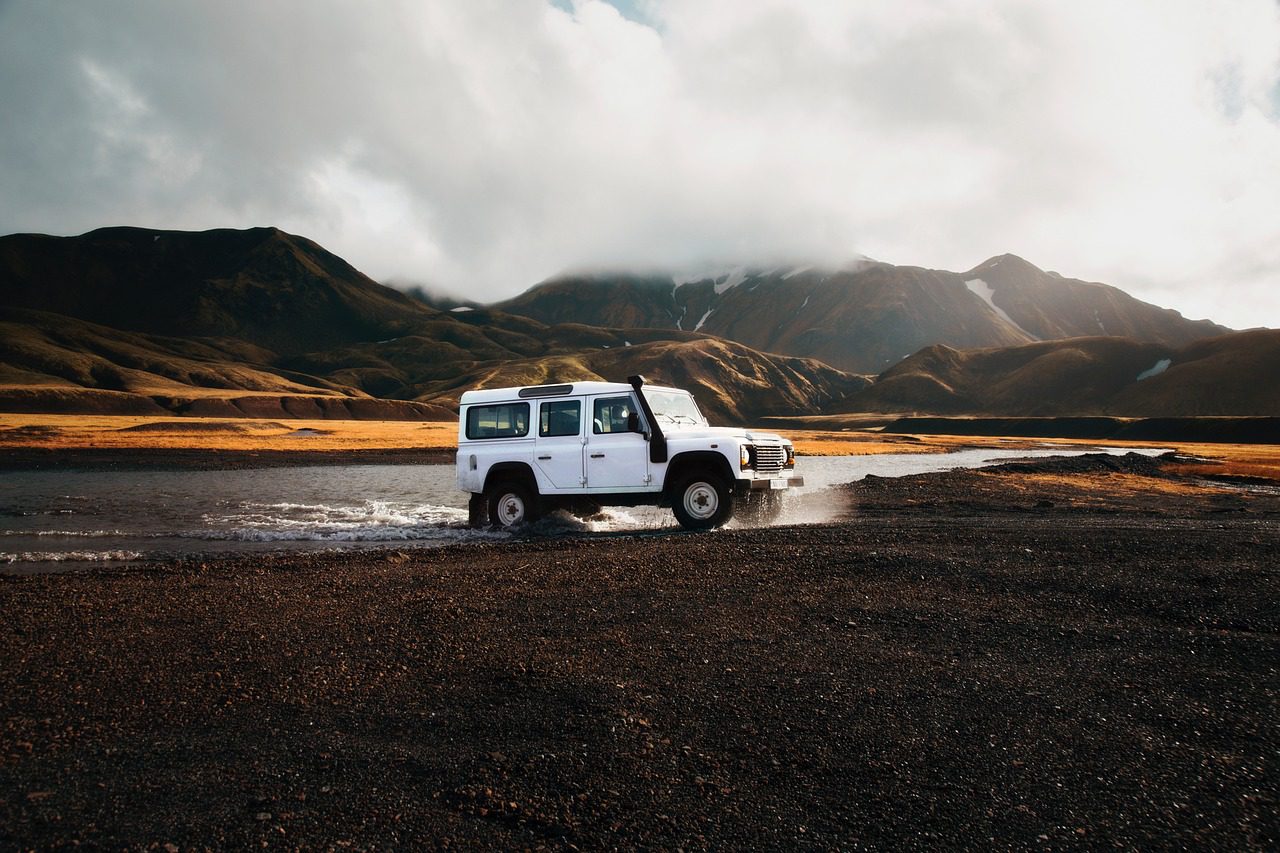
According to the Iceland 4×4 camper page, the fleet breaks down into three practical classes.
- Compact 4×4 camper, from about €87 a day. A Dacia Duster or Suzuki Jimny conversion, built for two, that can ford water up to about 40 cm. It is the entry point for F-roads and the thriftiest on fuel.
- Pick-up camper, about €187 a day. A Toyota Hilux or Ford Ranger conversion rated for about 60 cm of water and the main F-roads, including F26, F35 and F208.
- Large 4×4 van, about €191 a day. A Mercedes Sprinter or VW Crafter 4×4 with a wet room, suited to three or four adults.
Prices change by date, so use these as a guide rather than a quote. The same page notes that across all Icelandic campervans, a typical day costs about €140 in winter and about €354 in summer, from €40 at the cheapest, based on 112 vehicles from 19 companies. A 4×4 camper in the shoulder season can therefore be reasonable value, while July is the expensive month for everyone.
If you want to see what is free for your dates, you can compare Iceland 4×4 campers in a minute, and our reader code HUNGRYTRAVELFAMILY20 takes €20 off at checkout.
River crossings and insurance: the part people skip
The biggest mistake first-timers make is to treat a river crossing as a driving skill when it is really a risk-management decision. Most insurance policies for rental vehicles exclude or limit water damage, and an engine that has swallowed water is an expensive repair. Before you book, ask in writing what is covered, what the excess is, and whether water damage is excluded.
On the road, the usual rules apply. Walk the crossing if it is safe to do so, never cross after heavy rain, follow another vehicle only if you can see the depth, and turn back if you are unsure. A river crossing can look easy in the morning and be different in the afternoon, because glacial melt rises through the day.
We cover insurance generally in our guides to campervan insurance in Iceland and deposits and excess explained. Both are worth reading before you pay a deposit.
💡 Our campervan tip: prices for the same van vary a lot between rental brands. We compare Iceland campervans across 160+ rental companies on CampervanPlanet — and code HUNGRYTRAVELFAMILY20 takes €20 off your booking.
Which months make a 4×4 camper worth it
The seasons decide the value of a 4×4.
June to August is the peak F-road season. All the Highland routes are open, including Landmannalaugar, Þórsmörk, Askja and Kjölur, daylight runs 18 to 22 hours, and demand on every 4×4 fleet is high. Book two to three months ahead.
May and September are the shoulder months. In September the F-roads are still open for roughly the first two weeks, with fewer crowds and the first auroras of the season. In May the F-roads are mostly still closed, but 4×4 routes on and near the Ring Road are open.
April and October bring cold, short days and closed F-roads. A 4×4 camper still earns its money here with winter tyres and high clearance on an icy Ring Road. November to March is northern lights season, with three to seven hours of daylight and F-roads fully closed. A 4×4 camper is still the best winter vehicle, and our piece on renting a campervan in Iceland in winter covers heating, tyres and when a cabin simply beats a van.
A 4×4 camper in winter: safer, not magic
The winter case for a 4×4 camper is about handling, not adventure. Studded tyres, high ground clearance and a heavier vehicle make icy Ring Road stretches and snowy side roads more manageable. You still have to drive slowly, keep a large gap to the vehicle ahead, and treat wind warnings as real. In Iceland, wind can be as dangerous as ice, particularly for tall vehicles.
Daylight is short, so plan your driving between about 10:00 and 16:00 at midwinter, and leave sightseeing in the dark to the evenings with a northern lights forecast. Check the road conditions and weather every morning, and keep the fuel tank topped up, because stations can be far apart outside the south-west.
Heating also matters. A camper with a diesel cabin heater is far more pleasant than one that relies on a gas heater alone, and you should ask the rental company how the heating is powered. For the long dark season, many travellers pair two nights in a camper with one night in a guesthouse, and that is a sensible way to stay warm.
Pick-up, driving rules and practicalities
Most travellers collect their vehicle at Keflavik International Airport, about 45 minutes from Reykjavik, though Reykjavik city and the domestic airport are also options, as are Akureyri in the north and Egilsstadir in the east. Picking up in the north or east can make sense if your route runs the Ring Road in one direction.
Driving rules to remember: headlights are required at all times, off-road driving is illegal and heavily fined, and wild camping outside designated sites is restricted in many places. Most Iceland campervan trips therefore rely on campsites, and in summer we would book popular ones ahead. We explain the situation in our guide to finding campsites in Iceland.
If a roof-top tent appeals, the same site lists compact 4×4 SUVs with a pop-up tent. It is lighter to drive and cheaper per day, but less comfortable in wind and cold. We discuss the pros and cons in rooftop tent travel.
Our verdict: should you rent a 4×4 camper in Iceland?
Yes, if you have a specific F-road on your list, or if you are travelling between October and April and want the sturdiest option. No, if your plan is a first Ring Road loop in summer. A regular campervan is cheaper, roomier and perfectly capable of the main route.
Book early for June to August, ask about water damage before you pay, and check road conditions the week you travel. For the wider picture of renting here, see our campervan rental guide. And when you are ready, search for your dates and use code HUNGRYTRAVELFAMILY20 for €20 off.
Book your Iceland campervan
Compare prices across 160+ campervan and motorhome rental brands, get a free 1GB eSIM with every booking — and €20 off with code HUNGRYTRAVELFAMILY20.
Check prices & availability →Frequently asked questions
How much does an Iceland 4×4 camper cost?
Per the CampervanPlanet Iceland 4×4 page, compact 4×4 campers start from about €87 a day, pick-up campers are about €187 and large 4×4 vans about €191. Prices vary by date, and summer is more expensive.
Do I need a 4×4 to drive on F-roads?
Yes. Only 4×4 vehicles are allowed on F-roads in Iceland, and rental agreements usually bar two-wheel-drive campers from them.
When are Iceland’s F-roads open?
They typically open between mid-June and mid-July and close between mid-September and early October, depending on conditions. Always check the road authority’s live conditions before you travel.
Is there a discount code for CampervanPlanet?
Yes. Use our reader code HUNGRYTRAVELFAMILY20 at checkout on CampervanPlanet to take €20 off your booking. It is a fixed amount, and you book through our links.
Is a 4×4 camper a good idea in winter?
It is the best winter option in Iceland thanks to studded tyres and high clearance, but F-roads are fully closed from November to March. Drive slowly and check wind and road conditions daily.