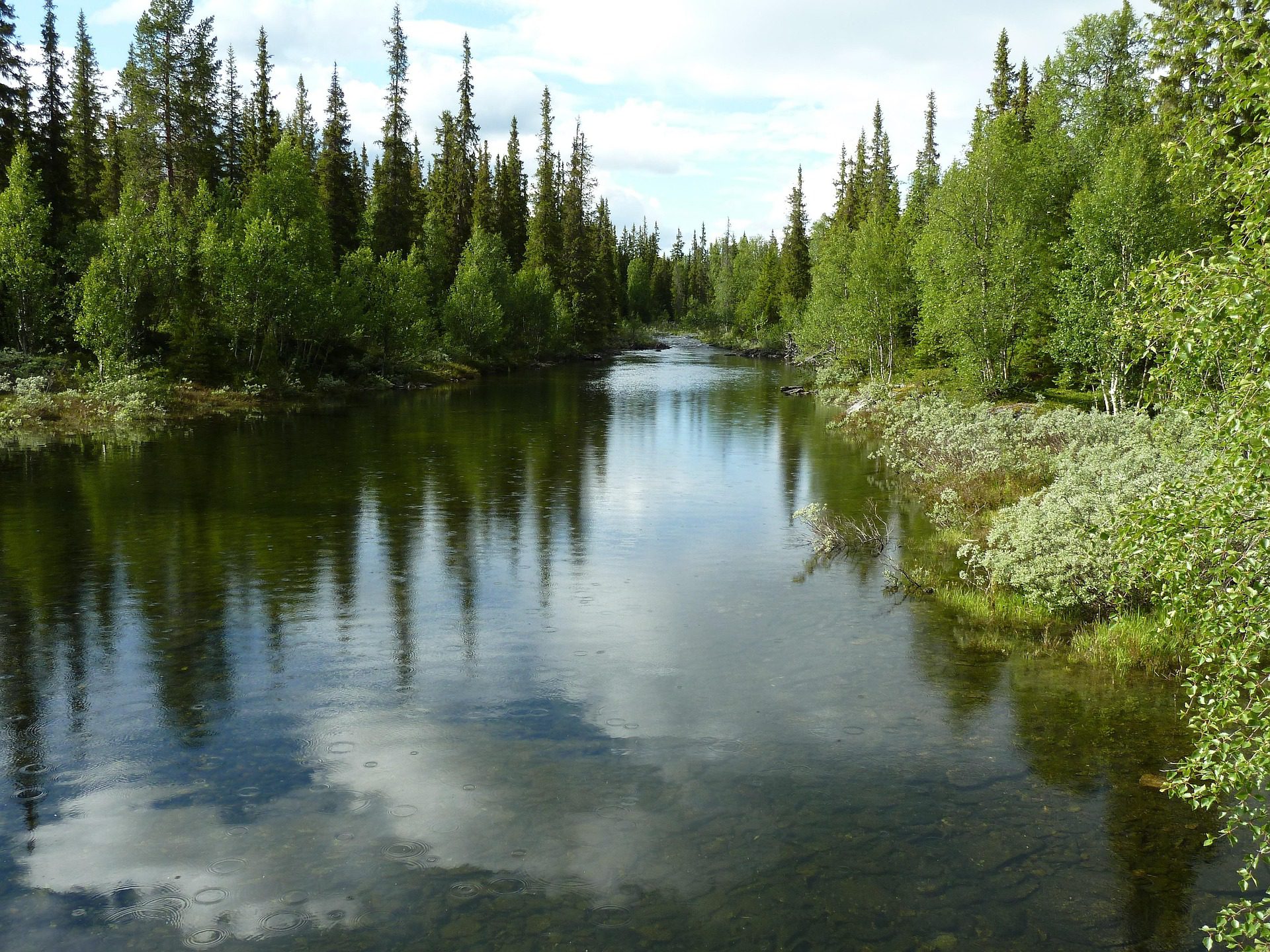
We’ve driven across Sweden more times than we can easily count — in our own car chasing the coast road north of Stockholm, and in rented campervans on longer loops up towards the mountains near Åre. The question we get asked most before anyone else attempts it: what does a Sweden campervan trip actually cost, once you add fuel, camping and everything in between to the daily rental rate?
This is the honest breakdown — not the marketing number, the number after a real week or two on Swedish roads.
A Sweden campervan rental typically runs from roughly €80–110/day for a small camper in shoulder season up to €160–220/day for a family-sized motorhome at the height of summer, before fuel, camping and extras. Sweden is one of the cheaper Nordic countries to do this in: fuel and campsites cost less than Norway, tolls are minimal outside the big cities, and Allemansrätten means wild camping is free and legal almost everywhere. Compare live prices for your dates on CampervanPlanet and use code HUNGRYTRAVELFAMILY20 for €20 off.
Sweden campervan rental costs at a glance
Daily rental rates for a campervan or small motorhome in Sweden vary a lot by size, season and how far ahead you book. As a rough guide: a compact two-berth campervan generally runs €80–110/day outside peak summer, rising to €120–150/day in July. A larger four- to six-berth motorhome typically costs €140–220/day depending on the month, with the top end of that range hitting during the school summer holidays when Swedish families are on the road too.
What we’d actually budget
- Compact campervan, shoulder season (May, September): €80–110/day
- Compact campervan, July–August: €110–150/day
- Family motorhome, shoulder season: €130–170/day
- Family motorhome, July–August: €170–220/day
Rates always vary by rental company and how far ahead you book, so treat these as a planning range rather than a quote — compare live prices for your exact dates on CampervanPlanet before you commit to a route.
Which van type actually suits a Sweden trip
Rental fleets generally split into three shapes: a low-profile campervan (a converted panel van, easiest to park in a town centre and the cheapest option), a coachbuilt motorhome (more space and a fixed double bed, but noticeably wider and less comfortable on narrow forest roads), and a rooftop-tent vehicle, which is really a car with camping gear rather than a true campervan. For Sweden specifically, where a lot of the appeal is small gravel roads to lakes and forest campsites, we’d lean towards the compact end of the range unless you’re travelling as a family of four or more — the savings on fuel and the ease of parking add up over a two-week trip.
What actually changes the price
Four things move the daily rate more than anything else. Van size is the obvious one — a two-berth camper is consistently cheaper than a six-berth motorhome, sometimes by 40–60%. Season is the second: booking outside the Swedish school summer holidays (roughly mid-June to mid-August) can save a meaningful amount even on the same van.
Insurance excess is the one people forget to compare. Standard rental cover often carries a €1,000–2,000 excess; most companies sell an excess-reduction package for €10–25/day, which is usually worth it unless you’re confident in your own travel insurance’s rental-vehicle cover. And one-way fees — picking up in Stockholm and dropping off in, say, Åre or Gothenburg — can add a genuinely large flat fee, sometimes €200–500, so a return-to-origin route is usually the cheaper plan if your itinerary allows it.
One Sweden-specific detail worth knowing: winter tyres are legally required from early December to the end of March (with some flexibility either side if conditions demand it), and rental companies fit them automatically for that period — you don’t choose or pay extra, but it does mean a winter rental will handle differently from a summer one if you’re used to driving your own car. Speed limits on Swedish motorways top out at 110–120 km/h, lower than parts of central Europe, which is worth factoring into how many kilometres you can realistically cover in a day with a loaded motorhome.
Fuel costs in Sweden
Sweden’s fuel prices sit in the middle of the Nordic pack — cheaper than Norway, similar to or slightly above Finland. A motorhome or campervan typically uses more fuel per 100 km than a car because of the weight and shape, so budget accordingly rather than using your own car’s mileage as a guide.
For a two-week loop covering roughly 2,000–2,500 km — Stockholm up the coast, across to the mountains and back — we’d budget somewhere in the region of €300–450 in fuel for a mid-size campervan, more for a larger motorhome. Filling up in larger towns rather than remote fuel stations tends to save a little, though the difference in Sweden is nowhere near as stark as it is in the far north of Norway.
💡 Our campervan tip: prices for the same van vary a lot between rental brands. We compare Sweden campervans across 160+ rental companies on CampervanPlanet — and code HUNGRYTRAVELFAMILY20 takes €20 off.
Camping costs: free wild camping vs paid campsites
This is where Sweden genuinely stands out. Allemansrätten — the right of public access — means you can camp for free on most uncultivated land for a night or two, well away from private gardens, as long as you leave no trace. For a campervan, that often means a quiet forest layby or a spot near a lake rather than a formal pitch, and it’s one of the main reasons a Sweden trip can come in cheaper than a Norway or Iceland equivalent.
When you do want facilities — showers, electricity hookup, a proper kitchen — a serviced campsite typically runs €20–35 per night for a van and two people. Mixing free wild-camping nights with the occasional paid site for a proper shower and laundry run is the approach we’d actually recommend, rather than committing to one or the other for the whole trip.
A practical note on Allemansrätten with a vehicle specifically: the right of access covers where you can pitch a tent or park overnight on foot access land, but it doesn’t override local parking restrictions or give you the right to drive off-road onto that land — you park where a vehicle is legally allowed to stop, then walk in if the actual camp spot is further off the road. Most campervan travellers in Sweden simply pull into a quiet layby, car park by a lake, or forest track turning and stay in the van itself, which keeps things simple and entirely within the rules. If you’d rather have a guaranteed pitch, Sweden has a large network of registered campsites (many affiliated with SCR, the Swedish camping association), which is worth checking in the weeks before a summer trip since popular coastal and lakeside sites do fill up in July.
Food costs on the road
Self-catering is noticeably cheaper than eating out in Sweden, and a campervan makes that easy — most rentals include a small kitchen setup. Supermarket shopping (ICA, Coop or the budget-focused Lidl and Willys where available) for two people cooking most meals typically runs €25–35 per day. Add one café stop or restaurant meal and you’re closer to €45–60 per day; eating out for every meal in a mid-range restaurant can push that to €70–90 per day, more in central Stockholm.
Our honest habit on Nordic road trips generally: cook breakfast and dinner, treat lunch as the one meal we might buy out, and stock up on basics wherever the supermarket is biggest rather than the one nearest the campsite.
Most campervans come with a two-ring gas hob and a small fridge, which is enough for the kind of cooking that actually works on the road — pasta, eggs, tinned fish, a proper Swedish fika of coffee and cinnamon buns rather than anything elaborate. Water and gas top-ups are usually available at larger campsites for a small fee, so it’s rarely something you need to plan around carefully.
Tolls and hidden costs people forget to budget
Sweden is genuinely toll-light compared with Norway. The main charges to know about are Stockholm and Gothenburg’s congestion taxes, which apply automatically if you drive through the city centres at certain times, and are usually billed to the rental company afterwards along with a small admin fee — worth asking about at pickup. The Öresund Bridge toll applies only if you’re crossing into or out of Denmark, and is a fixed per-crossing fee rather than a recurring cost.
Beyond tolls, the costs people most often forget: a rental company’s cleaning fee if you return the van with a dirty interior or empty gas bottle, a shortfall fee for returning with less fuel than you started with, and ferry crossings if your route includes any of Sweden’s larger islands, such as Gotland.
How we’d cut the cost on a Sweden campervan trip
Book outside the Swedish school summer holidays if your schedule allows it — late May, early June or September give you long daylight hours and noticeably lower rates without losing much of the experience. Compare more than one rental company rather than booking the first result, since the same van model can vary meaningfully in price between operators — this is the whole reason we use a comparison site rather than going direct to one brand.
Plan a route that returns to your pickup city to avoid one-way fees, lean on Allemansrätten for several nights a week instead of a paid site every night, and buy groceries in a proper supermarket rather than the small shop attached to a petrol station, where markups are real.
The other change that’s made the biggest difference on our own longer Nordic trips: booking well ahead for the exact dates you want, rather than assuming availability closer to the time. Campervan fleets are genuinely limited compared with regular rental cars, and the best-priced vans in the size you want are usually the first to go for peak summer weeks — comparing prices early, even a few months out, tends to save more than any single packing or route decision.
If you want to compare prices for your own dates, our campervan prices for Sweden link goes straight to CampervanPlanet’s live search, or start with our campervan rental guide for the wider Nordic picture. We’ve also written about the best time to rent a campervan across the border in Finland, and about whether Scandinavia is really as expensive as its reputation, if you’re planning a longer multi-country loop.
Book your Sweden campervan
Compare prices across 160+ campervan and motorhome rental brands, get a free 1GB eSIM with every booking — and €20 off with code HUNGRYTRAVELFAMILY20.
Check prices & availability →Frequently asked questions
How much does a campervan cost per day in Sweden?
Roughly €80–110/day for a compact camper outside peak summer, rising to €110–150/day in July–August. Larger motorhomes run €130–220/day depending on season.
Is Sweden cheaper than Norway for a campervan trip?
Generally yes — fuel, campsites and food all tend to cost less in Sweden than in Norway, and Sweden has far fewer toll roads.
Can you free camp in a campervan in Sweden?
Yes, under Allemansrätten (the right of public access), you can camp for a night or two on most uncultivated land, away from private gardens, as long as you leave no trace.
What’s the cheapest time of year to rent a campervan in Sweden?
Late spring (May) and early autumn (September) are usually noticeably cheaper than July–August, while still offering long daylight hours.
Does HUNGRYTRAVELFAMILY20 work on campervan rentals?
Yes — enter it at checkout on CampervanPlanet for €20 off your Sweden campervan booking.
Are there tolls to budget for in Sweden?
Mainly Stockholm and Gothenburg’s congestion charges if you drive through those city centres, plus the Öresund Bridge toll if you cross into Denmark. Outside that, Sweden has very few tolls compared with Norway.