Copenhagen to the Countryside: A Road Trip Through Denmark’s Hidden Heartland
We drove out of Copenhagen without a detailed plan and found rolling farmland, half-timbered villages, and stretches of coastline that felt like the Denmark nobody shares on Instagram. Here’s the route we’d repeat.
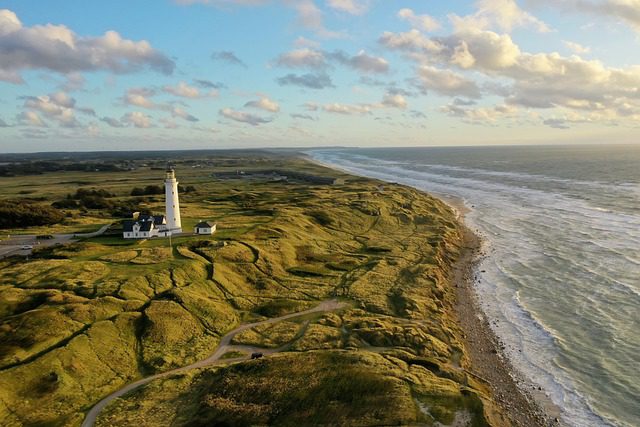
We have driven through Denmark more times than we can easily count — usually as a transit leg between Scandinavia and the rest of Europe. For years, Copenhagen was the point and the countryside was just the road in between. Then one morning we left the motorway and took a small regional road south of the capital, and the whole country changed shape.
Denmark is small. You can cross it in a few hours. But that compactness means you can be deep in farming country fifteen minutes after leaving the capital ring road, standing at a fjord inlet or in a village square that hasn’t changed much since the 1800s. The Copenhagen countryside trip is genuinely one of Europe’s most underrated short drives — and it rewards anyone who leaves the E45 behind.
A Copenhagen to countryside road trip covers rural Zealand, the White Cliffs of Møn, and the south Funen archipelago in 2–4 days. Drive south or west out of the capital and you’ll find half-timbered villages, chalk cliffs, and empty coastal roads within an hour. The country is small, the roads are good, and almost nobody thinks to leave the motorway.
Why leave Copenhagen by car — and when it makes sense
Most visitors treat Copenhagen as the destination and Denmark as the transit. That’s understandable — the city is genuinely excellent. But if you have a car (or can rent one for a day or two), the countryside argument is strong.
What the drive actually gives you
The moment you cross the outer ring road of Greater Copenhagen, the landscape drops to almost sea level, the fields open up, and the light changes. Danish light in summer is something particular: low, golden, and very long. The kind of light that photographers chase and that you just happen to stumble into when you’re driving a back road at 7 pm looking for somewhere to eat.
- Distance from city to countryside: genuinely 20–30 minutes. This is not a day-trip destination, it’s a turn-off-the-motorway destination.
- Best season: May through August gives you the green fields, long evenings, and open coastal swimming spots. September is underrated — harvest colours and almost no crowds.
- Car requirement: technically optional, but public transport peters out quickly once you’re off the main corridors. Rent a car for at least one full day if you can.
- Budget angle: countryside Denmark is noticeably cheaper than Copenhagen. A farmhouse guesthouse or a small-town restaurant will cost roughly half what you’d pay in Nørrebro.
Who this trip suits best
This isn’t a trip for people who want a packed itinerary. It suits couples or small groups who want to move slowly, eat well, and feel like they found a version of Denmark that wasn’t curated for them. We’ve done it twice and each time we wished we’d taken an extra day.
The main route options: south, west, or coast
Denmark’s shape means you have a genuine choice of direction from Copenhagen. Each corridor has its own character. We’ve driven all three and would do any of them again, depending on the mood.
Route south: Zealand to Møn and Falster
This is the one we recommend most often. Head south on the E47 and then peel off onto smaller roads toward Vordingborg, then follow the bridge across to Møn. The island of Møn is the most visually surprising thing in Denmark — white chalk cliffs dropping straight into the Baltic, beech forests hanging over the edge, and a small cluster of villages that feel genuinely old.
- Drive time Copenhagen to Møns Klint: about 1h 40 min without stops.
- Add the Liselund manor gardens just north of the cliffs — free to walk, absolutely beautiful in summer.
- Continue south to Falster for long sandy beaches (Marielyst is the big one) before looping back through Næstved and the medieval church towns of southern Zealand.
Route west: Roskilde, Lejre, and the Isefjord
The west route is shorter and more cultural. Roskilde is 30 minutes from Copenhagen and home to the Viking Ship Museum — genuinely excellent, not a tourist trap — and one of Scandinavia’s best music festivals in late June. Beyond Roskilde, the Isefjord opens up with small marinas and fishing villages. Lejre has an open-air Iron Age settlement that kids love, but it’s compelling even without children.
Route north: the Kattegat Coast and Louisiana
The coastal road north of Copenhagen — the Strandvejen — is the most scenically consistent drive in Denmark. It hugs the coast all the way to Helsingør, passing beach towns and the Louisiana Museum of Modern Art at Humlebæk, which is one of the finest art museums we’ve been to anywhere in Europe. The drive only takes an hour but feels much longer in the best way.
Stops worth actually slowing down for
These are the specific places we’ve pulled over, eaten at, or stayed near on our various Danish drives. Not a curated list from a tourist board — places we went back to or told friends about.
Eight stops that delivered
- Møns Klint: the white chalk cliffs on the south coast of Møn. Walk the steep staircase down to the beach. Early morning or evening is quieter than midday in July.
- Stege (Møn): the small town on the western approach to the island. Good bakery, an old medieval gate, and a completely un-touristy Friday morning market.
- Louisiana Museum of Modern Art (Humlebæk): on the north coast route. The building alone is worth it — it wraps around a cliff and the garden connects to the sea. We spent four hours there.
- Roskilde Cathedral: UNESCO-listed and where Danish monarchs are buried. Small city, easily done in half a day.
- Køge (south Zealand): often skipped, genuinely charming. The best-preserved medieval streetscape in Denmark outside of Ribe. Cobbles, half-timbered houses, small restaurants.
- Ribe (Jutland, if crossing the bridge): the oldest town in Scandinavia. The stork nests on the rooftops really do exist. Absolutely worth a detour if you cross to Jutland.
- Dyrehaven (north of Copenhagen): a royal deer park that most visitors fly straight past on the coast road. Free to walk. Thousands of deer, enormous old oaks, a 17th-century hunting lodge. We went in August and had it almost to ourselves.
- Stevns Klint (south of Køge): less famous than Møn but also a UNESCO World Heritage cliff. White limestone, old church balanced on the eroding edge, almost nobody there. One of those places that makes you feel like you found something.
The routes we actually drive
Road trip notes, honest destination takes, and the occasional mistake — straight from our Arctic home base.
What the Instagram crowds miss
Danish countryside tourism is mostly concentrated on a handful of famous images: Nyhavn at golden hour, the Little Mermaid, Tivoli at night. The moment you leave that orbit, you’re in a place that very few international visitors have found their way to.
- The Faxe Kalkbrud chalk quarry (south Zealand): an active limestone quarry that’s also a fossil site — you can pick up pieces of ancient coral from the piles. It sounds industrial. It’s genuinely fascinating.
- Knudshoved Odde: a thin peninsula on the south coast of Zealand pointing toward Funen. Eight kilometres long, one track, completely untouched. We drove to the end in near silence.
- Præstø and the Præstø Fjord: a tiny fjord town with a famous windmill and a walking path around the fjord that takes about two hours. Nobody told us about this. We stopped for coffee and stayed three hours.
- Svanninge Bakker (Funen): if you cross to Funen via the Great Belt Bridge, this small wooded hill area near Faaborg is the closest Denmark gets to upland forest. It’s not dramatic, but it’s very beautiful.
- Svendborg and the south Funen archipelago: the ferry connections from Svendborg to the smaller islands — Ærø, Drejø, Skarø — are genuinely lovely in summer. Day trips are feasible.
Practical tips for driving Denmark
Denmark has some quirks that are worth knowing before you take the motorway exit.
- Speed limits: 50 km/h in built-up areas, 80 km/h on rural roads, 130 km/h on motorways. Enforcement is automated and effective. There’s no Swedish “flexibility” here.
- Toll roads: the Great Belt Bridge (DKK 255 one-way for cars) and the Øresund Bridge (DKK ~370 one-way) are the main tolled crossings. Everything else is free.
- Parking: in towns, look for blue parking zones — you need a parking disc (gratis at tourist offices and some shops). App-based payment is also available in most towns.
- Fuel: notably cheaper than Norway and Sweden. Fill up in Denmark if you’re continuing north.
- Wild camping: unlike Sweden, Finland, and Norway, Denmark does not have Everyman’s Right in the same form. Camping outside designated sites requires landowner permission. This is actively enforced near beaches.
- Mobile coverage: excellent everywhere except the smaller islands. Download offline maps for Møn — the GPS signal is fine but data can be slow at the Klint.
- The roads: well-maintained, well-signed. Cycling is deeply embedded — expect cyclists on rural roads and always give them plenty of space.
Where to eat and stay on a countryside loop
One of the best things about rural Denmark is how seriously small towns take food. This is not a country where you accept a mediocre meal because there’s nowhere better to go.
- Smørrebrød: the open-faced rye bread lunch is on almost every rural café menu and is genuinely excellent when it’s made well. Order two or three pieces, not one. The shrimp-with-dill version is the baseline.
- Farmhouse guesthouses (bondegård): scattered through rural Zealand and Funen, typically 600–900 DKK per night for a double with breakfast. Booking.com lists most of them.
- Overnight ferries: if you want to include Ærø, the ferry from Svendborg is the experience — take your car over, spend a night, come back the next morning. Around 400 DKK for a car and two passengers.
- Supermarkets for picnics: Netto and Rema 1000 are in almost every small town. Danish bread, cheese, herring, and cold beer at a fjord pullout is a meal that costs almost nothing and is absolutely correct.
Mistakes we made — and what we’d do differently
- Staying too close to Copenhagen on night one. We booked our first night in a town just 30 km out, which was fine but not necessary. Push 60–80 km south or west and you’re in a genuinely different rhythm, not just the urban fringe.
- Skipping Stevns Klint. On our first trip we drove past the turnoff. Stevns deserves a dedicated stop — it’s UNESCO-listed for good reason and we only discovered it on our second loop.
- Planning too many crossing-points. We tried to do Zealand, Funen, and get back via Jutland in three days. It was too much driving for too little staying. The countryside rewards slowing down, not covering distance.
- Underestimating the ferry timing. Danish regional ferries — especially to the smaller islands — have limited timetables. We once missed the last ferry from Ærø and had to stay an extra night. Plan the ferry times first and build the day around those.
- Not buying pastry at the first bakery we saw. Every morning we said we’d stop at the “next one”. There is no next one. Stop at the first one.
- Trusting Google Maps for scenic routing. Google routes you on the motorway. Open Maps.me or use a physical map for the back roads — the regional routes are almost always better than the recommended route.
Frequently asked questions
How long does a Copenhagen to countryside road trip take?
A meaningful loop — taking in Zealand, Møn or Stevns Klint, and looping back through the coast — is well done in 2–3 days. You can do a single day trip to Møn or north Zealand in one long day from Copenhagen, but you’ll feel rushed. Three days is ideal.
Do I need to rent a car, or is public transport enough?
Public transport reaches the major towns but stops there. To get to Møns Klint, down a coastal road, or into the smaller villages, you need a car. Rental is easy at Copenhagen Airport (CPH) or in the city center. One-day rentals are available and affordable compared to most of Europe.
What is the best direction to drive from Copenhagen — south, west, or north?
South, toward Møn and the chalk cliffs, is the route we recommend for first-timers. It gives the most visual payoff and feels the most unlike Copenhagen. The north coast (toward Louisiana and Helsingør) is the most beautiful sustained drive. West toward Roskilde is the easiest half-day option.
Is Denmark expensive outside Copenhagen?
Noticeably cheaper. Restaurant prices in small towns are often 30–40% less than in Copenhagen. Accommodation drops significantly too — a farmhouse guesthouse with breakfast for two costs roughly what a budget hotel room in the capital costs without breakfast.
Can you wild camp in Denmark?
Not freely, unlike Sweden, Finland, and Norway. Denmark does not have the same Everyman’s Right tradition. Camping outside designated sites requires landowner permission. There are official primitive shelters (shelterplads) in some forests — these are bookable and free or very cheap.
Is the Great Belt Bridge worth the toll for a short road trip?
Yes, if you want to include Funen and the southern archipelago. The bridge itself is impressive and the crossing is smooth. The toll for a regular car is around DKK 255 one way. If you’re doing a 2–3 day loop, the Funen detour is worth it for the change of landscape and the ferry access to the small islands.
A final word from Rovaniemi
We live in the Arctic, which means our default frame for countryside is pine forest and reindeer. Denmark is the opposite — manicured farmland, white-washed churches, clay-tiled rooftops, and a sea horizon that sits very low and very close. It took us embarrassingly long to stop treating it as a road to somewhere else.
The best day we’ve had in Denmark was not in Copenhagen. It was parked at a chalk cliff with bread from a bakery two towns back, watching gannets work a strip of sea we’d never heard of before that morning. That kind of day is available to anyone who turns off the E47 and takes a small road south. You just have to actually turn off.
If you’re planning a Nordic summer trip and Denmark is on the route — don’t rush through it. Leave the motorway for at least one full day. The Copenhagen countryside trip is genuinely worth your time.
Joona & Alla
A Finnish-Ukrainian couple living in Rovaniemi, Finland. Joona is a marketing professional in Lapland tourism; Alla is an AI Engineer. Together we’ve visited 25 countries and share honest, locally-grounded travel writing from our home in the Arctic.
Read our full story →