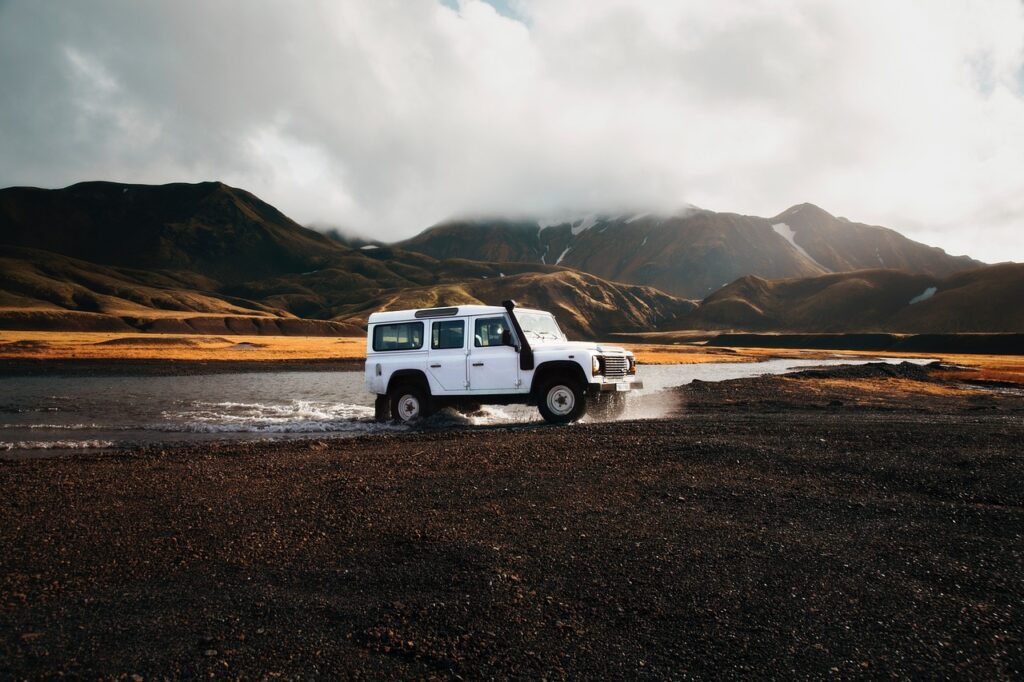
We have driven our own car across Scandinavia more times than we can count — up from Helsinki to the Norwegian border, across to Sweden, down through Denmark, back again with a trailer full of camping gear. We know the ferries that take cars, the border crossings that are just a road sign, and the insurance forms that trip everyone up the first time.
Bringing your own car to Scandinavia is genuinely straightforward once you understand the system. This guide covers everything: the ferry routes, the documents you need, the practical logistics, and the things that caught us off guard the first time we tried it.
You can bring your own car to Scandinavia by ferry from Germany, the UK, the Netherlands, or Poland — or by driving through Denmark if you are already in mainland Europe. EU nationals need only a driving licence, vehicle registration, and insurance valid across all countries visited. Non-EU visitors should check whether their insurance covers Scandinavia and arrange a Green Card if it does not. The practical barriers are much lower than most people expect.
- The main routes to bring your car to Scandinavia
- Documents and insurance you actually need
- Quick-reference checklist before you drive
- Scandinavian toll roads and automatic charges
- Comparing the ferry routes: cost, comfort, and car logistics
- Mistakes we made bringing our car to Norway the first time
- Frequently asked questions
- A final word from Rovaniemi
The main routes to bring your car to Scandinavia
There are essentially two ways to get your own car into Scandinavia: drive through Denmark from mainland Europe, or arrive by ferry. Which one makes sense depends entirely on where you are starting from.
Driving through Denmark — the land route
If you are already in Germany, Poland, the Czech Republic, or anywhere in central Europe, the simplest approach is to drive north through Germany and cross into Denmark at Flensburg. No ferry, no booking — just a road sign and a slightly different speed limit. From Denmark you can continue north across the Øresund Bridge into Sweden (toll applies — around €60–70 for a car, paid electronically), or take one of the Danish ferry routes to Norway or Sweden.
The Øresund Bridge is the quick route into Sweden from Denmark. From southern Sweden it is then a clear highway drive north through Gothenburg into Norway, or east toward Finland via Stockholm. We have driven this route twice and the only thing that slows it down is the bridge toll and occasional summer congestion around Copenhagen.
Ferry routes from the UK, Germany, and the Netherlands
If you are crossing from the UK, the most direct options are:
- Newcastle to Amsterdam (DFDS) — then drive north through Germany into Denmark. About 15 hours on the water, comfortable overnight ferry.
- Newcastle to Stavanger, Bergen, or Haugesund (Fjord Line) — arrives directly in western Norway. Ideal if Norway is your primary destination; eliminates the drive through Germany entirely.
- Hull to Rotterdam (P&O) or Zeebrugge — lands you in Belgium or the Netherlands, from where it is a highway drive north.
From Germany, DFDS runs Kiel to Gothenburg overnight — one of the most popular routes for people driving into Scandinavia from central Europe. From Poland, Stena Line connects Gdańsk to Nynäshamn (south of Stockholm) — a good option if you are starting in Eastern Europe.
Documents and insurance you actually need
This is the area that creates the most confusion, and the good news is that for most European drivers the paperwork is simpler than it looks.
For EU/EEA licence holders
If you hold an EU or EEA driving licence and your car is registered in an EU/EEA country, you need:
- Valid driving licence — your national licence is recognised across all Scandinavian countries.
- Vehicle registration document — the V5C (UK), Fahrzeugschein (Germany), or equivalent. Carry the original, not a copy.
- Proof of insurance — standard EU car insurance already includes minimum third-party coverage in Norway, Sweden, Finland, Denmark, and Iceland. Check the certificate that comes with your policy to confirm which countries are listed.
- Green Card (optional but recommended) — not legally required within the EU/EEA, but Norwegian and Swedish police stops do occasionally ask for it. Your insurer can issue one for free — it takes about five minutes online and fits in the glovebox.
For non-EU visitors (UK post-Brexit, US, Canada, Australia)
UK drivers post-Brexit should check with their insurer before travelling whether the policy covers every country on the route, because Green Card rules have changed and differ by country. If you need one, most insurers will issue it at no charge with a few days notice. US, Canadian, and Australian visitors bringing a car by ferry need to ensure their insurance policy explicitly covers the Scandinavian countries on their itinerary. Most international travel insurance policies do not cover driving abroad; a short-term European motor insurance policy is usually the practical solution.
Quick-reference checklist before you drive
Print this, keep it in your glovebox, and tick it off before your first Scandinavian border crossing.
- Driving licence — valid, not expired, original (not a photo on your phone).
- Vehicle registration document — original. If borrowing or leasing the car, carry a letter of authorisation from the owner or leasing company.
- Proof of insurance / Green Card — confirm it lists Norway, Sweden, Finland, Denmark, and Iceland as applicable. Get the Green Card from your insurer if needed.
- Passport or national ID — borders inside the Schengen area are typically open, and Norway and Iceland are both in Schengen even though they are outside the EU, but temporary checks do happen, so always carry your passport or national ID.
- Reflective vest — legally required in your car in Norway. Must be accessible without opening the boot — keep it in the cabin.
- Warning triangle — required in all Scandinavian countries. Most cars come with one; if yours does not, buy one before you go.
- Headlamp beam deflectors — if your car has right-hand drive headlights, you need beam deflector stickers to avoid dazzling oncoming traffic. Available at motorway service stations.
- Winter tyres (October–April) — in Finland and Norway, winter tyres are either legally required or strongly enforced during winter months. Your own car may not have them fitted.
Drive with us through the Arctic
Practical guides, honest costs, and road trip stories from 25 countries — written from Lapland.
Scandinavian toll roads and automatic charges
This surprises almost every first-time driver in Scandinavia. Norway in particular has an extensive, fully automated toll system — and if you do not register your car in advance, the bills follow you home weeks later, sometimes with added collection fees.
- Norway AutoPASS: all major Norwegian cities have toll rings (Oslo, Bergen, Trondheim, Stavanger), and individual roads, bridges, and tunnels are also charged. Foreign-registered cars without an AutoPASS transponder are charged via number plate recognition. Register your plate with AutoPASS, EasyPark, or Fremtind before you enter Norway. If you do not, Ferde (Norway’s toll collection authority) will invoice your home address — and if it goes unpaid, a debt collection fee is added. Register in advance.
- Sweden: Stockholm and Gothenburg have congestion charges, and the Øresund Bridge has an infrastructure toll. These are plate-recognition based. You can pay online within a few days of crossing.
- Denmark: no national road tolls except the Øresund Bridge (Denmark side) and the Storebælt Bridge connecting the Danish mainland to Funen. Both are simple to pay at booths or online.
- Finland: no road tolls at all. Finland is completely toll-free, which is one of the things we genuinely appreciate about home.
- Faroe Islands: the Eysturoy and Vágar subsea tunnel connections charge a toll, payable in the tunnel booth or via the Faroe Islands Road Administration website. Not expensive, but easy to miss if you do not know about them.
Comparing the ferry routes: cost, comfort, and car logistics
The ferry is usually the most complex part of bringing your own car to Scandinavia, and the one where people lose the most time to poor planning. Here is how the main options compare.
- Kiel–Gothenburg (DFDS or Stena Line) — overnight, ~14 hours: the most-used route for people driving from Germany or central Europe. An inside cabin for two plus a standard car runs roughly €180–280 return depending on season. Comfortable modern ships, restaurant and bar on board. Best for: anyone starting in Germany, Poland, or central Europe.
- Newcastle–Bergen/Stavanger (Fjord Line) — ~20–26 hours: the direct UK-to-Norway route. Prices for car plus two passengers start around £200–350 one-way. Good cabin quality, efficient car deck loading. Best for: UK travellers whose primary destination is western Norway.
- Gdańsk–Nynäshamn (Stena Line) — ~18 hours: connects Poland to Sweden south of Stockholm. Popular with Polish and Baltic travellers. Reasonable prices, reliable service. Best for: anyone starting in eastern Europe or the Baltic states.
- Travemünde–Helsinki (Finnlines) — ~29 hours: connects northern Germany directly to Finland. You arrive in Helsinki having slept two nights on board. Best for: families, anyone with a lot of luggage, anyone wanting to arrive in Finland directly.
- Hirtshals–Tórshavn (Smyril Line) — ~35–40 hours: for the North Atlantic extension to the Faroe Islands and onward to Iceland. Car space is limited — book early. Conditions can be rough. Best for: adventure drivers wanting to reach the Faroes or Iceland with their own vehicle.
Mistakes we made bringing our car to Norway the first time
- Not registering for AutoPASS before the trip. We drove through three Norwegian toll zones in our first two hours without realising, and spent twenty minutes on the roadside trying to pay retroactively. Register online before you enter Norway — it takes ten minutes and saves a lot of confusion.
- Leaving the reflective vest in the boot. In Norway the vest must be reachable from inside the cabin — you are supposed to put it on before you exit the car in a breakdown. A police officer mentioned this to us at a rest stop. Easy fix: keep it in the door pocket.
- Forgetting the letter of authorisation for a borrowed car. We borrowed a relative’s car for one trip and forgot the written authorisation confirming the owner permitted travel in Scandinavia. Finnish and Norwegian border guards can and do ask for this if your surname does not match the registration. Carry it.
- Arriving at the ferry terminal too late. Car ferries have strict check-in cut-offs — typically 45–60 minutes before sailing. We arrived at Kiel with 40 minutes to spare once and were waved through, but it was not comfortable. Allow 90 minutes in peak season.
- Not bringing winter tyres in October. We drove into Norway in late October on summer tyres. The roads were fine until they suddenly were not — an overnight snowfall had left a mountain pass icy. In Finland and Norway, winter tyres are mandatory from certain dates. Check the regulations for each country on your route.
- Underestimating Norwegian fuel costs. Fuel in Norway is among the most expensive in Europe. We budgeted based on Finnish prices and ran short on the first long leg. Fill the tank in Finland or Sweden before crossing into Norway, and top up whenever you are below half.
Frequently asked questions
Can I bring a non-EU registered car to Scandinavia?
Yes — there are no restrictions on bringing a foreign-registered car to Norway, Sweden, Finland, or Denmark for tourism. You need your registration document, insurance covering the countries you are visiting, and a driving licence valid in your home country. Check with your insurer whether the policy covers every country on your route, including Norway and Iceland, and ask for a Green Card if one is needed.
Do I need special insurance to drive in Norway?
Norway is not in the EU but is in the EEA. Standard EU car insurance policies include minimum third-party coverage in Norway automatically. UK drivers post-Brexit should confirm with their insurer whether a Green Card is needed. US, Canadian, or Australian visitors need to verify their policy explicitly covers Norway — many standard international policies do not, and a short-term European motor policy is the usual solution.
How much does it cost to bring a car on the ferry to Scandinavia?
It varies by route and season. Kiel–Gothenburg (car plus 2 people, inside cabin) costs roughly €200–350 return. Newcastle–Bergen starts around £220–380 one-way. Gdańsk–Nynäshamn starts lower, around €120–200 one-way. Summer and holiday periods cost more; booking 6–8 weeks in advance typically secures the best prices. Add fuel, tolls, and food for a realistic total budget.
Is it cheaper to bring my own car or rent one in Scandinavia?
For trips of a week or longer, bringing your own car is usually cheaper once you factor in the ferry cost spread over the full trip versus daily rental rates in Scandinavia, which are high (€60–120/day in Norway for a basic car). For short trips of 3–4 days, renting locally can make more sense. Your own car also means no return drop-off constraints and no mileage cap.
Do I need to pay Norwegian tolls if I do not have an AutoPASS?
Yes. Norway uses automatic number plate recognition at all toll stations. If your plate is not registered, Ferde (the toll collection authority) will issue an invoice to your home address based on your registration. The invoice usually arrives within 3–4 weeks. If it goes unpaid, debt collection fees are added. Register with AutoPASS or a third-party service before you enter Norway.
Can I wild camp with my car in Scandinavia?
In Finland, Norway, and Sweden, Everyman’s Right allows overnight stays in nature at no cost — including sleeping in your car in most locations. Distance rules apply (typically 150–200 metres from the nearest house) and you must not damage land or property. Denmark has stricter rules and does not share the same tradition. Designated campsites are plentiful across all four countries.
A final word from Rovaniemi
We are genuinely biased toward bringing your own car to Scandinavia. There is something completely different about arriving somewhere in the vehicle you have been living in for days — the gear is right, the seat is adjusted, you know exactly where the emergency vest is. The journey becomes part of the trip rather than a gap between trips.
The logistics that put people off — the ferry booking, the Norwegian toll registration, the insurance paperwork — are all solvable in an afternoon of research. The reflective vest in the glovebox, the AutoPASS registration, the Green Card from your insurer. None of it is complicated once you know what you are looking for.
From Rovaniemi we have driven south through Finland into Estonia, west into Norway, back down through Sweden, and across Denmark. Every one of those journeys started with the car packed and the ferry booked, and every one of them was better for being in our own vehicle. We hope yours is too.
Joona & Alla
A Finnish-Ukrainian couple living on the Arctic Circle. Joona leads marketing for Lapland tourism; Alla is an AI Engineer and content creator. We have driven our own car through every country in this guide — and we still think the ferry loading ramp is one of travel’s best moments.
Read our full story →