Traveling From Finland to Sweden: All the Options, Honestly Compared
We live in Rovaniemi and we’ve crossed into Sweden more times than we can count — by car, overnight train, ferry, and plane. Here’s every real way to make the trip, with costs and what we’d actually book.
We’ve done the Finland-to-Sweden trip in every configuration that makes sense — and a few that don’t. A road trip through Haparanda when we were moving furniture north. The overnight ferry from Helsinki to Stockholm for a long weekend. A flight when we had a wedding to catch in Gothenburg. A night train from Rovaniemi all the way down to Stockholm via Oulu and Sundsvall.
The “best” way to travel from Finland to Sweden completely depends on where in Finland you’re starting and what part of Sweden you’re heading to. There’s no one-size answer, which is exactly why we wrote this — every resource we found online gave you two options and called it a day. We’ll give you all of them, with honest trade-offs.
There are five real ways to travel from Finland to Sweden: drive across the border at Tornio–Haparanda, take the Helsinki–Stockholm overnight ferry, fly between cities, take the night train from northern Finland into Sweden, or use the seasonal Turku–Stockholm ferry. Which option makes sense depends almost entirely on your starting point and destination — not on price alone.
Driving across the border: Tornio and Haparanda
The Finnish town of Tornio and the Swedish town of Haparanda sit on opposite banks of the Torne River, connected by a bridge you can cross in about 20 seconds. It’s one of the most frictionless border crossings in Europe — no passport control, no customs stop, no signal that you’ve changed countries except a sign and a shift in speed limit units. This is by far the most common way Finns cross into Sweden, especially anyone coming from the north.
When driving makes sense
If you’re starting from anywhere in Finnish Lapland — Rovaniemi, Kemi, Oulu — the drive to Tornio is straightforward. From Rovaniemi it’s about 130 km south on the E75, roughly 90 minutes. You cross into Haparanda and you’re immediately in Sweden. From there you can continue south through Luleå, Sundsvall, Uppsala, and down to Stockholm — a full day of driving, but a very scenic one.
The border crossing itself is so seamless that a lot of people don’t even notice the moment they’ve left Finland. Both currencies work in both towns. Some shops in Haparanda price in Finnish euros because their customer base is Finnish. It’s an odd, pleasant twin-city arrangement that rewards exploring on foot.
What to know before you cross
- Sweden uses kilometers per hour — same as Finland, so no conversion needed — but the speed limits change immediately after the border sign.
- Sweden drives on the right — same as Finland, so no adjustment there either.
- Fuel is priced differently and is often cheaper on the Swedish side, especially in Haparanda. Locals cross specifically to fill up.
- Time zone: Sweden is UTC+1 (or UTC+2 in summer), one hour behind Finland. You gain an hour driving west.
- No toll roads on the northern route through Sweden. Stockholm’s congestion charge only applies within the city.
The Helsinki–Stockholm overnight ferry
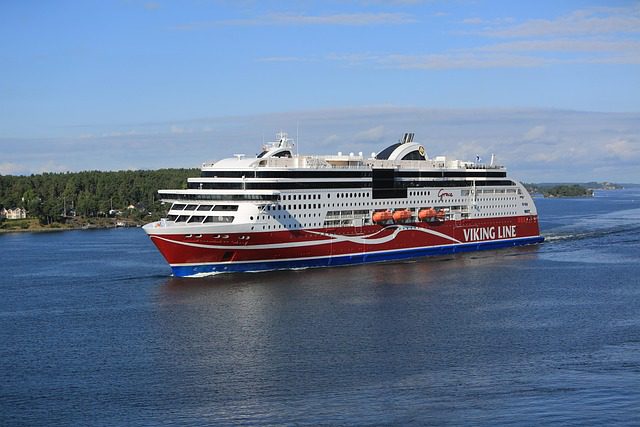
If you’re based in southern Finland and Stockholm is your destination, the overnight ferry is genuinely good value and an experience in itself. Two main operators run this route: Viking Line and Tallink Silja. The crossing takes about 16–17 hours, departing in the late afternoon and arriving the following morning — so you effectively travel for free in terms of time, because you’re sleeping.
What the ferry is actually like
These aren’t just transport ships. They’re floating hotels with multiple restaurants, a spa, live music, and a tax-free shop. A cabin is standard — booking without one is technically possible but not recommended. Entry-level cabins are basic but clean; the upper-deck sea-view cabins are genuinely lovely for a romantic trip. Prices range from around €50–80 per person for a basic cabin in low season up to €150+ in summer for the nicer rooms.
We’ve done this crossing three times. The first time it felt like an event; by the third it felt like a very comfortable commute. The breakfast buffet is good, the sauna is available to all passengers, and Stockholm’s harbour arrival in the morning is one of those travel moments worth waking up early for.
Practical details
- Departure ports: Helsinki (South Harbour) and Turku (Turku ferry terminal) — Turku sailings connect to Stockholm via the Åland Islands.
- Journey time: Helsinki–Stockholm roughly 16–17 hrs; Turku–Stockholm roughly 11–12 hrs via Mariehamn.
- Booking: Viking Line and Tallink Silja both have English-language booking online. Book weeks ahead in summer or for weekend crossings.
- Car transport: you can bring your car on the ferry. It adds significant cost but means you arrive in Sweden with wheels.
Flying from Finland to Sweden
Flying is rarely the most efficient option for Finland-to-Sweden travel, but it’s sometimes the right call — particularly if you need to go from Rovaniemi or another Finnish city to Gothenburg, Malmö, or anywhere that isn’t Stockholm. Direct flights from Helsinki to Stockholm (Arlanda) take about an hour. Finnair, SAS, and Norwegian all fly the route.
When flying wins
- Long-distance pairs: Rovaniemi to Gothenburg, for example, is genuinely painful to do overland in a weekend. A flight via Helsinki makes the whole thing feasible.
- Time-critical trips: if you have a wedding, conference, or flight connection in Sweden and need to be somewhere specific by a specific time, flying removes weather and schedule uncertainty.
- Budget airline deals: occasionally Ryanair or Wizz Air has surprisingly cheap routes from Tampere or Turku to Swedish cities. These are worth checking if you’re flexible.
The honest trade-offs
- Airport overhead: factor in travel to/from airports on both ends. Helsinki-Vantaa to Stockholm-Arlanda, then into central Stockholm — you’ve easily added 3–4 hours before and after your 1-hour flight.
- Carbon footprint: we try to fly only when the alternatives genuinely don’t work. For Helsinki–Stockholm, the ferry is a much easier conscience choice.
- Cost: budget routes can be as cheap as €30 one way, but name-carrier fares with luggage and city transfers can easily reach €200+ per person.
Night train from northern Finland into Sweden
This one is more niche, but we want to include it because it’s our personal favourite for the specific situation of travelling from Lapland towards central or southern Sweden. VR (Finnish railways) runs overnight trains from Rovaniemi and Kemijärvi south to Oulu, Tampere, and Helsinki. The connection into Sweden happens via a change in either Helsinki (then ferry) or via the rail–ferry combination through Turku.
There’s also a less-marketed option: the train from Rovaniemi–Oulu continues into Sweden if you connect at the right city. Some travellers piece together a Rovaniemi → Oulu → Haparanda (bus connection) → Luleå (Swedish rail) route, then onward by SJ (Swedish national rail) south. It’s slow by modern standards — you’re looking at 12–18 hours depending on connections — but the landscape views through northern Sweden in summer light are extraordinary, and you arrive without having spent a night in a hotel.
- VR overnight trains: book at vr.fi — the Rovaniemi to Helsinki night train has sleeping compartments and couchettes, both clean and reliable.
- SJ Sweden: Swedish trains connect Luleå, Sundsvall, and Uppsala south to Stockholm. Book at sj.se or via Rail Europe for cross-border convenience.
- The Oulu–Haparanda bus: not glamorous, but it exists and fills the gap that rail doesn’t cover directly across the border.
Nordic travel, honest and unhurried
We write about the routes we actually take — cross-border drives, ferry nights, and slow trains through the Arctic. Once a month, straight from Finnish Lapland.
All your options at a glance
Here’s the honest side-by-side for Finland to Sweden travel. Prices are approximate and change seasonally — always check current rates before booking.
- Drive via Tornio–Haparanda: Best for — northern Finland starts; Cost — fuel only (€30–80 depending on distance); Time — from Rovaniemi to Stockholm ~10 hrs driving; Booking — none needed.
- Helsinki–Stockholm overnight ferry: Best for — southern Finland to Stockholm; Cost — €50–150+ per person with cabin; Time — 16–17 hrs (overnight, no wasted day); Booking — vikingline.com or tallinksilja.com.
- Turku–Stockholm ferry: Best for — mid-south Finland, shorter crossing; Cost — €40–120+ per person; Time — 11–12 hrs via Åland; Booking — same operators as above.
- Fly Helsinki–Stockholm: Best for — speed when time is critical; Cost — €30–200+ per person; Time — 1 hr flight + airport transfers; Booking — finnair.com, sas.com, norwegian.com.
- Night train + bus/ferry connection: Best for — scenic travel, Lapland starts, budget with time; Cost — €40–100 depending on class; Time — 12–18 hrs; Booking — vr.fi + sj.se.
- Bus via Tornio (Onnibus/Flixbus): Best for — very tight budget; Cost — from €15–30; Time — slow, multiple changes; Booking — onnibus.com or flixbus.com.
- Rental car + drive: Best for — flexibility, families with luggage; Cost — rental + fuel; Time — depends on route; Booking — Europcar, Hertz, local operators.
- Coach to Haparanda, Swedish bus south: Best for — budget travellers without a car, starting from Oulu/Kemi area; Cost — €20–50; Time — 14–20 hrs; Booking — onnibus.com + länstrafiken.se.
Tips that make the trip easier
- Book the ferry cabin early. Summer cabins on the Helsinki–Stockholm route sell out weeks in advance. The cheap inside cabins go first. Book as soon as you know your dates.
- Fill up on petrol in Haparanda. Fuel is often 5–10% cheaper on the Swedish side. It’s a small saving, but if you’re doing a long drive south through Sweden it adds up.
- The Åland Islands are a bonus on the Turku route. The ferry stops in Mariehamn for a couple of hours on some sailings. You can step off and walk around — it’s genuinely worth it.
- Sweden’s congestion charge applies on arrival in Stockholm. If you arrive by car via the ferry or drive south from the border, you’ll pass through congestion zones. The charge is automatic and you can pay it retroactively online — but if you return the rental car before paying, check whether the agency will handle it or charge you a fat admin fee.
- Both SIM cards work across the border. Finnish and Swedish SIM cards operate on EU roaming rules — no extra charges. Data, calls, and texts work seamlessly the moment you cross.
- The border crossing at Tornio is 24/7. There’s no overnight closure, no queuing checkpoint, nothing. You can cross at 3 am with no drama.
Common mistakes on this trip
- Not accounting for the time zone difference. Sweden is one hour behind Finland. It sounds trivial until you miss a ferry check-in time because your phone switched automatically but you’d mentally calculated on Finnish time.
- Assuming the ferry is just transport. People who book the cheapest possible cabin, eat nothing on board, and sleep through the crossing are technically fine — but they miss what makes the ferry special. Budget at least one proper dinner on the ship.
- Flying Helsinki–Stockholm and not considering the ferry. The flight takes an hour. The ferry takes overnight. But by the time you factor in airport check-in, transfers, and arriving in Stockholm at 10 pm vs stepping off a ship at 10 am fresh, the ferry often wins.
- Driving the full Helsinki–Stockholm distance in one go. It’s doable but it’s roughly 10 hours of motorway, and Sweden’s speed limits are strictly enforced. Break it in Uppsala or Gävle at minimum.
- Not checking the Onnibus or Flixbus schedule. If budget is the real constraint, the coach options are legitimately usable and have improved a lot. They’re just slow.
- Forgetting that Haparanda and Tornio are essentially the same town. Don’t book a hotel in “Haparanda” if your plan was to cross in “Tornio” — you’re already there. The IKEA in Haparanda serves customers from both countries simultaneously and is weirdly a local attraction.
Frequently asked questions
Do you need a passport to travel from Finland to Sweden?
No. Both Finland and Sweden are part of the Schengen Area, so EU and EEA citizens can cross with just an ID card. Non-EU citizens who already have a valid Schengen visa or residence permit can also cross freely. You won’t encounter passport control at the Tornio–Haparanda border or on the ferry.
What is the fastest way to travel from Finland to Sweden?
A direct flight from Helsinki to Stockholm Arlanda takes about an hour in the air. However, once you add airport transfers on both ends, total door-to-door time is often 5–6 hours. For central Helsinki to central Stockholm, the overnight ferry is competitive in real travel time because you’re asleep during the crossing.
How long does the drive from Rovaniemi to Stockholm take?
Roughly 9–11 hours of driving, depending on your route. The most direct way is south through Kemi to Tornio, across the border at Haparanda, then south through Luleå and Sundsvall to Uppsala and Stockholm. We recommend stopping overnight somewhere in mid-Sweden rather than doing it in one stretch.
Is the overnight ferry from Helsinki to Stockholm worth it?
Yes, if you’re starting from Helsinki or the south coast of Finland and Stockholm is your destination. You save a night’s hotel cost, arrive in the morning with the city in front of you, and the crossing itself — with a ship sauna, restaurants, and sea views — is genuinely enjoyable. We’d choose it over flying on most southern Finland to Stockholm trips.
Can you take a bus from Finland to Sweden?
Yes. Onnibus runs routes from Finnish cities to Tornio, and from there you can connect to Swedish regional buses via Haparanda into Luleå and beyond. Flixbus also has some cross-border routes. It’s slow but the cheapest option available if you don’t have a car and the ferry doesn’t fit your budget.
What currency do you use in Sweden?
Sweden uses the Swedish krona (SEK), not the euro. You’ll need to convert or use a card that doesn’t charge foreign transaction fees. In Haparanda specifically, many shops accept euros, but further into Sweden you’ll need SEK or a contactless card. We use a Revolut card for Nordic travel — no conversion fees and it auto-switches currency.
A final word from Rovaniemi
Living in Finnish Lapland means Sweden is practically next door — mentally, culturally, geographically. The Torne River that forms the border is narrower than some urban streets we’ve seen. We cross it for an afternoon without thinking twice, the same way you might drive to the next town over.
For longer trips, the overnight ferry is our favourite version of the crossing. There’s something right about arriving in Stockholm’s harbour at 9 am, coffee in hand, watching the city come into focus across the water. But the drive south through northern Sweden — past the forests and rivers of Norrbotten, the birch-lined highway through Västernorrland — has its own rewards, especially in the long light of a Nordic summer.
Whatever route you pick, the crossing is easy. Finland and Sweden share a border, a mentality, and a mutual assumption that the other country is basically a comfortable extension of home. We hope this guide helps you choose the version that fits your trip — and we’d genuinely love to hear which way you end up going.
Joona & Alla
A Finnish-Ukrainian couple living in Rovaniemi, Finland. Joona is a marketing professional in Lapland tourism; Alla is an AI Engineer. Together we’ve visited 21 countries and share honest, locally-grounded travel writing from our home in the Arctic.
Read our full story →