The Best EV Charging Networks in Scandinavia for Road Trippers 2026
We drove electric through Norway, Sweden, and Finland and tested every major network. Here is the honest breakdown of which chargers to rely on, which apps to download, and how to plan a Scandinavian EV road trip without range anxiety.
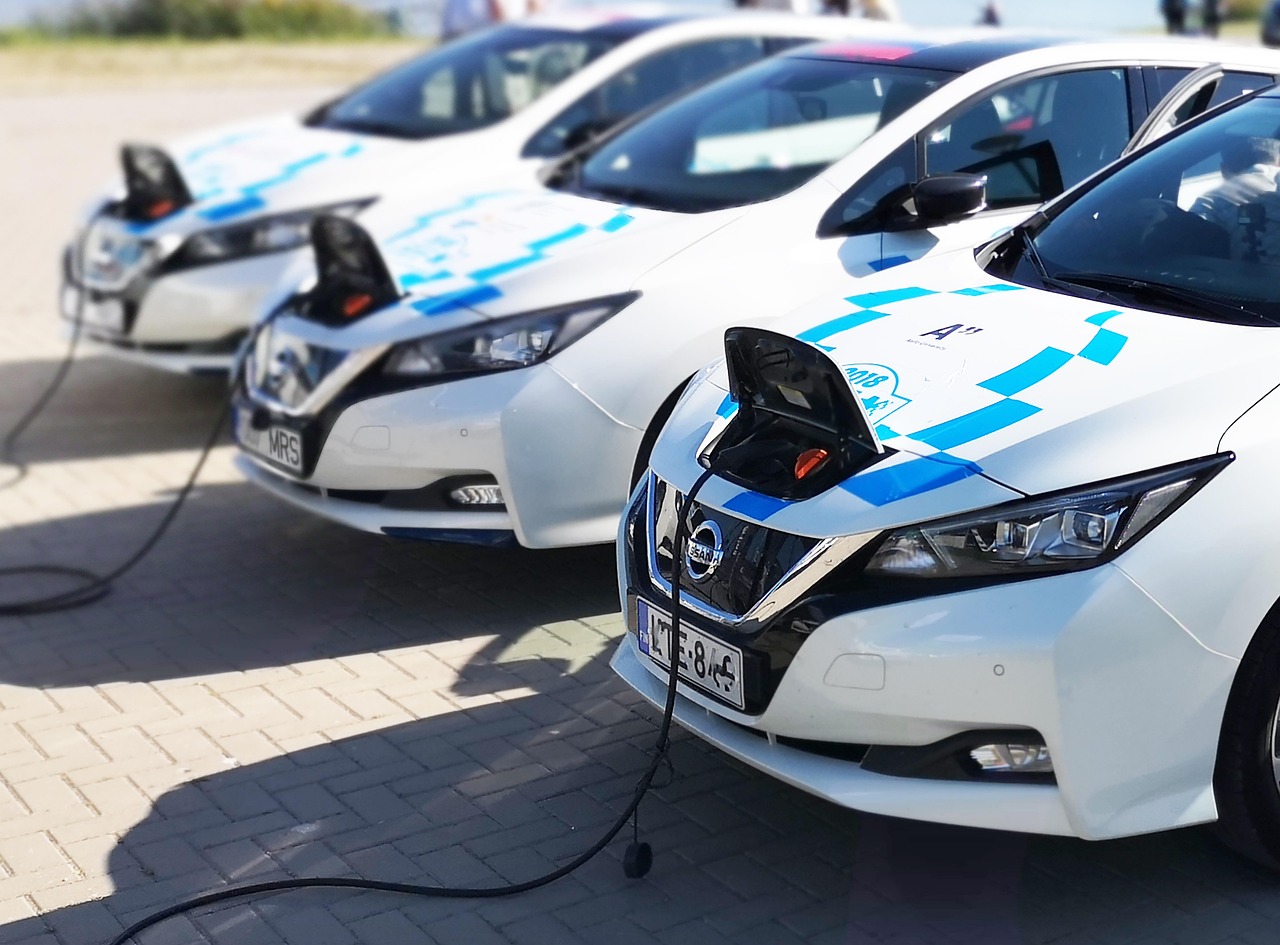
We live in Rovaniemi. Our next-door neighbor is Norway. And over the past few years we have taken four road trips across Scandinavia in electric vehicles — first renting, then borrowing a friend’s Tesla, most recently driving our own car across the Norway–Finland border in January when temperatures were sitting at −28 °C. EV charging in Scandinavia is genuinely world-class in some places and genuinely frustrating in others, sometimes on the same stretch of road. This guide is what we wish existed before our first trip.
The EV charging networks in Scandinavia are fragmented across six or seven competing providers, the apps are inconsistent, and the map apps will happily route you through a closed charger at 2% battery. We’ve learned a few things the hard way.
Ionity, Recharge (formerly Fortum), and APCOA/Circle K are the three networks that cover most of Scandinavia reliably. Download the apps for all three before you leave. Norway has the densest fast-charging infrastructure in Europe; Sweden is excellent on main routes; Finland is solid in the south but thins out considerably north of Oulu. Budget 15–25 extra minutes per 250–350 km leg for charging, and never drive past a 150 kW+ charger with under 20% battery if the next one is more than 100 km away.
Why EV charging in Scandinavia is different from the rest of Europe
Scandinavia adopted EVs faster than anywhere else on Earth. Norway leads the world with over 90% of new car sales being electric. Finland and Sweden aren’t far behind on infrastructure density. What this means for road trippers is that the charging ecosystem is mature — but also complicated, because that maturity happened across competing private networks before any single standard took hold.
What makes it unique
In most of Southern Europe, you arrive at a charger and tap your card. In Scandinavia, the infrastructure is denser and faster, but the payment ecosystem is more fragmented. Many of the best 150–350 kW chargers require either a network app or a subscription card. Walk-up contactless payment is increasingly common but still not universal — particularly at older Recharge and Circle K poles from 2019–2021.
- Speed is genuinely impressive: Norway has the highest density of 150+ kW CCS chargers in Europe. A 20-minute stop can get you 150–200 km of range in most modern EVs.
- Cold weather is a real variable: In Finnish Lapland in winter, range drops 25–40% compared to manufacturer estimates. This changes your charging strategy significantly.
- Rural gaps exist: Northern Finland north of Rovaniemi, the Swedish mountains between Östersund and the Norwegian border, and parts of the Norwegian coast between Bergen and Ålesund all have notable gaps.
- Most chargers work fine — but you need a backup plan: Charger reliability varies. In Norway, APCOA/Circle K has had reliability issues; in Finland, older Recharge units need an app to start.
The six EV charging networks you actually need to know
There are dozens of charging operators in Scandinavia, but six cover the vast majority of the routes road trippers care about. We’ve used all of them in the field.
Ionity — the gold standard for motorway speed
Ionity is the pan-European consortium backed by BMW, Mercedes, Ford, VW Group, and Hyundai. Their chargers are the most consistent 350 kW CCS units in Scandinavia, placed at highway service areas, and they all accept contactless card payment without an app. Pricing is higher without a membership (roughly €0.69–0.79/kWh in 2026 walk-up rates across Scandinavia) but they are reliably fast and rarely broken. If you have a car that accepts 150+ kW, prioritise Ionity when you can.
Recharge (formerly Fortum Charge & Drive) — the Nordic backbone
Recharge has the densest overall network across Finland, Sweden, and Norway — particularly in city centres and smaller towns where Ionity hasn’t placed motorway hubs. Most modern Recharge units accept contactless payment; older ones (look for the blue Fortum-branded poles) need the Recharge app. The app is free and worth having even if you only use it as a backup. Speed maxes out at 150 kW at their newest locations.
APCOA (Circle K) — the petrol-station fallback
Circle K petrol stations across all three countries have added EV bays, and the network is enormous. Speeds vary wildly — some are 22 kW AC (fine for overnight but not a road trip stop), others are 150 kW DC. The payment interface is the friendliest of all the networks: tap your card, charge, go. Reliability is inconsistent, particularly in Finland. Always check PlugShare reviews before relying on one that’s off your main route.
Tesla Supercharger — essential if you drive a Tesla, useful for everyone now
Tesla opened its Supercharger network to non-Tesla vehicles in Scandinavia in 2023, and the coverage is excellent. Norway has over 80 Supercharger locations. In Finland there are 25+ and growing. If you drive a CCS-compatible non-Tesla vehicle, download the Tesla app and set up payment — the network is worth having as an option. V3 Superchargers at 250 kW are becoming common and are generally the most reliable fast chargers we’ve used.
Mer (formerly Vattenfall InCharge) — strong in Sweden
Mer is the dominant network in Sweden for highway-adjacent locations and is particularly strong on the E4 from Stockholm to the north. Payment is app-based but contactless card payment was added to most locations in 2024–2025. Speed goes up to 150 kW. If you’re doing a Sweden-heavy route, Mer is worth having in your rotation.
PlugShare — the meta-app, not a network
PlugShare is not a charging network. It’s the crowd-sourced review aggregator that tells you whether the charger you’re about to rely on actually worked for someone this week. We open PlugShare on every charging stop. One star from three users saying “broken” in the last 48 hours sends us to the next option. Download it, use it religiously.
Network-by-network cheat sheet for Scandinavian road trippers
Here’s what to download and what to expect before you cross any border. This is the list we share with friends before their first Scandinavian EV road trip.
- Ionity app or contactless card: the most reliable motorway fast charging across all three countries. No pre-registration needed for card payment. Highest walk-up price but worth it when you’re low and in a hurry.
- Recharge app (free): essential for Finland, very useful in Norway and Sweden. Covers the dense mid-tier network. Activates older Fortum-branded poles that won’t start without the app.
- Tesla app with payment set up: even if you don’t drive a Tesla. V3 Superchargers are the most reliable fast chargers we have used in Scandinavia. Worth having as a primary option if your car accepts CCS.
- Mer app or contactless card: for Sweden-heavy routes, especially north of Stockholm on the E4.
- PlugShare (always open): check every charger before you pull off the highway. Five minutes of review-reading has saved us from a 40-minute detour more than once.
- A-to-B EV route planner: ABRP (A Better Route Planner) is the best third-party trip planner for EVs in Scandinavia. Set your car’s real-world efficiency (not manufacturer specs) and it recalculates when you’re behind schedule or the temperature drops.
- Local ANWB or AA membership or equivalent: we carry Finnish Autolitto coverage. Rescue in Northern Finland or Norwegian mountains takes time; roadside assistance membership is cheap insurance.
- Circle K (APCOA) app: useful in Norway where Circle K is ubiquitous. Skip in Finland unless you’re stuck — reliability there is patchy.
Nordic travel in your inbox
Road trip routes, honest gear reviews, and what it’s actually like to live at the Arctic Circle — from us, monthly.
Norway vs Sweden vs Finland — the honest charging reality by country
The three countries are very different experiences for an EV road tripper, and most guides treat them as interchangeable. They’re not.
Norway — the best EV infrastructure in the world
Norway is genuinely extraordinary. There are more fast-charging stations per capita than anywhere else. On the E6, E18, E39, and E134 — the main tourist routes — you will never be more than 80–100 km from a 150 kW+ charger. The ring road around the fjords and the Lofoten route are both fully serviced. Pricing is higher than Sweden or Finland — typically NOK 4.50–5.50/kWh at fast chargers in 2026 — but infrastructure anxiety simply isn’t a thing here.
Sweden — excellent on the spine, patchy off it
The E4 from Malmö through Stockholm to Sundsvall and beyond has excellent coverage, and the major tourist routes are well served. The problem in Sweden is the east-west roads through the mountains toward Norway — Route 45, the Inlandsvägen, or the road to Åre — where you can go 100+ km between chargers and the ones you find are sometimes 50 kW AC. Our advice: charge to 90% before leaving any major Swedish city if your next leg goes into the mountains.
Finland — solid south of Oulu, plan carefully north of it
Southern Finland is well served, with Recharge and Circle K covering the main highways between Helsinki, Tampere, Jyväskylä, and Oulu at 50–150 kW. North of Oulu and especially north of Rovaniemi, the network thins dramatically. Between Rovaniemi and Utsjoki (Finland’s northernmost town, 330 km away), there are only four chargers — two of them 50 kW, and one that has been intermittently broken since 2024. We don’t drive north of Rovaniemi in winter without charging to 100% and checking PlugShare first. This is not an exaggeration.
- Helsinki to Rovaniemi (840 km): completely covered. Stop in Tampere, Jyväskylä or Kuopio, then Oulu. No anxiety needed with a modern 400+ km range car.
- Rovaniemi toward the Norwegian border: plan carefully. Charging at Rovaniemi to 100% before heading toward Saariselkä, Inari, or Kilpisjärvi is not optional.
- Winter in Finnish Lapland: cold weather penalty is severe. We plan for a 35% range reduction at −20 °C and a 45% reduction below −25 °C. This is based on our own data, not manufacturer claims.
Cold-weather EV charging in Scandinavia — six things that actually matter
Half the EV guides for Scandinavia are written by people who drove in summer. Here is what changes in winter, from people who drive in January at −28 °C.
Run your car’s cabin preheat function while it’s still plugged in at the hotel or charger. This heats the battery and cabin using grid power, not battery power. Starting a winter drive with a warm battery gives you 15–20% more usable range than starting cold.
Most EV manufacturers recommend staying below 80–90% for battery longevity. In northern Scandinavia in winter, charge to 100% before any leg over 200 km. Battery degradation is real but range anxiety in the dark at −25 °C is worse.
Seat heaters use a fraction of the energy of the cabin blower fan. In a car at −20 °C, switching from full cabin heat to seat heaters + minimal fan can extend your range by 8–12% on a 200 km leg. Dress in layers and use the seats.
A car parked outside at −25 °C for 8 hours can lose 15–20% of its charge to thermal management. Park in a heated garage, or plug in overnight at the hotel (Level 2 AC charging at 7–11 kW is fine and cheap at Finnish and Norwegian hotels — ask at check-in).
A 50 kW charger in −20 °C will often charge more slowly than its rated speed because the battery management system limits input to protect cold cells. But a 20-minute warm-up in a heated charging bay (circle K stations often have a warm lobby) lets the battery warm up and accept higher speeds. Don’t skip the coffee.
Studded winter tyres increase rolling resistance. On a long Finnish highway leg in winter, we see an additional 8–10% efficiency penalty versus summer tyres, stacked on top of the cold-battery penalty. Account for both when planning your ABRP route.
EV road trip mistakes we made in Scandinavia (so you don’t have to)
- Trusting the in-car navigation’s charging suggestions without checking PlugShare. It routed us to a broken Recharge unit 70 km from the next charger with 8% battery. PlugShare reviews from three days earlier said exactly what we found. Now we always verify.
- Not downloading apps before crossing borders. In some parts of Norway, mobile data roaming is slow. Downloading the Recharge and Mer apps with cached payment info before you arrive saves a fumbling roadside registration.
- Underestimating the cold-weather penalty on the first Finland winter leg. Manufacturer says 450 km range. We had 295 km at −22 °C with heat running. Now we use 60–65% of stated range as our real-world winter number.
- Skipping the 50% charger top-up because “we had enough.” In summer, 50% might be fine. In northern Norway in October, cloud cover changes, you take a detour, and 50% becomes 15% faster than expected. Always charge when you see a reliable fast charger if your battery is under 60%.
- Not plugging in at the hotel. Every hotel in Norway and Finland we’ve stayed in (about 40 across our trips) has had at least a Type 2 outlet in the car park. We used it every night. Wake up at 90–100% every morning. It costs almost nothing (usually included, sometimes €5–8) and eliminates every morning anxiety.
- Driving into Swedish mountain roads without a full charge. The road from Östersund toward the Norwegian border looks fine on the map. It’s beautiful, long, and almost entirely without fast chargers. Charge to 100% in Östersund. We didn’t our first time.
Frequently asked questions about EV charging in Scandinavia
Do I need to pre-register for charging networks before arriving in Scandinavia?
For Ionity and most Circle K locations, a contactless card is enough — no pre-registration needed. For Recharge (Finland, Norway, Sweden) and Mer (Sweden), downloading the app before you arrive is strongly recommended. Older Recharge units won’t start without the app, and you do not want to register a new account roadside in the cold. Takes five minutes at home.
Which EV charging network has the best coverage in Norway?
For fast charging on main routes, Ionity and APCOA/Circle K together cover virtually all major Norwegian highways. For total network density including smaller towns, Recharge (formerly Fortum) is the largest single operator. For reliability, Tesla Superchargers win. We use all three on a single Norwegian trip.
Is EV charging free in Norway?
No, it hasn’t been widely free since around 2020–2021 when most public free chargers were converted to paid. Expect NOK 4–6/kWh at fast chargers in 2026. Some hotels, attractions, and shopping centres still offer free Level 2 AC charging as an amenity. PlugShare notes which ones.
Can I drive an EV in Finnish Lapland in winter?
Yes, but you must plan for it. Range drops 30–45% in deep winter. Charging infrastructure north of Rovaniemi is sparse. The key rules: charge to 100% before heading north, know where every charger between you and your destination is, check PlugShare for recent status, and plug in at your hotel every night. We’ve done it multiple times — it’s manageable, not reckless, but requires more planning than a summer trip.
What connector type do I need for Scandinavia?
CCS (Combined Charging System) is the universal standard for DC fast charging across all three countries. Every public fast charger accepts CCS. CHAdeMO is becoming rare — the last major new installations were around 2021, and Nissan Leaf owners should check coverage carefully on longer routes. Type 2 AC is universal for slower hotel/destination charging.
How much does EV charging cost in Scandinavia in 2026?
Fast charging: approximately €0.50–0.79/kWh in Finland and Sweden, NOK 4–6/kWh (roughly €0.35–0.52/kWh at current exchange) in Norway, which despite being expensive in NOK is still among the cheapest in Europe in euro terms. Level 2 AC hotel charging: usually €5–10 per night or free. Compared to petrol, you’ll spend less — particularly in Norway where fuel taxes are high.
A final word from Rovaniemi
We drove electric from Helsinki to Rovaniemi for the first time four years ago, white-knuckling the last 80 km because we hadn’t yet learned to trust the infrastructure. We’ve since done it a dozen more times across Norway, Sweden, and Finland, and the anxiety has completely disappeared — not because the infrastructure is perfect, but because we know how to work with it.
Scandinavia is genuinely one of the best places in the world to do an EV road trip. Norway’s infrastructure is extraordinary. Sweden’s main routes are excellent. Finland is solid for most trips and manageable even in Lapland if you plan. The networks are fragmented but Ionity, Recharge, Tesla Supercharger, and Mer together cover almost everything that matters.
The mistakes are all in the planning — trusting in-car navigation without cross-checking PlugShare, starting winter legs on 70% instead of 100%, not downloading apps at home. Fix those three things and the charging anxiety that puts people off EV road tripping in the north largely disappears.
If you’re planning your first Scandinavian EV road trip and want a specific route check or a charging plan for a particular leg, drop us a message via the contact page. We love this stuff and are happy to look at the map with you.
Keep your crypto offline, not in an exchange app
Any crypto we hold lives on a Trezor hardware wallet — a small offline device in a drawer in Rovaniemi, not on a phone that crosses borders every month. If you’ve been meaning to sort that out, this is the link we’d send a friend.
Joona & Alla
A Finnish-Ukrainian couple living in Rovaniemi, Finland. Joona is a marketing professional in Lapland tourism; Alla is an AI Engineer. Together we’ve visited 25 countries and share honest, locally-grounded travel writing from our home in the Arctic.
Read our full story →