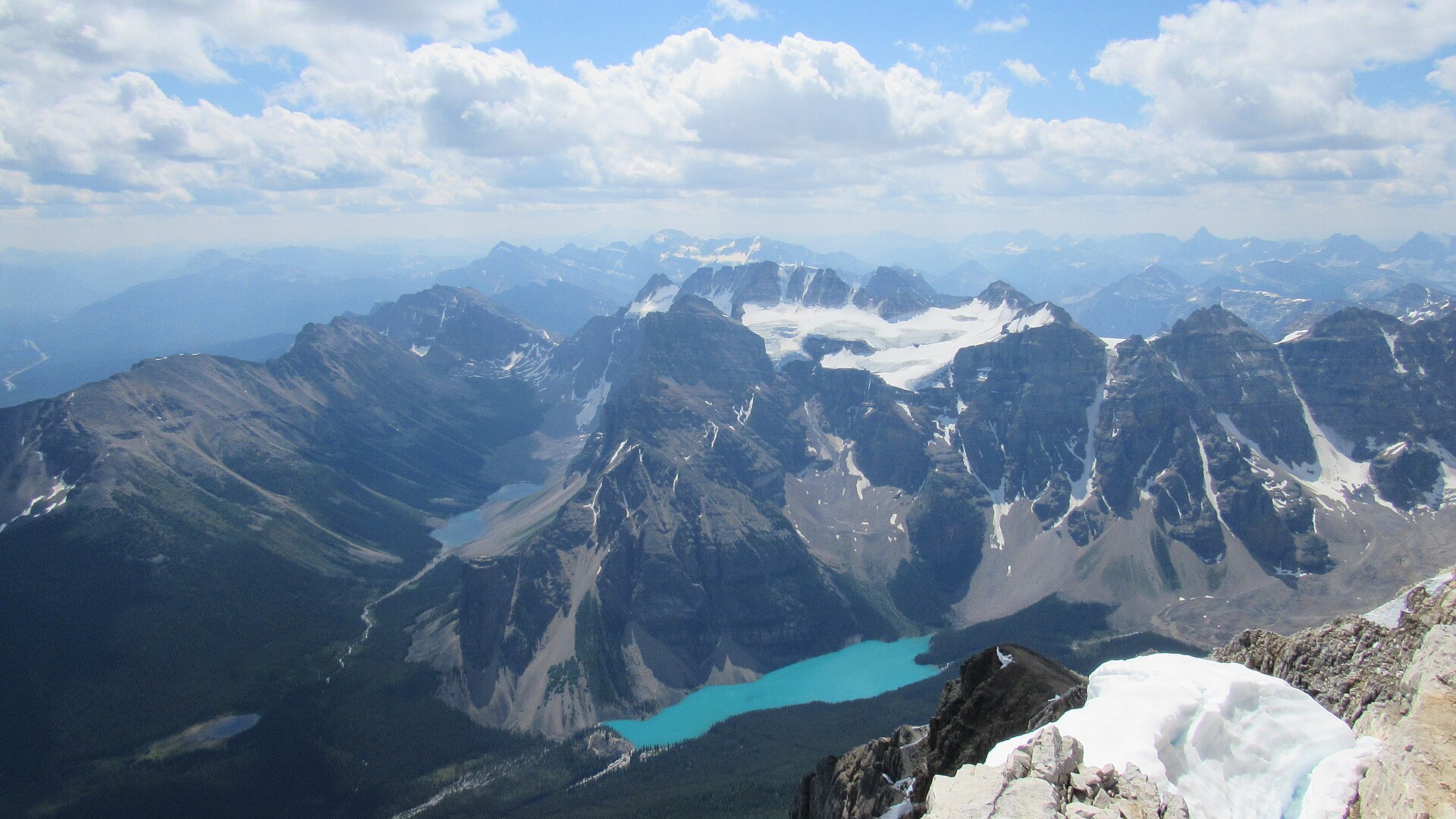
Canada is the second-largest country on Earth, and the most common mistake in planning an RV trip there is underestimating what that means. The distances are big, the best sights are far apart, and the good RVs for July and August are booked months ahead. The good news is that the rental side is simple: six pick-up cities, a handful of vehicle types and a fairly predictable pricing pattern.
This guide pulls together what the CampervanPlanet Canada page says about prices, seasons and cities, plus some stable background that anyone planning a trip should know. We are not writing from a personal Canadian RV trip, so we hedge anything that changes, such as park fees and campground rules. If you are new to hiring a van abroad, our campervan rental guide explains the basics.
Summer 2027 sounds a long way off, but the best RVs for the Rockies in July are the first to go. This is a good moment to start comparing.
Canada RV rental starts from about C$157 a day in the cheapest seasons and from C$197 a day for June 2027, with standard RVs from around C$235 a day and family RVs from about C$251. There are six pick-up cities, from Vancouver to Halifax. Spring and autumn are the best times; summer is peak. Code HUNGRYTRAVELFAMILY20 takes €20 off at checkout.
What an RV costs in Canada
The CampervanPlanet Canada page lists prices in Canadian dollars, and gives a few useful anchor points. For the cheapest vehicle on a seven-night rental, it quotes from C$157 a day for November 2026 and March 2027, and from C$197 a day for June 2027. That is a spring price, and it climbs into July and August when demand peaks.
Beyond the headline, the page mentions a standard RV from about C$235 a day and a family RV from around C$251 a day, adding that other prices are live by date. So the real range depends on the vehicle, the pick-up city and the week you travel. A compact camper van sits at the bottom, and a large family motorhome sits near the top.
Those are rental prices only. Fuel, campgrounds, park passes, mileage and insurance add up. The page gives fuel as an important item on long trips: a Trans-Canada Highway route of more than 5,000 km can cost CAD 600 to 1,000 or more in fuel. That is why our post on RV rental costs per day and week in the USA is a useful companion, because the pattern is similar.
Honest travel from the Arctic Circle
We send one letter a month — no roundups, no sponsored fluff. Just what we’re doing, where we’re going, and what we actually think.
Six pick-up cities, six different trips
There are six pick-up locations in Canada: Vancouver, Calgary, Toronto, Montreal, Halifax and Edmonton. Each is the start of a different trip.
- Vancouver: the Pacific coast, Sea-to-Sky Highway to Whistler and a ferry to Vancouver Island. Our guide to Vancouver RV rental covers it.
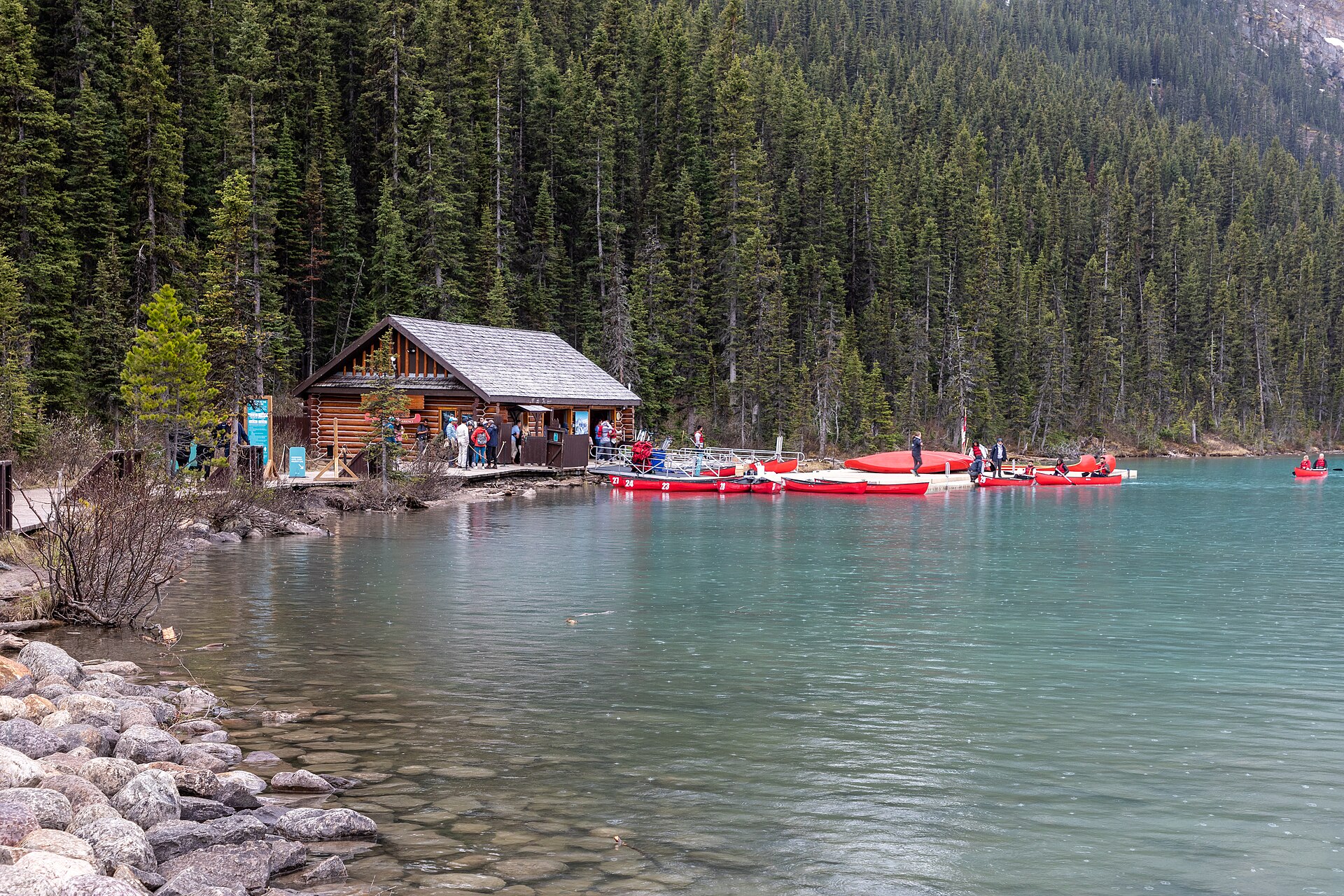
- Calgary: the gateway to Banff, Lake Louise and the Icefields Parkway. See our Calgary RV rental guide.
- Edmonton: the northern route into Jasper. We wrote up Edmonton RV rental too.
- Toronto: Niagara, Muskoka and Algonquin Park, with lakeside campgrounds.
- Montreal: Quebec City, the Gaspé and the Laurentians.
- Halifax: the Cabot Trail and Nova Scotia’s coast.
The rule of thumb is to pick the city that matches the region you want to see, then check whether a one-way to a second city makes sense. Cross-country one-ways exist but are expensive, so most travellers choose a loop.
When to go: spring and autumn win
According to the page, spring (April to June) and autumn (September to October) are the best times for an RV in Canada. Summer, July and August, is peak season, and winter, November to March, needs winter driving skills and has limited RV availability.
Spring brings melting snow, wildflowers and moderate crowds, though many campgrounds in the Rockies only open in May. Autumn is, in the page’s words, a photographer’s paradise: brilliant maple leaves in the east and golden aspens in the Rockies. Alberta’s fall foliage is particularly well regarded, and the Icefields Parkway can be glorious in late September, with fewer crowds and lower prices.
Summer is the time to go if you want long days and every attraction open, but it also means full campgrounds, high prices and traffic on the most famous roads. If July is your only option, reserve everything early. Our post on low season versus peak prices shows how much shifting by a few weeks can save.
Campgrounds and the booking problem
Canada has more than 2,000 campgrounds, according to the page, ranging from basic sites at around $10 a night to full-service ones at $50 or more. Provincial and national park campgrounds are the most scenic and the hardest to book. Many open their reservations months ahead, and popular sites in Banff, Jasper and Pacific Rim vanish within hours of release.
That creates a practical tip: book the RV first, then reserve campsites as soon as your dates are fixed. Private RV parks fill the gaps, with hook-ups, showers and laundry. If you do not mind a little improvisation, many areas also have first-come, first-served campgrounds, and in some regions there are rules on camping on public land. Those rules differ by province, so check the current ones for the area you are visiting.
Also remember that wildlife is real. Keep food stored properly, and never feed animals. Bears, elk and bighorn sheep are a joy to see, and a danger to approach.
💡 Our campervan tip: prices for the same van vary a lot between rental brands. We compare Canada campervans across 160+ rental companies on CampervanPlanet — and code HUNGRYTRAVELFAMILY20 takes €20 off your booking.
Fuel, distance and a sensible daily pace
Canada’s size drives the trip. A typical long day is four to six hours behind the wheel, and an RV is slower, thirstier and less pleasant at speed than a car. The page warns that fuel prices vary significantly by province, so use apps or signs to compare, and do not wait for the last bar on the gauge in remote areas.
We would plan two to three hours of driving as an average day, with longer drives between regions. In the Rockies this feels natural, because the scenery is the point. On the Trans-Canada Highway through the prairies or northern Ontario, it can be monotonous, and a one-way flight might be a better answer than driving the whole way.
Fines vary by province but can be hundreds of dollars for infractions, and the page reminds readers to follow local rules on speed, seatbelts and parking. If you are crossing the border into the USA, check the rental terms first, since cross-border rules differ between companies.
Three routes we would consider
To make this concrete, here are three routes that match the six pick-ups. Rockies loop: fly into Calgary, collect an RV, drive to Banff and Lake Louise, continue north along the Icefields Parkway to Jasper, and return via Edmonton or loop back through Kananaskis. Allow seven to ten days. Pacific loop: collect in Vancouver, take the ferry to Vancouver Island, drive to Tofino, return to the mainland and finish with the Sea-to-Sky Highway. Allow a week.
Atlantic loop: collect in Halifax, drive the Cabot Trail in Cape Breton, visit Peggy’s Cove and the Bay of Fundy, then return. Allow seven to ten days. Our guide to Halifax RV rental and the Cabot Trail has the details.
If you can afford the time, two weeks gives you room to combine two regions. Anything shorter than a week in the Rockies feels rushed once you count driving and campground setup.
Insurance, mileage and the border question
Read three things in every Canadian RV offer. First, mileage: some rentals include a daily allowance and charge per kilometre beyond it, and on a trip of thousands of kilometres that matters more than the daily rate. Second, insurance: ask what the excess is, what is covered for tyres, windscreen and the roof, and what the security deposit is. Third, generator hours and kitchen kits, which are sometimes charged separately.
Pick-up procedures also deserve a minute of attention. Take photos of the vehicle before you leave the depot, ask for a demonstration of the water, power and waste systems, and keep a copy of the checklist. Many problems on the road come from a hookup or valve used incorrectly, not from the vehicle itself. Our guide to first campervan road trip tips has a checklist that applies in Canada as much as anywhere.
If you plan to cross into the USA, ask about it now, not at the border.
How to book and save €20
Open the CampervanPlanet Canada page and enter your pick-up city and dates. Compare vehicle types, mileage allowance, deposit and cancellation terms. For summer 2027, we suggest booking by early in the new year, and sooner for July and August. If your plans are flexible, aim for June or September and enjoy lower prices and calmer campgrounds.
At checkout, enter HUNGRYTRAVELFAMILY20 to take €20 off your booking. The coupon is deducted from our commission, so it costs you nothing extra. And if you are still deciding between countries, our 22-country price comparison shows where Canada sits.
Book your Canada campervan
Compare prices across 160+ campervan and motorhome rental brands, get a free 1GB eSIM with every booking — and €20 off with code HUNGRYTRAVELFAMILY20.
Check prices & availability →Frequently asked questions
How much does an RV cost to rent in Canada?
CampervanPlanet shows the cheapest vehicle from C$157 a day in November 2026 and March 2027 and from C$197 a day in June 2027. Standard RVs start around C$235 a day and family RVs around C$251, with live prices by date.
What is the best time to rent an RV in Canada?
Spring (April to June) and autumn (September to October) are the best times. July and August are peak season, and winter needs special driving skills.
Where can I pick up an RV in Canada?
There are six pick-up locations: Vancouver, Calgary, Toronto, Montreal, Halifax and Edmonton.
Do I need to book campgrounds in advance?
In popular national and provincial parks, yes. Reservations open months ahead and fill fast in summer. Book the RV first, then the campsites.
Is there a discount code for CampervanPlanet?
Yes. Our reader code HUNGRYTRAVELFAMILY20 takes €20 off your booking at checkout. It is deducted from our commission, so you pay nothing extra.
Can I take a Canadian RV into the USA?
It depends on the rental company, so check the terms for your booking before you plan a border crossing.