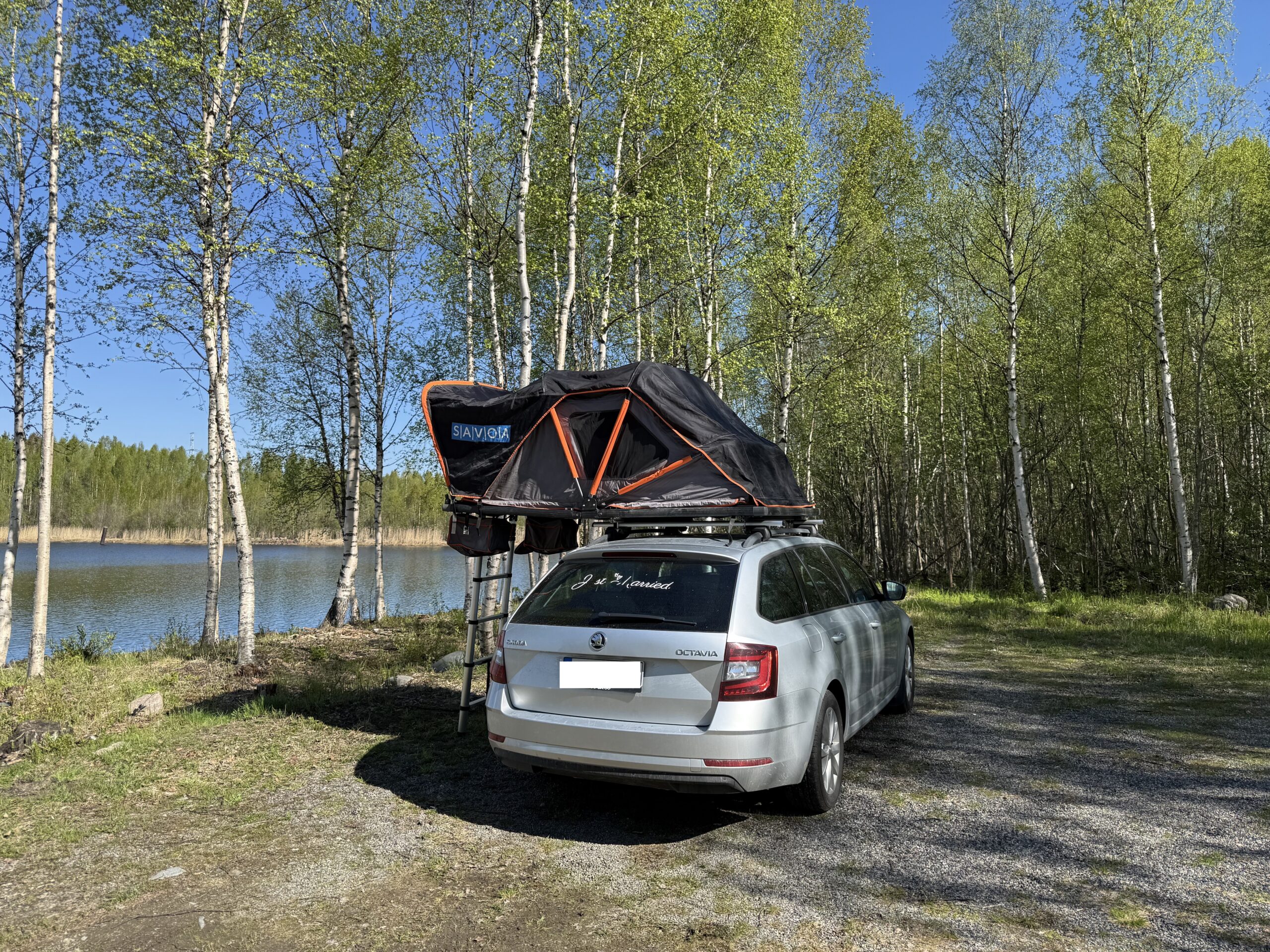
Ask ten first-time renters what worries them most and nine will say campervan insurance in Denmark. Not the driving, not the campsites, but the paragraph of small print about excess, deposits and protection plans that appears just before you pay. We understand that. We have road-tripped every Nordic country, and the insurance section is the one part of a rental we always read twice, slowly, with a cup of coffee.
The good news is that Denmark is a gentle place to rent a van, and the insurance logic is the same for almost every offer. This guide explains it in plain English: what comes with the rental, what the excess is, why the deposit is held on your card, and when we would pay for extra protection. If you are still at the very beginning, our first-timer guide to renting a campervan in Denmark covers licences and the pick-up inspection.
One honest note before we start: we are not insurers, and the exact cover is always set by the rental company named in your offer. Treat this as a way to ask better questions, not as legal advice.
Every campervan rental in Denmark includes the compulsory third-party insurance, and most add basic damage cover with an excess, the amount you pay if the van is damaged. You can usually lower the excess with the rental company’s protection plan, and the company holds a refundable security deposit on the main driver’s credit card at pick-up. The exact figures are shown in each offer, so compare the excess and deposit, not just the daily rate. Our €20 reader coupon, HUNGRYTRAVELFAMILY20, takes €20 off at checkout.
- What is included in a Danish campervan rental as standard
- The excess: the number that really matters
- Extra protection plans: when they are worth paying for
- The security deposit on your card
- The card-cover myth, and what to check first
- Denmark-specific things insurance questions revolve around
- Our checklist before you click book
What is included in a Danish campervan rental as standard
Start with the floor. Every rental on CampervanPlanet includes the compulsory third-party insurance that local law requires. That is the cover for damage or injury you cause to other people and their property, and it is not optional anywhere in Europe.
Most offers also include a basic form of damage cover for the van itself. The keyword is basic. It comes with an excess, which is the part of any damage bill that stays with you. Basic cover is why renting a campervan feels less risky than owning one: if a wing mirror meets a bollard in a Copenhagen car park, you are not paying for a new van, you are paying up to the excess.
Each offer on the site lists what is included, such as insurance, mileage and equipment, and anything that is paid locally, for example a one-way fee or optional extras. That list is the single most useful part of the page, and it is the one people scroll past. Read it before you compare prices, because two vans with the same daily rate can have very different cover behind them.
Because you rent from the company named in the offer, not from the comparison site, the rental contract and its terms are the company’s. That is normal and nothing to worry about, but it means the contract is the final word on what is and is not covered.
The excess: the number that really matters
If you remember one thing from this guide, make it this: the excess is the real price of an accident. A low daily rate with a high excess can end up costing more than a slightly dearer van with a low one, the day a scrape happens.
The excess is shown in the offer and in the details of each protection plan. We do not quote a figure because it differs by company and by vehicle, and a number we saw on one offer would mislead you on another. What we can say is how we think about it. Ask yourself: if the van came back with a dented panel, could we shrug off the excess, or would it ruin the holiday? If the honest answer is “it would sting”, we lower it.
Also check what the basic cover does not include. Typical exclusions across rentals are things like tyres, windscreen, underbody, the interior, and damage caused by driving the wrong fuel into the tank. We are being general here on purpose: the list differs by company, and the offer shows what applies to your van. A line we read every time is the one about the roof, because a high-sided van and a low car park entrance are an old, expensive friendship.
In Denmark the driving itself is flat, smooth and well signposted, so serious accidents are not the common story. The common story is a small scrape on a tight campsite lane or a bollard in a city car park. That is exactly the kind of damage the excess decides.
Extra protection plans: when they are worth paying for
Most rental companies sell protection plans that reduce the excess, sometimes to zero. You can usually add them when you book, and many companies also sell them at the counter on pick-up day. The cover and the excess of each plan are listed in the offer, so you can see exactly what each step up buys.
Our rule of thumb is simple. If you are travelling with children, a heavy itinerary of tight city and harbour car parks, or a van bigger than you have driven before, add the protection. If you are an experienced camper on a short, calm trip, basic cover may be enough. We lean towards adding it, partly because one bad day in a car park can colour a whole trip, and partly because a lower excess usually also lowers the deposit, which is the next point.
One practical tip: decide on protection at booking, on a calm evening at home, not at a rental counter after a long flight with tired kids behind you. Counter upsells are designed for that exact moment. Buying online lets you compare the plan inside the same offer and price it against the rest of the trip.
If you are comparing options, this is where we compare Denmark campervans, and code HUNGRYTRAVELFAMILY20 takes €20 off the booking at checkout, which is a small but welcome saving on a trip where the bridge toll alone is about €34 each way.
💡 Our campervan tip: prices for the same van vary a lot between rental brands. We compare Denmark campervans across 160+ rental companies on CampervanPlanet — and code HUNGRYTRAVELFAMILY20 takes €20 off your booking.
The security deposit on your card
This is the part that surprises people. At pick-up, almost every company holds a refundable deposit on the main driver’s credit card. The amount depends on the company, the vehicle and the insurance you choose, and it is shown in the offer before you book. Higher protection plans generally lower the deposit.
It is a hold, not a charge, in the sense that you get it back. But it still has to fit on the card, so check your credit limit well before you travel. A hold that is bigger than the available limit is the classic reason a pick-up goes wrong. It is also why the deposit needs to be on a credit card in the main driver’s name, which a debit card or a partner’s card usually cannot replace. Confirm this in the rental conditions rather than assuming.
How soon the deposit is released after a damage-free return depends on the rental company, and card issuers add their own days on top. If you are heading straight on to another trip, do not plan to spend that money in the first week.
Separately from the security deposit, many bookings take a deposit online, often 10 to 20 percent of the price, with the rest paid at pick-up. Others are paid in full online. The payment plan is shown before you pay and again on your voucher, so there is no reason to guess.
The card-cover myth, and what to check first
A very common idea is “my credit card already covers rental insurance, so I will skip the extras”. Sometimes that is true. Often it is less simple than it sounds, and the failure points are specific.
Many card benefits are written with ordinary rental cars in mind. Campervans and motorhomes are frequently treated differently, and some policies exclude them or set limits on the vehicle’s size, value or the length of the rental. Others pay out only after you have settled the claim yourself with the rental company, which means the excess comes out of your pocket first and you claim it back later, with paperwork.
So before you rely on a card, we would check four things in writing: does the benefit apply to campervans, does it apply in Denmark, how long a rental does it allow, and is it primary cover or does it only top up another policy. If you cannot answer all four, treat the card as a nice bonus and buy proper protection instead.
This is a place where travel insurance and rental insurance are also sometimes confused. Travel insurance covers you, your health and your belongings. Rental protection covers the van. They are different products, and you usually want both.
Denmark-specific things insurance questions revolve around
Denmark is easy, but it has its own habits, and they shape what could go wrong.
Wind is the first one. Danish coasts are open and exposed, and a high-sided van takes gusts hard, especially on the bridges and the Jutland west coast. Slow down in strong wind and park facing into it if you can. Second, wild camping is banned in Denmark: you sleep at licensed campsites or at designated motorhome aires. That is good for insurance, because campsites are lit, level and staffed. Campsites typically cost somewhere around DKK 250 to 450 a night for a van and two adults, and basic aires about DKK 100 to 200.
Third, the two big bridges are tolled, and the Great Belt is roughly DKK 250 (about €34) one way for a car or small camper, with larger motorhomes paying more. You pay by plate or card, so keep a card handy. We mention it because toll charges incurred during your rental are your responsibility, and a van is not a car for pricing purposes.
Finally, dipped headlights are required day and night in Denmark. Most modern rentals have automatic daytime lights, but check the full dipped beams are actually on. It is one of the most common fines visitors collect, and a fine is not something insurance will cover.
For a view of how the bills stack up around all this, our breakdown of what a Denmark campervan really costs pulls the numbers together.
Our checklist before you click book
Here is the sequence we actually follow, in the order we follow it.
First, we run the search for our real dates and sort by total, not daily rate. Then we open two or three offers and read the inclusions line by line, looking at the excess, the deposit, the mileage and any equipment extras. Next we decide on protection: we compare the plan that lowers the excess against the extra cost, and we pick the one where the remaining excess is a figure we could pay without a gasp.
After that we check the payment plan, so we know how much is due online and how much at pick-up, and we check the credit limit on the card that will hold the deposit. We also read the cancellation terms. Many offers allow free cancellation until a set number of days before pick-up, with fees that increase closer to the date, which is a good reason to book early and adjust later.
Finally, we enter the coupon at checkout. Code HUNGRYTRAVELFAMILY20 takes €20 off the booking, as a fixed amount. At pick-up we photograph every side of the van, the roof and the interior with the rental agent present, and make sure the existing marks are written on the form. That five-minute habit is worth more than any plan, because it prevents arguments before they start. If you want the broader picture of how rentals work, our campervan rental guide pulls it together in one place.
Book your Denmark campervan
Compare prices across 160+ campervan and motorhome rental brands, get a free 1GB eSIM with every booking — and €20 off with code HUNGRYTRAVELFAMILY20.
Check prices & availability →Frequently asked questions
Is insurance included when I rent a campervan in Denmark?
Yes, the compulsory third-party insurance is included in every rental, and most offers also include basic damage cover with an excess. The offer lists exactly what is included, so check it before you pay.
What is the excess on a campervan rental?
It is the amount you pay towards damage to the van before the cover applies. It differs by company and vehicle, it is shown in the offer, and you can usually lower it with the company’s protection plan.
Why does the rental company hold a deposit on my card?
Almost every company holds a refundable security deposit on the main driver’s credit card at pick-up, to cover any damage or charges. The amount is shown in the offer, and higher protection plans generally lower it.
Is there a discount code for CampervanPlanet?
Yes. Enter code HUNGRYTRAVELFAMILY20 at checkout on CampervanPlanet to take €20 off your booking. It is a fixed amount, and it works on top of whichever vehicle and protection plan you choose.
Does my credit card cover a campervan rental?
Sometimes, but many card benefits are written for ordinary cars and exclude campervans or limit the rental length. Check the wording for campervans, for Denmark and for whether it is primary cover before you rely on it.
Can I buy the extra protection at the counter instead?
Many companies sell it at the counter, but we prefer to decide at booking, when we can compare the plan inside the offer. Counter decisions after a flight are rarely the calmest ones.
Keep your crypto offline, not in an exchange app
Any crypto we hold lives on a Trezor hardware wallet — a small offline device in a drawer in Rovaniemi, not on a phone that crosses borders every month. If you’ve been meaning to sort that out, this is the link we’d send a friend.