Corfu vs Crete in Summer: Which Greek Island First?
We’ve island-hopped in Greece and spent time on both. Here’s our honest verdict on which island to pick for your first Greek summer, based on what each does best — and where each falls short.
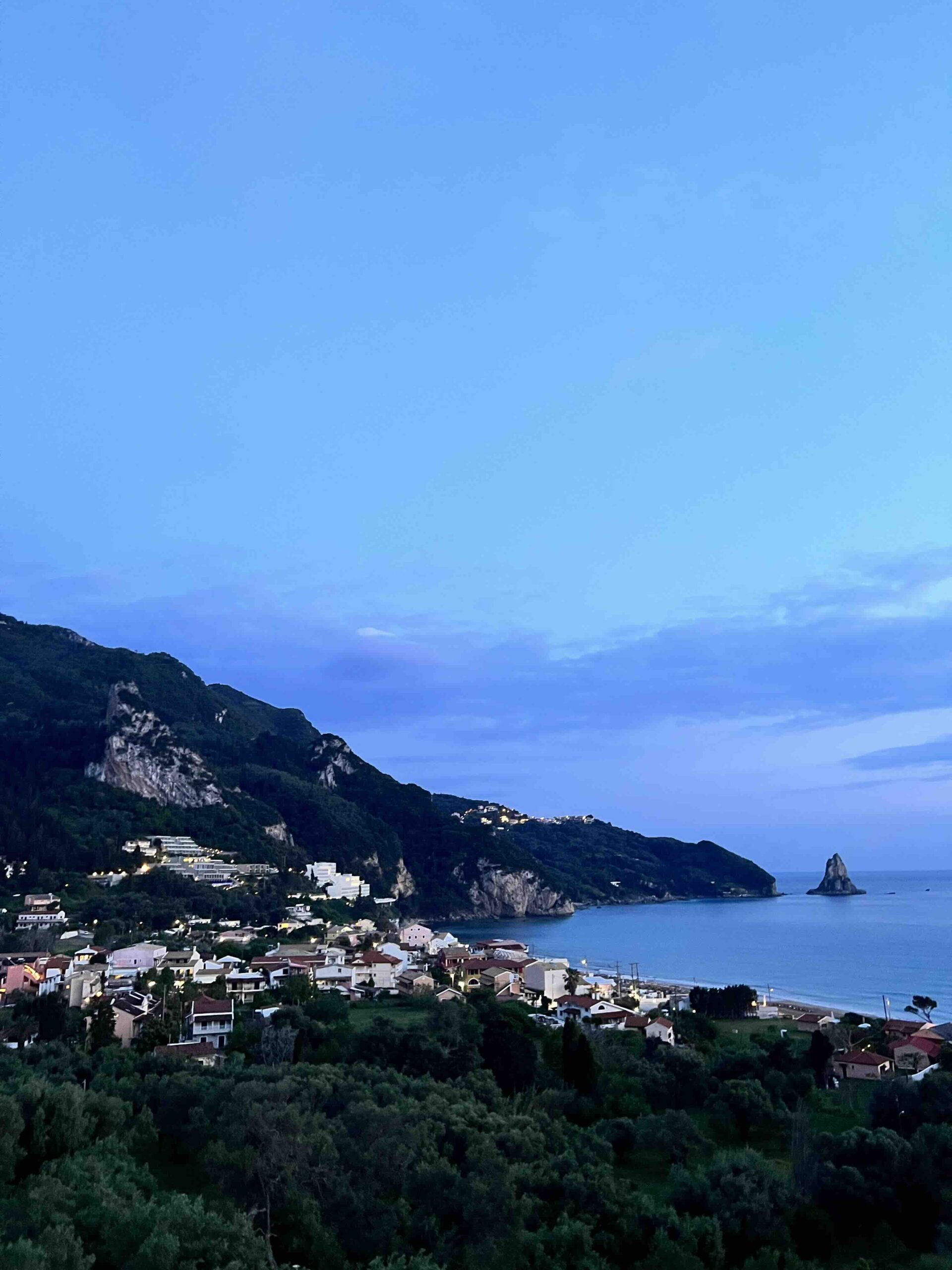
When we flew into Athens on our way down to the Greek islands, the taxi driver asked us the same question everyone does: “Corfu or Crete?” We laughed, because we’d spent weeks trying to answer that ourselves. Having now visited both — and having helped dozens of friends plan their first Greek summers — we can finally give you a real answer.
The short version: they’re not competing for the same traveller. The longer version is this whole guide.
Choose Corfu if you want lush scenery, Venetian architecture, excellent food, and a manageable size for a first trip. Choose Crete if you want more variety — bigger beaches, ancient ruins, mountain villages, and longer hiking — and have at least a week to explore. Both are worth it; only logistics and priorities should decide.
The key differences between Corfu and Crete in summer
We landed in Corfu vs Crete with very different expectations — and both times the island surprised us. Here is what we actually noticed on the ground, not what the brochures promised.
What makes Corfu different
Corfu is the most Italian-feeling of the Greek islands. Seven centuries of Venetian rule left their mark in the pastel-coloured old town, the covered arcades along the Spianada, and a food scene that blends Greek and Italian flavours in ways you won’t find anywhere else in Greece. The island is relatively small (about 585 km²) and manageable — you can drive across it in under an hour. The landscape is shockingly green for a Greek island, thanks to rainfall from the Albanian mountains, with olive groves and cypress trees covering most of the interior.
- Old Town Corfu is a UNESCO World Heritage Site — one of the best-preserved Venetian towns in the Mediterranean.
- West-coast beaches like Paleokastritsa and Glyfada are genuinely beautiful, set in sheltered bays with clear turquoise water.
- The Ionian Sea is calmer than the Aegean, which matters a lot if you’re prone to seasickness on boat trips.
- It’s popular with British and Scandinavian tourists, which means good English everywhere but also busier resorts in July and August.
What makes Crete different
Crete is a continent in miniature. At roughly 8,300 km² — fourteen times the size of Corfu — it has beaches ranging from the fine white sand of Elafonisi to the pink-pebble coves of Balos, mountain villages at 1,400 metres, the Samariá Gorge (one of Europe’s longest), Minoan ruins at Knossos, and a food culture so distinct it has its own olive oil appellation. A week barely scratches the surface.
- Heraklion, Chania, and Rethymno are all worth at least a full day each — three cities with different personalities on one island.
- The south coast is noticeably quieter than the north, with fewer tourists and more authentic village life.
- Hiking the Samariá Gorge in June is a legitimate bucket-list day trip — 16 km of stunning terrain, but genuinely demanding.
- Crete gets hotter than Corfu in July and August, which either sounds perfect or horrifying depending on who you are.
How to pick your island: a step-by-step decision guide
We’ve helped enough people plan Greek island trips to know that the wrong question is “which island is better?” The right question is “which island is better for me, this trip, this summer?” Work through these steps.
Step 1 — How many days do you have?
If you have 5 days or fewer, Corfu wins outright. It’s compact, easy to navigate, and you can genuinely feel like you’ve seen the best of it in a long weekend. Crete with fewer than 5 days means choosing between the beaches and the history and probably feeling like you missed half the island.
If you have 7–10 days, both work. Crete opens up properly at 7+ days; Corfu at 7 days means you can slow down considerably and enjoy it without rushing.
Step 2 — What do you most want from the trip?
Be honest with yourself here:
- Beach + sea + a beautiful town + manageable size: Corfu.
- Ancient history + variety + long hikes + multiple cities: Crete.
- Quieter, fewer tourists, south coast swimming: Crete (south side).
- Food culture as the main event: Both are excellent — Crete has more variety, Corfu has a unique Venetian-Greek fusion.
- Travelling with older relatives or young kids: Corfu’s smaller scale and calmer sea are easier.
Step 3 — Think about the heat
Both islands are hot in July and August. Corfu averages around 30–32°C at peak. Crete can hit 35–38°C in the south, and Heraklion can feel suffocating mid-afternoon. If you’re coming from Finland (as we always are), the heat is part of the appeal — but if you want to actually do things outside past noon in August, Corfu is marginally more comfortable.
Step 4 — Consider the budget
Corfu is slightly more expensive than Crete in accommodation — demand from British package tourists keeps prices firm, especially in July and August. Crete is more price-competitive for longer stays, particularly in the south. Food on both islands is reasonably priced compared to, say, Mykonos, but Crete offers more budget-friendly local tavernas once you get away from the main tourist strips.
Corfu vs Crete: the quick-reference comparison
- Size: Corfu = 585 km² (easy to cover in 5 days) — Crete = 8,300 km² (needs 7+ days).
- Best for: Corfu = first-timers, couples, short trips, history + beach combo — Crete = adventure seekers, families, longer stays, serious culture.
- Beaches: Corfu = beautiful Ionian bays, calmer water — Crete = more variety, including some of Europe’s most photographed (Balos, Elafonisi).
- History: Corfu = Venetian Old Town (UNESCO), Byzantine churches, two forts — Crete = Knossos (Minoan palace), Heraklion Archaeological Museum, Ottoman Rethymno.
- Food: Corfu = sofrito, pastitsada, Venetian influence — Crete = dakos, fresh seafood, world-class olive oil, cheese, one of Europe’s oldest food cultures.
- Hiking: Corfu = pleasant trails, Pantokrator summit — Crete = Samaria Gorge, E4 trail, multiple gorges.
- Crowds: Corfu = busy in Old Town July–August, quieter inland — Crete = very busy north coast July–August, south coast remains calmer.
- Getting around: Corfu = one car, easy — Crete = essential to rent a car (or two), distances are real.
Get our best travel tips in your inbox
Monthly stories from Rovaniemi — Arctic tips, packing lists, and the places we keep coming back to.
Mistakes we made — and watched others make
- Booking the wrong base in Corfu. We almost ended up in Kavos (a party resort) when we wanted Corfu Town. Always check the exact location on a map; “Corfu” covers a lot of ground.
- Under-estimating Crete’s distances. It looks manageable on a map. It’s not. Chania to Elounda is two hours on a good day. Plan your base carefully and don’t try to do both coasts in one day.
- Going to the Samaria Gorge without proper shoes. We watched people descend 1,250 vertical metres in flip-flops. Don’t do this. Proper trainers minimum, hiking shoes preferred.
- Arriving in August in Corfu Old Town without a room.’ A couple we met had assumed they’d find something on the day. There was nothing. Book ahead.
- Skipping Crete’s interior. Everyone goes to the north coast beaches and misses the mountain villages — Anogia, Zaros, Argyroupoli — which are some of the most beautiful places in Greece.
- Assuming Corfu is just for British package tourists. It has a reputation, which put us off initially. The actual island — especially inland and on the west coast — is genuinely special.
Frequently asked questions
Is Corfu or Crete better for a first visit to Greece?
Corfu is easier for a first visit if you have 5–7 days: it’s compact, has a beautiful UNESCO Old Town, excellent beaches, and is simple to navigate. Crete is the better choice if you have a week or more and want more variety — beaches, history, mountains, and food culture all in one place.
Which island is better for families with children?
Both work well for families. Corfu’s smaller scale and calmer Ionian Sea make logistics easier with young kids. Crete has more to keep older children interested — Knossos ruins, the Samaria Gorge (for ages 10+), and more beach variety.
When is the best time to visit Corfu or Crete in summer?
June and September are ideal for both islands: cooler temperatures (25–28°C), fewer crowds, and comparable sea temperatures to peak summer. July and August are busier and hotter but have the longest daylight hours. We prefer June for both.
Is it possible to visit both Corfu and Crete on one trip?
Technically yes, but practically awkward — they’re on opposite sides of Greece. You’d fly or ferry through Athens between them, adding significant travel time. Better to pick one and do it well than to rush both. Save the second for a future trip.
Which island has better food — Corfu or Crete?
Crete has one of the most distinctive regional food cultures in the Mediterranean: fresh olive oil, dakos salads, aged cheeses, and excellent seafood. Corfu’s Venetian-influenced cuisine (sofrito, pastitsada, bourdeto) is unique in Greece and underrated by travellers who don’t seek it out. Both will exceed expectations if you eat where locals eat.
How much does a week in Corfu or Crete cost?
Both are mid-range Greek island destinations. Expect to budget €800–1,200 per person for a week (flights, accommodation, food, transport, activities) — more in peak July–August, less in June or September. Crete can be cheaper for longer stays, especially on the south coast. Corfu accommodation in the Old Town commands a premium.
A final word from Rovaniemi
Every summer we come back from the Greek islands the same way: sunburnt at the shoulders, with olive oil stains on at least one shirt, and genuinely torn about whether we should have spent more time somewhere we didn’t go. That’s Greece doing what Greece does.
The honest answer to “Corfu vs Crete” is that you’re choosing between two versions of a very good thing. Corfu is more intimate, more manageable, and has a unique layered history that takes your breath away when you turn a corner in the old town and see the Venetian arcades. Crete is grander, more varied, and will reward every extra day you give it.
Our recommendation: if you’ve never been to either, start with Corfu. It’s a gentler introduction to Greek island travel, and finishing your trip thinking “I’ll be back, and next time I’m trying Crete” is an excellent place to be. From our kitchen in Lapland, where the nearest Mediterranean beach is a four-hour flight south, that decision sounds pretty good to us.
Joona & Alla
A Finnish-Ukrainian couple living in Rovaniemi, Finland. Joona is a marketing professional in Lapland tourism; Alla is an AI Engineer. Together we’ve visited 25 countries and share honest, locally-grounded travel writing from our home in the Arctic.
Read our full story →Before you book either island
Two small things that make the trip cheaper and the photos better.
Our Nordic trip planner (PDF)
The one-page planner we use ourselves, plus the HUNGRYTRAVELFAMILY5 5% code and one short email a week with real deals. Unsubscribe any time.
Edit your trip photos like ours
The exact presets behind the photos on this site — Winter Magic, Golden, Frost and more, from €34.
See the presets →