What to Pack for the Faroe Islands in Summer (Weather Is Brutal)
We got it wrong on our first trip. Here’s the packing list we actually use now — tested across multiple summer visits to the Faroes and refined for the wind, rain, and horizontal weather you’ll almost certainly face.
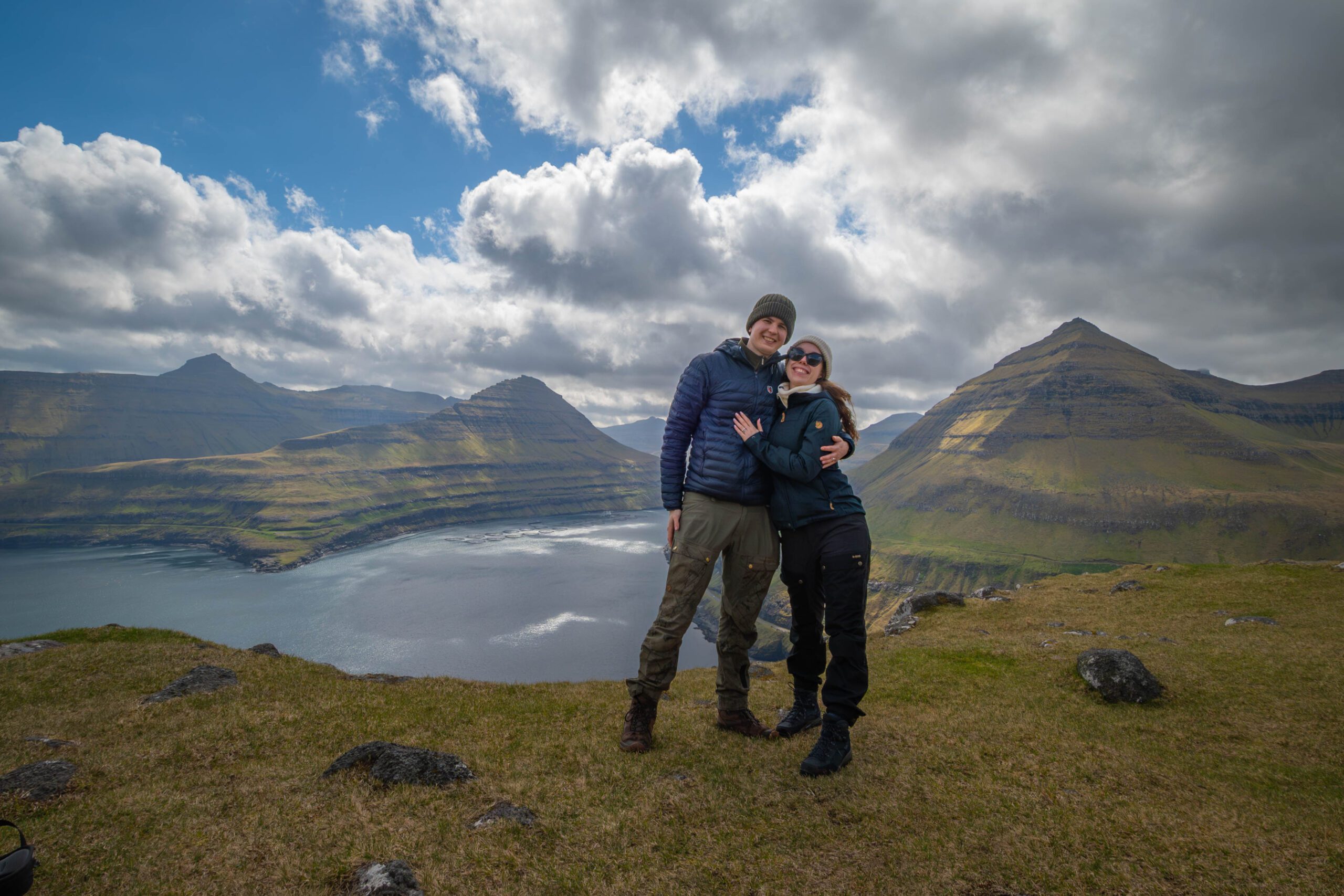
We’ve been to the Faroe Islands twice now, and the first time we were genuinely underprepared. We knew it would be “a bit rainy.” We did not know that what to pack for the Faroe Islands is basically an entirely different question from packing for any other European summer destination. The wind comes sideways. The rain comes sideways. On Mykines, the rain came upward. We love every wet, wild second of it — but you need the right gear.
This list is built from actual Faroe Islands summers, refined against Nordic weather from our home base in Rovaniemi, and ruthlessly edited to carry-on size. No fluff, no filler.
Pack for cold, wet, and windy regardless of the month. The Faroe Islands in summer means temperatures of 8–14 °C, near-constant wind, and rain on roughly 2 in every 3 days. A waterproof shell jacket, waterproof hiking trousers, and waterproof boots are non-negotiable. Everything else is secondary.
Understanding Faroe Islands summer weather
Before we get to the list, you need to understand what “summer” actually means on 18 islands sitting in the North Atlantic between Norway, Iceland, and Scotland. The Faroes are famous for having all four seasons in one day — and that is not a marketing exaggeration.
The numbers you need to know
- Average summer temperature (June–August): 9–14 °C (48–57 °F). Rarely above 16 °C.
- Rain days: roughly 200+ per year, with summer being only marginally drier than winter.
- Wind: average wind speeds of 7–9 m/s in summer, with frequent gusts to 15+ m/s on exposed headlands.
- Sunshine hours: up to 19 hours of daylight in June, but overcast skies mean actual sunshine is rare.
- Humidity: high. Damp air means 10 °C feels colder than 10 °C anywhere else you’ve been.
Why this matters for packing
Most packing guides tell you to “layer up.” In the Faroes, layering is not a nice-to-have — it’s the entire strategy. You will add and remove layers multiple times in a single hour of hiking. Your outer layer will be battered by wind and rain simultaneously. Your feet will be tested on steep, wet grass paths. Pack accordingly.
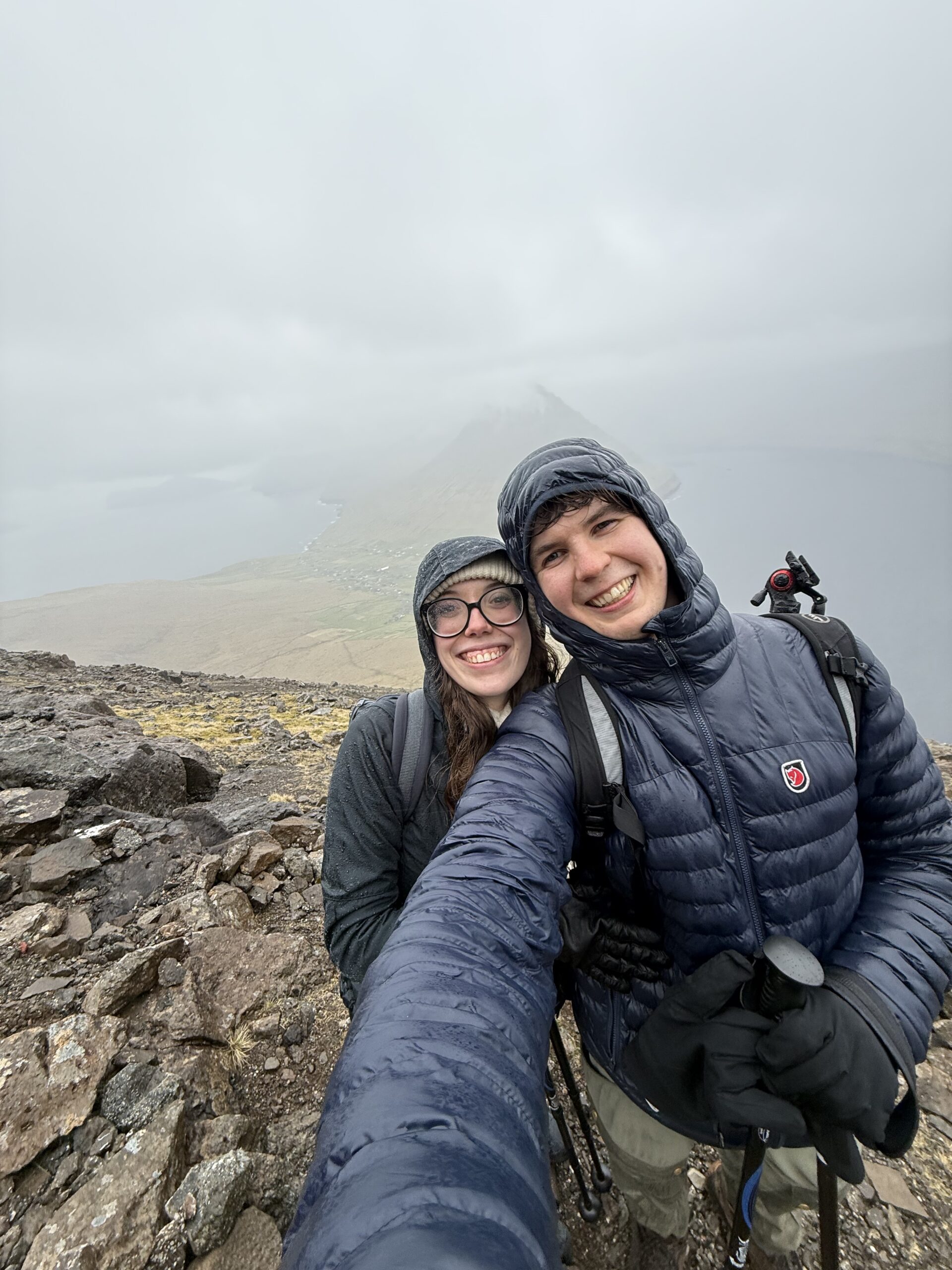
The non-negotiable waterproof layer system
Everything else on this list is negotiable. These three layers are not. If you get them right, you will be comfortable. If you get them wrong, you will be miserable before you’ve reached the first viewpoint.
Merino wool or a synthetic moisture-wicking top. Merino is our preference because it doesn’t smell after two days of back-to-back wearing, and it regulates temperature when you shift from hiking hard to standing at a windy viewpoint. Avoid cotton at all costs — once it’s wet, it stays wet and it pulls heat away from your body.
A light-to-medium fleece or a thin down jacket that compresses well. You won’t always need it, but at the top of Slaítansfjall or waiting for the puffin ferry at Mykines, you will want it badly. Down is warmer for its weight; fleece stays warm when wet. We bring both and choose based on the day’s forecast.
This is the most important item on the entire list. Not a soft-shell, not a “water-resistant” jacket — a fully waterproof, seam-sealed hardshell with a proper hood that cinches tight. Look for at least 20,000 mm waterproof rating and 15,000 g breathability. Brands we trust: Arc’teryx, Patagonia, Bergans, Fjallraven. Budget option: Decathlon Forclaz. Do not cheap out here.
Most people skip this. Most people are wet from the knees down within an hour. Waterproof over-trousers (or built-in waterproof hiking pants) pack small and weigh almost nothing. We use Bergans Istjern pants. If the Faroes wind picks up and rain turns horizontal, you will thank yourself ten times over for having these.
Related read Planning your Faroe Islands trip from scratch? Start with our complete guide: Faroe Islands in Summer — Why It’s the Coolcation Nobody’s Talking About.
The complete summer packing checklist
Everything below fits in a 40–45L carry-on bag. We’ve done it. The key is that most items double up — your waterproof jacket is also your evening jacket in Tórshavn. Your merino base layer works for hiking and for dinner.
Clothing
- Hardshell waterproof jacket — non-negotiable, see layer system above
- Waterproof over-trousers or waterproof hiking pants — non-negotiable
- Merino wool base layer tops ×2 — long-sleeve preferred
- Fleece mid-layer — medium weight, packable
- Thin packable down jacket — optional but worth it if space allows
- Merino wool or moisture-wicking t-shirts ×2
- Hiking trousers ×2 — quick-dry, stretchy, not jeans
- Merino wool socks ×4–5 — wool dries faster and doesn’t smell
- Warm hat / beanie — you will use it every day, even in July
- Lightweight buff / neck gaiter
- Gloves — thin liner gloves
- One slightly nicer outfit for Tórshavn restaurants (the city is genuinely chic)
Gear & accessories
- Daypack (20–25L) with a rain cover
- Dry bags or waterproof stuff sacks — for camera, phone, passport inside your pack
- Trekking poles (optional but valuable on Mykines and Slaítansfjall)
- Headlamp or torch — it stays light until midnight but some paths are inside tunnels
- Sunscreen SPF 50+ — UV is deceptively strong at northern latitudes even through cloud
- Lip balm with SPF
- Reusable water bottle — tap water in the Faroes is some of the best in the world
Get our best travel tips in your inbox
Monthly stories from Rovaniemi — Arctic tips, packing lists, and the places we keep coming back to.