How to Get Around Iceland Without a Car — Is It Even Possible?
We’ve driven Iceland twice and traveled it without a car once. The carless trip was harder—but it worked. Here’s our honest breakdown of every option that actually exists for getting around Iceland without a car.

Let’s address the question directly: yes, you can get around Iceland without a car. But it comes with serious trade-offs that most travel blogs skip over. We’ve driven the Ring Road twice from our home base in Rovaniemi, Finland, and we spent one trip deliberately going carless to understand what it actually costs in time, flexibility, and experience.
The short answer is that Iceland without a car works well for Reykjavík and the most popular South Coast stops, adequately for a few Golden Circle and Snæfellsnes highlights, and basically not at all for the Westfjords, the Highlands, or the East Fjords. This guide is our honest account of what the carless options really look like in practice.
Getting around Iceland without a car is possible—especially in summer—using scheduled buses, day tours, and the Strætó network. You can reach the main South Coast waterfalls, the Golden Circle, and Reykjavík without renting. But anything off the ring road, in the Westfjords, or in the Highlands requires a 4WD or organized tour. Plan for slower travel, higher per-attraction costs, and a much smaller radius than you’d get with a car.
Which parts of Iceland actually work without a car
This is the question that matters most, and the one most travel content answers too optimistically. Based on our carless trip and years of following Iceland travel forums, here’s an honest map of what’s accessible and what isn’t.
The accessible zone: South Coast and Golden Circle
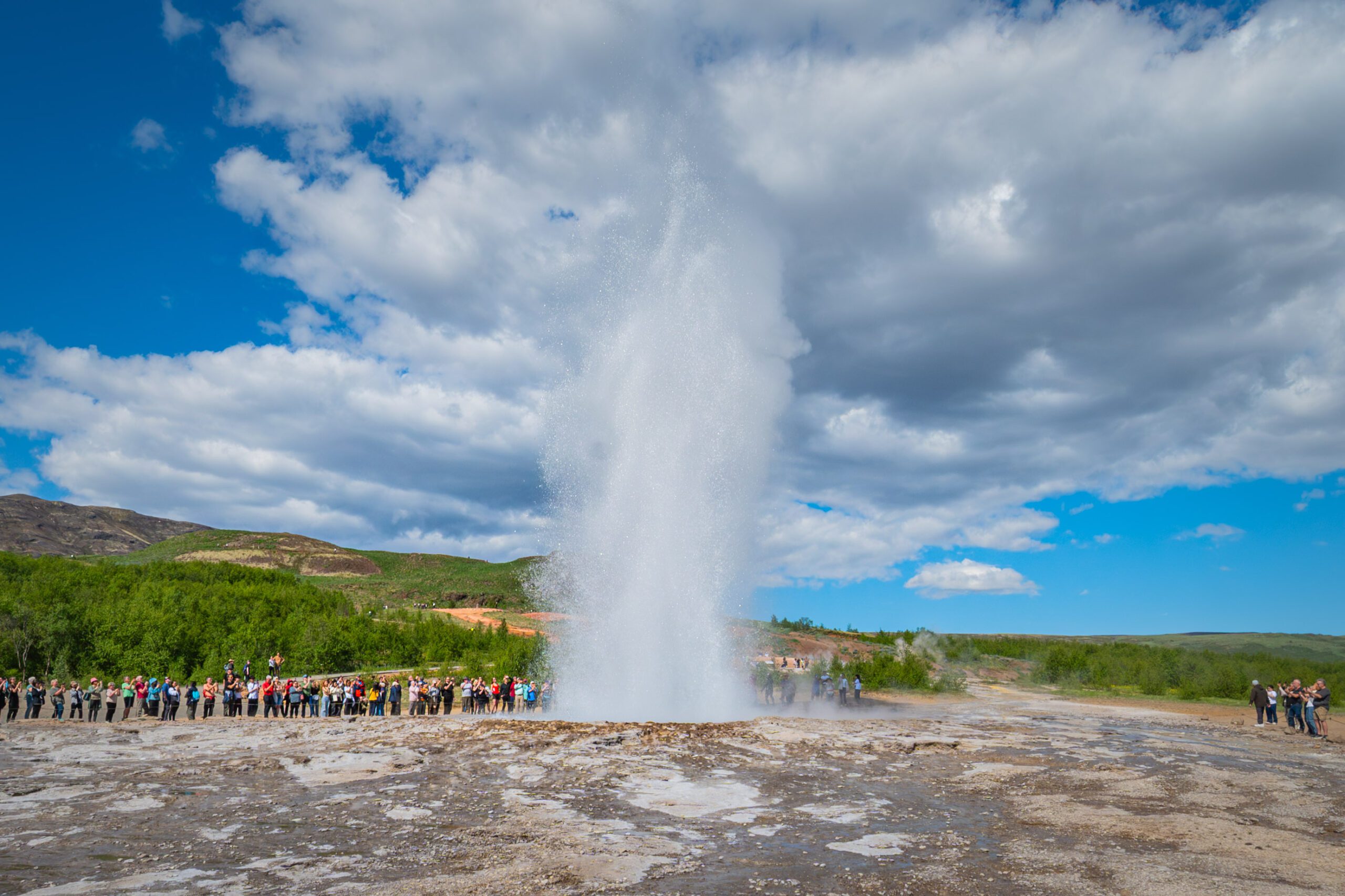
The stretch of Iceland most visited by international tourists is also the most served by public transport and day tours. From Reykjavík you can reach Þingvellir National Park, Geysir, and Gulfoss on the Golden Circle by scheduled bus or day tour. The South Coast—including Seljalandsfoss, Skógafoss, the black sand beach at Reynisfjara, and Jökulsárlón glacier lagoon—is covered by the scheduled Strætó Route 51 in summer, plus dozens of competing day tour operators.
- Reykjavík city: fully walkable, with local Strætó buses for farther neighborhoods and a good cycle hire scheme.
- Golden Circle highlights: accessible on full-day scheduled tours or Strætó buses, though timing is rigid.
- South Coast to Höfn: Strætó Route 51 runs in summer (June–August), stopping at major waterfalls and the glacier lagoon. This is the single most useful carless route in Iceland.
- Snæfellsnes Peninsula: Strætó Route 58 runs from Reykjavík to Stykkishólmur; a day tour covers the glacier and key viewpoints.
The difficult zone: North, East, and Westfjords
Traveling beyond the tourist corridor without a car means either booking an expensive organized tour for every destination or accepting that you simply won’t get there. Akureyri in the north is reachable by domestic flight (cheap, fast) or the long-haul bus, making it a viable base for a carless North Iceland trip. But the Westfjords have almost no public transport and even many day tours don’t reach them. The East Fjords are technically on the Ring Road bus route but buses run infrequently and the valley drives that make the region beautiful require a car.
The Strætó bus network: how it really works
Strætó is Iceland’s public bus company, and understanding it is the key to planning any carless Iceland trip. The system is more limited than many guides imply, but it’s also more useful in summer than many travelers realize.
The summer vs. winter difference is enormous
In summer (roughly mid-June to mid-August), Strætó runs a set of long-haul routes that effectively create a loop around part of the Ring Road. Route 51 (the South Coast) runs daily, Route 52 (Egilsstaðir to Akureyri) covers the east and north, and a handful of other routes connect Reykjavík to destinations like Stykkishólmur and Borgarnes. In winter, most of these long-haul routes simply don’t run. What remains in winter is the local city network in Reykjavík and a few basic interurban routes.
Key Strætó routes for carless travelers
- Route 1 (Reykjavík local): the city network, useful for reaching the BSÍ bus terminal and outlying neighborhoods.
- Route 51 (South Coast): Reykjavík → Selfoss → Vík → Jökulsárlón → Höfn. Runs June–August. The workhorse route for carless travelers. Book in advance in July.
- Route 52 (East & North): Höfn → Egilsstaðir → Mývatn → Akureyri. Links the east and north, but frequencies are low.
- Route 57 (Reykjavík → Borgarnes → Stykkishólmur): the gateway to Snæfellsnes. Runs year-round but less frequently in winter.
- Route 82 (Akureyri local and beyond): covers Akureyri city and some nearby sights including parts of the Diamond Circle.
Related read Planning a full Iceland trip? Our 7-Day Iceland Summer Itinerary covers how we structured a week with the right mix of flexibility and pre-booked stops.
Quick-reference: Iceland carless travel routes, prices, and booking
The most common questions from carless Iceland travelers are about logistics: how much does it cost, where do you book, and what’s the catch? Here’s the cheat sheet we wish we’d had.
All Strætó long-haul routes book at straeto.is. Prices vary by distance; Reykjavík to Höfn (Route 51) costs roughly 8,000–9,500 ISK one-way (approx. €55–65). Book at least a week ahead in July.
For the Golden Circle and South Coast, Reykjavík Excursions, Gray Line Iceland, and Tröll Expeditions all offer day tours from 8,000–18,000 ISK (€55–120). These include pick-up from central Reykjavík guesthouses.
Eagle Air flies Reykjavík (Domestic Airport) to Akureyri, Egilsstaðir, and the Westfjords. One-way fares from ~15,000 ISK (€100) if booked early. This is the best way to make the North accessible without a car.
A basic 2WD rental in summer 2026 runs 12,000–20,000 ISK/day (€80–135) before insurance. A 4WD is 20,000–35,000 ISK/day. Splitting between two people makes driving cheaper than many bus+tour combos over a week.
Hitchhiking is common on the Ring Road in summer and many travelers have good experiences. It is not reliable for timetable planning, but works as a supplement to buses for short legs you missed or scenic detours.
The Ring Road is cyclable in summer. Most cyclists carry their own gear. You can hire bikes in Reykjavík, but carrying a hire bike on the bus for the return is not straightforward—confirm with Strætó before attempting.
Iceland tips, Nordic detours, and honest travel writing
We send one email a week from our home in Arctic Finland. No fluff, no sponsored rankings.
Tips and warnings for carless travelers in Iceland
We learned most of these the hard way. A few are specific to Iceland; others apply to any destination where you’re bus-dependent in a country built for road trips.
- Book Route 51 before you fly. The South Coast bus fills up fast in July. We met multiple travelers who arrived expecting to hop on and found it full for three days. Reserve your seat online before leaving home.
- Don’t rely on the bus for sunrise/sunset shots. Buses run on schedules. The midnight sun means the light is good at 11 pm—when the last bus left hours ago. If photography matters to you, this is the strongest argument for a car.
- Budget for tours generously. When we totaled our carless trip, the day tours we needed to fill in the gaps brought our per-day transport cost close to what a 2WD rental would have cost. The break-even is around 5–6 days.
- Akureyri is the secret base. Fly or bus to Akureyri and base yourself there for the North. From Akureyri you can reach Mývatn, Goðafoss, and parts of the Diamond Circle by Strætó or day tour without a car.
- Hostels with good tour desks are worth paying a little more for. In Reykjavík, Vík, and Akureyri, staying at a hostel with an active tour desk means same-day booking options that you can’t find online.
- Weather cancels tours too. Day tours to the Highlands or Snæfellsnes glacier regularly cancel for weather or F-road closures. Build at least one extra day into your itinerary.
Day tours vs. independent bus travel: which is better?
The choice between booking a day tour and riding the Strætó bus depends entirely on what you want from a stop. Here’s how we break it down after doing both.
- Use the Strætó bus when you want to spend a real night somewhere. The bus lets you travel between towns and stay. If you want two nights in Vík or Höfn, the bus is the right tool. Day tours return you to Reykjavík every evening.
- Use a day tour for one-day highlights you don’t want to base near. The Golden Circle is a classic day-from-Reykjavík trip. A day tour handles the logistics perfectly.
- Day tours include knowledge and context; buses just move you. A good guide at Þingvellir makes it twice as meaningful. A bus drops you at a car park and walks away.
- Day tours for niche sights (ice caves, Northern Lights, whale watching). These require specialist operators anyway—day tour is the only realistic option.
- Bus for solo budget travelers who are comfortable being flexible. If you’re alone, moving at your own pace, and not against an itinerary, the bus + overnight combo is often cheaper and more rewarding.
- Day tours win in bad weather. Most day tour companies will move you to another date if your tour cancels. If the bus brings you somewhere and the weather closes in, you’re stuck there until the next bus.
Related read Considering Iceland vs. the Faroes for a carless trip? Read our comparison: Iceland vs. Faroe Islands — Which North Atlantic Escape in 2026?
Mistakes we made going carless in Iceland
We’ll be transparent: our carless Iceland trip was an experiment and it showed. Here are the things we’d change.
- We didn’t book Route 51 early enough. We arrived assuming we could buy a seat at the bus terminal. We had to wait two days for a seat. Book before you fly.
- We underestimated the emotional cost of watching car-travelers turn off down roads we couldn’t take. Driving past signs for Þórsmörk or the Fjáðrárglífurs Canyon knowing you can’t stop is genuinely frustrating when you’ve planned carefully around what the bus covers.
- We over-packed tours into too few days. We tried to fit Golden Circle, South Coast, Snæfellsnes, and a whale-watching trip into five days from Reykjavík. It was exhausting. Carless travel requires more time, not less.
- We didn’t fly to Akureyri. We took the long-haul bus north and lost most of a day. The domestic flight is short and cheap relative to what you gain in time.
- We trusted a hostel’s “tour desk” that turned out to be a phone number on a sticky note. Research your accommodation’s actual tour connections in advance, especially in smaller towns like Vík or Selfoss.
- We didn’t account for the West. We’d told ourselves we’d “figure out the Westfjords” on arrival. There is nothing to figure out without a car or a very expensive specialized tour. Know this before you go.
Frequently asked questions
Can you do the Ring Road without a car in Iceland?
Technically yes—a combination of Strætó buses and domestic flights can get you most of the way around in summer. In practice it takes significantly longer than driving, requires careful advance booking, and misses a large portion of what makes the Ring Road special (the ability to stop anywhere). Most travelers who attempt the full Ring Road carless report it takes at least 14 days versus 7–10 by car.
Is public transport in Iceland free or cheap?
Neither. The Strætó long-haul buses are reasonably priced compared to day tours, but not cheap by European standards. Reykjavík to Höfn (one way) costs roughly 8,000–9,500 ISK (€55–65). City buses in Reykjavík cost around 560 ISK per ride with a Klapp card. The Klapp app is the easiest way to pay.
What is the best way to get around Iceland without a car in winter?
Honestly, it’s very difficult in winter. Most long-haul Strætó routes stop running from September to May. Your realistic options are: stay within Reykjavík and base yourself there for organized tours, fly domestically to Akureyri for Northern Lights tours, or accept that winter Iceland without a car means seeing a fraction of the country. A rental car (ideally a 4WD) makes far more sense in winter than in summer.
Can I hitchhike around Iceland?
Hitchhiking is practiced and generally safe in Iceland in summer, especially on the Ring Road between Reykjavík and Vík. That said, waits can be very long in less-traveled areas, it’s unreliable for time-sensitive connections, and it essentially doesn’t work in winter. Use it as a supplement to buses, not a primary strategy.
Is a car necessary for Iceland, or can you have a good trip without one?
You can absolutely have a very good trip—especially if you’re based in Reykjavík and doing day tours to the major highlights. But “experiencing Iceland” the way most travelers dream of—pulling over at a random waterfall, driving into the Highlands, watching the midnight sun from a deserted fjord road—requires a car. Think of carless Iceland as “Iceland’s greatest hits”: great, but not the full album.
How far in advance should I book Strætó buses in Iceland?
At least two weeks in advance in peak summer (June–August), especially for Route 51 on the South Coast. In July, popular departures fill up quickly. We recommend booking your bus legs at the same time you book your flights. The Strætó website accepts bookings online at straeto.is with international cards.
A final word from Rovaniemi
We live in Rovaniemi, which means Iceland is a relatively short hop for us—a direct flight or a routing through Helsinki, and we’re there in a few hours. Over multiple trips we’ve come to think of Iceland the way we think about any destination we love deeply: the version you get without a car is real and rewarding, but it’s a sketch of the painting, not the full canvas.
If you’re budget-constrained, traveling solo, or doing a short city break centered on Reykjavík, going carless makes complete sense. The city is wonderful on foot, the day tours to the Golden Circle and South Coast are genuinely good, and you’ll return home having seen waterfall after waterfall under a sky that never fully darkens.
If you’re spending a week or more, traveling as a couple or small group, and you have any interest in the Westfjords, the Highlands, or the East—rent the car. Split the cost. You’ll spend less per day than you would on a string of individual tours, and you’ll have the freedom that Iceland is really built for. The road in Iceland is part of the experience in a way it isn’t in most other places we’ve visited across 25 countries.
Either way, Iceland is worth every confusing transport decision to get there.
Joona & Alla
A Finnish-Ukrainian couple living in Rovaniemi, Finland. Joona is a marketing professional in Lapland tourism; Alla is an AI Engineer. Together we’ve visited 25 countries—including Iceland multiple times, with and without a car—and share honest, locally-grounded travel writing from our home in the Arctic.
Read our full story →