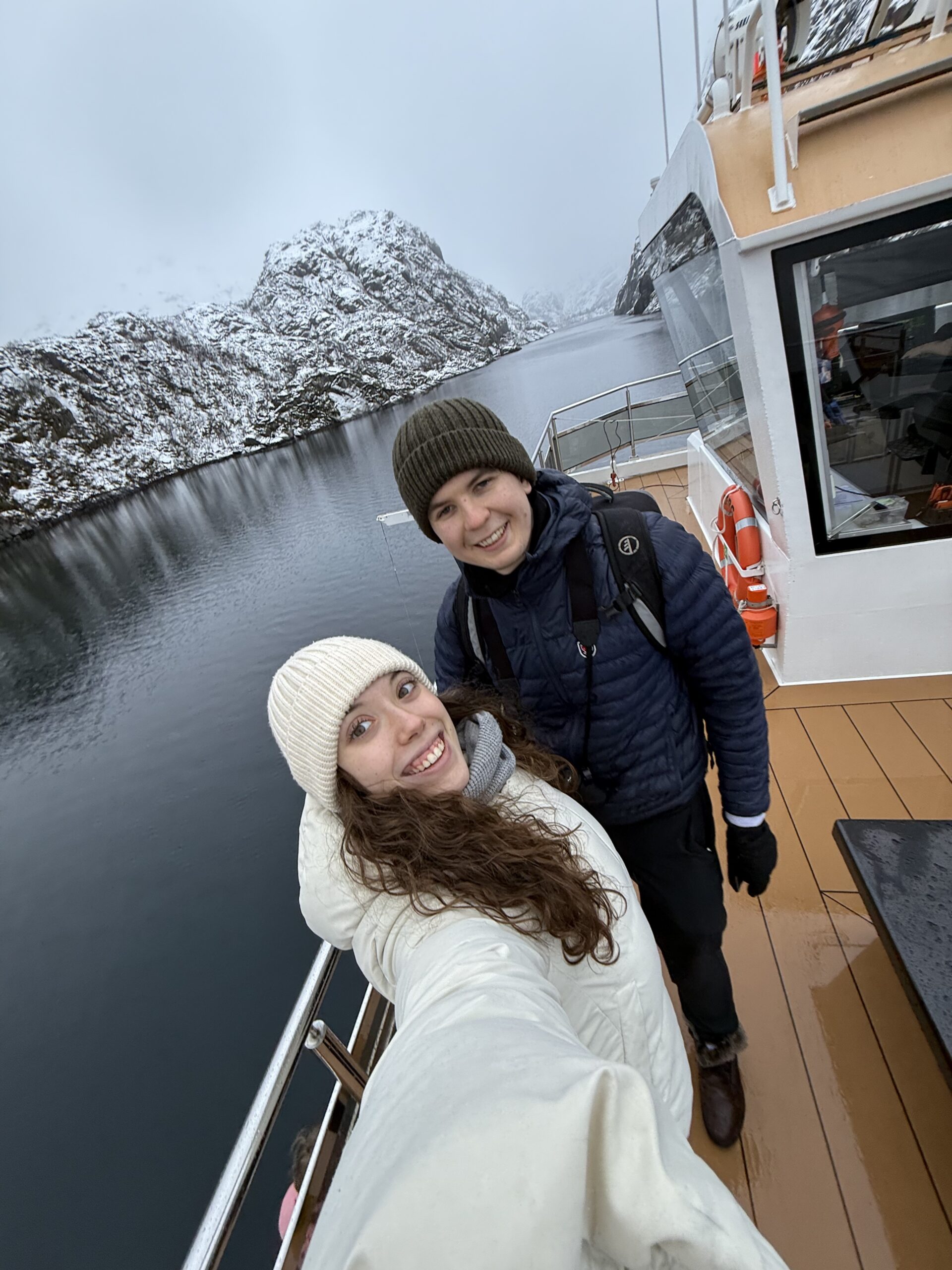
We’ve been living in Rovaniemi since before most people could point to it on a map. In the years since, we’ve driven through Finland, through Norway’s fjords, up to Nordkapp, across Iceland on the ring road, and through the single-track tunnels of the Faroe Islands. People keep asking us the same question: how much does a Nordic road trip actually cost?
Not the travel-blog version where everything is vague and the photos are suspiciously perfect. The real number. The fuel receipts. The ferry surprises. The campsite booking we made at 11 pm because the “wild camping spot” turned out to be someone’s garden.
This breakdown covers our actual Nordic road trip costs across multiple trips, updated for 2026.
A Nordic road trip costs roughly €80–150 per person per day depending on your country mix, camping style, and whether you include Norway or stick to Finland and Sweden. Iceland and the Faroes add a significant premium. The single biggest variables are accommodation type and Norway’s toll roads and ferries — plan for both before you leave.
The Nordic road trip cost gap — country by country
The biggest thing we wish someone had told us before our first Norway trip: the Nordics are not one budget. Finland and Sweden are expensive by European standards but manageable. Norway is another level. Iceland is another level again. The Faroe Islands sit somewhere between Norway and Iceland depending on what you’re doing.
What we spent per person per day, by country
- Finland: €55–80/day per person, camping. Our home country — we know the free spots, the cheap grocery chains, and the fuel prices. Very doable on a moderate budget.
- Sweden: €60–90/day per person. Similar to Finland. Allemansrätten means wild camping is genuinely free and legal. Stockholm is the budget spike.
- Norway: €100–160/day per person. Fuel is expensive, toll roads add up fast, ferries are non-negotiable on most routes, and supermarkets are noticeably pricier. Wild camping is allowed but the distances are long.
- Iceland: €120–180/day per person. Fuel costs more, the ring road is long, and accommodation is either expensive or requires booking far ahead. Campsites are plentiful but not always cheap in July.
- Faroe Islands: €100–150/day per person. Small country so distances are short, but the tunnel tolls, limited food options, and scarcity of cheap supermarkets add up.
Our average across a multi-country Nordic trip
On a trip mixing Finland + Sweden + Norway (the classic route from Rovaniemi), we typically land at €90–120 per person per day when camping most nights and cooking our own food. Add Iceland and the daily average jumps above €130.
Fuel costs: the number people underestimate
Fuel is often the second-largest expense on a long Nordic road trip, after accommodation. The distances are real — Norway alone is over 2,700 km from Oslo to Nordkapp. Here’s what we’ve paid and what to budget.
2026 fuel price reference (petrol, rounded)
- Finland: €1.65–1.80/litre. Usually the cheapest in the region.
- Sweden: €1.70–1.85/litre. Similar to Finland.
- Norway: €1.90–2.10/litre. Higher, with some regional variation. Fill up in cities when you can.
- Iceland: €2.00–2.20/litre. Fill the tank whenever you see a station — remote areas have nothing for 150 km.
- Faroe Islands: €1.75–1.90/litre. Surprisingly not the worst in the region.
For a mid-size car doing 7–8 litres per 100 km, a two-week Norway circuit of roughly 3,500 km will cost around €450–550 in fuel alone. Split two ways, that’s €225–275 per person — more than people expect when they first price a Nordic road trip.
EV tip: Norway has exceptional EV charging infrastructure (IONITY, Recharge, Mer), and electricity is cheap. If you can rent an EV for Norway, fuel costs drop dramatically — but verify charging availability before any remote Highland routes.
Accommodation: the biggest variable in your Nordic road trip budget
Where you sleep has more impact on your Nordic road trip cost than almost any other decision. The range from free wild camping to a Norwegian hotel is enormous — we’ve done both ends, and everything in between.
Accommodation options and what they actually cost
- Wild camping (Finland, Sweden, Norway): Legally free under Everyman’s Right laws. You need a tent or rooftop tent, leave after one or two nights, and leave no trace. In Finland and Sweden this is genuinely easy. In Norway it’s legal but terrain can make flat ground harder to find.
- Municipal campsites: €15–30 per night for two people with a tent. Found across all Nordic countries. Clean, often with hot showers and kitchen facilities. Our most-used option on longer trips.
- Camping cabins (hytte/mökki): €50–120 per night. A proper Nordic experience — small wooden cabin with beds, basic kitchen, sometimes sauna. Worth budgeting for at least two or three nights on a longer trip.
- Budget hotels / guesthouses: €80–160 per room per night in cities. In Oslo, Bergen, and Reykjavik, budget hotels are genuinely hard to find below €120. Book well ahead in summer.
- Campervan/motorhome rental: €100–250/day hire cost, but you save on accommodation every night. On a 14-day Norway trip the maths can work in your favour if you wild-camp most nights.
Our actual accommodation breakdown on a 10-day Finland–Norway trip
- 4 nights wild camping: €0
- 3 nights municipal campsites: €72 total (€24/night for two)
- 2 nights camping cabins: €160 total (€80/night)
- 1 night city hotel in Tromsø: €148
- Total for two over 10 nights: €380. Per person per night average: €19.
That’s the lean end. If you skip wild camping and stay in cabins or hotels most nights, €50–80 per person per night is more realistic for Norway.
Honest travel from the Arctic Circle
We send one letter a month — no roundups, no sponsored fluff. Just what we’re doing, where we’re going, and what we actually think.
Food costs: the gap between cooking and eating out
Food is where the cost gap between Nordic road trippers opens up the most. We cook most of our meals on the road — it’s both cheaper and honestly one of the best parts of the trip. There is nothing quite like eating fresh eggs and rye bread by a Finnish lake at 7 am.
Realistic food costs by approach
- Self-catering (supermarket + camp stove): €15–25 per person per day. Lidl and K-Market in Finland, ICA in Sweden, Rema 1000 and Kiwi in Norway. Pasta, tinned fish, eggs, bread, local cheese. Not suffering — genuinely eating well.
- Mix of cooking + one café stop per day: €30–45 per person per day. Our usual approach. Breakfast and dinner cooked, lunch at a local café or a Norwegian roadside veikro.
- Mostly eating out: €60–90 per person per day in Norway and Iceland. A burger and a beer in Bergen will run you €30 easily. Reykjavik is comparable.
The border shopping rule
If you’re driving from Finland into Norway, stock up before the border. Norwegian supermarkets are 30–50% more expensive than Finnish ones for basics. We always buy a week’s worth of pasta, tinned goods, coffee, and snacks on the Finnish side. On a fortnight-long Norway trip, that alone saves €100–150 for two people.
Quick-reference weekly food budget (two people, self-catering heavy)
- Finland: €150–200/week for two
- Sweden: €160–210/week for two
- Norway: €200–280/week for two (supermarket only — eating out doubles this)
- Iceland: €220–300/week for two
- Faroe Islands: €190–260/week for two (limited supermarket options; plan ahead)
💡 Our campervan tip: prices for the same van vary a lot between rental brands. We compare the Nordics campervans across 160+ rental companies on CampervanPlanet — and code HUNGRYTRAVELFAMILY5 takes 5% off.
Ferries, tolls, and the Nordic road trip costs people forget to budget
This is the section that catches most people out. On a Norway road trip especially, ferries and toll roads are not optional extras — they are part of the route. Budget for them as a separate line item.
Norway toll roads (AutoPASS system)
- As a foreign driver in a rental car, tolls are typically charged to your rental company, who bill your credit card after the trip — often with a service fee of €5–20 on top of the toll itself.
- On a 10-day Norway road circuit, we’ve paid €60–120 in tolls alone for one car.
- Some routes (the E18 into Oslo, the E39 coastal route) are heavily tolled. Use vegvesen.no to estimate costs for your specific route before you leave.
Norway car ferries
- Many fjord crossings require car ferries costing €15–40 per car + driver, plus €5–10 per additional passenger.
- On our Lofoten route we took four ferry crossings. Total for car + two people: €90.
- Ferries on major routes run every 20–40 minutes; booking ahead is wise in peak summer to avoid queues.
Faroe Islands tunnel tolls
- The Faroe Islands have paid undersea tunnels — the Vágatunnilin and Eysturoyartunnilin are both tolled. Budget around €80–120 for a week of driving in the Faroes, depending on your route.
Iceland: the fuel-gap problem on remote routes
- In remote parts of Iceland — especially the east coast and the Westfjords — petrol stations can be 150–200 km apart. Running low on F-roads is not an option. Always fill the tank when you can, and carry a small backup can on highland routes.
Our biggest budget surprises on a Nordic road trip
These are the costs that caught us off-guard — either because we hadn’t budgeted for them or because they came in significantly higher than we expected.
- Norwegian toll bills arriving weeks later. Our rental company charged the card three weeks after the trip for tolls we’d genuinely forgotten. Always keep a buffer in your travel account for post-trip charges from Scandinavian rental agencies.
- Campsite booking fees in Iceland. Many Icelandic campsites now use Tjalda for online booking and charge a booking fee. In peak July, some sites require advance reservation — those fees add up across a two-week trip.
- Fishing licences in Norway. Saltwater fishing is free in Norway — great. River and lake fishing requires a licence (€5–15/day). Easy to forget if you plan to do both.
- Laundry on long trips. On a 14-day road trip, laundry is real. Norwegian laundromats charge €8–15 per load. Budget €30–50 for laundry on a two-week trip, or pack enough merino to skip it.
- Faroe Islands accommodation scarcity. The Faroes have very limited accommodation. We booked our guesthouse on Mykines six weeks ahead and it still cost more than expected. Do not leave Faroe Islands lodging to the last minute.
- Car insurance excess in Iceland and Norway. Standard rental insurance often carries a €1,500–2,500 excess. A gravel chip on a Faroe Islands single-track road cracked our windscreen — we were very glad we’d paid for the excess waiver. Budget €15–30/day for full cover.
What we’d do differently to cut the Nordic road trip cost
These are the actual changes we made between our first and second major Nordic road trips — and the ones we’d recommend to anyone planning theirs now.
- Start in Finland, not Norway. Starting your Nordic road trip in Finland means cheaper fuel, cheaper food, and a few days of acclimatising to the road-trip rhythm before Norway’s costs hit. From Rovaniemi, you can be in northern Norway in four hours — there’s no reason to fly into Oslo and pay Oslo prices for your first three nights.
- Get a rooftop tent or commit to ground camping. We switched from a ground tent to a rooftop tent after trip two. Setup time dropped from 25 minutes to 4 minutes, and we were far more likely to wild-camp because it was so easy. Wild camping eliminates the single biggest recurring cost.
- Travel in May or September, not July. July is the most expensive month across all Nordic countries. Campsites fill, prices peak, and ferries get congested. May and September give you 80% of the experience at 60% of the cost — and in Norway and Iceland, the light is still extraordinary.
- Use the Kiwi app in Norway. Kiwi supermarket has a loyalty app with real discounts. Sign up before you cross the border and activate the offers each week. It has made a noticeable difference to our weekly grocery spend in Norway.
- Plan your Norway route around toll-light roads. Some inland routes (the E6 north from Trondheim, for example) are far less tolled than the western fjord roads. You can plan a genuinely scenic Norway road trip that avoids most toll roads — it just takes a bit of research on vegvesen.no before you go.
- Skip two restaurant dinners per week. We set ourselves a rule: cook at camp four evenings, eat out three. In Norway and Iceland, each restaurant meal for two costs €60–100. Sticking to the rule saves €100–150 per week without feeling like deprivation.
A final word from Rovaniemi on Nordic road trip costs
We’ve driven across the Nordic region more times than we can easily count. Every trip teaches us something new about costs — a cheaper fuel stop, a campsite we’d overlooked, a border town with a surprisingly good supermarket on the Finnish side of a crossing nobody uses.
The honest answer to the Nordic road trip cost question is: it depends enormously on your choices. A couple who wild-camps five nights a week, cooks their own food, and avoids Norway’s most tolled corridors can do a two-week Scandinavia trip for €1,500 each. A couple who stays in hotels, eats out daily, and does the full Iceland ring road plus Norway will spend €3,500 each or more.
Both trips are worth doing. The key is knowing which one you’re planning before you leave, rather than discovering it mid-route when the toll invoice arrives three weeks after you’re home.
If you have a specific route you’re planning and want a more precise estimate, drop it in the comments. We’re happy to give you a realistic range based on what we’ve actually spent on the same roads.
Book your the Nordics campervan
Compare prices across 160+ campervan and motorhome rental brands, get a free 1GB eSIM with every booking — and 5% off with code HUNGRYTRAVELFAMILY5.
Check prices & availability →Frequently asked questions
How much does a Nordic road trip cost per day on average?
Expect €80–150 per person per day depending on your country mix and accommodation style. Finland and Sweden are cheaper (€55–90/day); Norway, Iceland, and the Faroes run €100–180/day. Camping and self-catering are the two biggest levers for reducing the overall cost.
Is Norway the most expensive Nordic country for a road trip?
Yes, consistently. Fuel, supermarkets, accommodation, toll roads, and ferries are all notably more expensive than Finland or Sweden. Iceland is comparable or slightly higher. The Faroe Islands are expensive partly due to limited options rather than high prices per se.
Can you wild camp for free on a Nordic road trip?
Yes — in Finland, Sweden, and Norway under Everyman’s Right laws (each country has its own version, but the principle is one or two nights in any one spot, leave no trace). Iceland and the Faroe Islands have more restrictions. In Iceland, wild camping outside designated sites is now heavily fined in many popular areas.
How much should I budget for Norway toll roads?
Budget €60–150 for a 10–14 day Norway road trip depending on your route. Oslo-area roads are heavily tolled. Use vegvesen.no to estimate tolls for your specific route. If using a rental car, ask your company how they handle toll billing — some add a processing fee of €5–20 on top.
Is Iceland or Norway more expensive for a road trip?
Iceland is typically slightly more expensive overall, mainly due to accommodation and fuel. Norway’s toll roads and ferries add costs Iceland doesn’t have, but Iceland’s accommodation (especially in summer) and limited off-season deals push it higher. For a two-week trip, budget around €2,800–3,500 per person for Iceland vs €2,200–3,000 for Norway, camping most nights.
What is the cheapest Nordic country to road trip through?
Finland, followed closely by Sweden. Both have free wild camping, cheaper supermarkets, lower fuel costs, and fewer mandatory ferry or toll costs. Sweden’s E4 motorway north from Stockholm is completely toll-free. Finland’s roads are excellent and traffic is light even in summer peak.