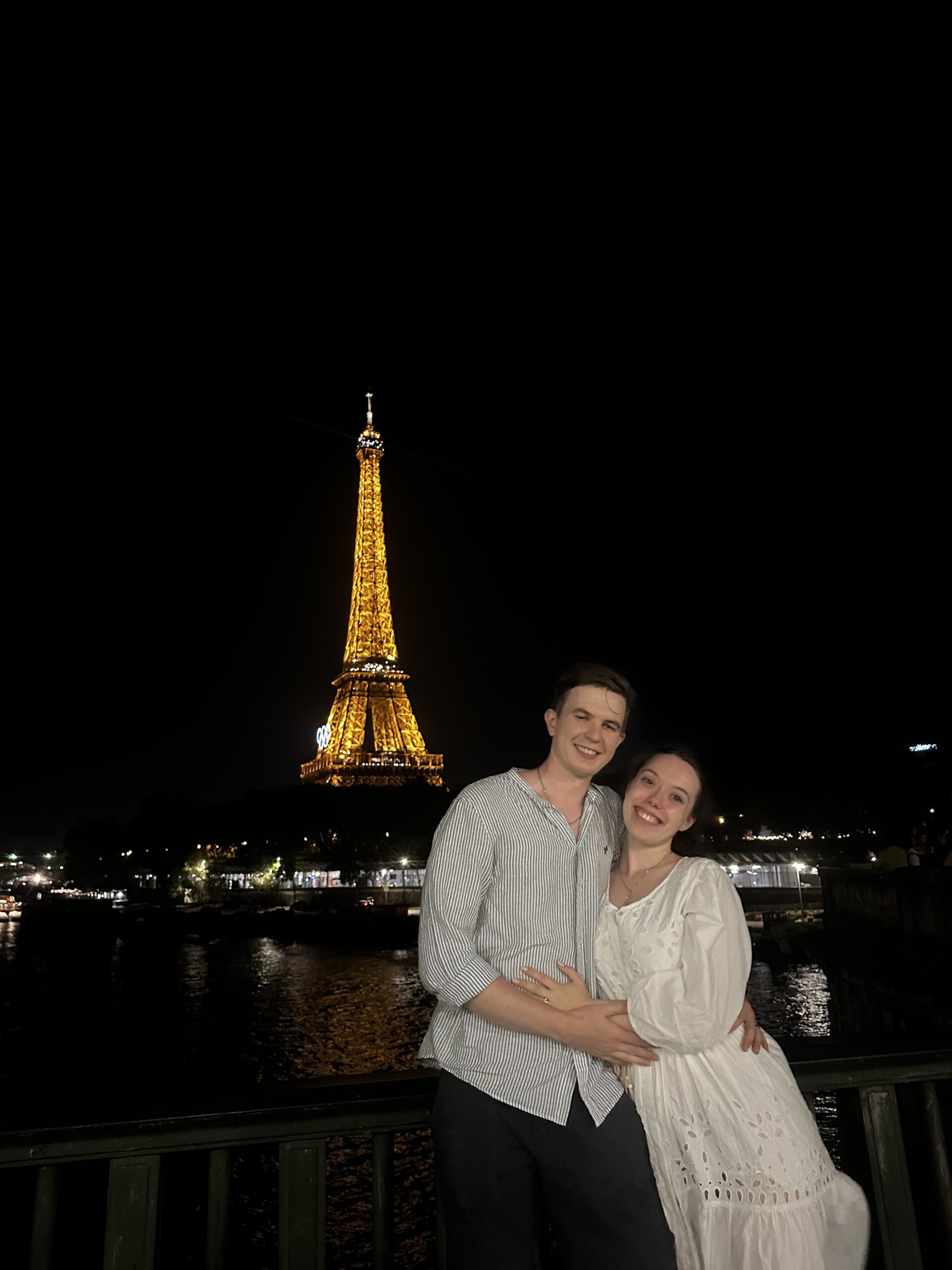
We’ve had this argument in a tent outside Tromsø, in a Budapest ruin bar, and most recently over reindeer stew at our kitchen table in Rovaniemi. It goes something like this: Joona wants to camp wild by the fjord and cook pasta on the gas stove. Alla wants to sleep in the guesthouse with the wood-fired sauna and the view of the water. Someone has to blink.
After 25 countries and somewhere north of 400 nights on the road — from free campsites in Norway’s Lofoten to a tiny apartment overlooking the Faroe Islands’ most dramatic sea-stack — we’ve developed a working philosophy on when budget wins, when experience wins, and why the question itself is often the wrong one to ask.
This is our honest take on budget vs experience travel, built from real decisions, real regrets, and the one framework that has consistently made us happier than either extreme.
Budget travel and experience travel are not opposites. The question is never “how little can we spend?” — it’s “where does money actually make a difference?” We spend freely on a few things that genuinely change a trip, and cut ruthlessly everywhere else. That principle, applied consistently across 25 countries, is the closest thing we have to a travel philosophy.
- How we frame the budget vs experience question
- The categories where spending more almost always pays off
- The categories where saving almost never costs you anything
- Our decision framework — the five questions we ask
- What we got wrong in our early travels
- How our philosophy has evolved after 25 countries
- The mistakes that still happen (honestly)
- Frequently asked questions
How we frame the budget vs experience question
Most travel content treats budget and experience as a spectrum — at one end is the backpacker sleeping in a 12-bed dorm; at the other is the person paying €800 a night for a glass-floored overwater bungalow. The implication is that more money equals better travel, and less money means sacrifice.
We’ve never found that to be true in practice. Some of our most vivid travel memories cost almost nothing: a midnight swim in a lake outside Rovaniemi in June, a €4 pastry on a Lisbon street corner, a two-hour ferry from Helsinki to Tallinn watching Estonia’s coastline appear out of the fog. Some of our most forgettable nights involved hotels that cost more than our weekly food budget.
The real question is not budget size — it’s allocation
What we’ve learned, slowly and sometimes expensively, is that the budget vs experience debate is actually about allocation. The traveler who spends €2,000 in Iceland and has a transcendent trip, and the traveler who spends €4,000 in Iceland and comes home vaguely disappointed, probably made different decisions about where that money went — not different decisions about how much to spend.
- Misallocated budget: spending heavily on a hotel you’ll use for six hours of sleep, then skimping on the activity that was the entire reason you came to this place.
- Well-allocated budget: staying in a basic guesthouse you actually like, and putting the savings toward the glacier hike, the local cooking class, or the third extra night in a place you fell in love with.
- The hidden cost of always going cheap: decision fatigue. If every purchase triggers anxiety about whether you’re overpaying, the anxiety itself becomes the dominant experience of the trip.
The categories where spending more almost always pays off
Across 25 countries, certain spending categories have reliably delivered outsized returns. When we look back at the money that felt worth it, it clusters in predictable ways.
Experiences you cannot replicate
A guided whale-watching boat in Tromsø. A privately arranged snowmobile trip into Lapland wilderness. A slow overnight ferry from Helsinki to Stockholm with a proper cabin and a dinner table. These are things you genuinely cannot substitute — and the gap between the cheap version and the proper version is often the difference between a memory and a vague recollection.
- Guided local expertise: a good local guide in an unfamiliar country — Iceland, Greece, Singapore — often unlocks access and context that no amount of pre-trip research replicates. We’ve hired guides three times in our travels and regretted it zero times.
- Location when it matters: in Rovaniemi, a hotel 20 minutes from the aurora-chasing zone matters less than in, say, the Faroe Islands, where being in the wrong village means missing the light entirely. Location spending is case-specific.
- The one meal in the place: in Copenhagen, we spent what felt like a reckless amount on one lunch at a restaurant we’d been thinking about for two years. We still talk about it. Every other meal that trip was bread, cheese, and things from the market. The ratio was right.
- Sleep when sleep matters: a bad night’s sleep before a 14-hour driving day on Norwegian mountain roads is not a budget win — it’s a safety issue. We’ve learned to spend on accommodation the night before a physically demanding day.
The categories where saving almost never costs you anything
The following spending categories have consistently disappointed relative to their cost, or have proven substitutable without meaningful loss.
Where we cut reliably
- Accommodation when you’re just sleeping there: if you’re arriving after dark and leaving before 9am, the room exists only for horizontal time. A clean, quiet basic room is indistinguishable from a premium one at 2am.
- Airport food and convenience purchases: the most reliably overpriced food in any country is always at the airport. We pack food. This is a rule we have broken precisely twice, under duress, and regretted both times.
- Branded gear and travel accessories: after a decade on the road, we use a mid-range camera, a €40 backpack liner, and a travel pillow that cost €12. The €300 merino base layer does not make the Faroe Islands warmer. (We checked.)
- Tourist shops near major landmarks: a miniature Eiffel Tower costs the same everywhere. The things worth buying as mementos are almost always found at smaller markets or local shops, at a fraction of the tourist-zone price.
- Taxis over public transport when transit exists: in Helsinki, Tallinn, Budapest, Lisbon — cities where public transit is genuinely excellent — a taxi is often a worse experience as well as a more expensive one. Slower, door-to-door-ish, and you miss the texture of the city.
Travel honestly, spend wisely
Get our monthly notes on real travel decisions — what worked, what we wish we’d done differently, and where we’re heading next.
Our decision framework — the five questions we ask
Over time, we’ve converged on five questions we run through — sometimes explicitly, sometimes in about 30 seconds of silent mutual understanding — whenever we’re deciding whether to spend or to save.
The five-question test
- Will we talk about this in five years? Experiences that produce stories are worth more than experiences that produce Instagram posts. If we can imagine telling this story to friends at dinner five years from now, the bar for spending rises.
- Is there a meaningful difference between the cheap and premium version? Sometimes yes (a rental car with winter tyres in Lapland vs without), sometimes definitively no (a generic hotel breakfast in any European city vs the café down the street for a third of the cost).
- Are we spending to reduce anxiety or to increase joy? Spending to soothe trip-planning stress — booking an expensive hotel because you’re overwhelmed by choice — rarely delivers value. Spending because you genuinely want something delivers value almost every time.
- Could we get this for free or far cheaper with 10 minutes of effort? In most Nordic cities, we can swim in the harbour or a lake for free. The paid beach club version is sometimes nicer and sometimes not. The 10-minute research question is worth asking before defaulting to either.
- Is this the bottleneck — the thing that determines the quality of this trip? In Rovaniemi in winter, the bottleneck is weather and aurora. Spending more on accommodation does nothing for the weather. But spending on a second or third night extends your window considerably. Identifying the actual bottleneck changes where money belongs.
What we got wrong in our early travels
When we started traveling seriously — before Finland, before 25 countries, before we had a framework for any of this — we made the classic mistakes in both directions.
- We optimised for price on the things that actually mattered. We booked a budget guesthouse in the Faroe Islands that was 45 minutes from the cliff walks we came to see. We saved €30 per night and spent it on taxi rides and frustration. This was bad math.
- We spent reflexively on things that felt like quality signals. A hotel with a rooftop bar in Budapest that we visited exactly once, at €180 a night, when a clean apartment two blocks away would have cost €60 and given us more space, a kitchen, and the same view from the street. We paid for a brand, not an experience.
- We confused suffering with saving. There is a version of budget travel that treats discomfort as proof of authenticity — the colder the tent, the more “real” the experience. We did this for about six months. It produces stories but not, in retrospect, consistently better travel.
- We avoided experiences that scared us on price without actually calculating them. The whale-watching tour in Tromsø that we almost skipped was €85 each. We spent that much on restaurant meals that trip without a second thought. The tour remains in our top five travel experiences. The meals do not.
How our philosophy has evolved after 25 countries
The single biggest shift in how we approach budget vs experience travel has been a move away from per-night or per-day metrics toward per-trip allocation. We think about the total money available for a trip, identify the two or three things that will define that trip, and protect budget for those things first.
- Ring Road Iceland, 10 days: the defining thing was the Ring Road itself — the rental car, the fuel, the extra day in Westfjords. We saved on accommodation (guesthouses, one campsite) and ate simply. The car budget was sacred.
- Faroe Islands, 5 days: the defining thing was the helicopter to Mykines during puffin season. We built the rest of the budget around that flight. Everything else was secondary.
- Singapore stopover, 3 days: the defining thing was eating well — hawker centres, one proper dinner at a restaurant we’d researched for weeks. We stayed in a functional but basic hotel and took the MRT everywhere. The food was the trip.
The common thread is that we identified what the trip was for, and protected the money that made that thing possible. Everything else followed from there.
The mistakes that still happen (honestly)
We have a philosophy now. It does not prevent us from making bad calls. In the interest of honest reporting, here are the budget vs experience mistakes we made most recently.
- Overcorrecting toward experience. When we’re excited about a destination, we have a tendency to approve expenditures that, in retrospect, were more about the excitement than the actual value. A very fancy boat tour in Norway that was, fine, but probably not three times the price of the basic option, which would have shown us the same fjord.
- Ignoring cumulative budget drain. Small decisions — a coffee here, a taxi there, a souvenir that seemed reasonable — accumulate invisibly. We’ve arrived at the end of trips 20% over budget because we tracked headline costs but not the daily texture spending.
- Booking too far in advance out of price anxiety. We’ve locked in accommodation to secure a price, then had the trip evolve in ways that made that accommodation inconvenient or wrong. Flexibility has value, and we still sometimes underweight it in favor of a good deal seen three months out.
- Letting one person carry all the budget stress. On joint trips — which, given we travel together constantly, means all of them — it is easy for financial anxiety to land unevenly. We’ve gotten better at explicit conversations about what we’re willing to spend and why, but it took longer than it should have.
Frequently asked questions
Is budget travel or experience travel better?
Neither, as categories. The question that actually matters is whether you’re spending money in the places where it changes your experience. A €3,000 trip where money is well-allocated will almost always feel better than a €6,000 trip where it isn’t. Think allocation, not total budget.
How do you decide what’s worth splurging on?
We use a five-question framework: Will we talk about this in five years? Is there a meaningful difference between cheap and premium? Are we spending to reduce anxiety or increase joy? Could we get this cheaper with ten minutes of research? Is this the actual bottleneck of the trip? If the answer to the first, second, and fifth is yes, we spend. If not, we don’t.
What do you always save money on when traveling?
Airport food, accommodation when we’re just sleeping there, branded travel accessories, tourist-zone shops, and taxis in cities with good public transit. These categories consistently disappoint relative to their cost, regardless of destination.
What do you always spend more on?
Experiences we genuinely cannot replicate — a specific guided tour, the correct mode of transport for a landscape (boat, helicopter, snowmobile), and the one meal in a place we’ve been thinking about for months. Also: an extra night or two when we’ve fallen in love with somewhere, because the marginal cost is almost always worth it.
How do you handle budget disagreements between travel partners?
Explicit conversation before the trip, not during it. We establish a rough total budget, identify the two or three things each of us cares most about experiencing, and protect those first. Everything else is negotiated in real time with the agreed framework, not on the spot when one of us is already annoyed.
Does traveling on a budget mean you miss out on good experiences?
Only if you let it. Some of the best experiences in 25 countries were free or close to it — wild swimming in Finland, hiking in the Faroe Islands, sitting on a ferry watching the Baltic in golden hour. The error is assuming that expensive things are experiences and cheap things are just travel. The distinction almost never holds up.
A final word from Rovaniemi
We still argue about this. Probably always will. Alla thinks Joona undervalues comfort after a long drive; Joona thinks Alla overvalues novelty when familiar things are working fine. These are, genuinely, different travel philosophies in a two-person team, and they’re useful friction.
What we’ve landed on — after 25 countries, a lot of tent nights, a few overpriced hotels, and more spreadsheets than we’ll admit — is that budget vs experience is a false choice. The real question is what you’re traveling for, and whether your spending reflects that. When those are aligned, almost any budget produces good travel. When they’re not, no amount of money fixes the mismatch.
We hope something in here is useful for how you think about your own trips. And if you want to send us your version of this argument, our inbox is always open.
Joona & Alla
A Finnish-Ukrainian couple living on the Arctic Circle. Joona leads marketing for a Lapland tourism brand; Alla studies AI and content creation. Together they write about travel honestly — what it costs, what it’s like, and what they wish they’d known.
Read our full story →