Local Life in Lapland During Busy Season
We live in Rovaniemi year-round. That means we’re here when the coaches arrive and when they leave. Here’s what Lapland local life actually looks like when the tourists come to town — and what that means for you as a visitor.
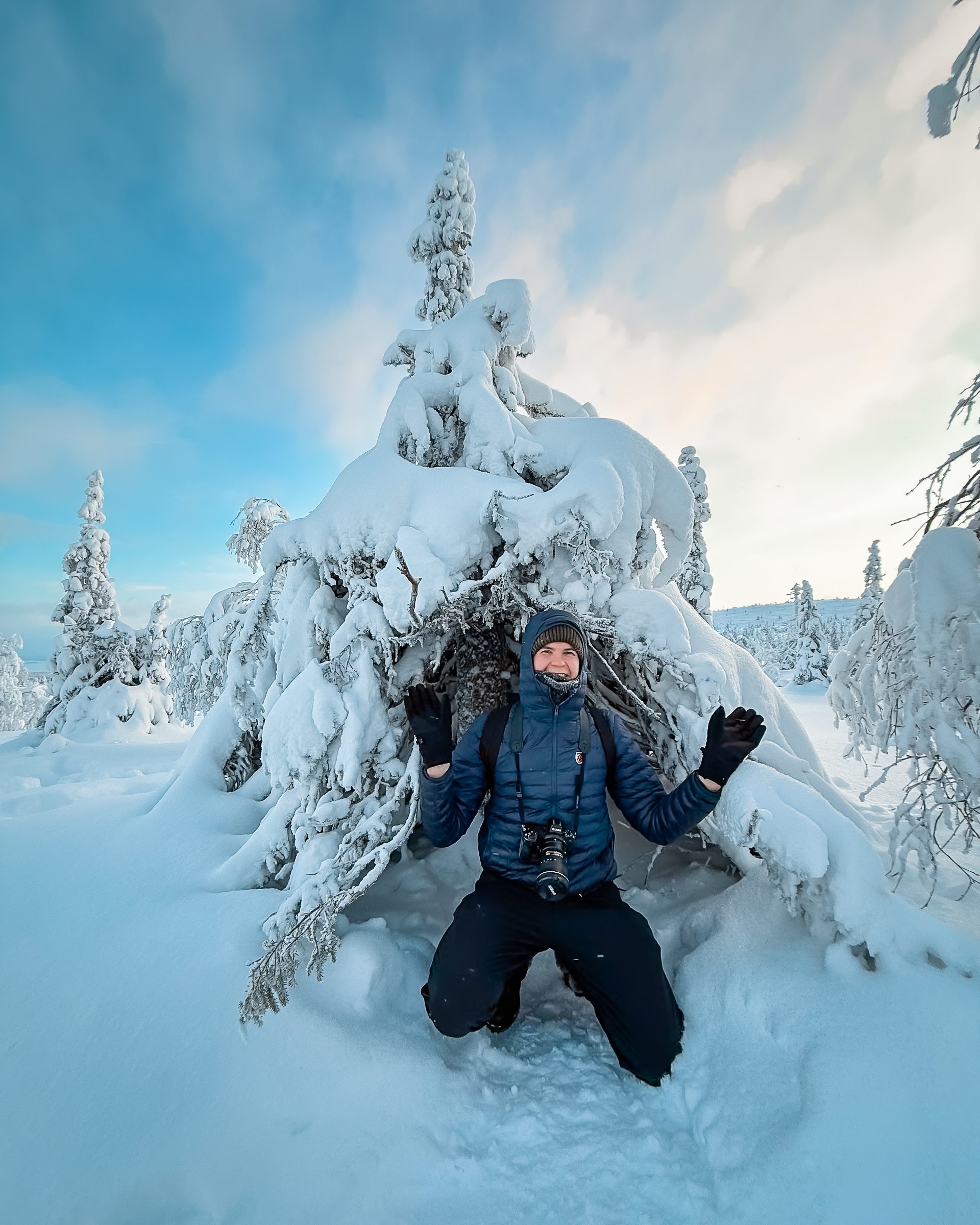
We have lived in Rovaniemi long enough to know both versions of this place. There is the Lapland that visitors read about — pristine wilderness, reindeer crossings, the glow of the midnight sun over silent rivers — and there is the Lapland that locals navigate while that same Lapland fills up with people who flew in from all over the world to find it. Both are real. They just coexist in ways that can surprise a first-time visitor.
Busy season in Finnish Lapland runs in two distinct waves: the winter peak (late November through March, anchored by Christmas in Rovaniemi) and the summer peak (late June through August, when the midnight sun draws everyone north). This guide is about what Lapland local life looks like during those peaks — how locals move around the city, which places fill up and which stay quiet, and what knowing this means for how you should plan your own visit.
During busy season, Rovaniemi and the wider Lapland region become genuinely crowded — especially in December and July. Locals adapt by shifting their routines: eating earlier, using quieter trails, and avoiding the tourist hotspots on peak days. As a visitor, knowing where locals actually go gives you a far better trip. This guide tells you exactly that.
- What busy season means in Lapland
- How locals move around during peak weeks
- The local Lapland quick-reference: 8 things worth knowing
- Where locals actually go (and what fills up)
- Busy season in summer vs winter — how they differ
- What we wish visitors understood
- Frequently asked questions
- A final word from Rovaniemi
What busy season means in Lapland
“Busy season” is not a single thing in Lapland — it is two very different phenomena wearing the same name. Understanding the difference matters before you book.
The winter peak: December through March
Rovaniemi’s winter peak is one of the most intense tourist concentrations in the Nordic countries. In December, the city’s population of roughly 65,000 people receives several hundred thousand visitors — the week before Christmas sees charter flights from the UK, Germany, France, Italy, and Japan stacking up at Rovaniemi Airport like it is Heathrow. Santa Claus Village, just outside town, becomes an almost surreal place: reindeer rides, elf encounters, and groups of small children who have been told the magic is real standing next to groups of influencers filming it all for a different kind of audience.
For locals, this period means certain roads clog up, the central supermarkets run short of things, and the two good restaurants in the city that are not tourist-oriented suddenly require reservations a week in advance. Most Rovaniemi residents either lean into the season (many work in it) or quietly retreat to the edges of the city and the forests they know well.
The summer peak: June through August
The summer peak is different in character. It is less concentrated, less charter-flight-driven, and dominated more by road-trippers and independent travellers. The midnight sun is the draw — and it is genuinely spectacular, even for people like us who have lived under it for years. Finnish families visiting from Helsinki, German campervan travellers, and hikers heading north to Pyhä-Luosto or Saariselkä all pass through Rovaniemi in summer. It is busy, but the city absorbs it more easily than December because people are more spread out across the region.
How locals move around during peak weeks
Knowing local habits during busy season is genuinely useful if you want to avoid the worst of the crowds without leaving the region entirely.
Time-shifting is the main local strategy
- Eating times shift earlier. In peak tourist weeks, locals eat dinner at 17:00–18:00 rather than 19:00, because the restaurants in Rovaniemi city centre fill up with tour groups from 18:00 onwards. If you eat when locals eat, you get better service and available tables.
- Grocery shopping happens at odd hours. The S-market on Koskikatu and the Prisma near the ring road get genuinely difficult between 16:00 and 19:00 on weekdays in peak season. Locals shop at 08:00 or after 20:00. Both stores are open long hours — use the early window.
- Trail use shifts to weekdays. The popular trails — Ounasvaara hill above the city, the Kemijoki river path — are noticeably quieter Monday through Thursday compared to weekends. Locals who hike regularly avoid weekends entirely in July and August.
Where locals go that tourists don’t
- Ounasvaara’s back side. Everyone knows the main Ounasvaara ski hill trail. Far fewer visitors find the longer network of gravel tracks on the eastern slope — locals walk and cycle there all summer with almost no tourist presence.
- The Kemijoki gravel paths north of the city. The river runs through the city, and the paths on both banks extend well beyond the tourist area. Walk north for 20 minutes and you are entirely alone.
- The Arctic Circle beyond Santa Claus Village. The Arctic Circle line continues into the forest in both directions from the commercial village. A quiet walk into untouched taiga that most visitors never find.
The local Lapland quick-reference: 8 things worth knowing
- Book restaurants at least 3 days ahead in December and July. The good local places — not the tourist buffets — fill up fast. Fransmanni, Nili, and Sky Kitchen all need advance reservations in peak season.
- Rent a bike rather than a car for Rovaniemi itself. The city centre is small. A bike gets you to Ounasvaara, the river paths, and the market in five minutes. Parking during peak season is genuinely annoying.
- The Arktikum museum is best on weekday mornings. It’s one of the few world-class things in Rovaniemi that tourists mostly skip in favour of reindeer rides. Go Tuesday or Wednesday morning and you practically have it to yourself.
- The Lordi Square market on summer Saturdays. Local Rovaniemi producers sell at the outdoor market from around 09:00. Reindeer sausage, cloudberry jam, smoked fish — this is actual local food. It’s busy by 11:00; arrive before 10:00.
- Midnight sun swims happen spontaneously. Locals appear at the river or lakes at 23:00 when the light is extraordinary. If you see people heading toward the Kemijoki with towels at an unreasonable hour, follow them.
- Supermarkets close on Finnish public holidays. Juhannus (Midsummer), Juhannusaatto (the eve), and other holidays catch visitors off guard. Plan grocery shopping the day before.
- Working reindeer farms differ from Santa Claus Village. The Santa Claus complex is a commercial Christmas world. Actual herding farms outside the city offer a completely different, quieter experience of Finnish herding culture.
- Buses north run from the airport and city centre. Direct buses to Saariselkä, Levi, and Pyhä mean you do not need to rent a car if your destination is a resort village — especially in summer.
Get our best travel tips in your inbox
Monthly stories from Rovaniemi — Arctic tips, packing lists, and the places we keep coming back to.
💡 Our campervan tip: prices for the same van vary a lot between rental brands. We compare the Nordics campervans across 160+ rental companies on CampervanPlanet — and code HUNGRYTRAVELFAMILY5 takes 5% off.
Where locals actually go (and what fills up)
The tourism economy in Lapland is built around a relatively small set of experiences: the Santa Claus Village in winter, reindeer safaris, husky rides, and aurora chasing. That concentration is actually useful for visitors who want something different — because local Lapland life happens almost entirely outside those corridors.
- What fills up completely: Reindeer farm tours within 10 km of Rovaniemi, the Santa Claus post office, the main elf experience packages, aurora chase tours, and the handful of restaurants near the village. Book all of these months in advance in December. In summer, popular hiking trailheads like the Kaunispää summit at Saariselkä get genuinely crowded on clear evenings.
- What stays surprisingly open: The Arktikum science museum, the Pilke science centre, Rovaniemi’s public library (one of the most beautiful we’ve been in), the city’s actual grocery stores and local cafés, and any trail more than 5 km from a resort centre.
- The supermarkets are genuinely local. Walk into Prisma or S-market in central Rovaniemi during peak season and you are surrounded by people who live here. It is one of the few places in the city where tourist and local life fully intersect.
- Local events during busy season: The Rovaniemi Marathon happens in August — a midnight-sun race that is genuinely one of the more surreal athletic experiences in Europe. The start is at 22:00. Local participation is high and the atmosphere is nothing like the curated Christmas events.
- The river in summer: Kemijoki is not a tourist attraction. Locals fish it, kayak it, and swim in it. There are no signs and no infrastructure. If you find a local on the riverbank with a rod, that is probably the most genuine Lapland local life moment you will have on your trip.
Busy season in summer vs winter — how they differ
Most writing about Lapland treats it as a winter destination with a brief summer footnote. As people who experience both, we think that framing misses how different the two peaks actually are.
- The crowds are different in character. Winter brings large organised groups — coach tours, charter families, school trips. Summer brings independent travellers, road-trippers, and hikers. The infrastructure strain is different: winter is concentrated around a few experiences, summer is spread across the whole region.
- Local mood shifts. In December, most Rovaniemi locals are either working the season or quietly exasperated by it. By summer, there is a genuine local pride in showing people what Lapland is like when the snow is gone. The vibe is warmer in both senses.
- Availability changes. The famous husky and reindeer experiences are winter-oriented; many reduce in summer. But summer opens up activities locals actually do — kayaking, berry picking, hiking, lake fishing — that have almost no tourist infrastructure around them.
- Weather complexity. Winter busy season has extreme cold as its backdrop — which concentrates activity. Summer busy season has the midnight sun, which disorients visitors’ sense of time. Locals plan around it; visitors fight it. The trick is to give up and eat dinner at midnight if that is when you are hungry.
- Getting around. In winter, the main resort areas are connected by shuttle. In summer, independence requires either a car or strategic use of long-distance buses. The region is large — Lapland is Finland’s biggest province, roughly the size of Ireland. Getting between places takes longer than maps suggest.
What we wish visitors understood
We are travel writers who live in the place people come to visit. That puts us in a slightly odd position — we want visitors to have a wonderful time and we also have opinions about how Lapland is sometimes presented versus what it actually is. Here is what we genuinely wish more people knew before arriving.
- Lapland is not just Rovaniemi. Rovaniemi is the capital and the transport hub, but the region extends hundreds of kilometres in every direction. Saariselkä, Pyhä-Luosto, Kilpisjärvi, Levi, Inari — these are different places with different characters. Treating Lapland as synonymous with Rovaniemi is like treating Finland as synonymous with Helsinki.
- The darkness and light extremes are more than a novelty. Polar night in December means the sun does not rise at all. The midnight sun in June–July means it does not set. Both are more psychologically affecting than visitors expect. Give yourself time to adjust rather than trying to maximise activities immediately.
- Wildlife encounters are real but not guaranteed. Reindeer roam freely and you will almost certainly see them. Elk (moose) are possible on forest roads. Wolverines and wolves exist but are genuinely rare. None of this is managed — it just happens, usually when you are not looking for it.
- Sámi culture is not a tourist experience. The indigenous Sámi people of Lapland have their own language, traditions, and land rights. Some tourism experiences involving Sámi culture are respectful and community-run; others are not. Ask where the money goes and who runs the operation.
- The quiet of the forests is the point. Tourists often try to fill every moment with organised activities. Locals know that the best thing Lapland offers is silence — real, uninterrupted, forest silence. You can find it five minutes from any resort centre if you walk away from the parking lot.
- Prices are high but the local economy is standard Finnish. Lapland is more expensive than Helsinki for most visitor activities. But the local supermarkets, public transport, and self-catering options are normal Finnish prices. The trick is to separate the tourist economy from the local one.
Book your the Nordics campervan
Compare prices across 160+ campervan and motorhome rental brands, get a free 1GB eSIM with every booking — and 5% off with code HUNGRYTRAVELFAMILY5.
Check prices & availability →Frequently asked questions
When is Lapland busiest for tourists?
The peak of the peak is the two weeks before Christmas in Rovaniemi — typically December 15–24. The second busiest period is late July to early August for the midnight sun. Both require advance booking for accommodation and activities by at least two to three months.
Do locals like tourists in Lapland?
Genuinely, yes — with nuance. Tourism supports a huge share of the local economy and most Rovaniemi residents understand and appreciate that. The frustration when it exists is usually about the scale of certain peaks (Christmas week especially) rather than about visitors themselves. Respectful, curious visitors are always welcome.
What is Lapland local life like in summer?
Summer in Lapland for locals means long evenings outdoors, berry picking, fishing, hiking, and an almost complete flip of the winter darkness. Most locals describe summer as their favourite season — the midnight sun gives an extraordinary quality of light that even after years does not get boring. Daily life normalises significantly compared to the intense tourism peak of December.
Are there experiences in Lapland that locals actually do?
Yes — and they are mostly free or cheap. Swimming in lakes and the Kemijoki river, picking berries and mushrooms in the forest (everyman’s right applies), hiking unmarked forest trails, fishing, cycling the Ounasvaara trail network, and attending local events like the Rovaniemi Marathon or the Saturday market. These are things locals do regularly and tourists almost never find.
Is Rovaniemi safe during busy season?
Very safe. Finland consistently ranks among the safest countries in the world and Lapland is quieter than the south of the country. The only genuine risk in busy season is weather-related — winter temperatures can reach −30°C or colder, and frostbite is a real possibility if you are underdressed. Dress for the conditions and Rovaniemi is one of the most relaxed places in Europe to be a visitor.
What do locals eat in Lapland that tourists miss?
Poronkäristys — sautéed reindeer with mashed potato and lingonberries — is everywhere, but the best versions are in local cafés rather than tourist restaurants. Fresh-caught muikku (vendace fish) fried by the river, and the remarkably good Finnish supermarket bakery section. The Lordi Square Saturday market is where locals shop for genuinely local food in summer.
A final word from Rovaniemi
We have watched Lapland change over the years we have lived here. The tourism infrastructure has grown enormously — new hotels, new experience companies, new airport capacity. What has not changed is the thing that drew people here in the first place: the sheer scale and silence of the Arctic landscape, the light that does extraordinary things at the wrong hours, the sense that you are genuinely far north of everywhere else.
Lapland local life during busy season is not some secret that exists beyond a hidden gate. It is happening in the same supermarkets, on the same river banks, and on the same trails as the tourist version — just slightly offset in time and place. Find the offset and you find the trip you were actually looking for.
We have been writing about Lapland and our wider travels across 25 countries not because we want to gatekeep this place but because we want you to understand it the way we do — honestly, without the gloss. That is what being hungry for travel actually means to us.
Joona & Alla
We are a couple based in Rovaniemi, Finnish Lapland — Joona is Finnish, Alla originally from Ukraine. Between us we have travelled to 25 countries and counting. Joona leads marketing for Stay Lapland; Alla studies AI and content. We write about the places we have actually been, the way we actually found them.
Read more about us →