How to Handle Visa-Free Travel in Europe as a Non-EU Citizen in 2026 (ETIAS Guide)
Everything non-EU travelers need to know about the ETIAS 2026 guide: what it is, who needs it, how to apply, and the realistic timeline — from a couple who has crossed Europe’s borders more times than they can count.
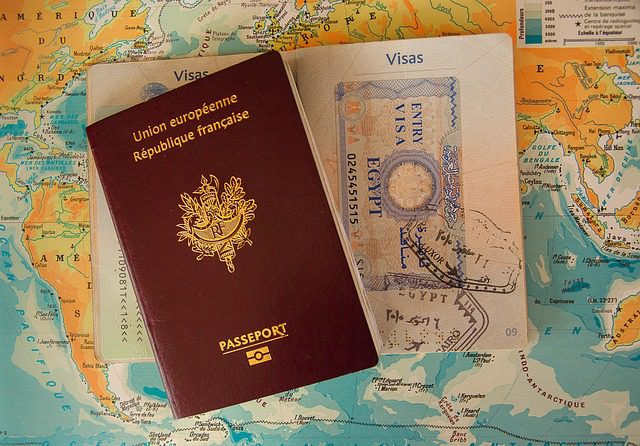
We’ve crossed European borders by plane, train, ferry, and rental car more times than we can honestly count — from Rovaniemi south through the Nordics and deep into Western and Central Europe. For most of those trips we traveled as EU citizens and barely thought about borders. But Alla’s Ukrainian passport means we’ve spent real time researching what the rules actually are for non-EU travelers. The ETIAS 2026 guide is the document we wish existed when we first needed to understand all this.
ETIAS — the European Travel Information and Authorisation System — has been discussed for years and is finally moving toward real-world implementation. If you hold a passport from a visa-exempt country (USA, UK, Canada, Australia, Japan, and many more), ETIAS will soon affect every Europe trip you plan. Here is what we actually know, what is still unclear, and how to prepare.
ETIAS is a pre-travel authorisation — not a visa — required for visa-exempt non-EU nationals entering the Schengen Area from 2025/2026 onward. The application is online, costs €7 for most applicants, takes minutes to fill in, and once approved is valid for 3 years or until your passport expires. Apply before you book flights, not after.
What ETIAS actually is — and why it matters now
The basics in plain language
ETIAS stands for the European Travel Information and Authorisation System. It is the EU’s answer to the US ESTA, the Canadian eTA, and similar systems used by Australia and New Zealand. Think of it as a background check you complete before your trip, which is then linked to your passport. Border officers can see it electronically the moment you arrive; you don’t carry a paper document.
The key point: ETIAS is not a visa. It does not change your right to stay in the Schengen Area (still the standard 90 days in any 180-day period). It is a pre-screening mechanism that lets the EU know you’re coming and flag potential security concerns before you board your flight. For the overwhelming majority of applicants, the authorisation is issued automatically within minutes.
The timeline: when does it actually start?
ETIAS was originally scheduled for 2023, then 2024, then late 2025. As of our latest update, the system is linked to the introduction of the Entry/Exit System (EES), which has also been repeatedly delayed. The most reliable information comes directly from the official EU ETIAS website. Our strong advice: check the official source before every trip to Europe in 2026, because the launch date is still subject to change.
Who needs ETIAS — and who is exempt
Nationalities that will need ETIAS
If your country is currently on the EU’s list of visa-exempt nations, you will need ETIAS. That includes nationals of the United States, United Kingdom, Canada, Australia, New Zealand, Japan, South Korea, Brazil, Mexico, and dozens of other countries. The full list is published officially by the European Commission and currently covers about 60 nationalities.
- USA: yes, ETIAS required from launch date.
- UK: yes — Brexit removed automatic Schengen access, so UK nationals already face border questions; ETIAS adds another layer.
- Canada and Australia: yes, ETIAS required.
- Japan and South Korea: yes, both are on the visa-exempt list.
- EU citizens: no — fully exempt. ETIAS is only for non-EU nationals.
- Schengen Area residents with a valid residence permit: exempt, even if you hold a non-EU passport (important for many expats living in Finland, Germany, etc.).
- Children under 18 and adults over 70: exempt from the €7 fee, though an application may still be needed (check official guidance at time of travel).
If you currently need a Schengen visa to visit Europe, ETIAS does not apply to you — you continue to use the standard visa route.
Related read Planning a European summer trip? Check our guide to travel tips for Europe for everything from packing to budgeting.
How to apply for ETIAS: step-by-step
The application process is designed to be simple. Here is the process as it has been outlined by EU authorities — subject to minor changes when the system fully launches.
The five steps
- Step 1 — Go to the official ETIAS website: The only legitimate application portal is the official EU site (travel.ec.europa.eu/etias). Ignore third-party services charging inflated fees for the same process.
- Step 2 — Create an account and fill in the form: You’ll need your passport details, address, employment status, and answers to security and health questions. The form takes about 10 minutes for most applicants.
- Step 3 — Pay the fee: €7 for applicants aged 18–70. Under 18 and over 70 are exempt from the fee (though an application may still be required).
- Step 4 — Wait for approval: In most cases, approval is automatic and arrives within minutes to a few hours. In a small number of cases, additional checks are needed and can take up to 30 days. This is why applying early matters.
- Step 5 — Travel with your authorised passport: The approval is linked electronically to your passport. You don’t need to print anything — but keeping a digital copy of your confirmation email is sensible.
The ETIAS authorisation, once granted, is valid for 3 years or until your passport expires, whichever comes first. You can use it for multiple trips to any Schengen country during that period, without re-applying each time.
ETIAS 2026 quick-reference checklist
Before you book
- Check whether your nationality requires ETIAS (official EU list).
- Confirm the current ETIAS launch date on the official EU website — it has been postponed before.
- Verify your passport is valid for at least 3 months beyond your planned departure date from the Schengen Area.
- Check whether an Entry/Exit System (EES) stamp requirement applies to your trip (linked to ETIAS rollout).
When applying
- Use only the official EU application portal — avoid paid third-party services.
- Apply at least 72 hours before travel; ideally 2–4 weeks ahead for peace of mind.
- Have your passport, email address, and a payment method ready.
- Answer all questions accurately — security screening is real, and inaccuracies can cause delays.
At the border
- Your ETIAS is electronic — no paper needed, but carry your passport and booking confirmation.
- Remember that ETIAS does not guarantee entry: border officers retain discretion.
- The 90/180 day rule still applies regardless of ETIAS status.
Get our best travel tips in your inbox
Monthly stories from Rovaniemi — Arctic tips, packing lists, and the places we keep coming back to.